Triakis semifasciata
Spot leopard sharks along the US Pacific Coast from April to December in cool 13-24 °C waters. Here's where divers log them most often.
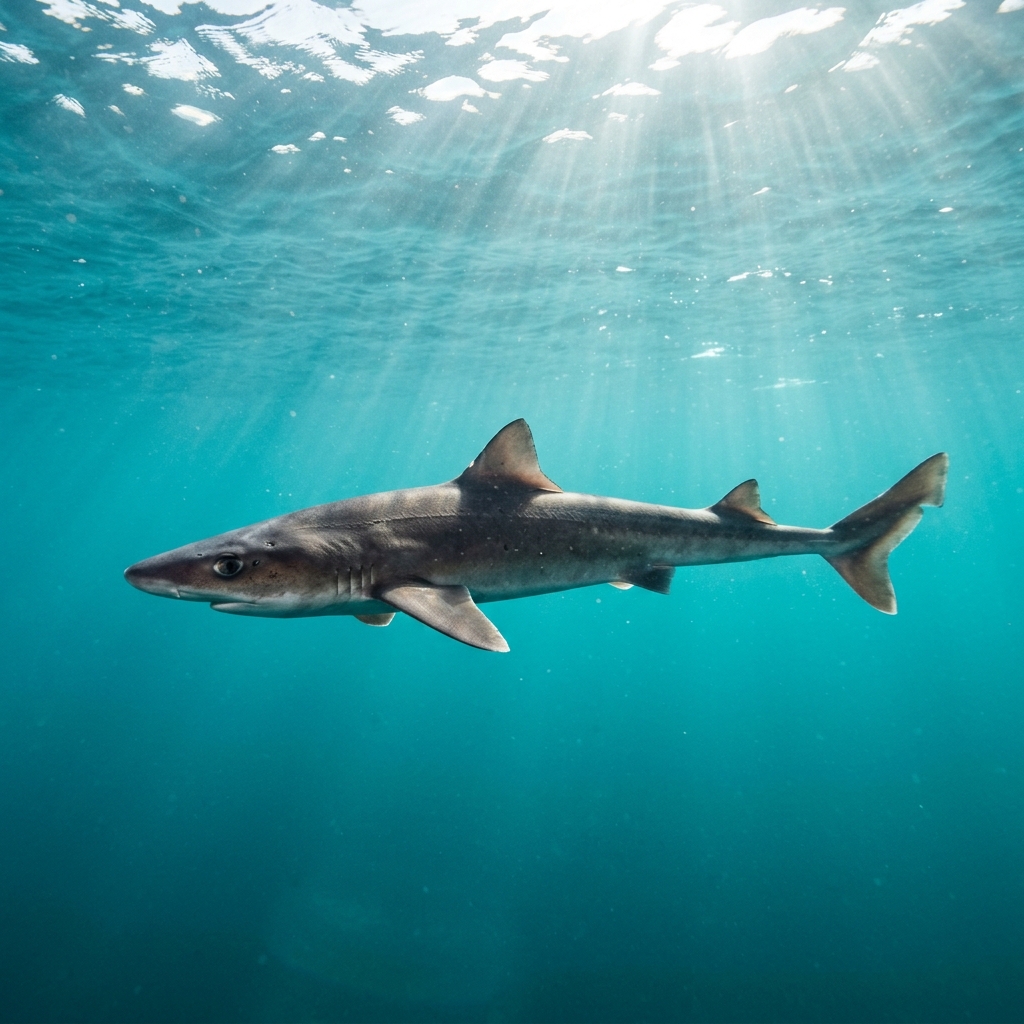
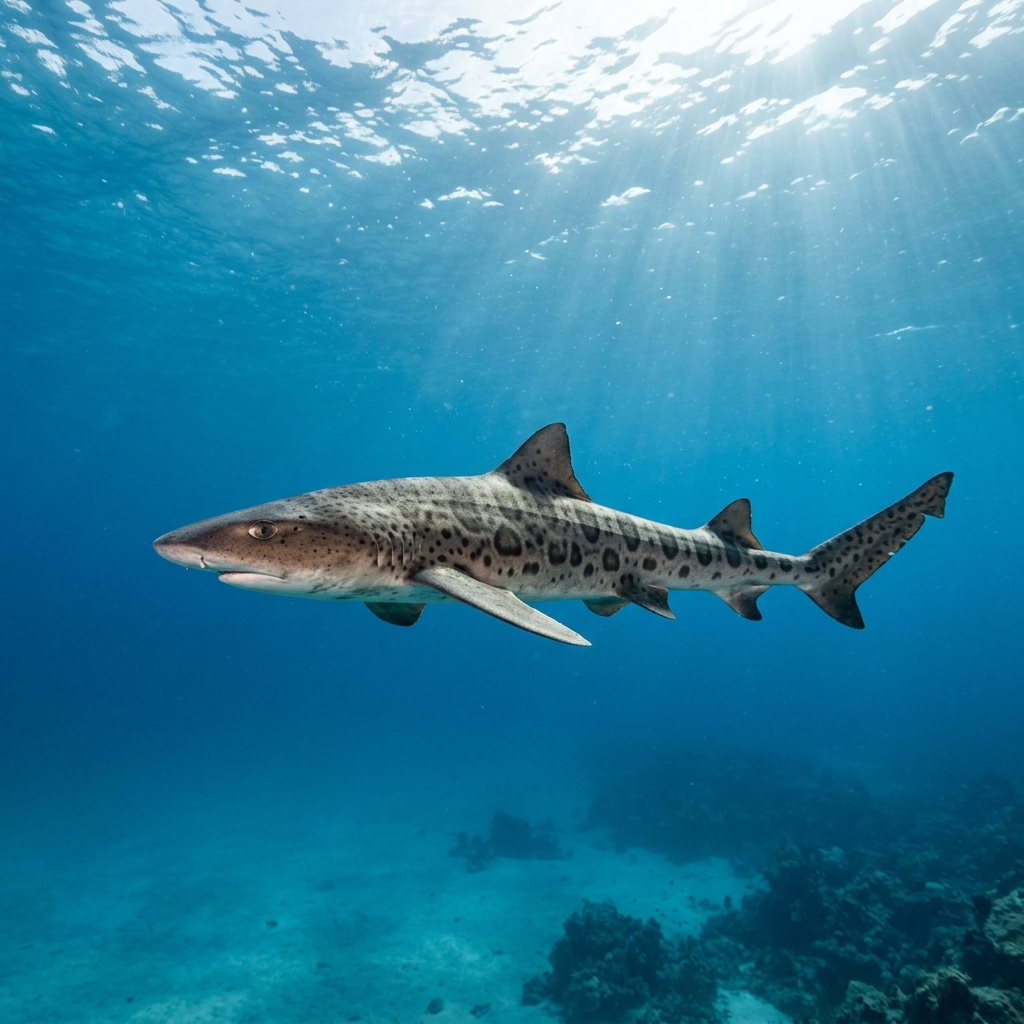
Bold dark saddles (crossbands) draped over a grey-brown body, breaking into spots along the flanks, make this shark one of the easier Pacific species to name on sight. It has a slender, elongated build and typically cruises low over sandy or rocky bottom. Adults can reach around 1.5 metres, though many encounters are with smaller individuals. No other inshore Pacific shark combines that saddle-and-spot pattern so distinctly.
Leopard sharks are typically seen cruising slowly over sandy flats, rocky reefs, and kelp-edge habitats, often in small loose groups. They are calm around divers and rarely show any agitation, making them one of the more relaxed shark encounters available on the US Pacific Coast. Encounters in shallower bays are common, particularly during warmer months when aggregations form in the warmer shallows.
Females are known to seek out shallow, sun-warmed bays to raise their body temperature and speed up pup development, which is why large groups of pregnant females are reliably found in specific California bays each summer.
In the Northern Hemisphere, sightings concentrate from April through December, peaking across the warmer months when water temperatures climb toward the upper end of their 13-24 °C comfort range. Winter months see a notable drop-off in encounters along the US Pacific Coast.
The overwhelming majority of sightings come from the US Pacific Coast, which accounts for the bulk of logged sites worldwide. Baja California, Mexico is the next-strongest region, followed by scattered records from Tasmania and South Australia. Outside the Americas, the data includes a handful of sites in Montenegro and a single New Zealand location, likely representing range-model predictions rather than reliable encounter spots.
Mapping where Leopard Shark is logged…
The US Pacific Coast is by far the most reliable place, with strong representation across California in particular. Baja California in Mexico is the next best option, and there are additional sighting records from South Australia and Tasmania, though these are less frequent.
Along the US Pacific Coast, April through December is the window most divers log encounters, with summer and early autumn being especially productive. Cooler winter months see a significant drop in sightings.
No. Leopard sharks are not considered dangerous to divers or snorkellers. They are slow-moving, generally indifferent to human presence, and there are no documented unprovoked attacks on divers. They are among the more approachable shark species you'll encounter in temperate waters.
Look for the distinctive dark saddle-shaped crossbands over a grey-brown body, which break into spots along the sides. The slender body shape and low, unhurried swimming style over sandy or rocky bottom are also characteristic. No other common inshore Pacific shark shares this saddle-and-spot combination.
Adults commonly reach around 1.2 to 1.5 metres in length, with some individuals recorded slightly larger. Most underwater encounters are with animals in the 1 to 1.4 metre range, making them a medium-sized, non-intimidating shark.
Pregnant females aggregate in warm, shallow bays to use solar heating of the water to raise their body temperature. This speeds up the development of their pups, a behaviour known as behavioural thermoregulation. It's one of the main reasons reliable summer aggregations form in certain California locations each year.
Site and sighting data is aggregated from diver logs, iNaturalist and GBIF. For taxonomy and conservation status:
Tiger Shark
1,616 sites