Euselenops luniceps
Spot this mottled nocturnal slug on sandy night dives in Luzon or Mafia Island, water around 20-30C, year-round if you know where to look.
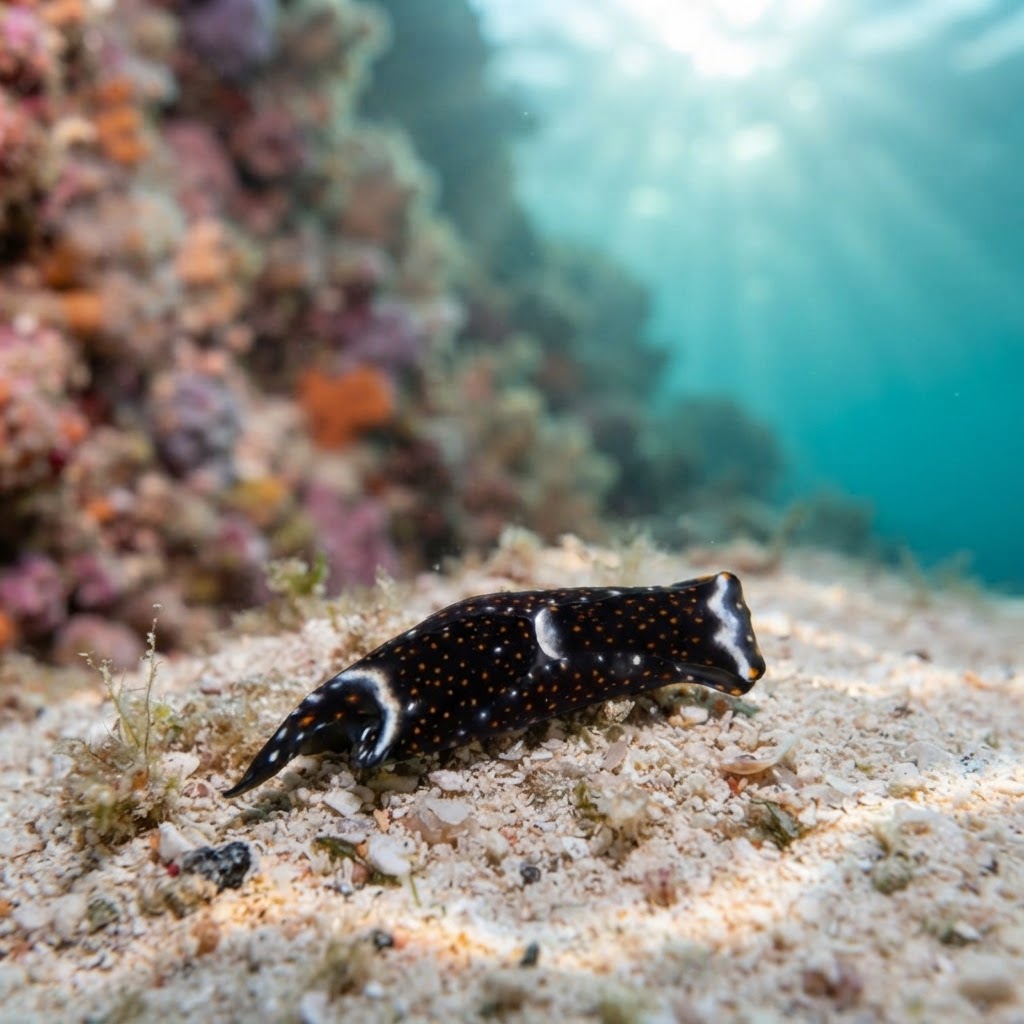
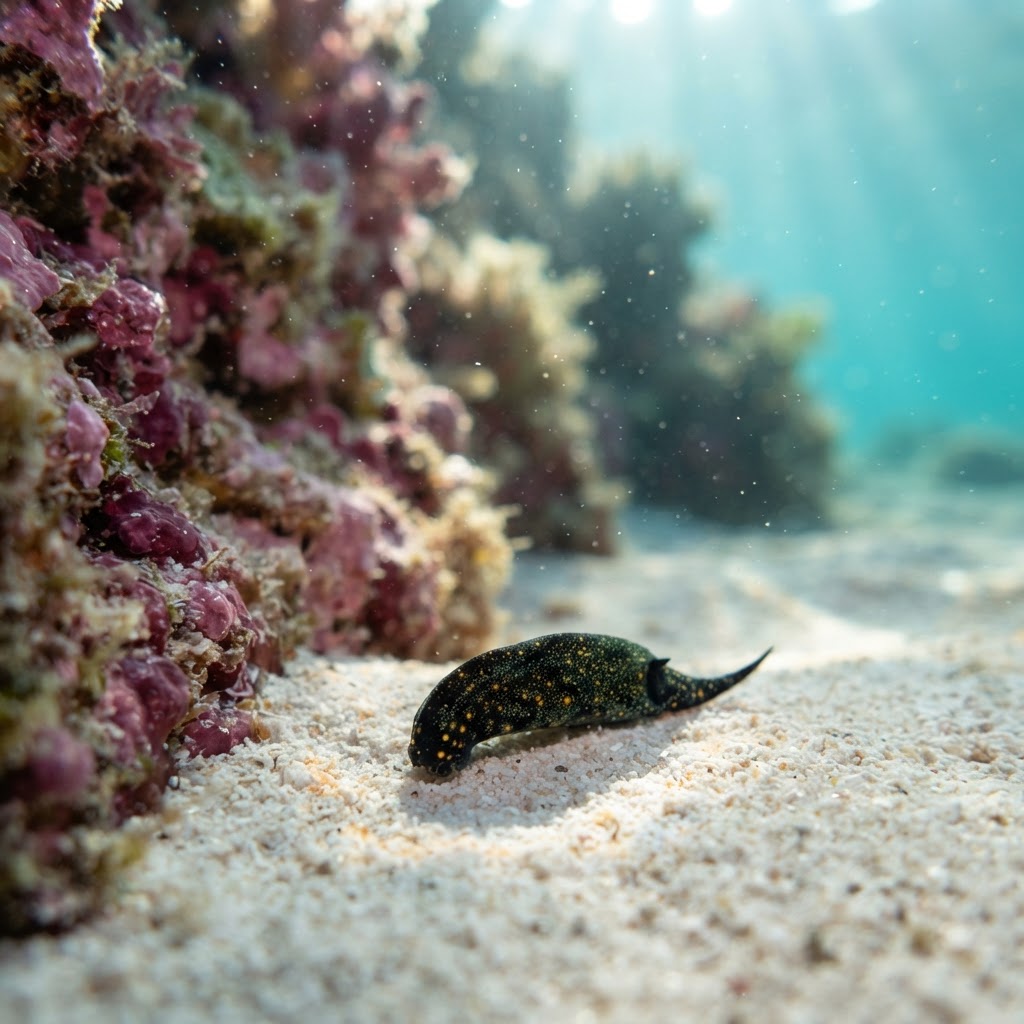
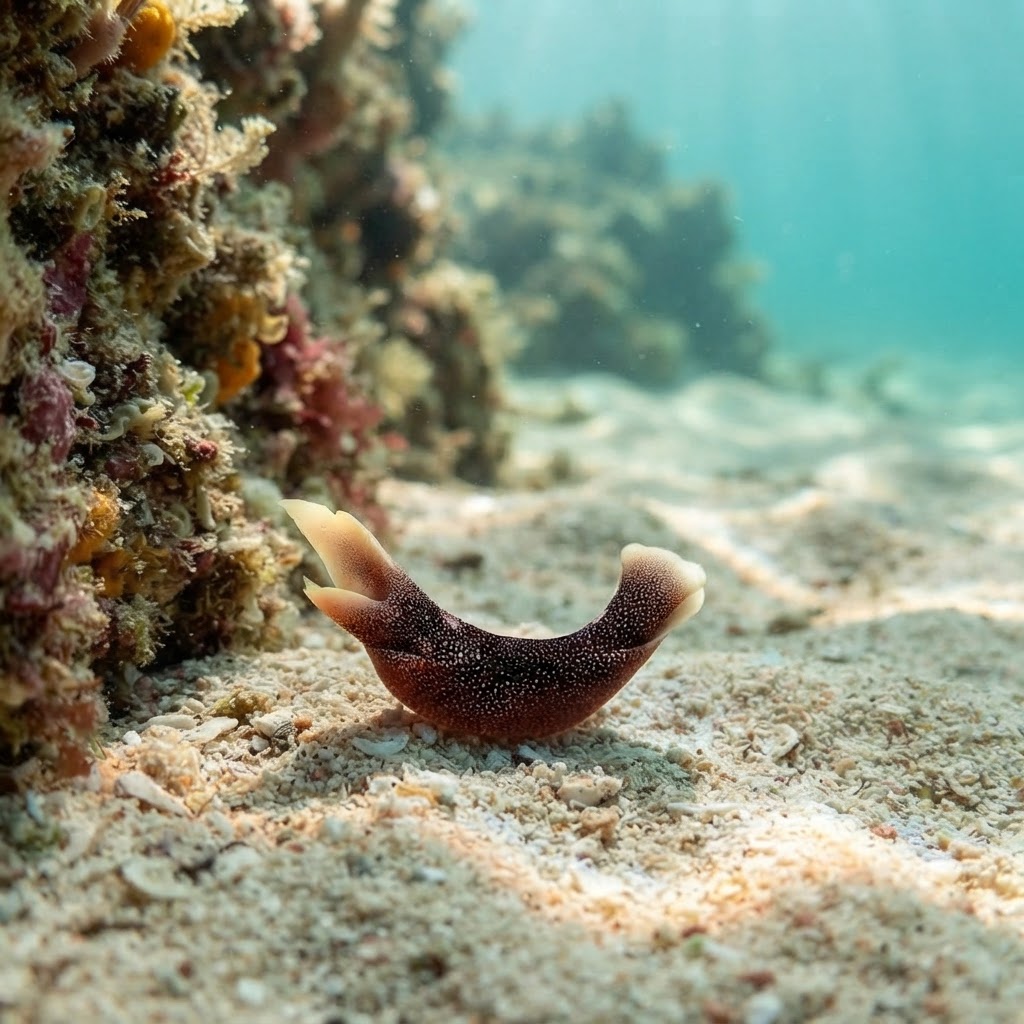
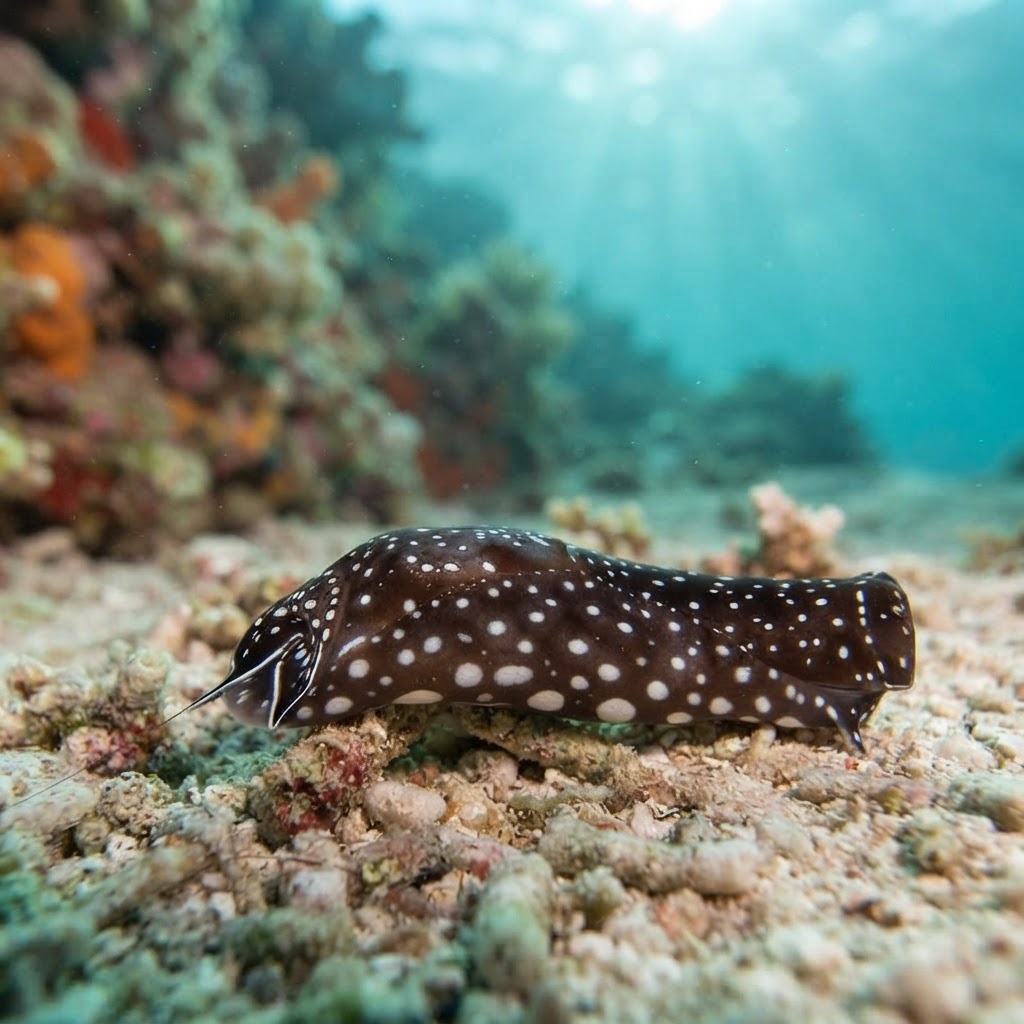
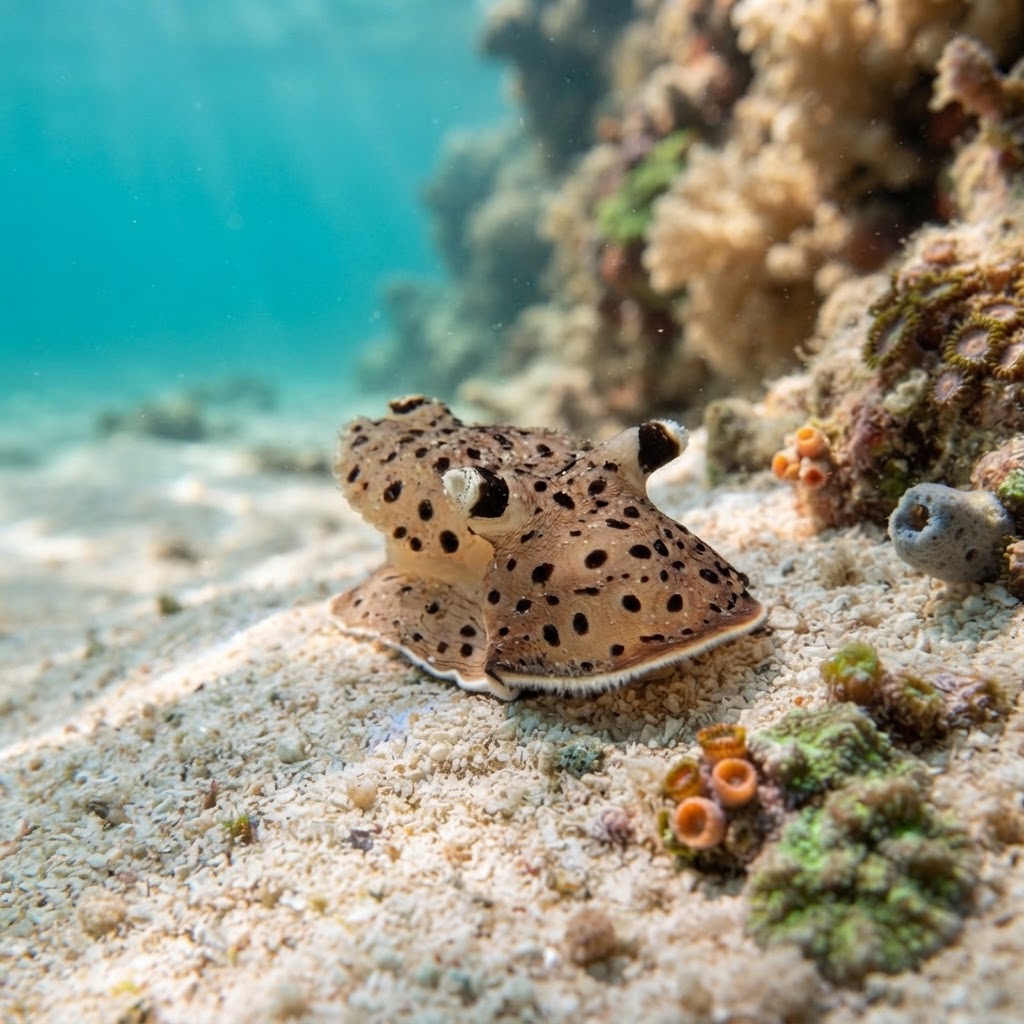
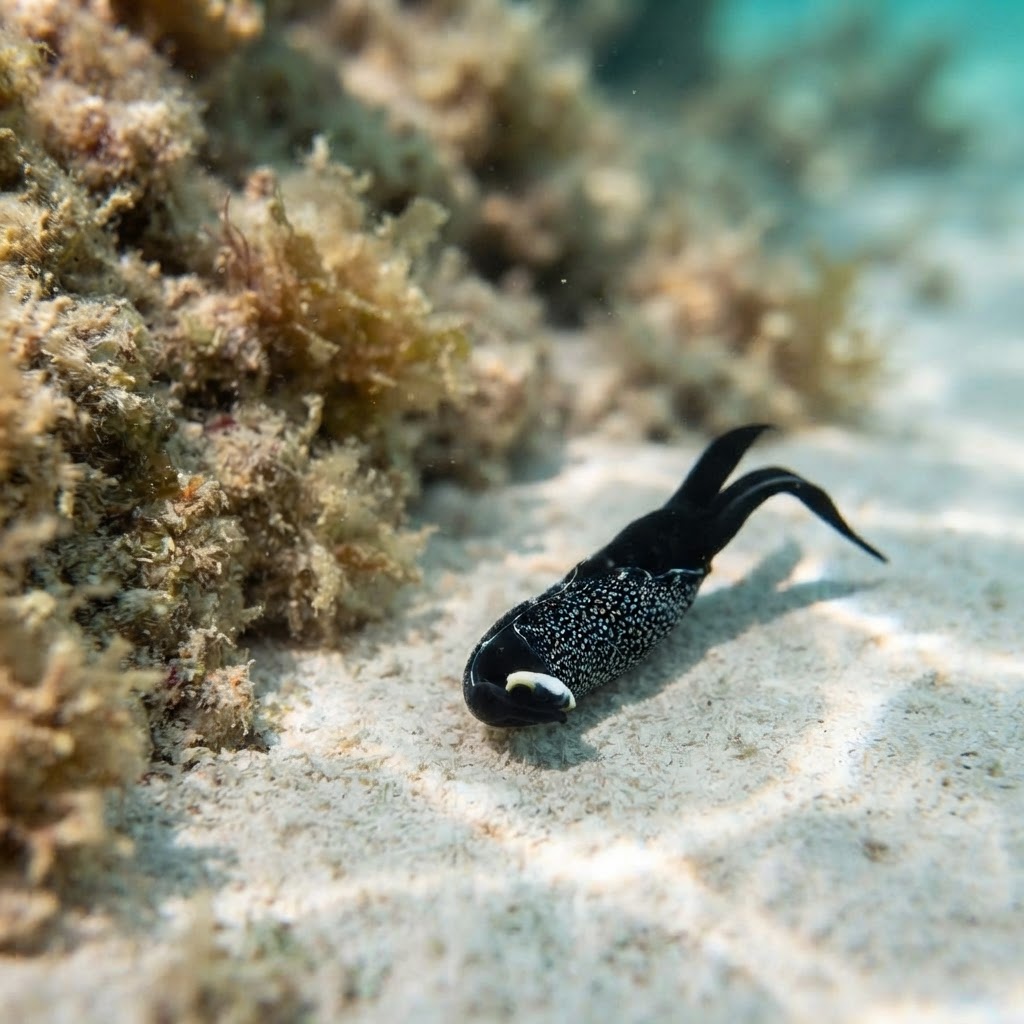
A flat, oval-bodied slug about 5 cm long with a mottled brown, cream and grey pattern that scatters light like leopard spots against sand. It has no visible shell and a soft, almost translucent fringe around the body edge, with two small rolled tentacles (rhinophores) at the front used to sense the substrate. Its low, splayed profile and sand-matching camouflage are the giveaway, since it sits flush against the seabed rather than perched on coral.
Typically found crawling slowly across open sand or silty rubble at night, when its mottled camouflage is easiest to miss unless you're scanning close to the bottom with a torch. It shows little reaction to divers, relying on blending into the substrate rather than fleeing, so a steady light and patience are usually all it takes to get a good look. Most sightings come from muck and sand patches rather than hard coral structure.
Its flattened, shell-less body and sand-camouflage pattern let it move across open, exposed seabed where a shelled snail would be an easy target, trading protection for stealth instead.
No clear seasonal pattern shows up in the data, and it's been observed across a wide range from 19.6 to 29.7C, so it appears to be a year-round find wherever sandy muck-diving conditions exist.
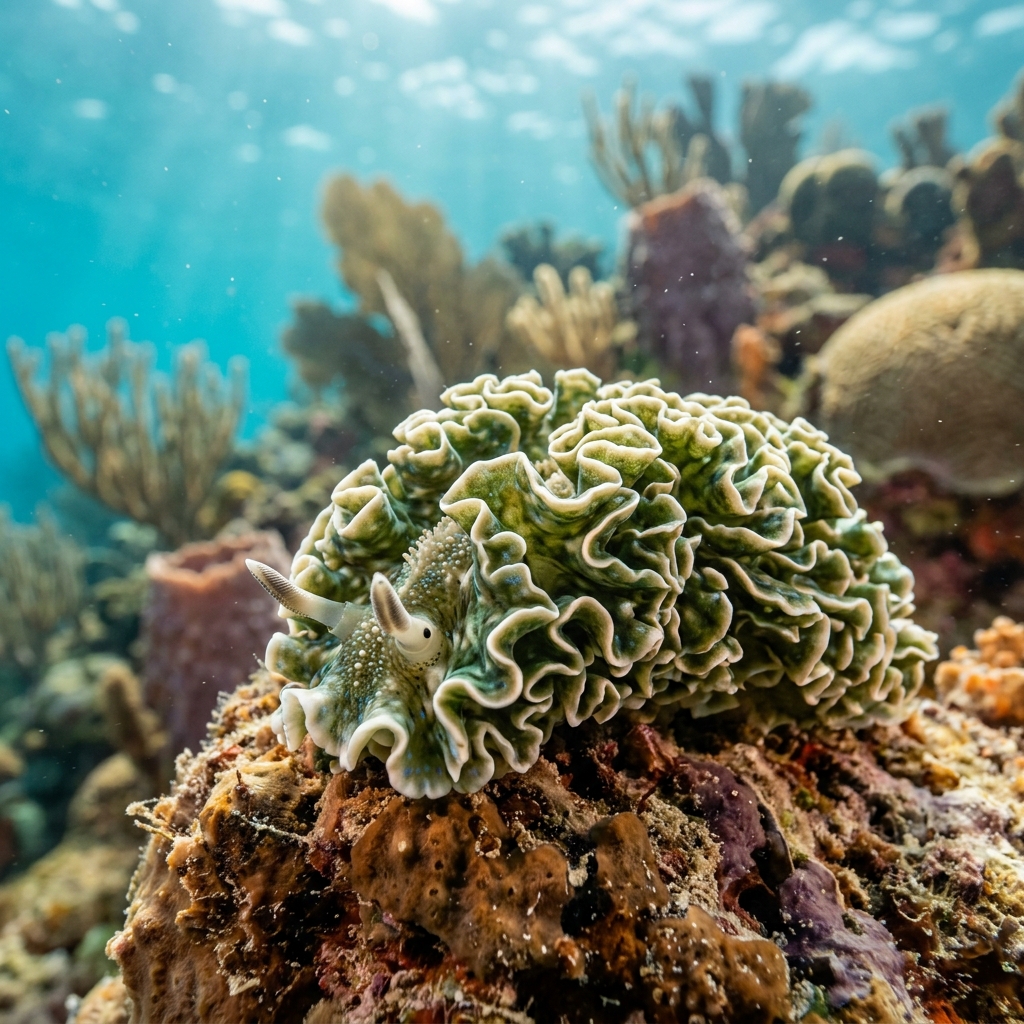
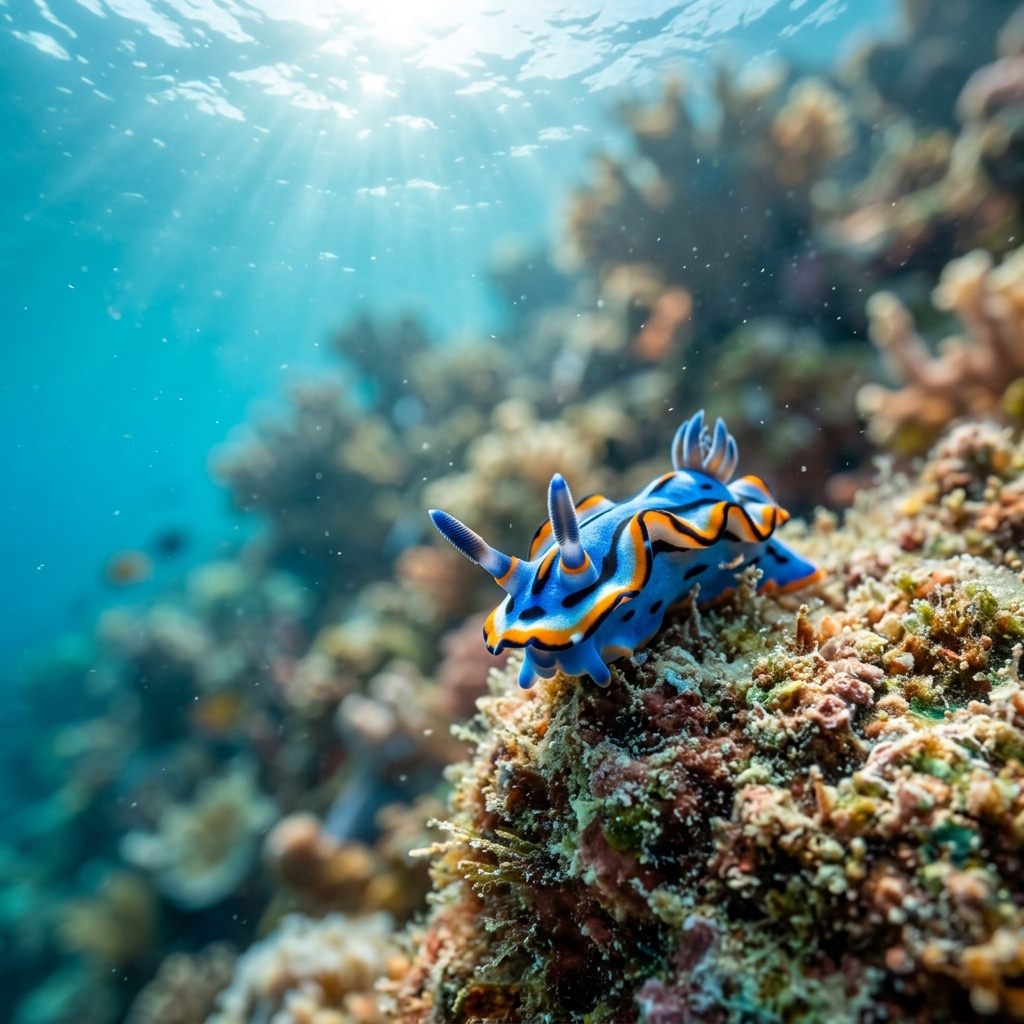
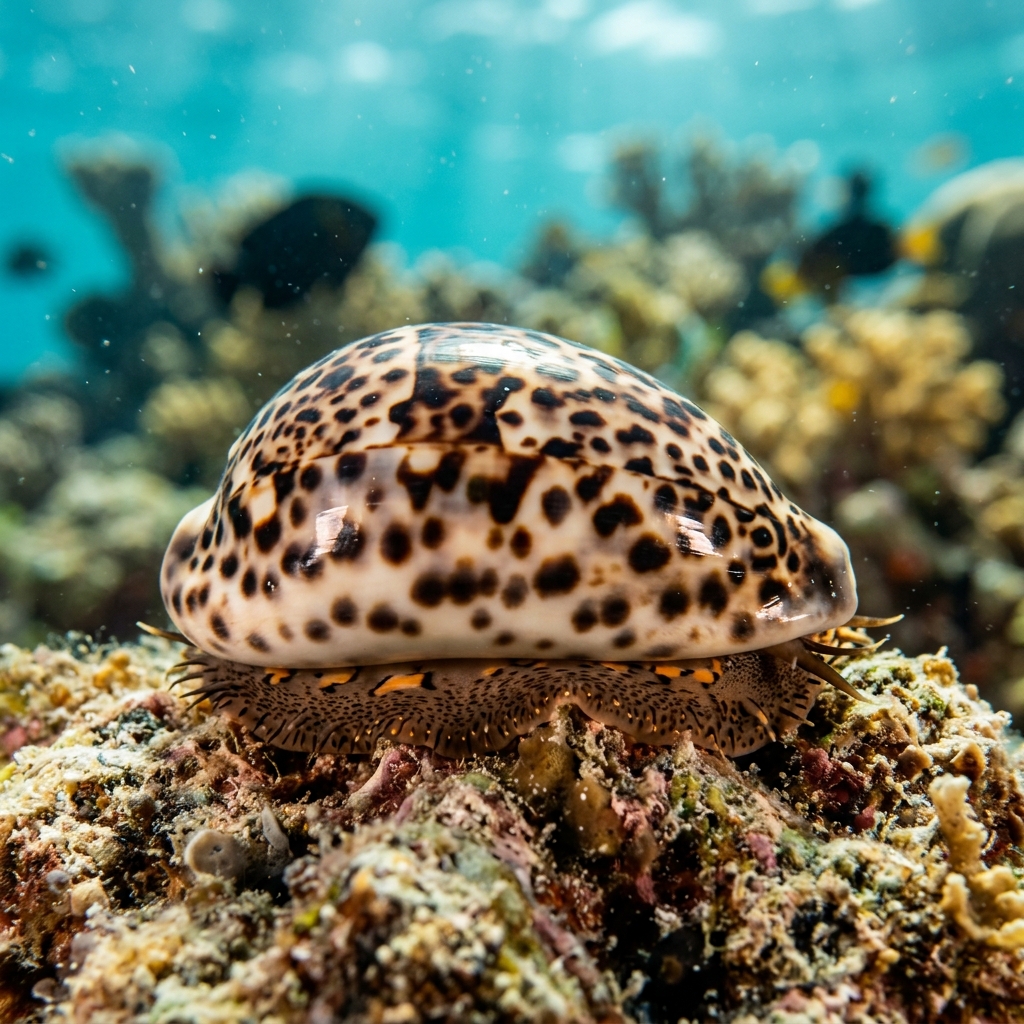
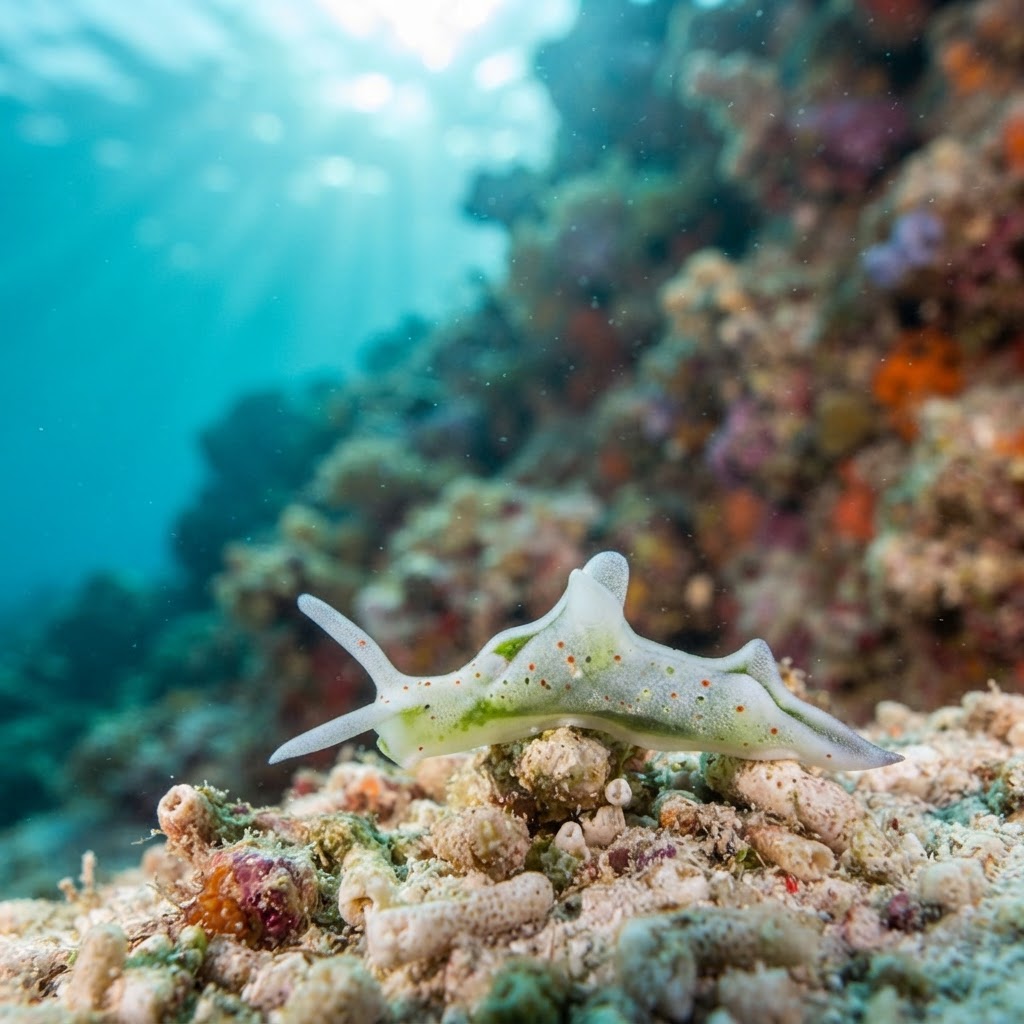
Reef neighbours a diver could mistake it for. Use the identification notes above to tell them apart.
Most reliably logged on sandy sites in Luzon, Philippines, which accounts for the bulk of sightings, with additional records from Mafia Island in Tanzania and Sulawesi in Indonesia. Across all these regions it turns up as an uncommon to rare find, so it rewards divers doing slow, sand-focused night dives rather than reef cruising.
Mapping where Leopard Pleurobranch is logged…
Luzon in the Philippines has the strongest track record for sightings, with additional records from Mafia Island in Tanzania and Sulawesi in Indonesia. Look for sandy or muck-diving sites rather than coral reef.
There's no detected season in the sighting data, and it has been recorded across a broad temperature range, so it seems to be present year-round on suitable sandy sites.
Look for a flat, shell-less slug around 5 cm long with a mottled brown and cream pattern that mimics sand texture. It lies low against the seabed rather than climbing over coral, and is easiest to spot at night with a torch.
They reach around 5 cm in length, making them a small find that's easy to overlook without a careful sand-scanning search.
No, they pose no danger to divers. They are slow-moving, non-aggressive slugs best observed by keeping a respectful distance and steady light.
Site and sighting data is aggregated from diver logs, iNaturalist and GBIF. For taxonomy and conservation status:
Mariaglaja inornata
Elysia Timida
573 sites