Myripristis violacea
Reddish, big-eyed reef fish hiding in caves at 64 Maldives sites and Raja Ampat, year-round in warm water.
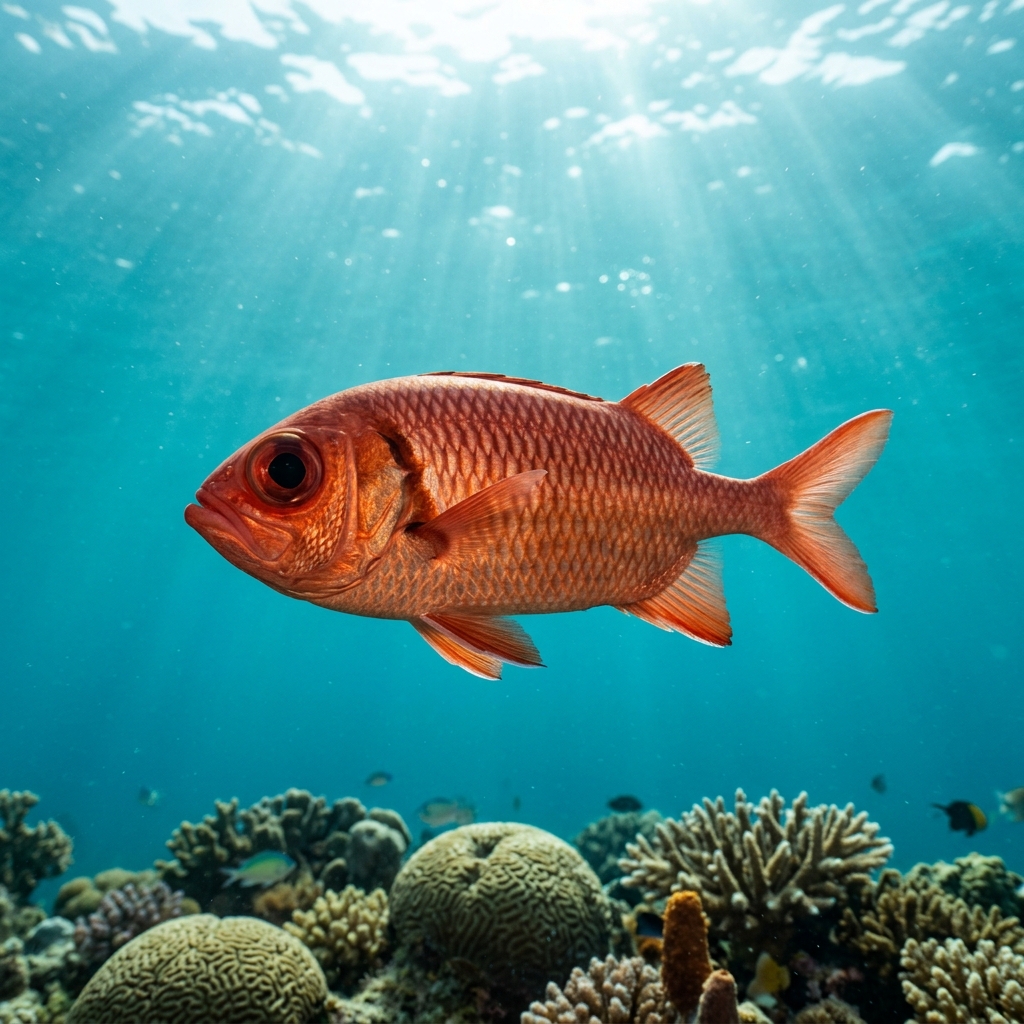
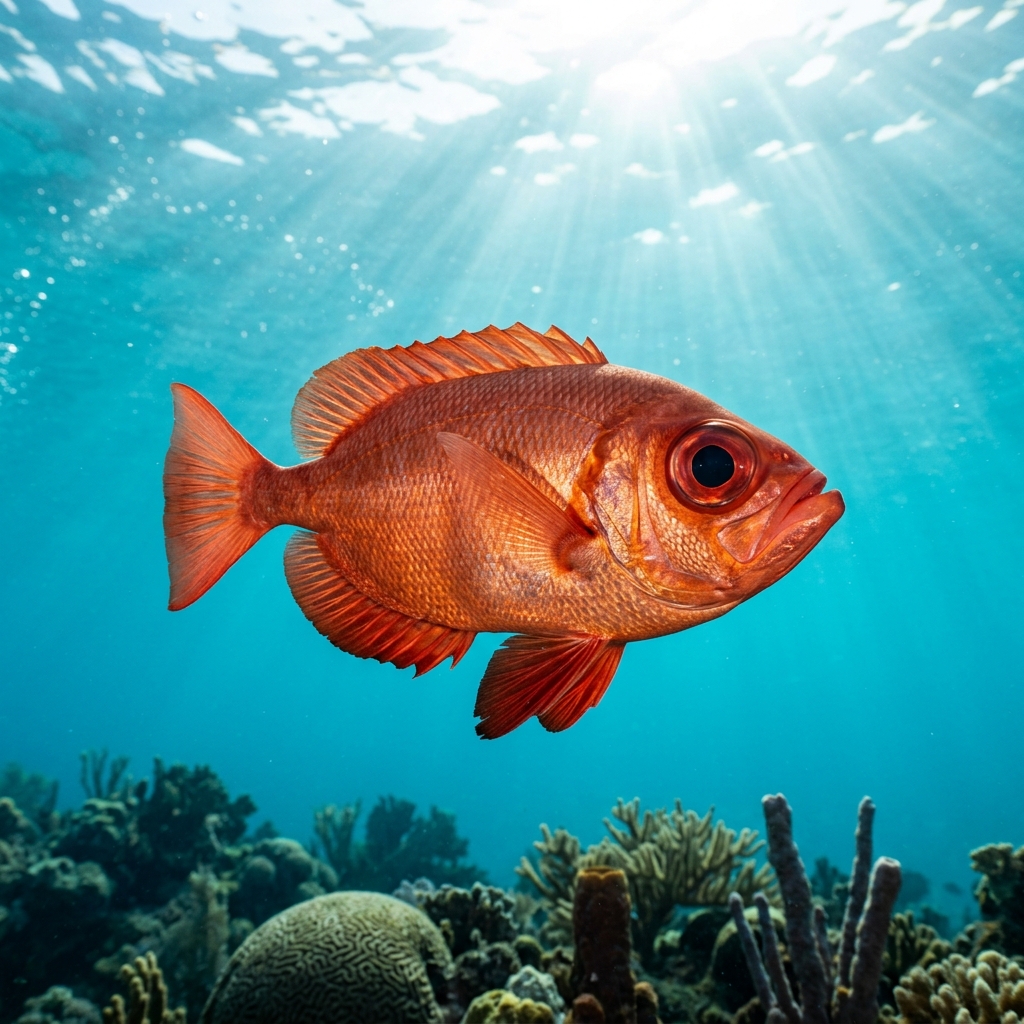
Reddish-orange body with a faint pale lattice pattern across the scales, growing to around 24 cm. Look for the oversized dark eyes and the pale trailing edges on the dorsal and anal fins, a giveaway against the deep red-orange base colour. It sits nose-out from ledges and small caves rather than swimming openly over the reef, which is often the first clue you have found one.
Usually seen tucked under overhangs, in small caves, or hovering near reef crevices during the day, often in loose groups with other soldierfish or squirrelfish. It is more active after dark, when it moves out to hunt, but daytime divers typically just find it holding station in shaded pockets of the reef. It does not scatter dramatically when approached, just eases back a little further into cover.
Those big eyes are a nocturnal hunter's toolkit: soldierfish feed mainly at night, using low-light vision to pick off small invertebrates and zooplankton that daytime reef fish miss.
No clear seasonal pattern shows up in the sightings, and with a comfortable range of roughly 25 to 29 C it is present on these reefs year-round. Plan around the dive site's general conditions rather than chasing a season for this one.
Most reliably logged in the Maldives, especially around the Central Atolls, and in the Seychelles' Inner Islands, with strong numbers also turning up in French Polynesia's Society Islands and Indonesia's Raja Ampat. Smaller but consistent populations show up in Fiji, Malaysia's Sabah region, the Philippines' Palawan, and Madagascar's Nosy Be.
Mapping where Lattice Soldierfish is logged…
The Maldives and the Seychelles turn up the most sightings, particularly the Central Atolls and Inner Islands. French Polynesia's Society Islands and Raja Ampat in Indonesia are also strong spots, with smaller populations in Fiji, Sabah, Palawan and Nosy Be.
There is no strong seasonal pattern in the sightings, and it tolerates a warm 25 to 29 C range, so it is a year-round find on tropical reefs rather than a seasonal special.
Look for a reddish-orange body around 24 cm long, oversized dark eyes, and pale edges along the dorsal and anal fins. It usually stays close to caves or ledges rather than swimming out in the open.
They typically reach about 24 cm, a modest reef fish size that fits neatly into cave and crevice hiding spots.
Their oversized eyes are built for low-light hunting. They feed mainly at night on small invertebrates and zooplankton, and spend daylight hours resting in shaded reef cover.
No. They are not considered dangerous to divers and simply retreat further into reef cover if approached too closely.
Site and sighting data is aggregated from diver logs, iNaturalist and GBIF. For taxonomy and conservation status:
Soldierfish
3,621 sites