Epibulus brevis
An uncommon 13cm wrasse most often logged around Bali in warm 28-29C water, best found by watching for its extending jaw.
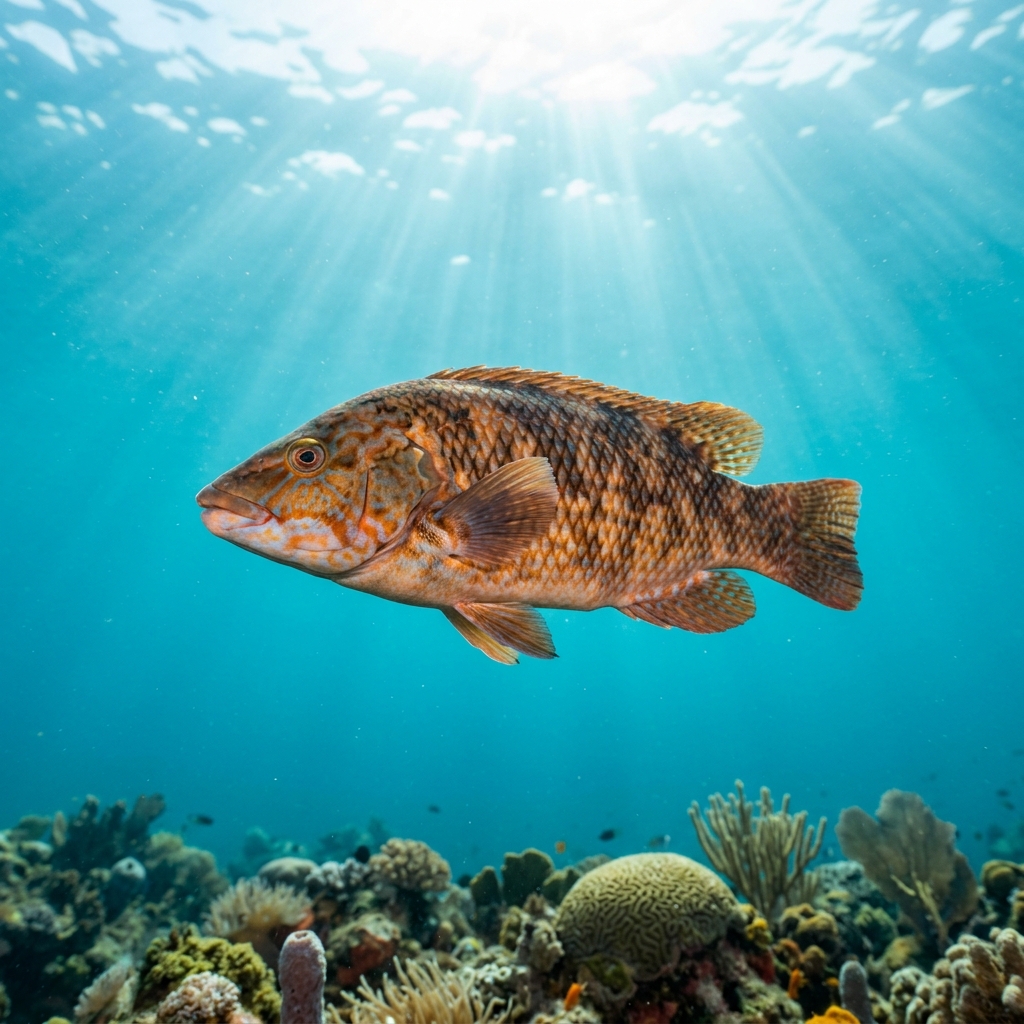
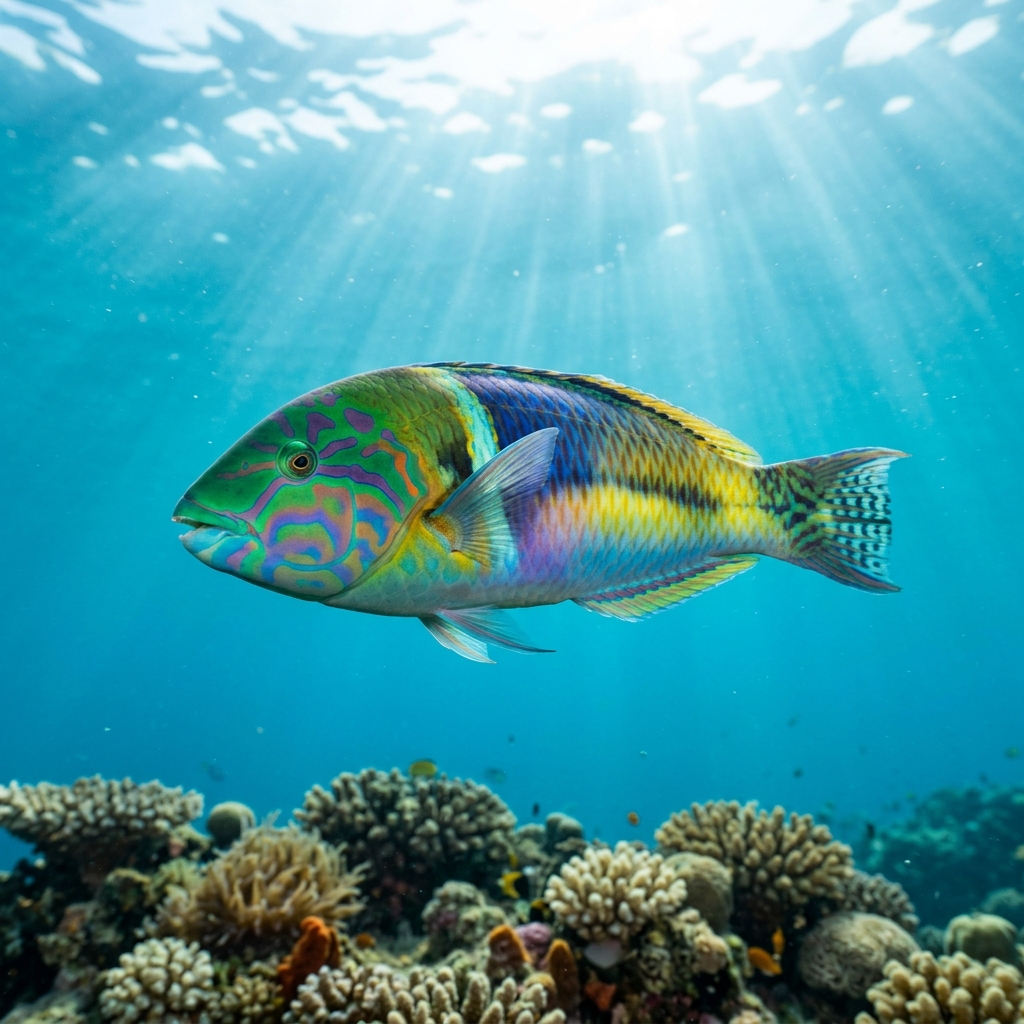
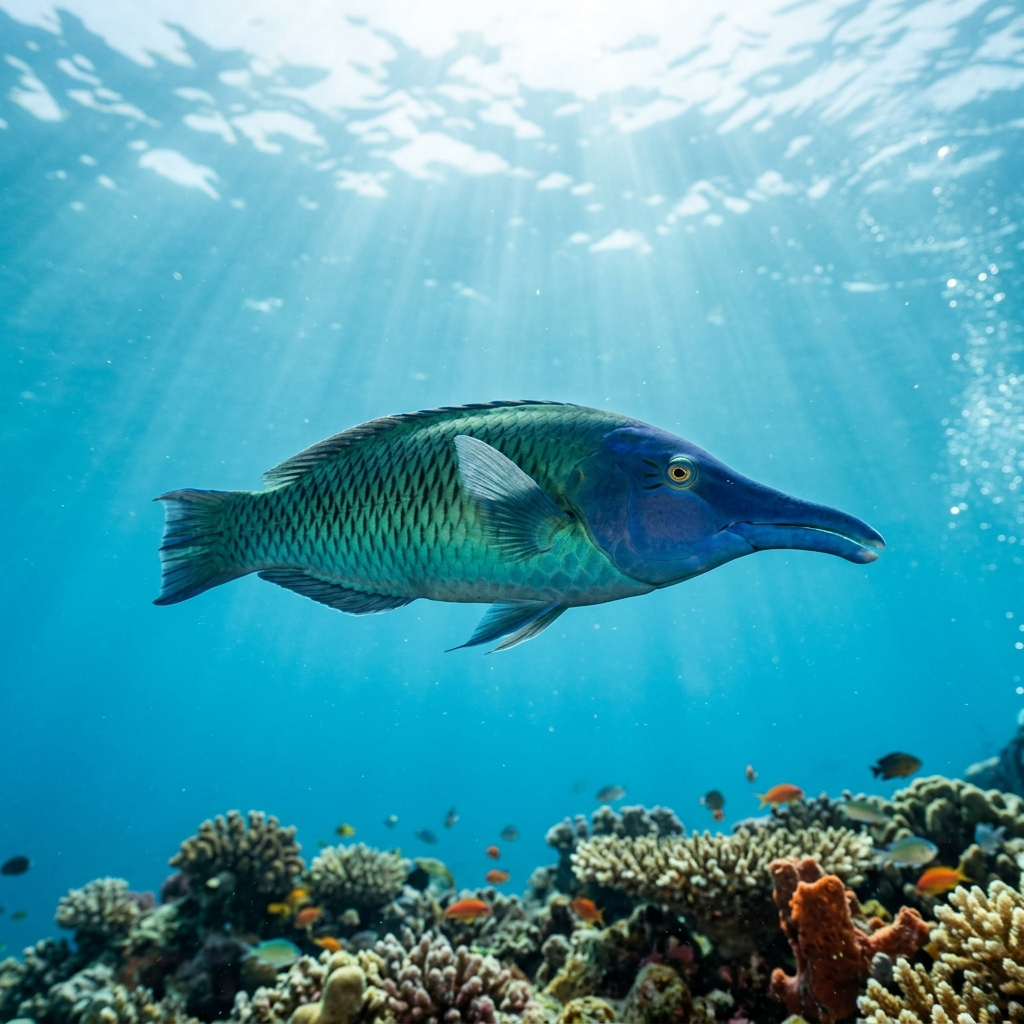
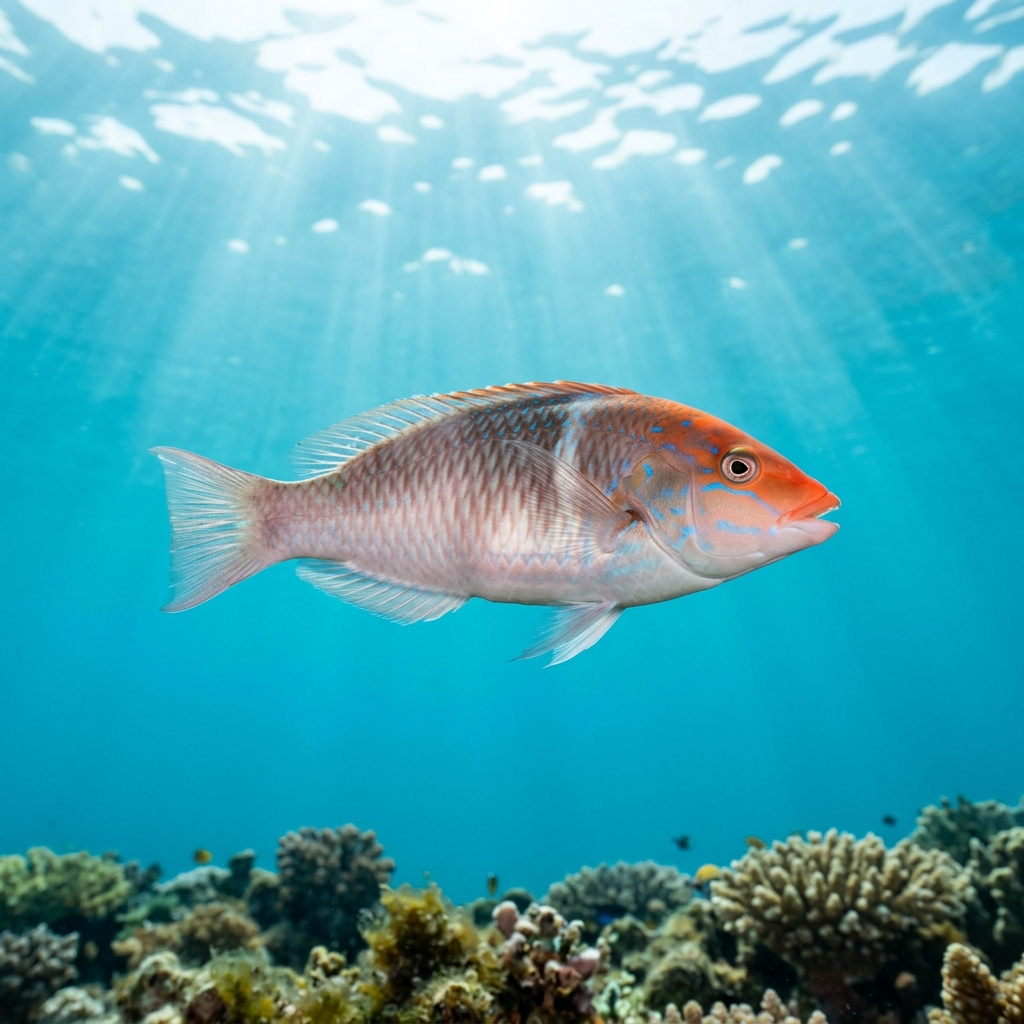
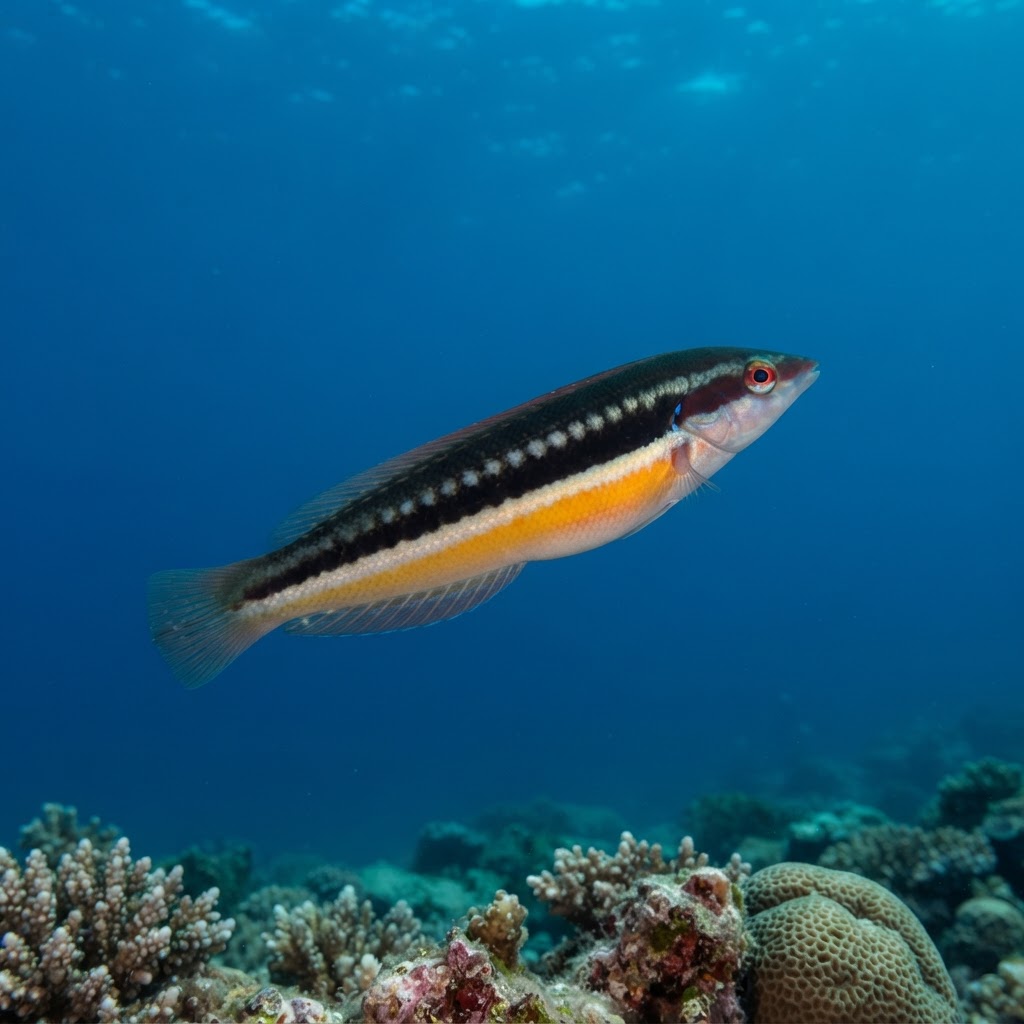
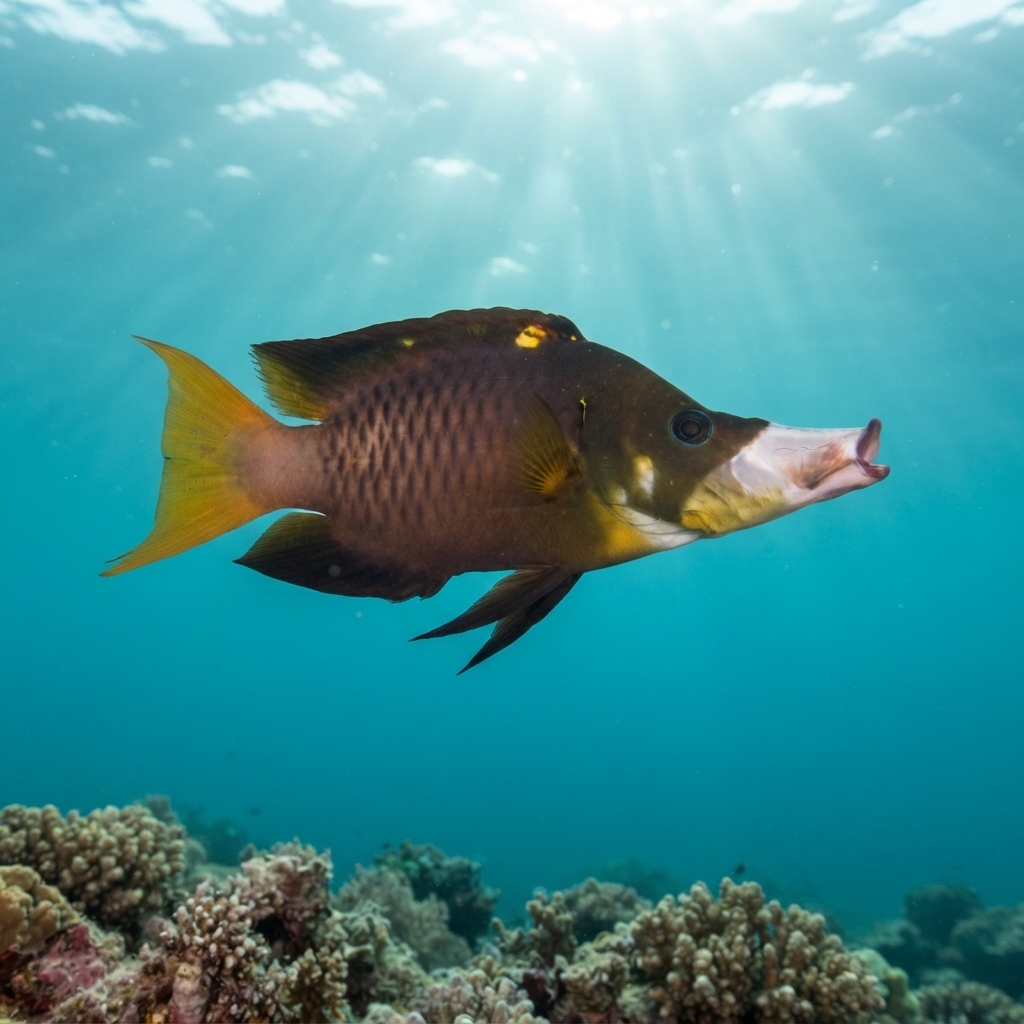
A small, slender wrasse topping out around 13 cm, with a long pointed snout that gives it a distinctly elongated face compared to most reef wrasses. The real giveaway is the jaw itself, which can shoot forward into a tube to snatch prey from crevices, a trait shared across the slingjaw family. Colouring tends toward muted browns and pale mottling that blends into rubble and coral rock, so it is easy to overlook unless you are looking for that jaw movement.
Divers tend to spot this wrasse working low over rubble and reef crevices, using that projectile jaw to pick out small crustaceans and other prey tucked into holes. It is not a fish that schools or grandstands, more a solitary forager that keeps a low profile against the substrate. Given its small size and camouflage, a slow, close look at the reef floor is usually what turns up a sighting rather than open-water scanning.
The extendable jaw is not a party trick, it lets the fish strike prey hidden in gaps and crevices that a fixed-jaw wrasse could never reach, a hunting method shared with its slingjaw relatives.
There is not enough seasonal data to point to a particular month, and the water temperature range recorded, 28.6 to 29.4C, is stable warm-reef conditions year-round in these regions, so there is no obvious reason to expect a tighter season. Treat it as a species you might encounter on any dive rather than one tied to a calendar window.
Most records come from Indonesia, with Bali standing out as the strongest area, plus additional sightings from Sulawesi and Raja Ampat. A single logged site in Tufi, Papua New Guinea, shows it turns up further east too, though sightings anywhere remain uncommon rather than reliable.
Mapping where Latent Slingjaw Wrasse is logged…
Sightings cluster in Indonesia, especially Bali, with additional records from Sulawesi and Raja Ampat, plus at least one site in Tufi, Papua New Guinea. It stays uncommon wherever it is logged, so treat any dive there as a chance sighting rather than a guarantee.
There is no detected season in the data, and the warm 28.6 to 29.4C water it is found in holds steady year-round across these Indo-Pacific reefs, so sightings are not tied to a particular month.
Look for a small wrasse around 13 cm with an elongated snout and muted, mottled colouring that blends with rubble and reef rock. The clearest confirmation is watching the jaw extend forward like a tube when it strikes at prey in a crevice.
They stay small for a wrasse, typically around 13 cm, which along with their camouflage colouring makes them easy to miss on a reef.
Its jaw can project forward like a small tube to grab prey hidden in reef crevices, a hunting trick shared by the wider slingjaw wrasse group and unusual among reef fish.
Site and sighting data is aggregated from diver logs, iNaturalist and GBIF. For taxonomy and conservation status:
Bird Wrasses
3,632 sites