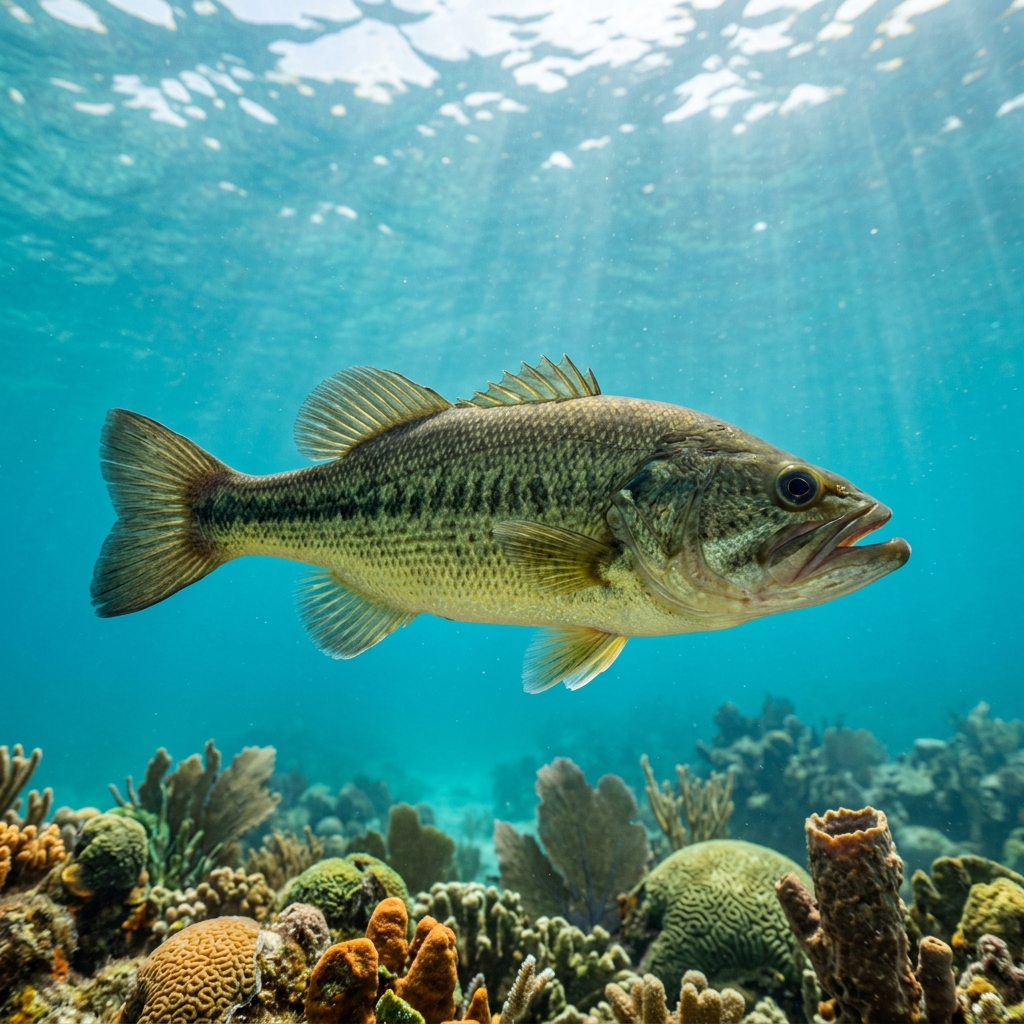
Micropterus salmoides
Spot large mouth bass across Florida and the Southeast US, April to August, in warm shallows down to 6 m. Here's where divers find them most reliably.
A stout, olive-to-greenish body with a bold dark horizontal stripe running from gill to tail is the key mark to look for at depth. The jaw is the giveaway: it extends well past the eye, giving the face an unmistakably wide, bucket-mouthed profile. At around 67 cm, it is a sizeable fish for the shallow freshwater and brackish environments where it hunts, and it often holds almost motionless just above the bottom or among vegetation.
Large mouth bass are ambush predators, typically spotted hovering low in the water column near submerged structure, weed beds, or woody debris. They tend to hold their position and watch a passing diver with curiosity rather than fleeing, making slow, steady approaches the best tactic. Activity picks up in warmer months when they move into very shallow water to feed and spawn.
During spawning season in spring, males build and guard nests in shallow silt or gravel beds, fanning the eggs and aggressively driving off intruders, including curious divers who stray too close.
In the Northern Hemisphere, sightings concentrate between April and August, coinciding with warmer water temperatures and peak activity in the shallows.
Most sightings are logged across Florida and the Southeast United States, which accounts for the bulk of confirmed dive sites, with additional records spread across the Central and Mountain West. Mexico's Yucatán Peninsula and Pacific Coast also feature on the map, along with a single site in Colombia's Gulf of Urabá.
Mapping where Large Mouth Bass is logged…
They are most reliably encountered across Florida and the Southeast United States, with further sites in the Central and Mountain West. Mexico's Yucatán Peninsula and Pacific Coast also have recorded sightings, making North America the clear focus for any diver hoping to find them.
April through August is the peak window in the Northern Hemisphere. Warmer water temperatures bring the fish into the shallowest zones and trigger spawning activity, making them easier to spot and more likely to hold their ground near the bottom.
Look for an olive-green fish with a bold dark stripe running the full length of the body and a jaw that extends visibly past the eye. That oversized mouth is the single most reliable field mark. Adults can reach around 67 cm and tend to linger near structure rather than swimming in open water.
A typical adult reaches around 67 cm in length. They are solidly built fish, and in the shallow freshwater environments where divers encounter them, even a mid-sized individual is an impressive presence.
No. Large mouth bass pose no threat to divers. They are carnivores and will take fish, frogs, and invertebrates, but they show no aggression towards people and will generally hold position or slowly move away when approached.
Males take on full parental duty during the breeding season, fanning nests and defending eggs aggressively against any intruder. This protective behaviour can make them surprisingly bold when guarding a nest, and it is one of the more memorable encounters a freshwater diver can stumble upon in spring.
Site and sighting data is aggregated from diver logs, iNaturalist and GBIF. For taxonomy and conservation status:
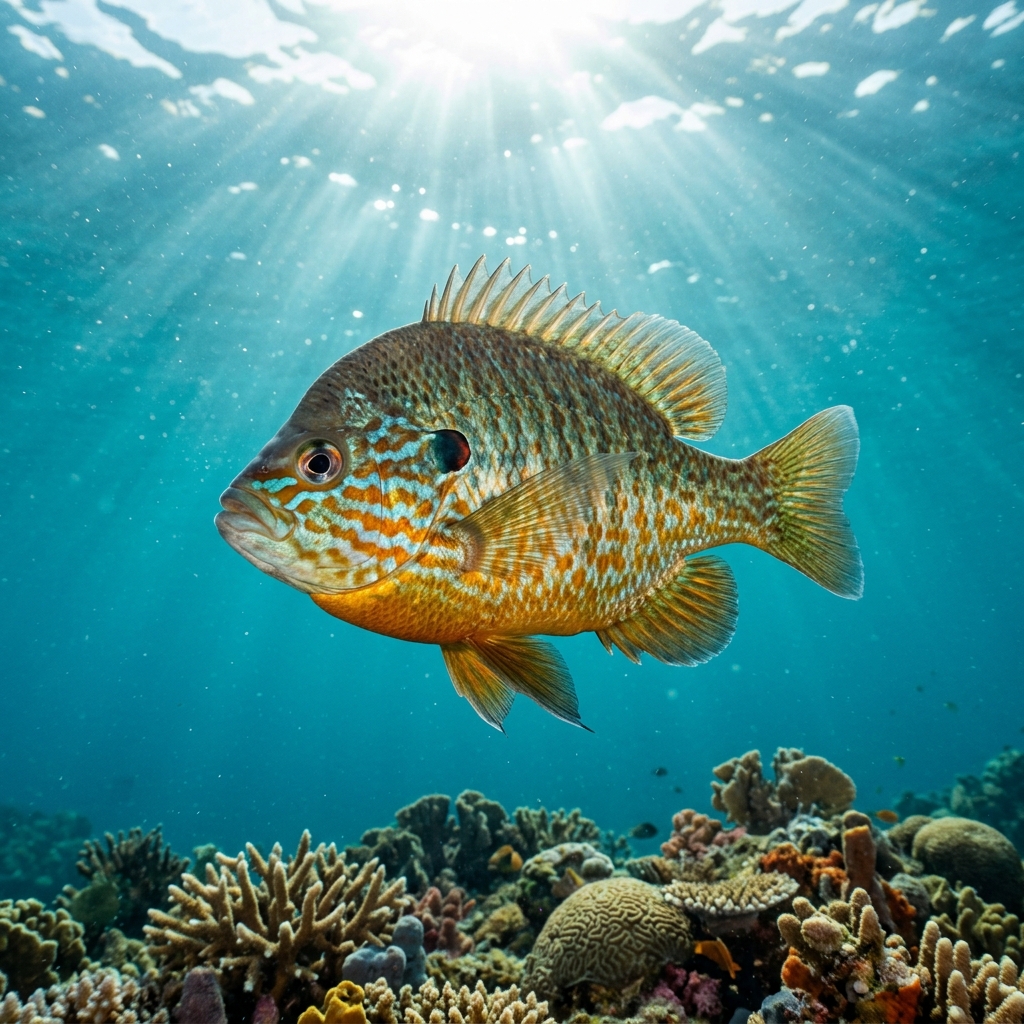
Sun Perch
2,182 sites