Serranus baldwini
Only 8cm long but easy to find once you know where to look: Florida reefs and Martinique's Saint-Pierre are top spots for this small bass.
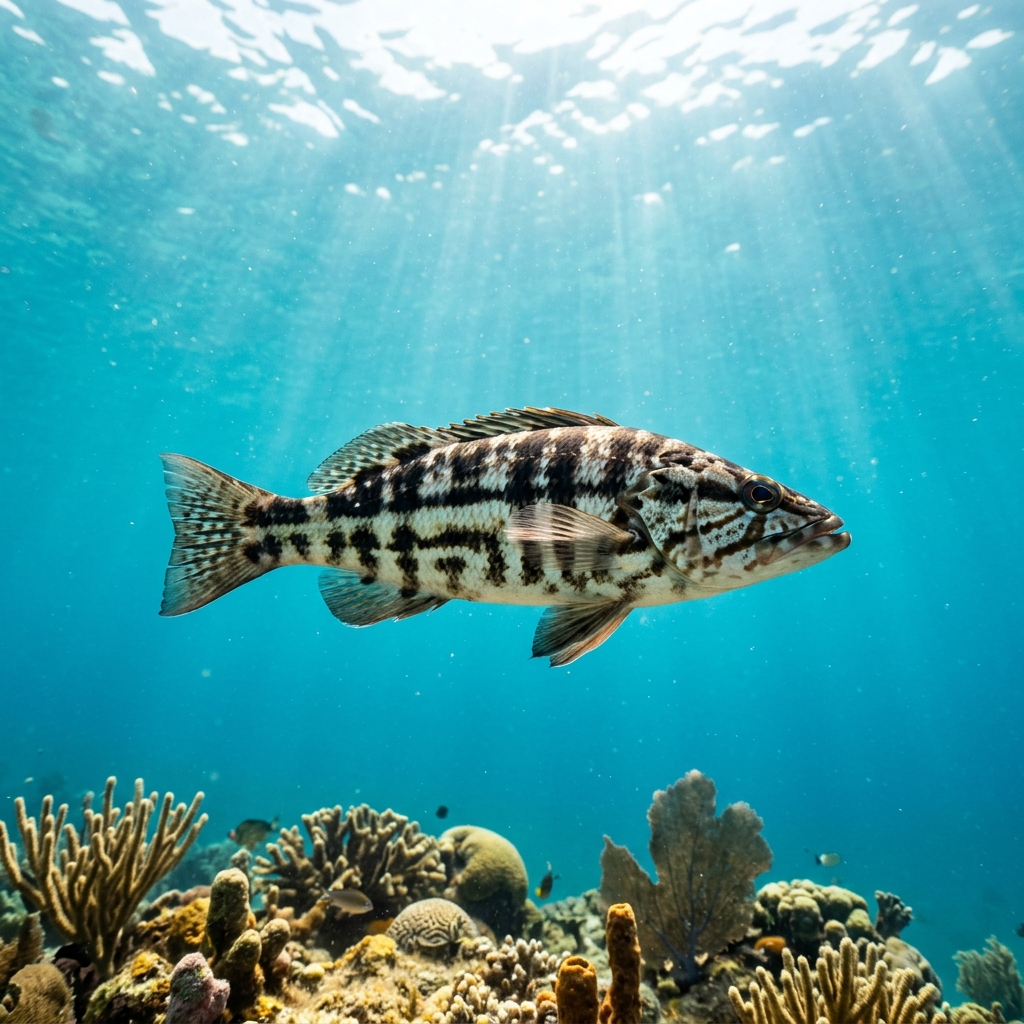
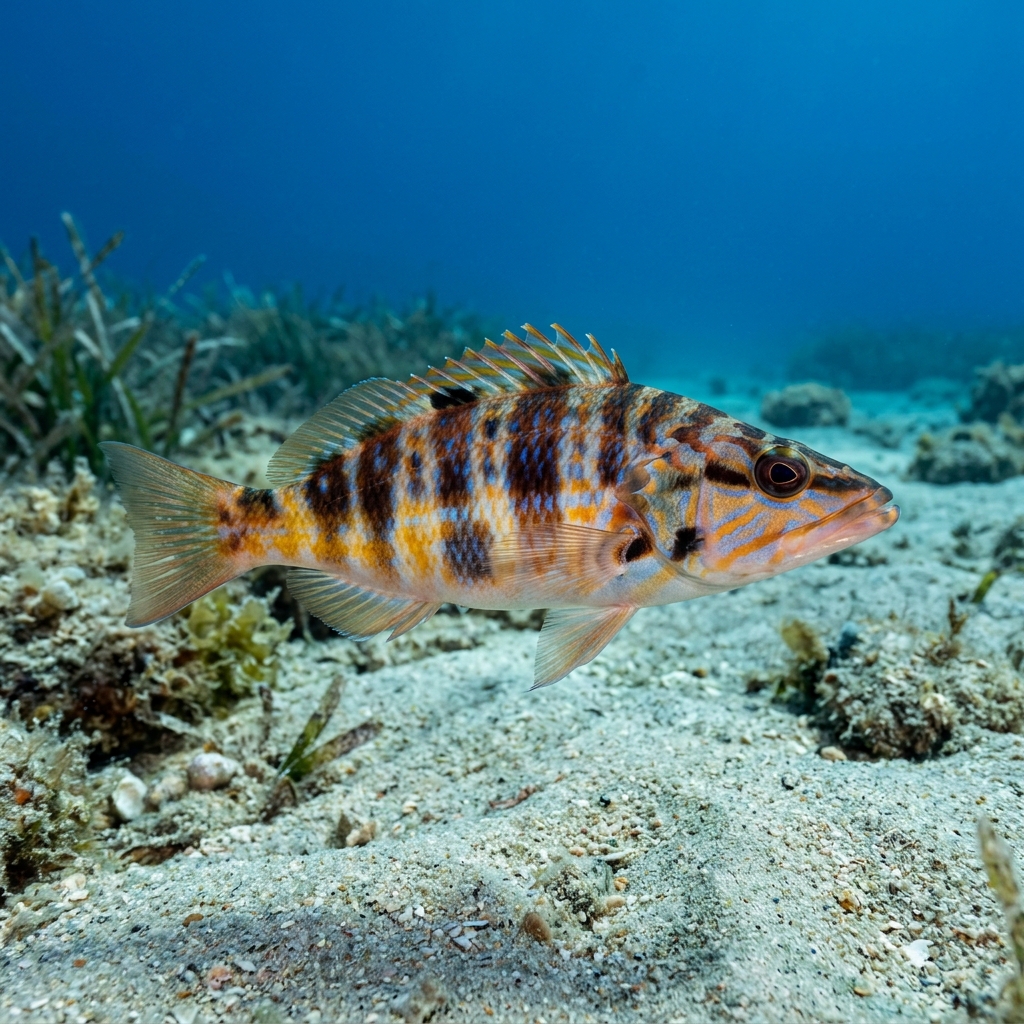
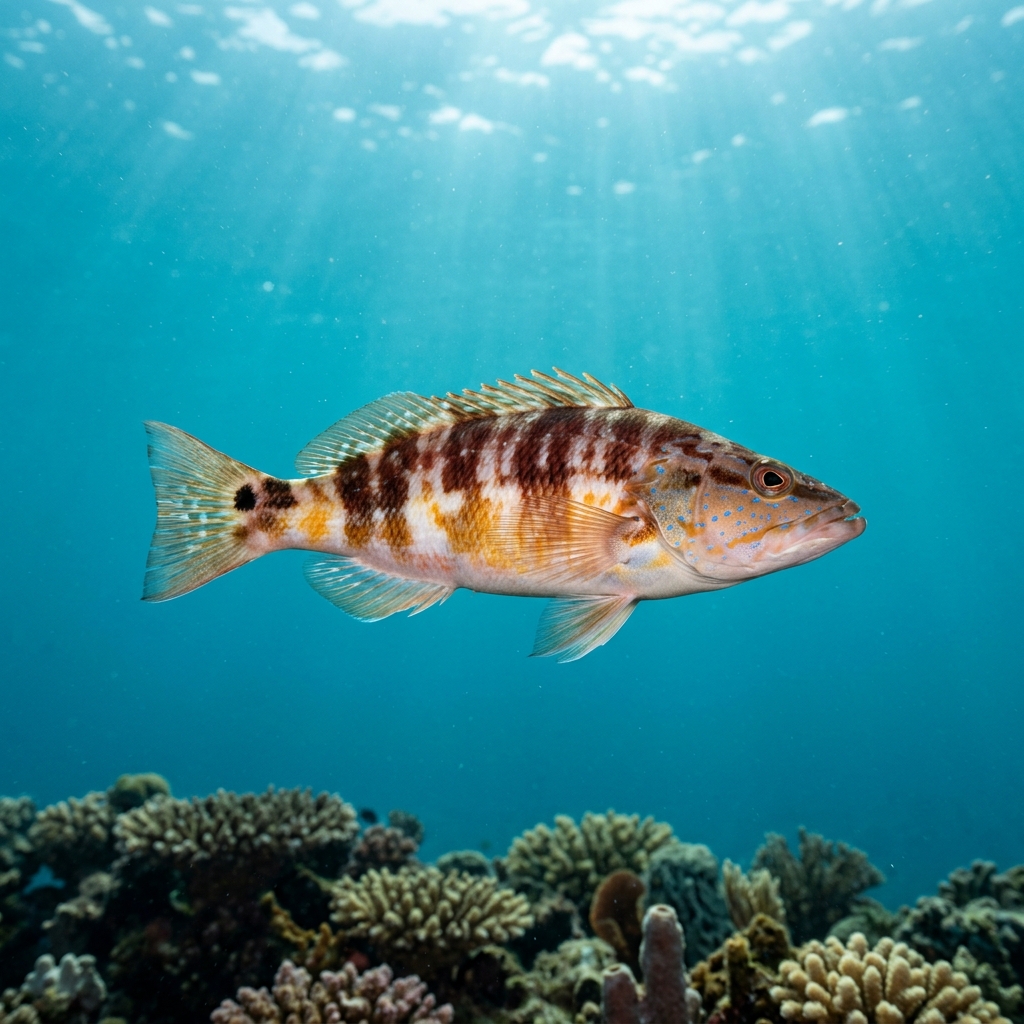
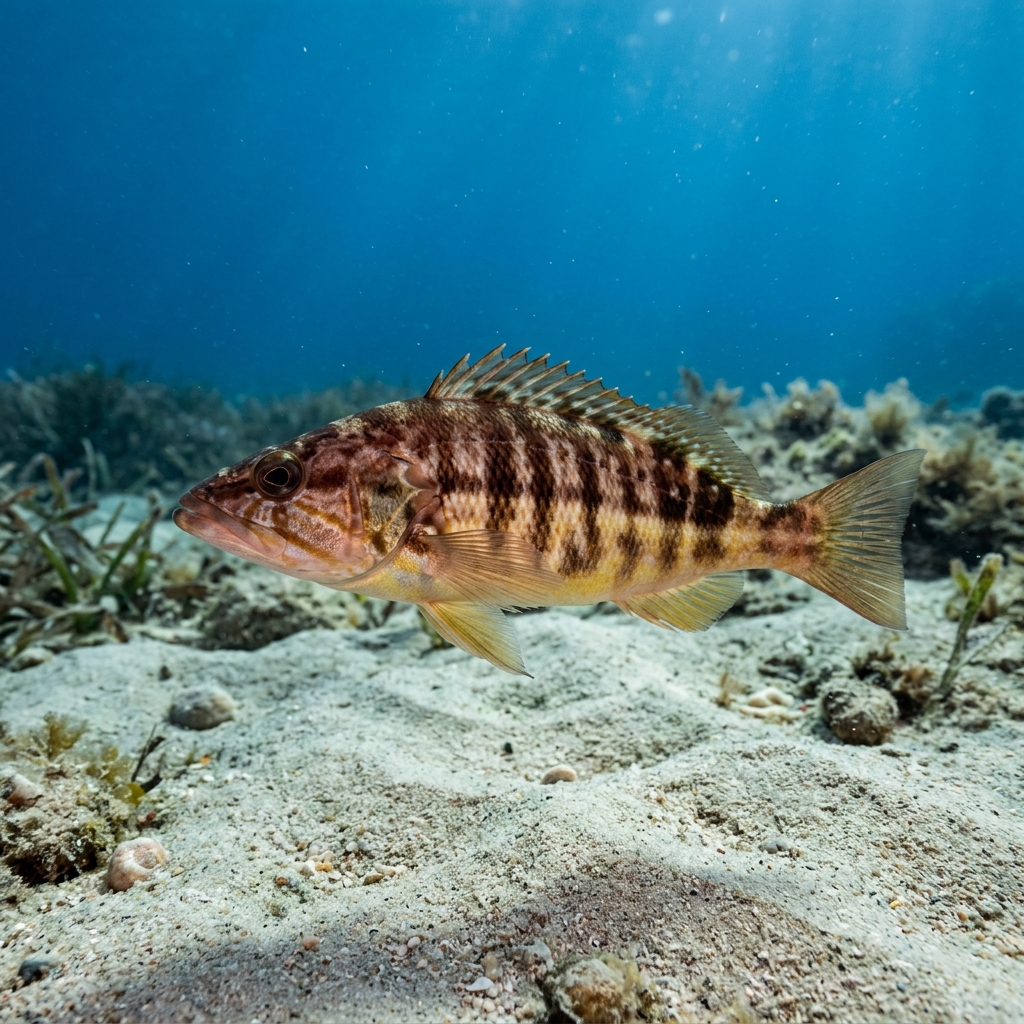
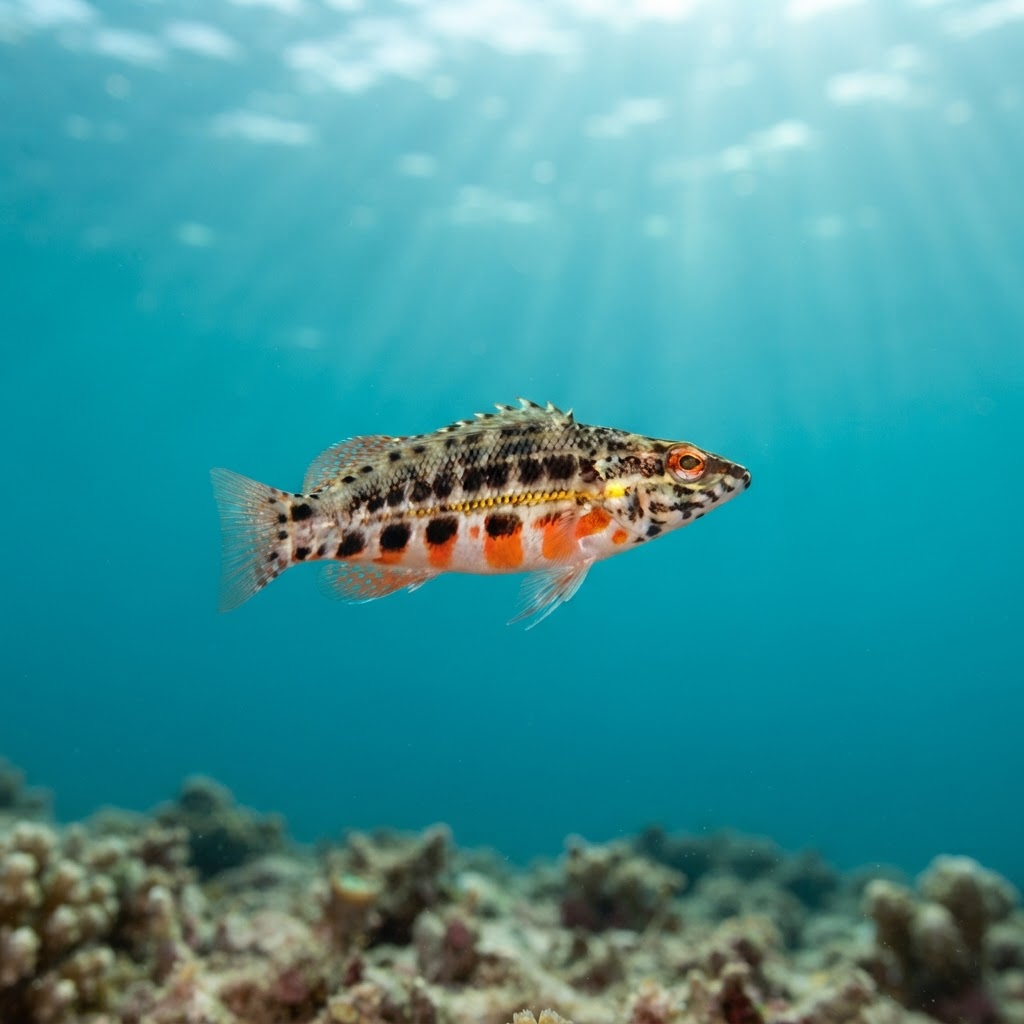
Barely bigger than a finger, with a stocky, cigar-shaped body in mottled tan, olive and reddish-brown that breaks up its outline against rubble and coral. Look for a pale underside and a row of faint dark blotches along the back, plus a habit of perching motionless on the substrate rather than swimming in open water. Its small size and perpetual hover-and-perch posture are the biggest tells; no bright colours or bold stripes to key on here.
Expect to find it sitting still on rubble, sand patches or low coral rather than cruising the reef, often tucked close enough to a crevice to dart in if you get too close. It's a low-key, easy-to-overlook fish that most divers only notice once they slow down and start scanning the bottom rather than the water column. Logged consistently but never in large numbers, it's the kind of species you tick off one at a time, not in a school.
Like other members of the Serranus group, it's believed to be a simultaneous hermaphrodite, meaning individuals can carry both male and female reproductive tissue at once, an unusual reef bass trait most divers never suspect from the outside.
No clear seasonal pattern shows up in the sightings data, and its comfort range of roughly 22 to 28C spans most of the tropical and subtropical dive season, so it's a year-round find rather than a seasonal target.
Most reliably logged on Florida's reefs, which account for the bulk of sightings, and in Saint-Pierre, Martinique, where it turns up consistently on rubble and patch reef. Smaller numbers have been recorded in Mexico's Yucatán Peninsula, Rio de Janeiro in Brazil, and around Soufriere, Saint Lucia.
Mapping where Lantern Bass is logged…
Florida is the most consistent place to find one, with Saint-Pierre in Martinique also a strong bet. Smaller numbers show up in Mexico's Yucatán Peninsula, Rio de Janeiro in Brazil, and Soufriere in Saint Lucia.
There's no strong seasonal pattern in sightings, and its preferred water temperature of roughly 22 to 28C covers most of the year on the reefs where it lives, so it's a fair year-round find.
Look for a small, stocky fish around 8cm long in mottled tan and reddish-brown, perched still on rubble or low reef rather than swimming freely. There's no bold pattern to spot; its size and motionless perching posture are the main giveaways.
They stay small, topping out at around 8cm, so they're easy to miss unless you're looking closely at rubble and reef edges.
No, they pose no threat to divers. They're too small and too shy to be anything but a fun spotting challenge.
They're thought to be simultaneous hermaphrodites, carrying both male and female reproductive tissue at the same time, a trait shared with several other small Serranus basses.
Site and sighting data is aggregated from diver logs, iNaturalist and GBIF. For taxonomy and conservation status:
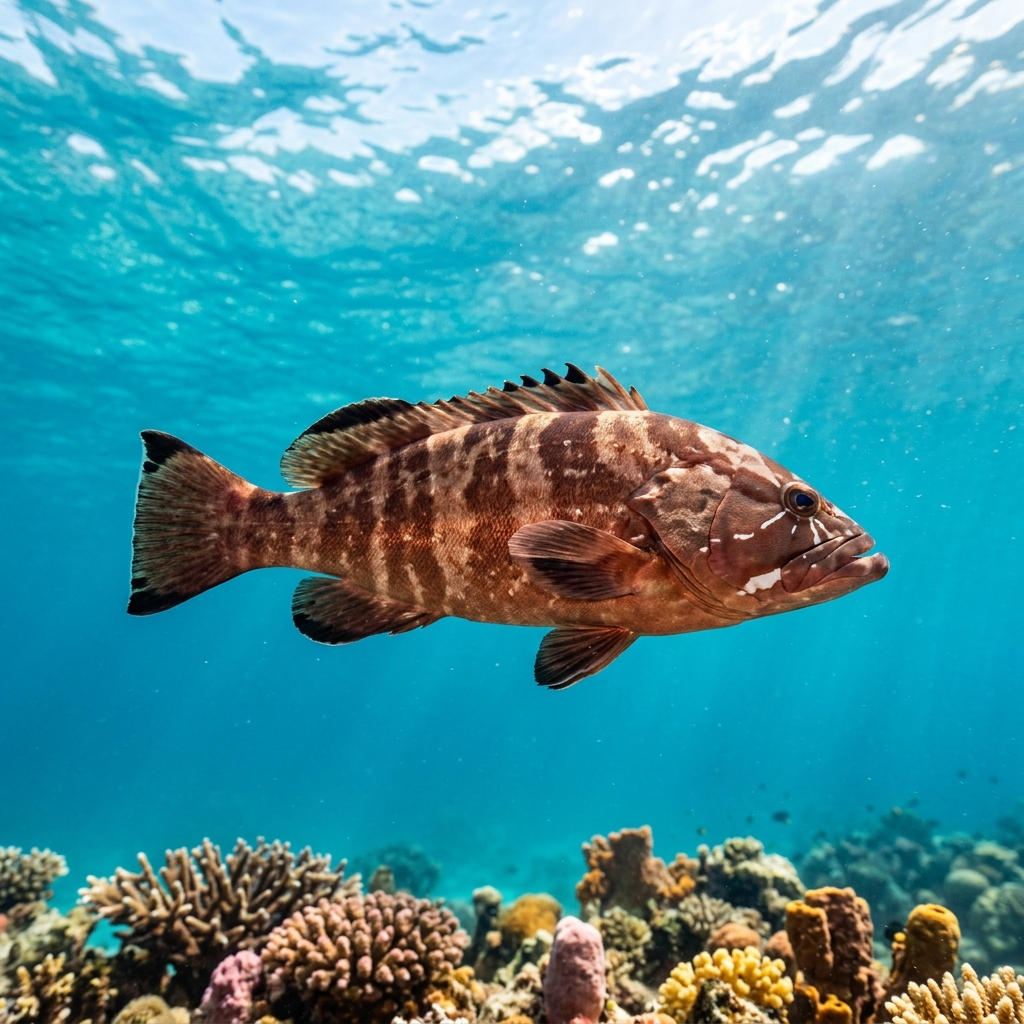
Blacktip Grouper
2,726 sites