Elops saurus
Silvery and swift, ladyfish turn up on uncommon sightings across Florida dive sites, comfortable in 25-29C water year-round.
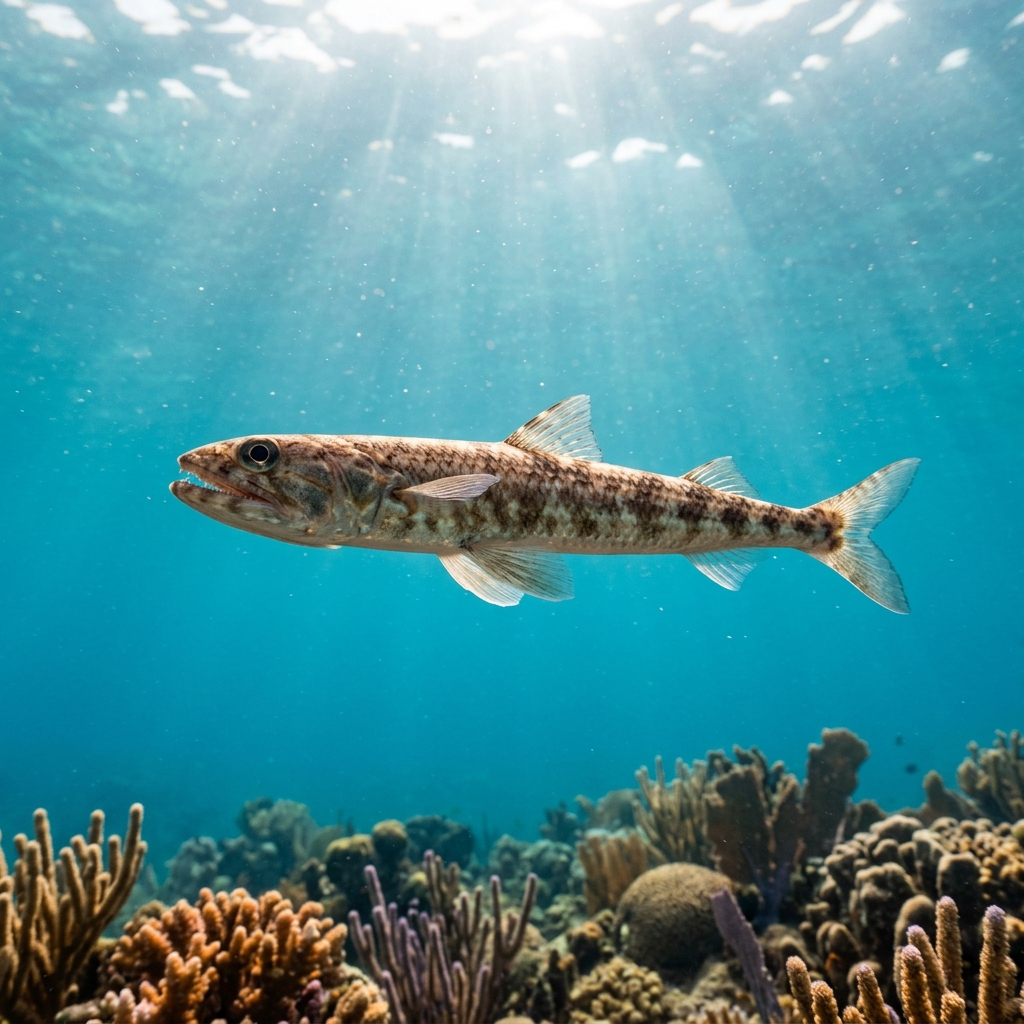
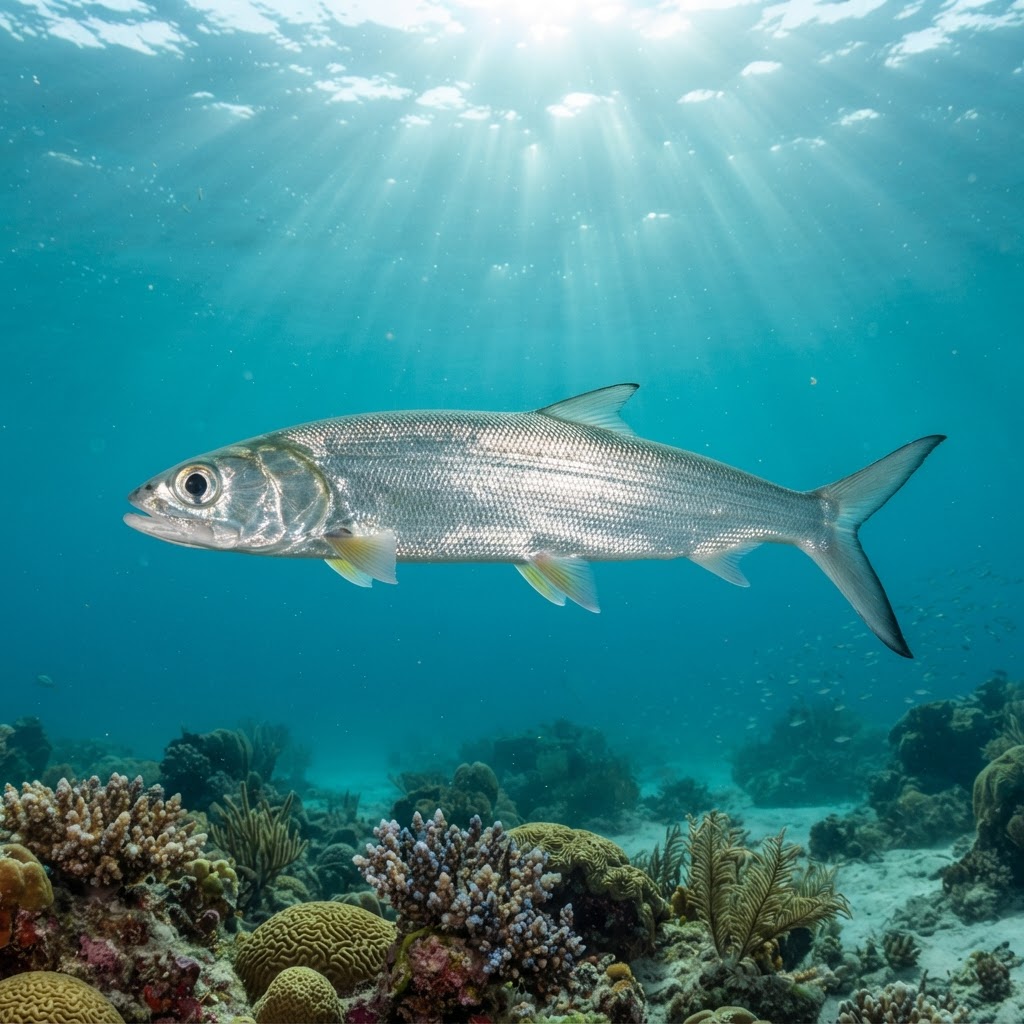
Long, slender, and almost torpedo-shaped, ladyfish run about 70 cm and flash a bright silvery body with a slightly greenish back. Look for a pointed head, a deeply forked tail, and a single dorsal fin set back toward the midline. They tend to appear alone or in loose, fast-moving groups rather than tight schools, which helps separate them from similar-looking baitfish.
Divers usually spot ladyfish cruising open water near reef edges or sandy patches, often moving with purpose rather than lingering. They're skittish and quick to peel away if you approach directly, so most sightings are brief glimpses of a silver flash rather than a lasting encounter. They're logged as uncommon at most sites where they appear, so a sighting is a nice bonus rather than a given.
Ladyfish have a distinct larval stage called a leptocephalus, a transparent, ribbon-like form shared with eels and tarpon, before metamorphosing into the familiar silvery adult shape.
Sightings show no clear seasonal pattern, and with a comfortable range of 25 to 29 degrees C, they're a year-round possibility on warm Florida and Gulf sites rather than a seasonal specialty.
Ladyfish are most consistently logged around Florida, with sites scattered across the state accounting for the bulk of sightings, plus occasional reports from Texas and the South more broadly. Outside the US, a site on Mexico's Yucatán Peninsula also turns them up, so they are worth watching for anywhere along the Gulf and western Atlantic coast where sandy flats meet reef edges.
Mapping where Ladyfish is logged…
Florida is by far the strongest region for ladyfish sightings, logged at sites across the state. They also turn up occasionally in Texas and on Mexico's Yucatán Peninsula.
There's no strong seasonal pattern in the sighting data, and their comfortable water temperature range of 25 to 29 degrees C means they can show up on Florida and Gulf dives at any time of year.
Look for a slim, silvery, torpedo-shaped fish around 70 cm long with a forked tail and a pointed head. They often move alone or in loose groups near sandy edges rather than tight schools.
Ladyfish typically reach around 70 cm in length, giving them a lean, elongated profile that's easy to mistake for a small jack or baitfish at a glance.
Ladyfish start life as a transparent, eel-like larva called a leptocephalus, the same larval body plan used by true eels and tarpon, before transforming into the silvery adult shape divers recognise.
No, ladyfish pose no threat to divers. They're skittish and tend to swim off quickly rather than approach.
Site and sighting data is aggregated from diver logs, iNaturalist and GBIF. For taxonomy and conservation status:
Soldierfish
3,612 sites