Labidesthes sicculus
Brook Silverside sightings are concentrated in the Great Lakes and Ontario region of Canada. Here's what to look for and when to dive.
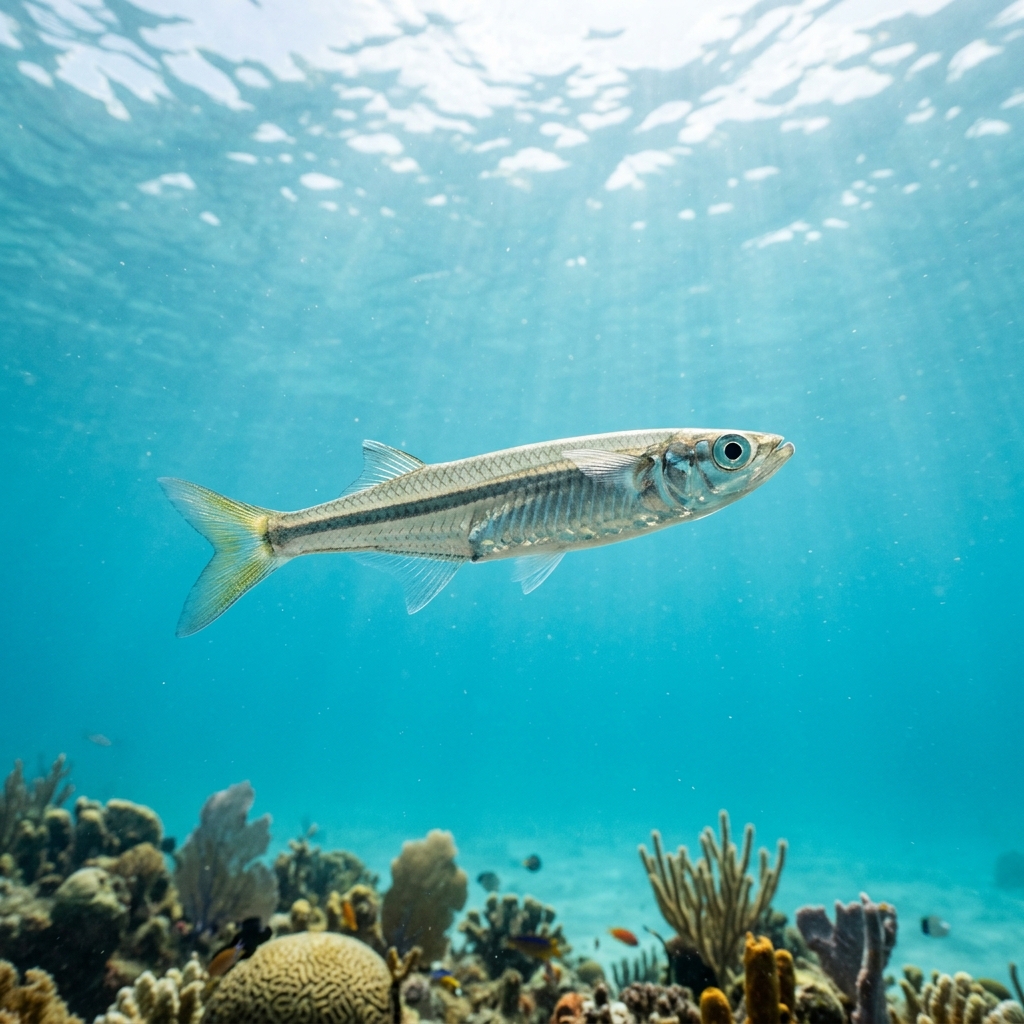
A slim, almost transparent fish with a bright silver stripe running the full length of its flank, making it look like a sliver of reflected light in the water. Its body is elongated and needle-like, and it typically holds near the surface rather than deeper in the water column. The greenish or pale yellow tint along the back helps it blend with open-water backgrounds, so the silver stripe is usually the first thing a diver keys on.
Brook silvesides are schooling fish that tend to cruise just below the surface in open, calm water, often appearing as a shimmering wave of silver when a group catches the light. They are not particularly bothered by slow, careful divers, but are quick to scatter if approached fast. Snorkellers and shallow-water divers in calm bays or lake margins have the best chance of a close encounter.
Brook silversides are annuals in the biological sense, meaning most individuals in a population complete their entire life cycle, from hatching to spawning and death, within a single year. This unusually short lifespan means the population turns over rapidly and can be sensitive to localised disturbance.
There is not enough monthly sighting data to point to a specific season, so treat it as potentially present year-round where conditions suit. The observed water-temperature range runs from cold to cool (roughly 1.7 to 21.6°C), consistent with temperate freshwater lakes and rivers.
All logged sightings come from Canada, with every recorded site sitting within the Great Lakes and Ontario region. This freshwater species has a relatively tight known diver range, so that region is the place to focus your search.
Mapping where Brook Silverside is logged…
All diver-logged sightings are from Canada, specifically the Great Lakes and Ontario region. Look for them in calm, clear freshwater sites such as sheltered lake bays and slow-moving river stretches in that area.
There is not enough seasonal sighting data to pinpoint a peak month. The species tolerates a wide cool-water range (roughly 1.7 to 21.6°C), suggesting it can be encountered across multiple seasons in the Great Lakes region.
Look for a very slender, almost see-through fish with a bold silver lateral stripe from head to tail. It swims near the surface, often in loose schools, and the stripe catches light in a way that makes the fish easy to spot against open water despite its small size.
Brook silversides are small fish, typically reaching around 7 to 10 cm in length, though size data from diver observations is limited. In the water they look even smaller and more slender than that measurement suggests.
Most individuals live for only one year, making brook silversides true annual fish. They hatch, grow, spawn, and die all within about 12 months, which is remarkably fast even by small-fish standards and means the school you see this summer is largely a new generation.
Site and sighting data is aggregated from diver logs, iNaturalist and GBIF. For taxonomy and conservation status:
Sun Perch
2,182 sites