Thalassoma rueppellii
A common reef fish across South Sinai and Marsa Alam, in warm 24 to 29C water, this striped wrasse is a year-round Red Sea regular.
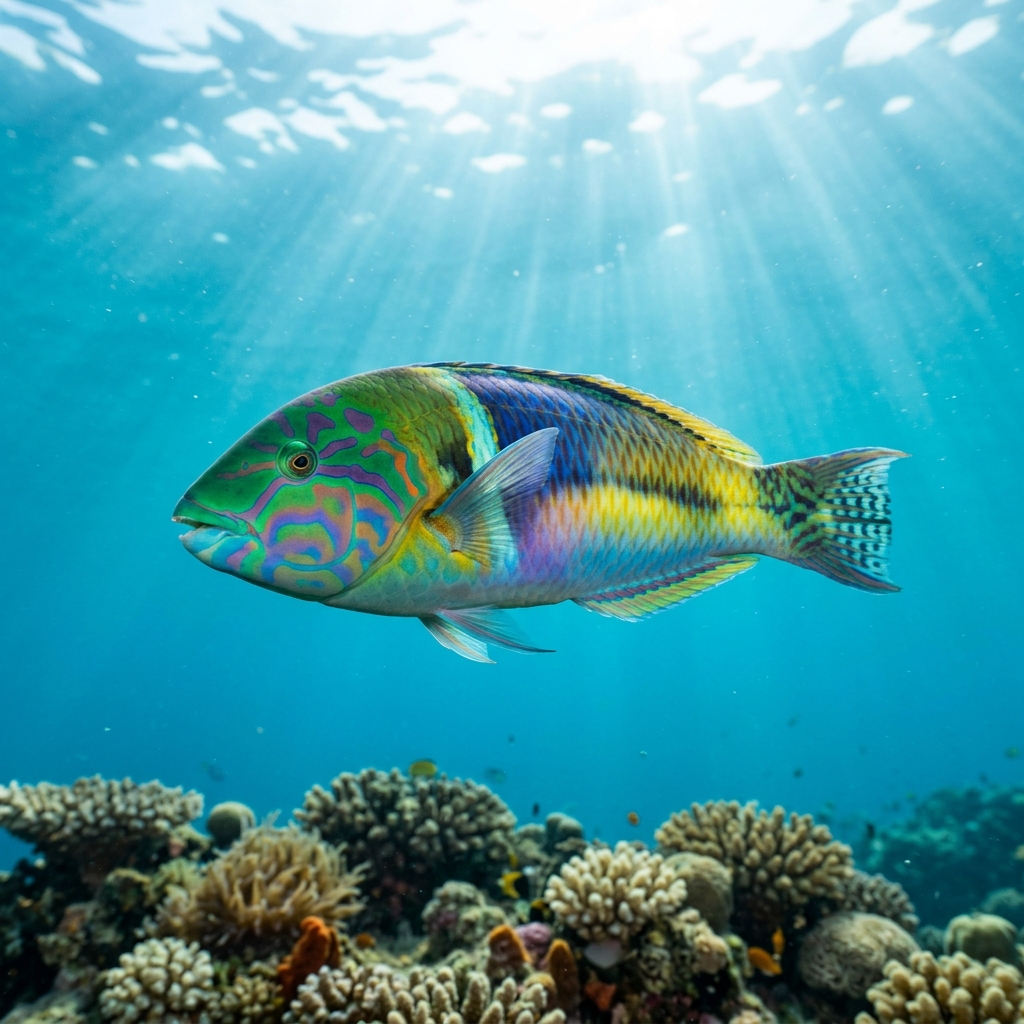
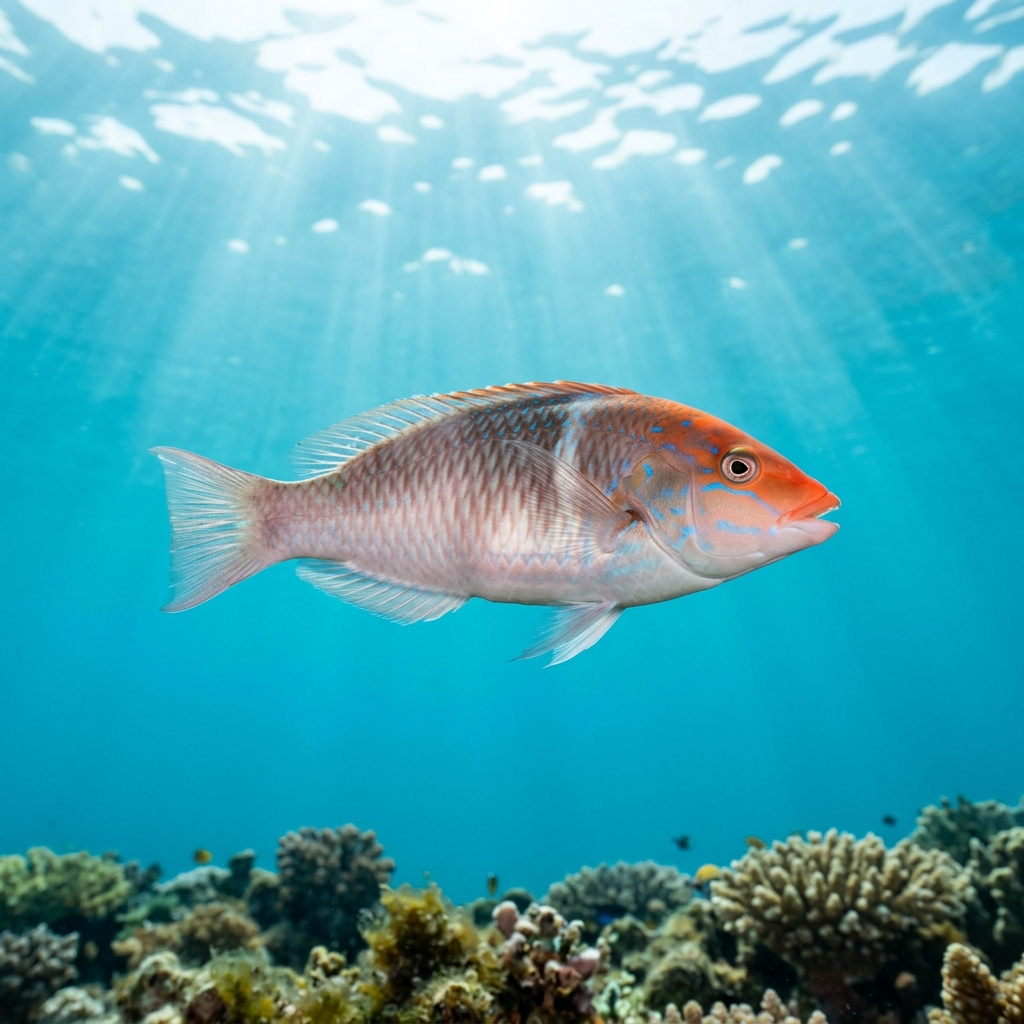
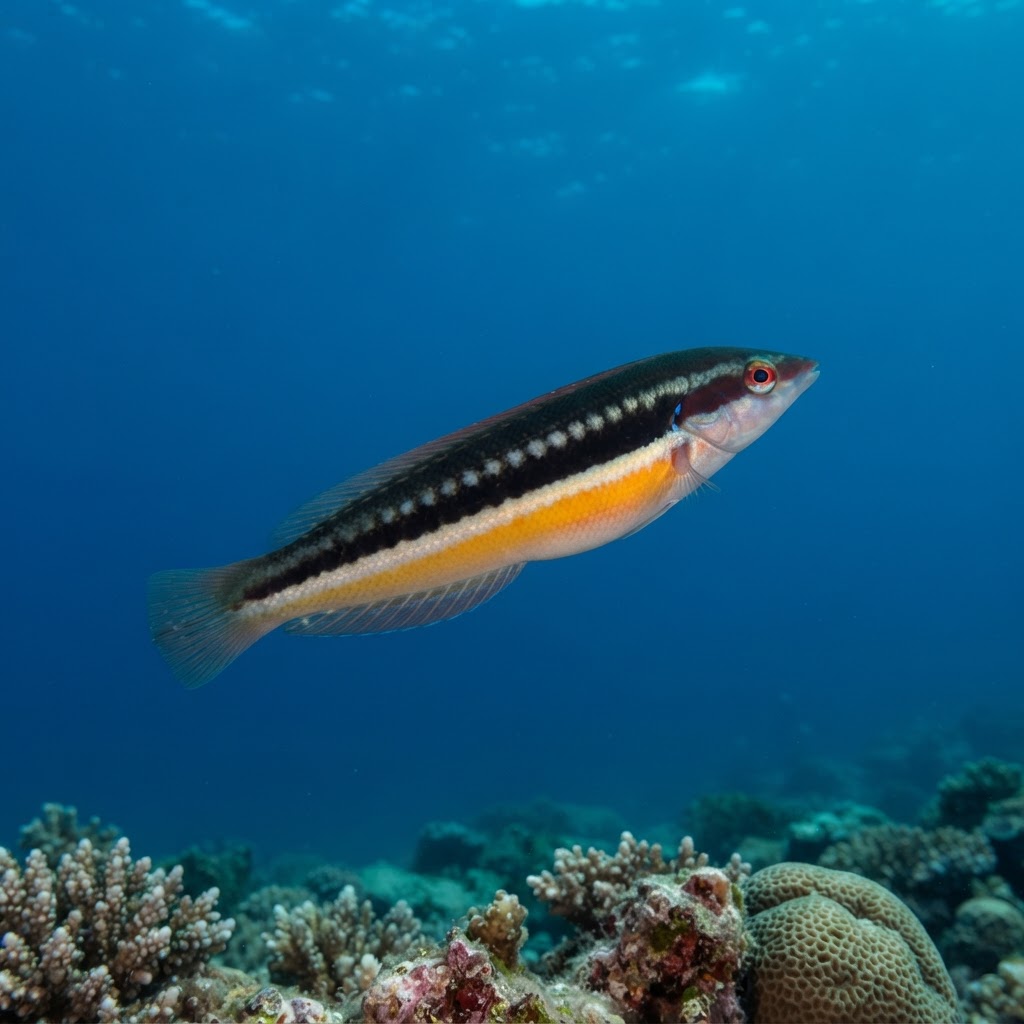
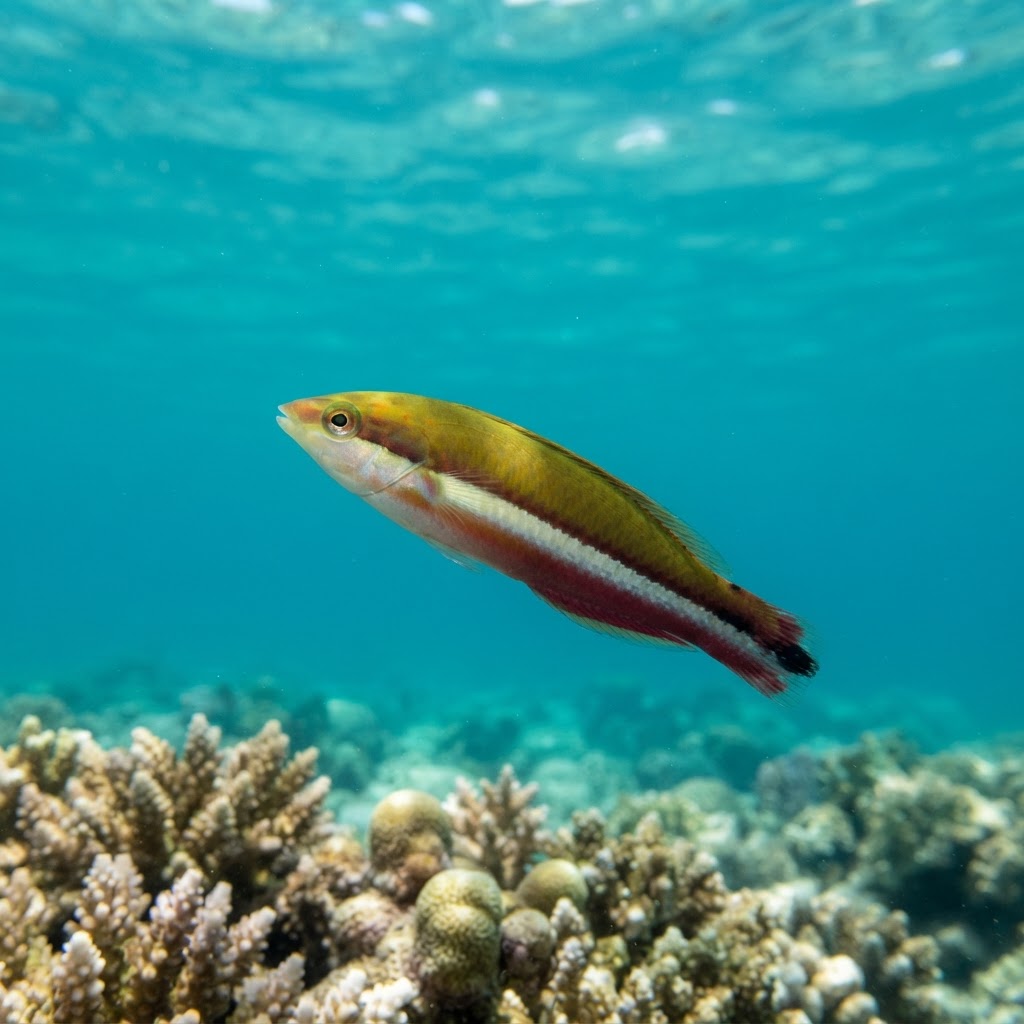
A slender, torpedo-shaped wrasse around 14 cm long, with a blue-green body crossed by bold orange or yellow stripes running back from the head. The striped facial pattern is the giveaway feature divers key on, along with the constant darting, stop-start swimming typical of the genus. Colour intensity can vary a bit between individuals, but the head striping stays diagnostic on Red Sea reefs.
Expect to see it picking over the reef surface and in the water column just above coral and rock, darting after small invertebrates in short, quick bursts rather than cruising steadily like larger wrasses. It pays divers little attention and carries on foraging close to the reef, often in loose groups around the same section of reef through a dive. Most sightings are on shallow to mid-depth reef, where light and coral cover are best.
Like other members of its genus, Klunzinger's wrasse is a protogynous hermaphrodite, meaning individuals can start life as females and later change into males, which is part of why colour intensity varies between fish on the same reef.
No clear seasonal pattern shows in the sightings, and with a comfortable temperature range of roughly 24 to 29C it stays active on the reef all year. Plan around your own travel window rather than chasing a season for this one.
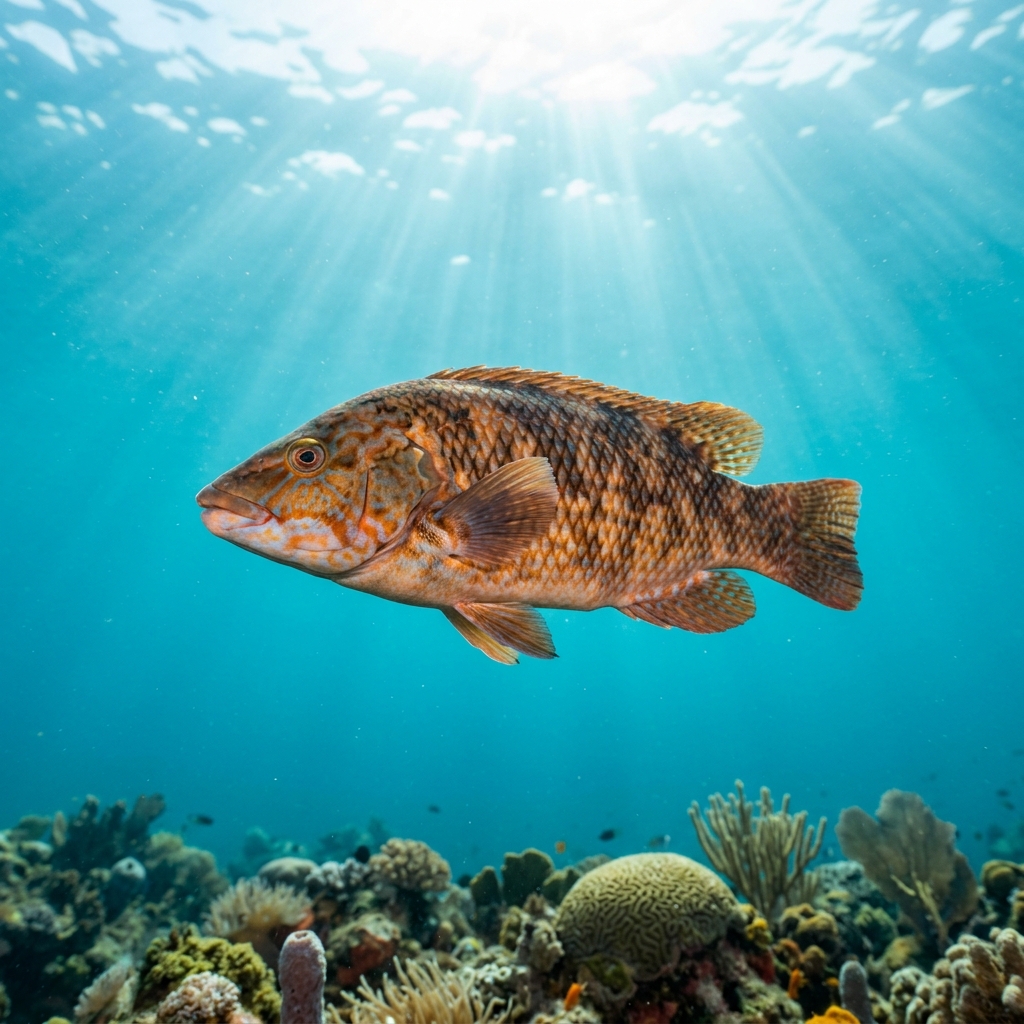
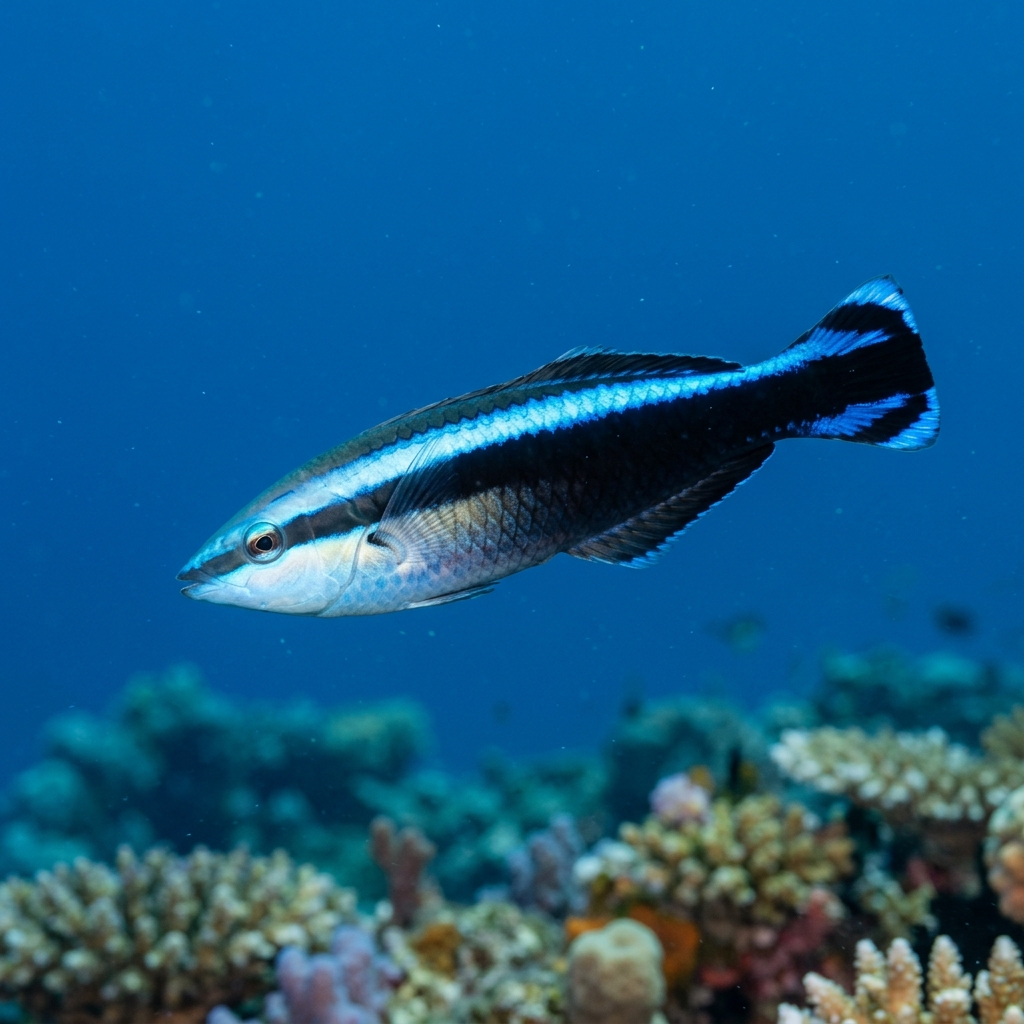
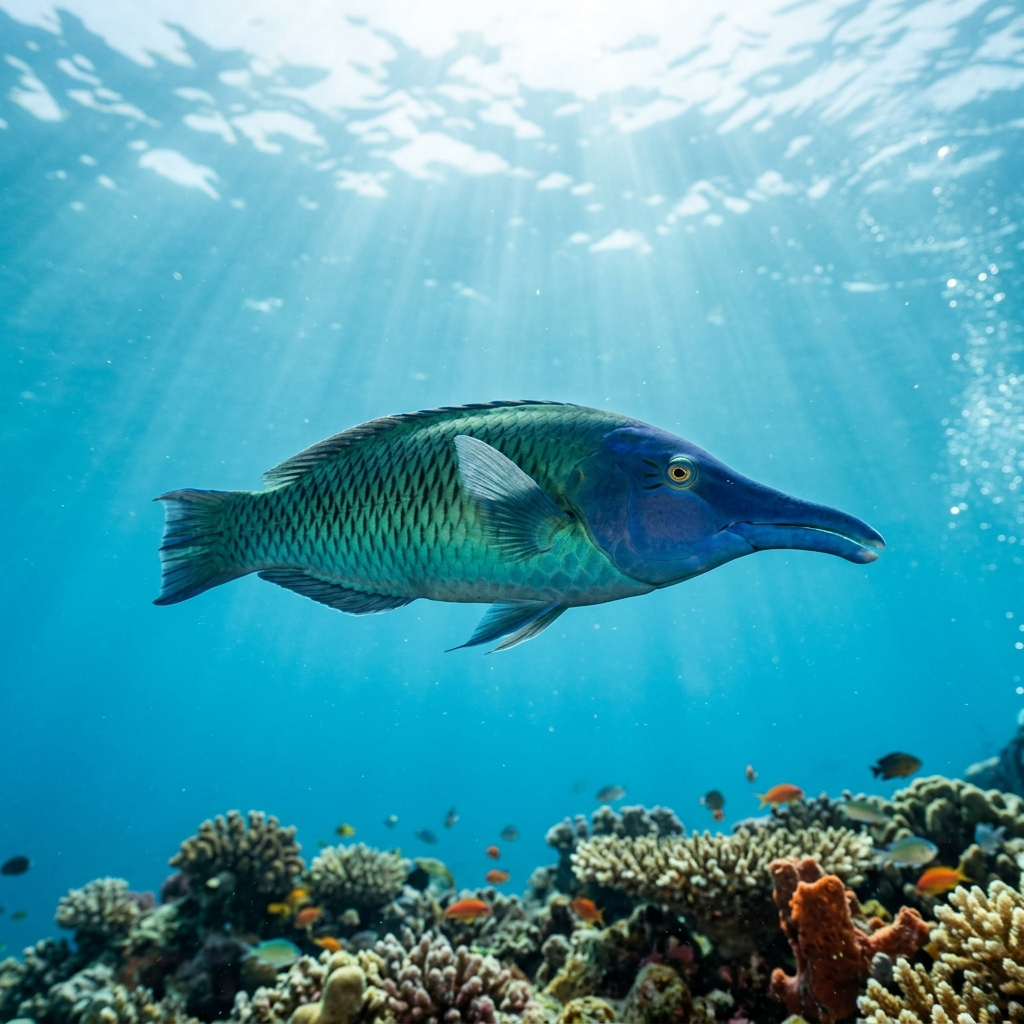
Reef neighbours a diver could mistake it for. Use the identification notes above to tell them apart.
This is a Red Sea speciality, most reliably logged across Egypt, especially South Sinai, Marsa Alam and the Deep South, and the Red Sea Riviera. It also turns up with a solid presence in Aqaba in Jordan, Eilat in Israel, and along the Red Sea coast of Saudi Arabia, with occasional records further south around Sudan's Central Reefs.
Mapping where Klunzinger's Wrasse is logged…
It is most commonly logged in Egypt's Red Sea, particularly South Sinai, Marsa Alam and the Deep South, and the Red Sea Riviera. It is also a regular sighting in Aqaba, Jordan, Eilat, Israel, and along Saudi Arabia's Red Sea coast.
There is no strong seasonal pattern in the sightings, so it is considered a year-round fish. Warm Red Sea water in the 24 to 29C range keeps it active on the reef throughout the year.
Look for a small, slender wrasse around 14 cm with a blue-green body and bold orange or yellow stripes across the face and head. It moves in quick, darting bursts just above the reef rather than swimming in a steady glide.
They typically reach around 14 cm in length, making them one of the smaller reef wrasses divers encounter in the Red Sea.
No, they pose no threat to divers. They are small, curious feeders that ignore divers and go about picking food off the reef.
Like many wrasses, it can change sex during its life, starting out female and later becoming male, which contributes to variation in colour and pattern seen among individuals on the same reef.
Site and sighting data is aggregated from diver logs, iNaturalist and GBIF. For taxonomy and conservation status:
Bird Wrasses
3,632 sites