Sillaginodes punctatus
Spot King George whiting in South Australia and Western Australia between Dec, Apr in cool 15-18 °C waters. Here's where divers log it most.
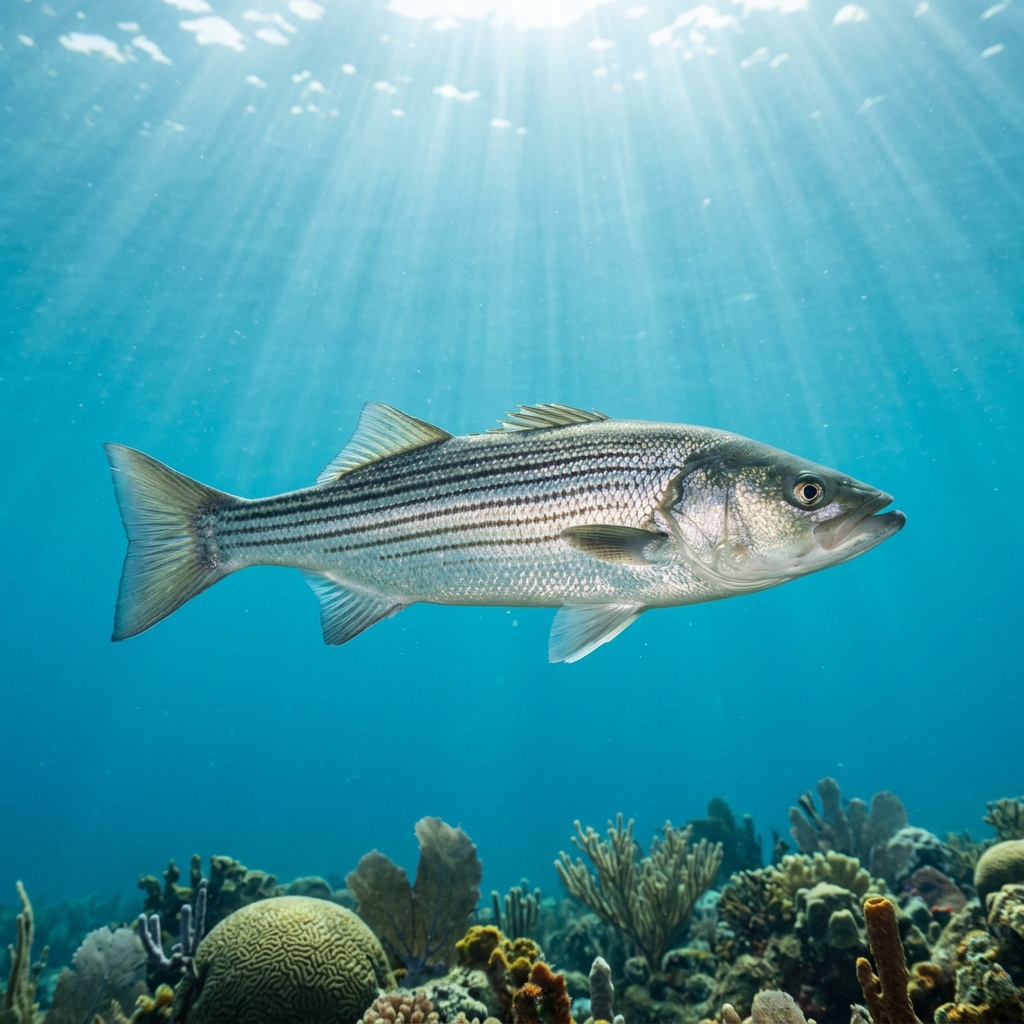
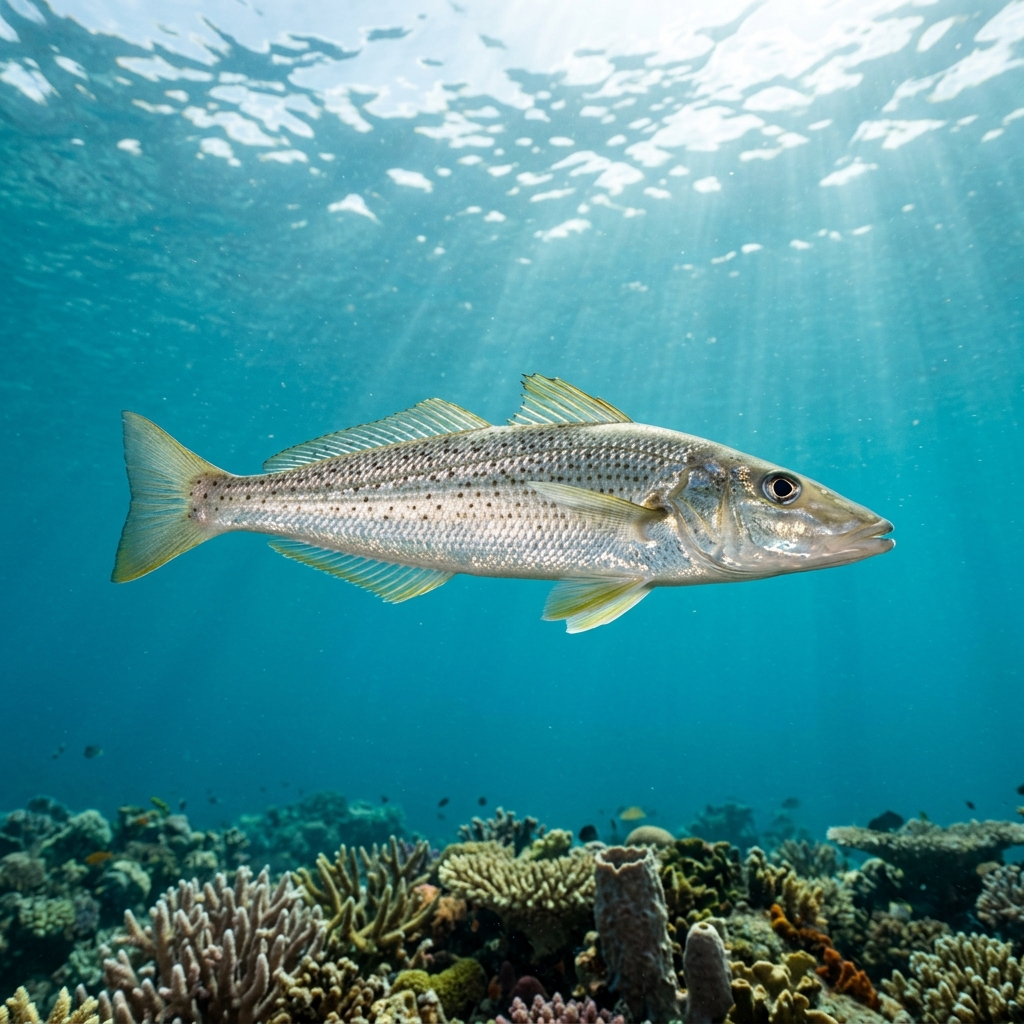
A slender, elongated fish that blends easily against sandy bottoms with its silvery-white flanks patterned with rows of small, dark spots running from head to tail, the key field mark at a glance. Typical adults run around 50 cm, giving them a noticeably streamlined profile compared to chunkier demersal (bottom-dwelling) species sharing the same habitat. The pointed snout and underslung mouth are characteristic; the body tapers cleanly to a forked tail. Juveniles tend to show more vivid spotting and are often found in shallower seagrass beds.
Expect to find them cruising just above sandy or seagrass-covered bottoms, picking through sediment for small invertebrates. They tend to be wary of divers and will move off at a measured pace rather than bolt, so slow, low approaches work best. Most sightings are of singles or loose aggregations rather than tight schools.
Juveniles use shallow estuarine seagrass beds as nurseries and progressively move into deeper coastal reefs and offshore sandy grounds as they grow, so depth and habitat shift significantly across their life stages.
Sightings concentrate from December through April, the Southern Hemisphere summer and early autumn, which aligns with warmer peaks within the species' cool 15-18 °C temperature range along southern Australian coasts.
King George whiting is logged almost exclusively in Australia, with the strongest presence in Western Australia and South Australia. Tasmania and Victoria also contribute sightings, making the temperate southern coastline the reliable corridor for encounters. Queensland and New South Wales records exist but are far less frequent.
Mapping where King George whiting is logged…
King George whiting is found almost entirely in Australian waters. Western Australia and South Australia are the top regions for diver sightings, with Tasmania and Victoria also producing regular records. The species hugs the cool, temperate southern coastline.
Diver sightings peak between December and April along southern Australia. This summer-to-early-autumn window appears to correspond with the species' activity patterns in coastal habitats during that part of the year.
Look for a slender, silver-white fish about 50 cm long with rows of small dark spots running along its sides. The pointed snout and habit of hovering close to sandy or seagrass bottoms are strong cues. The spot pattern is distinct enough that there are few easy lookalikes among reef fish sharing its habitat.
Most individuals divers encounter are around 50 cm in length. They have a notably slim, torpedo-shaped body, so they can look smaller than that length suggests when seen side-on against an open sandy bottom.
At the sites where it has been recorded, King George whiting is most typically logged as uncommon, with a smaller number of sites where it is rare and only a handful where it qualifies as common. Patience and good habitat selection, sandy bottoms and seagrass beds in southern Australia, improve your odds.
Site and sighting data is aggregated from diver logs, iNaturalist and GBIF. For taxonomy and conservation status:
Meagre
1,159 sites