Labrisomidae spp.
Spot kelpfish across Florida, the Yucatán, and the Galápagos in warm 24-29°C waters. Tips on ID and where divers log them most.
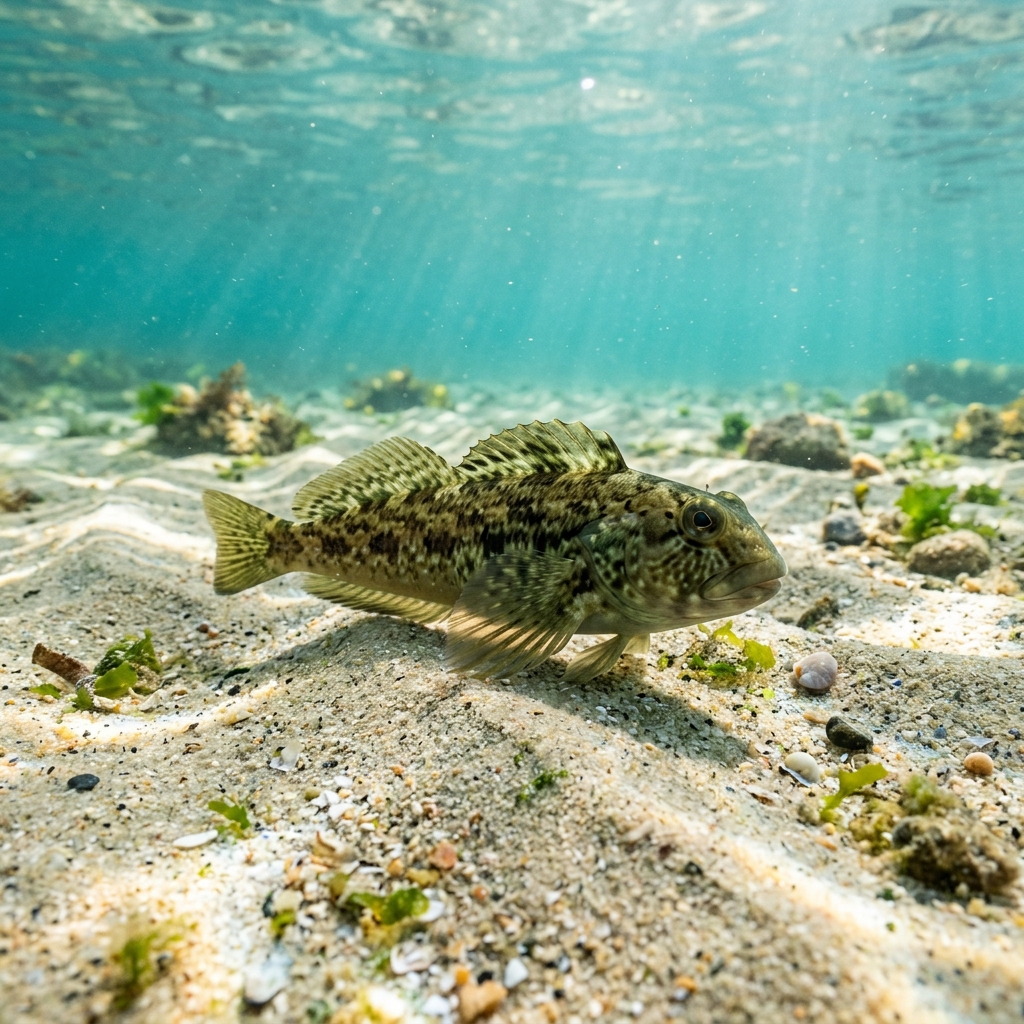
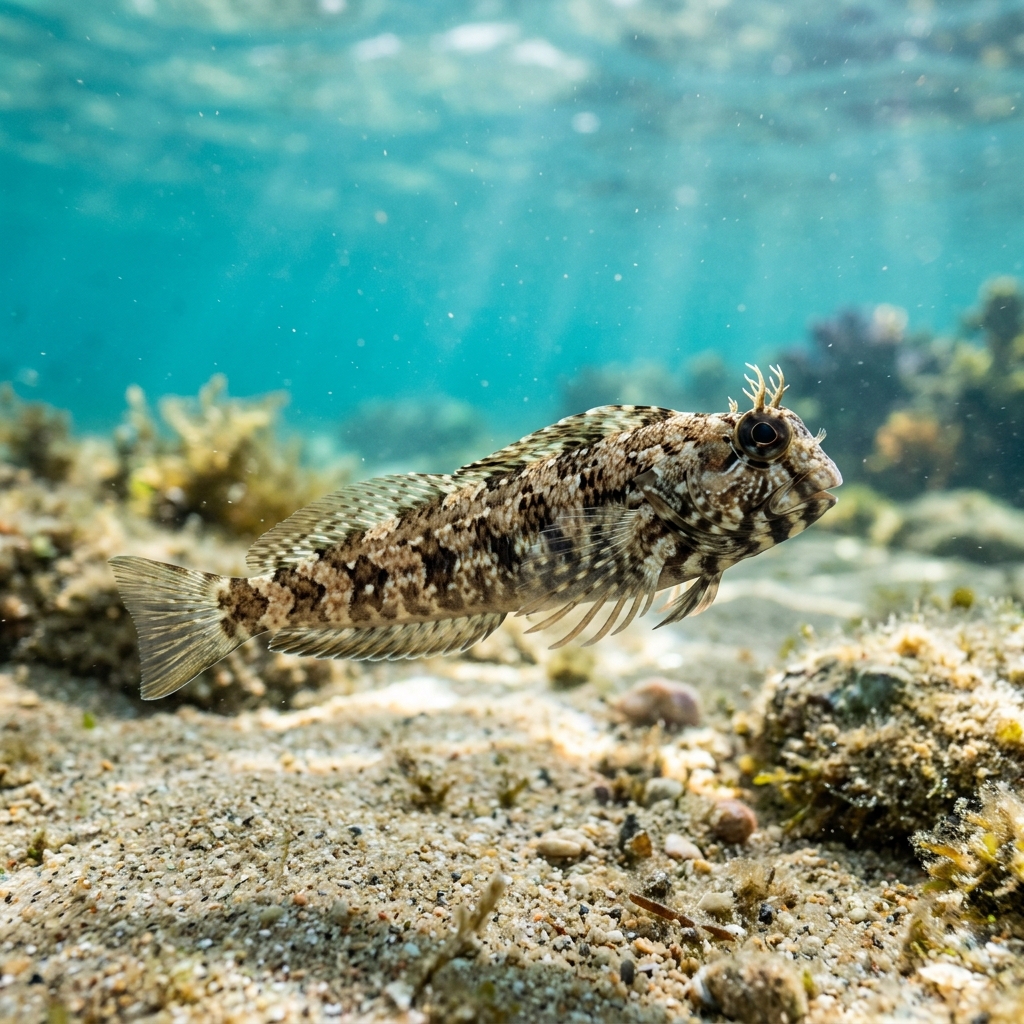
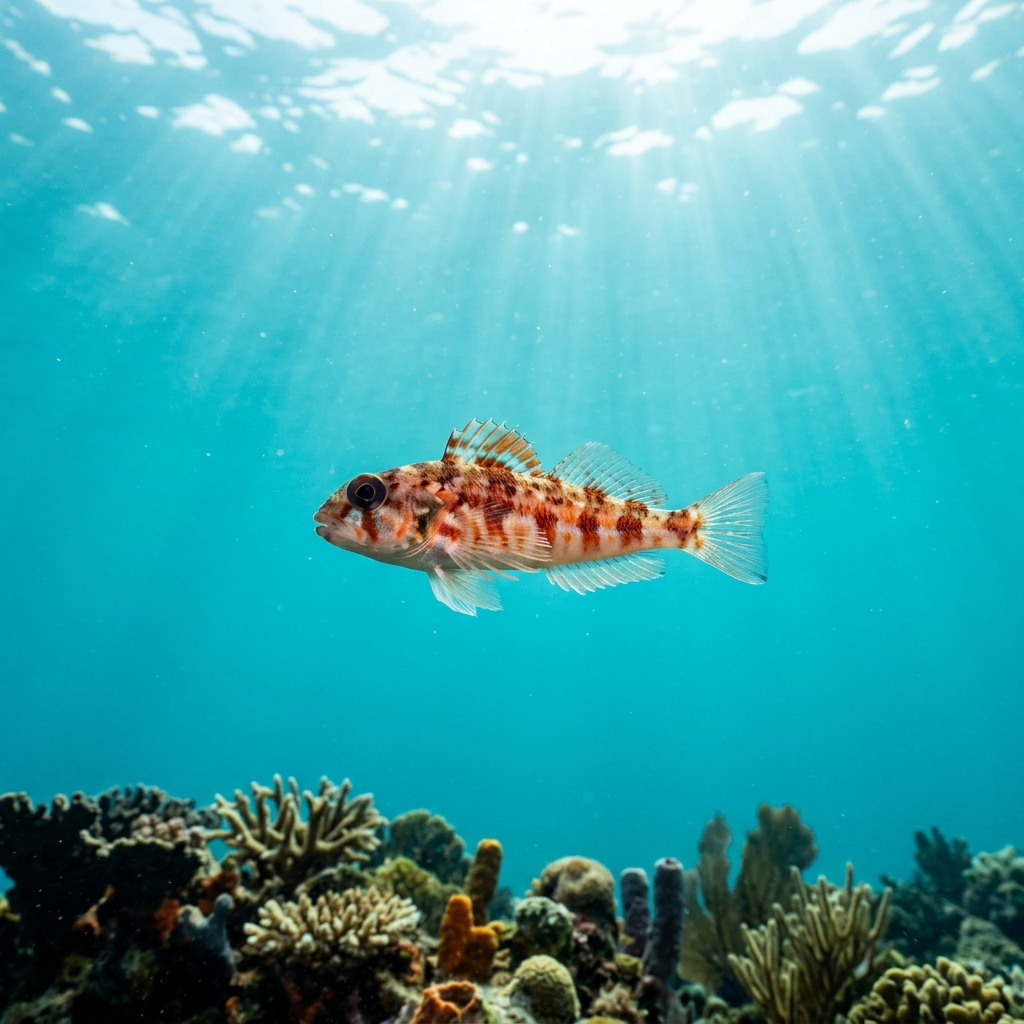
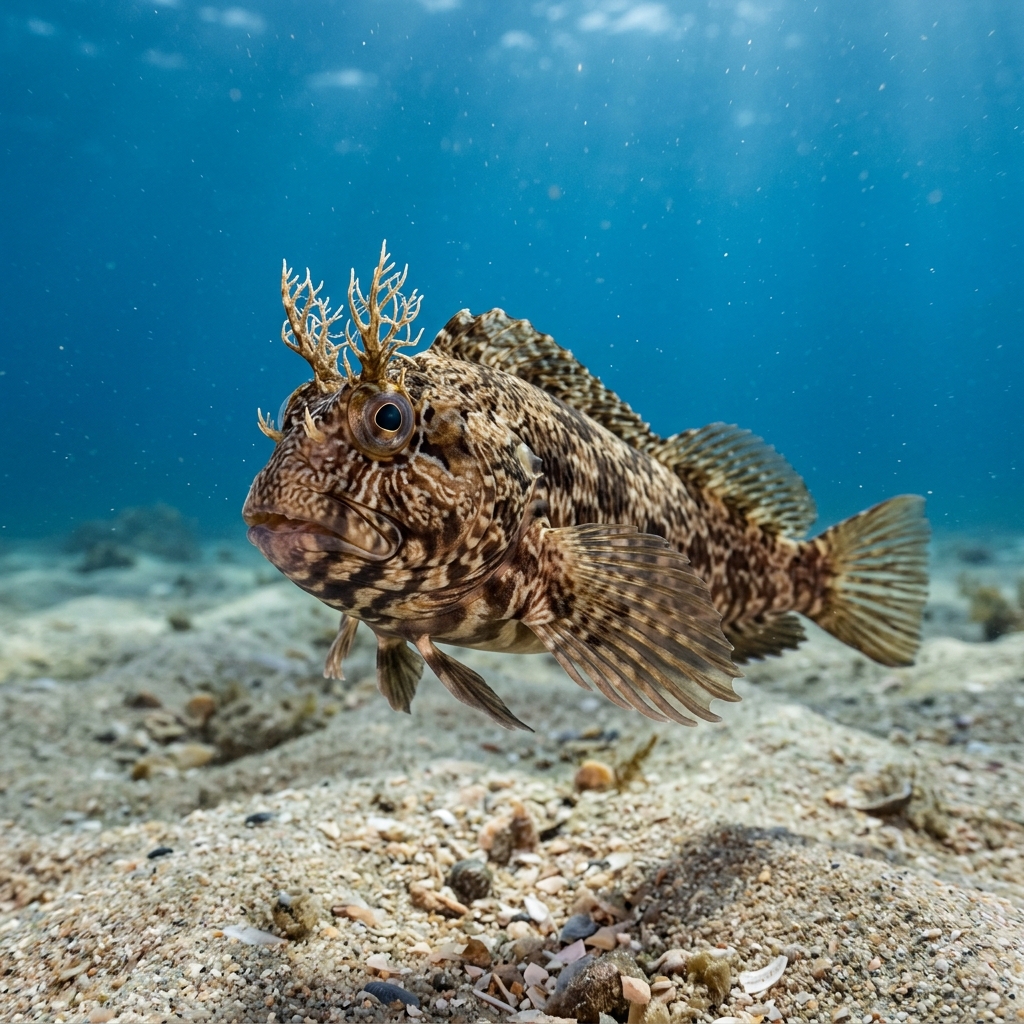
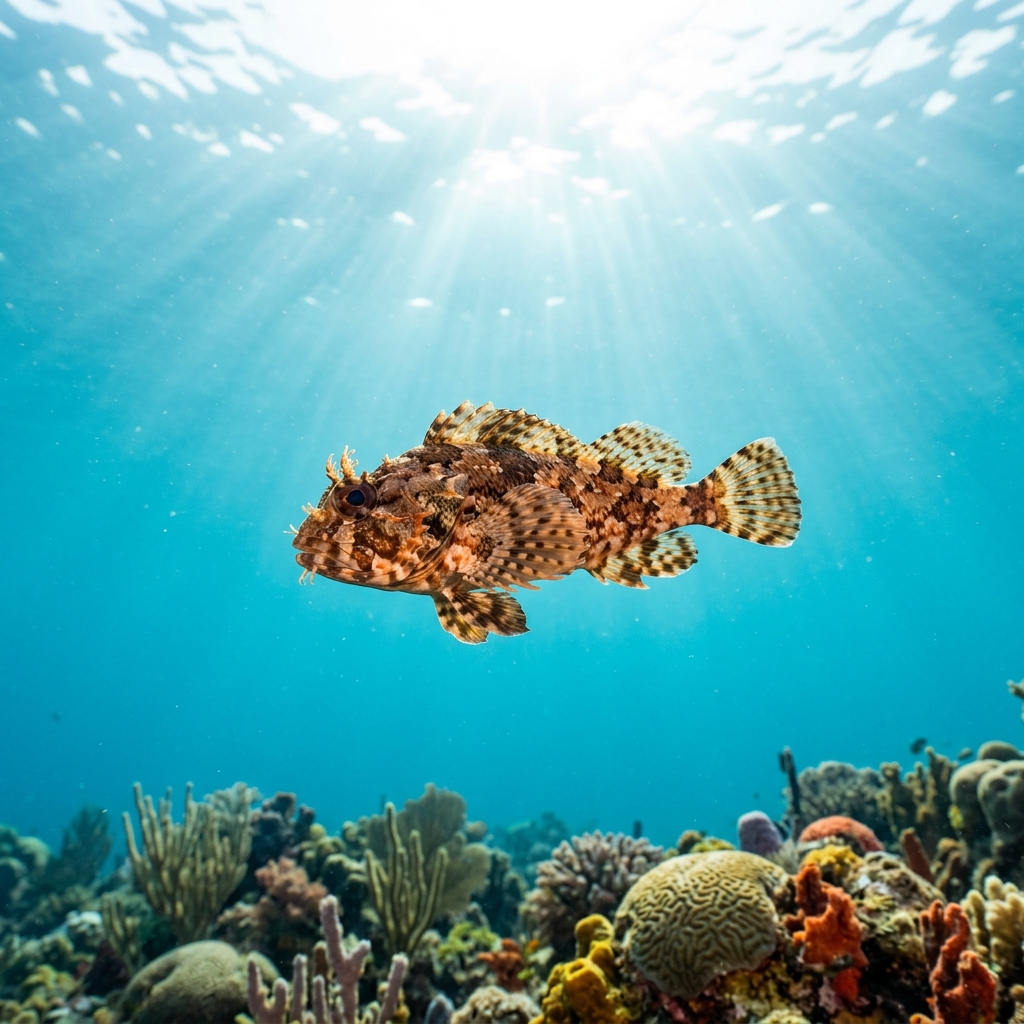
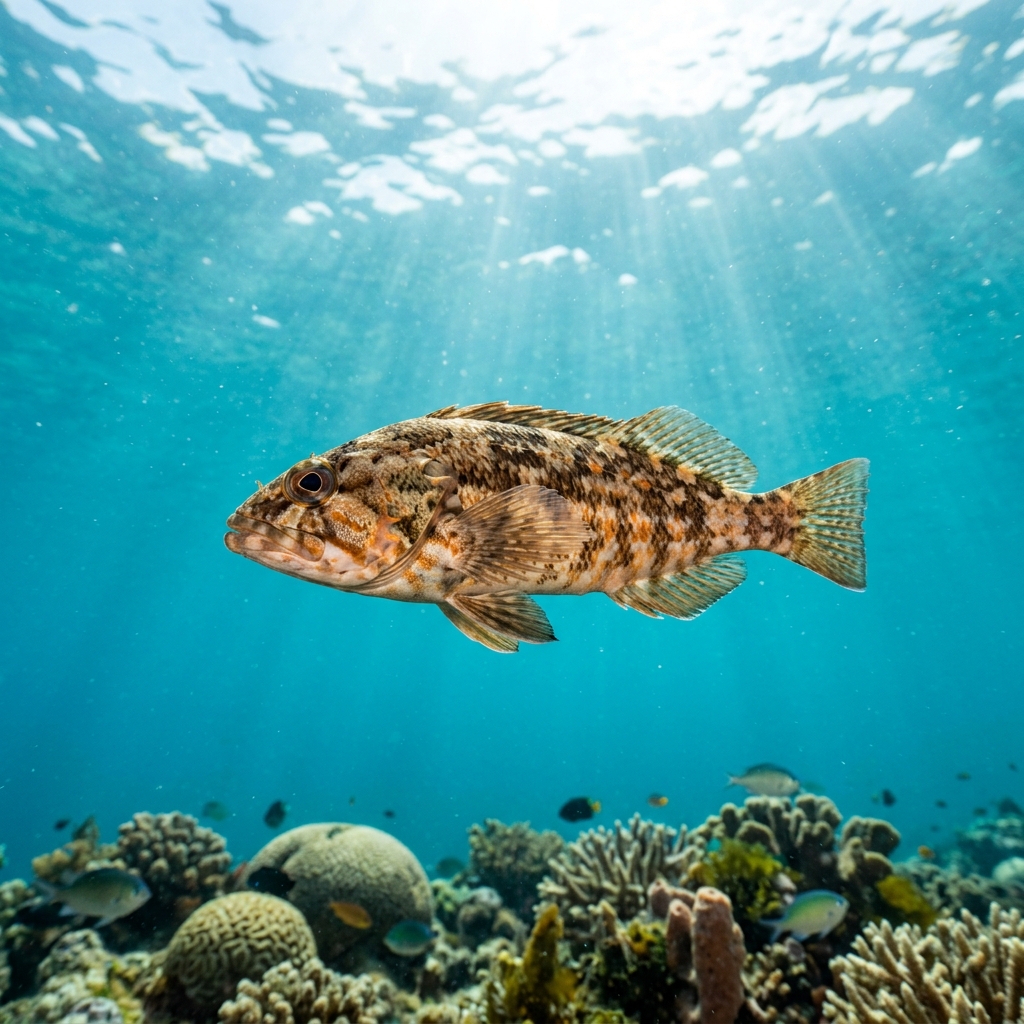
Members of this family are small, elongated reef fish that sit motionless on hard surfaces rather than swimming freely, making them easy to overlook against rubble, algae, or coral. Most share a blenny-like body plan with a blunt head, large eyes set high on the skull, and a continuous dorsal fin running the length of the back. Colouration varies widely across species but typically runs through browns, greens, and reds with mottled or banded patterns that blend tightly with the substrate. Look for the habit of propping themselves up on their pectoral fins, almost like they are doing a tiny press-up.
Kelpfish are quintessential sit-and-wait predators, typically found perched on algae-covered rock, rubble, or coral heads at very close range. They tend to hold their position when a diver approaches slowly, relying on camouflage rather than flight, which makes them rewarding subjects for macro photographers. Most active during daylight hours, they can be tricky to spot even when common at a site simply because their cryptic (camouflage) colouration is so effective.
Despite being logged across a remarkable spread of sites and countries, kelpfish are rated uncommon at most locations where they appear, which reflects their camouflage-first lifestyle rather than low population density. Slowing down and scanning substrate at close range dramatically improves your hit rate.
In the Northern Hemisphere, kelpfish are recorded year-round with no concentrated season, which makes sense given their warm-water niche of roughly 24 to 29°C on tropical and subtropical reefs. In the Southern Hemisphere the data shows sightings peaking between February and June, so plan accordingly if you are diving Brazil's southeast coast.
Reef neighbours a diver could mistake it for. Use the identification notes above to tell them apart.
Kelpfish are most consistently logged in the United States, Mexico, and Brazil, with Florida and the Southeast being the single strongest region for sightings. The Yucatán Peninsula, Grand Cayman, and the Caribbean coast of Colombia also produce regular encounters, and the Galápagos Islands stand out as a notable Pacific hotspot. Across the Caribbean more broadly, sites in the US Virgin Islands, Cuba, and Guadeloupe all feature them in meaningful numbers.
Mapping where Kelpfish is logged…
Kelpfish are logged across a wide stretch of the tropical and subtropical Atlantic and Pacific. The strongest concentrations appear in Florida, the Yucatán Peninsula, Grand Cayman, and the Caribbean coast of Colombia. The Galápagos Islands are a notable Pacific location. Brazil's Rio de Janeiro and São Paulo coast also feature them regularly.
In the Northern Hemisphere, kelpfish show no concentrated season and can be found year-round on reefs within their warm-water temperature range. If you are diving in the Southern Hemisphere, such as along Brazil's southeast coast, sightings concentrate between February and June.
Look for a small, elongated fish sitting motionless on the reef, propped up on its pectoral fins. The body is typically mottled brown, green, or reddish to match the surrounding algae or rubble. A continuous dorsal fin and a blunt, large-eyed head are the key shape cues. They rarely swim away when approached slowly.
Kelpfish pose no threat to divers. They are small, cryptic fish that rely on camouflage and stillness as their main defence. You are far more likely to miss them than to have any negative interaction.
Their mottled colouration matches algae, encrusted rock, and rubble so closely that they effectively disappear into the background. Rather than fleeing, they freeze, which means you can swim right past one without noticing. Slowing down, getting low, and scanning surfaces at close range rather than mid-water is the most reliable approach.
Site and sighting data is aggregated from diver logs, iNaturalist and GBIF. For taxonomy and conservation status:
Rusty Blenny
2,605 sites