Brachyistius frenatus
A small copper-brown perch drifting in California kelp forests, often overlooked but a reliable find in 8 to 18C water year-round.
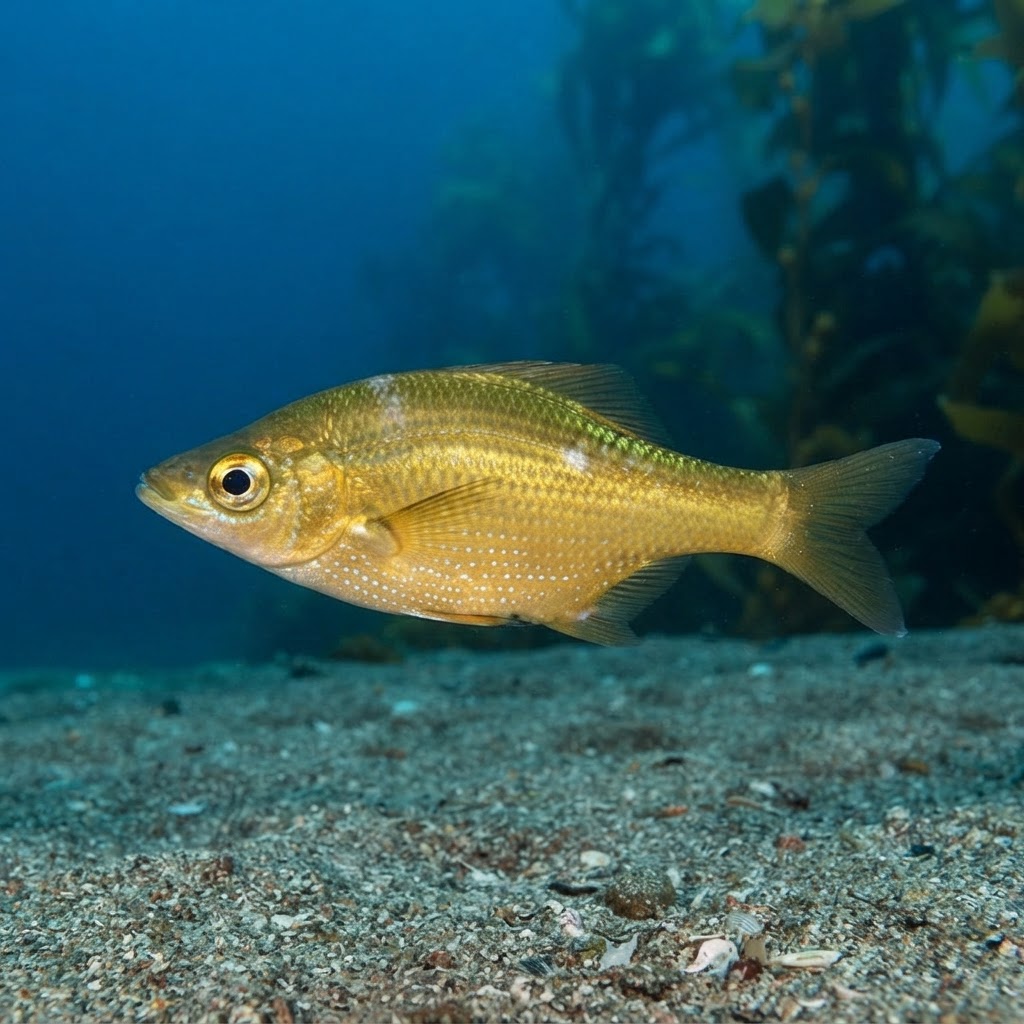
Slender, laterally compressed body reaching about 15 cm, usually copper-brown to olive with faint darker mottling that helps it blend into kelp fronds. Look for a small mouth with a slightly protruding lower jaw, built for picking tiny invertebrates off blades and stipes rather than chasing prey. It often hangs at an angle, nose-down, tucked close to kelp rather than swimming in open water.
Divers typically find it hovering close to kelp blades and stipes, picking small crustaceans and other invertebrates off the surface rather than foraging out in open water. It tends to sit still or move in short, unhurried drifts when a diver approaches, relying on the kelp canopy for cover rather than fleeing outright. Most logs describe it as an uncommon but easy-to-miss sighting for divers who take the time to look into the kelp itself rather than scanning the water column.
Like other surfperches, it is thought to bear live young rather than laying eggs, a trait shared across the Embiotocidae family that sets it apart from most reef fish a diver encounters on tropical dives.
Sightings show no clear seasonal peak, and the recorded temperature range of 8.4 to 18.3C spans both winter and summer conditions on the US and Canadian west coasts, so divers log it across the year. Plan around kelp forest conditions and visibility rather than chasing a particular month.
Most reliably logged in California, which accounts for the large majority of recorded sightings, with a smaller but steady presence in British Columbia, Canada. Within these regions it turns up wherever there is standing kelp forest rather than open reef or sand.
Mapping where Kelp Seaperch is logged…
California is the strongest region for sightings, with a smaller number logged in British Columbia, Canada. Look for it in kelp forest habitat rather than open reef.
There is no strong seasonal pattern in sighting data, so it is considered a year-round find within its temperature range of roughly 8 to 18C. Focus on good kelp forest conditions rather than a specific month.
Look for a slim, copper-brown fish around 15 cm long hovering close to kelp fronds, often tilted nose-down as it picks food off the blades. Its small mouth and mottled colouring help it blend into the kelp rather than stand out.
They typically reach about 15 cm in length, making them one of the smaller fish divers spot within California and British Columbia kelp forests.
No, they pose no risk to divers and simply go about picking invertebrates off kelp fronds when approached.
No, they are part of the surfperch family, which is known for bearing live young rather than laying eggs, an unusual trait for fish divers typically see on temperate dives.
Site and sighting data is aggregated from diver logs, iNaturalist and GBIF. For taxonomy and conservation status:
Meagre
1,159 sites