Syngnathus californiensis
Spot Kelp Pipefish along the British Columbia Coast and Pacific Coast USA, mainly Aug, Dec in waters from 12 to 28 °C. Here's where and how to find them.
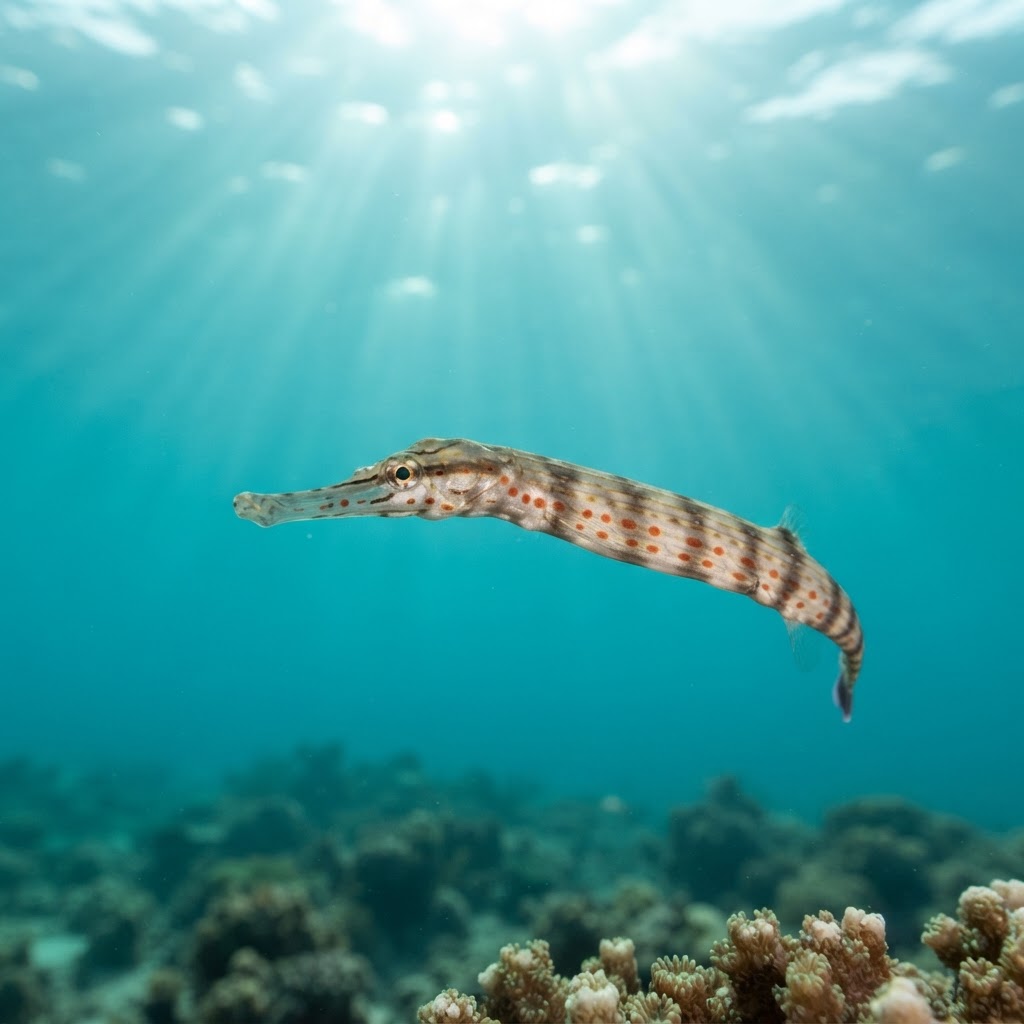
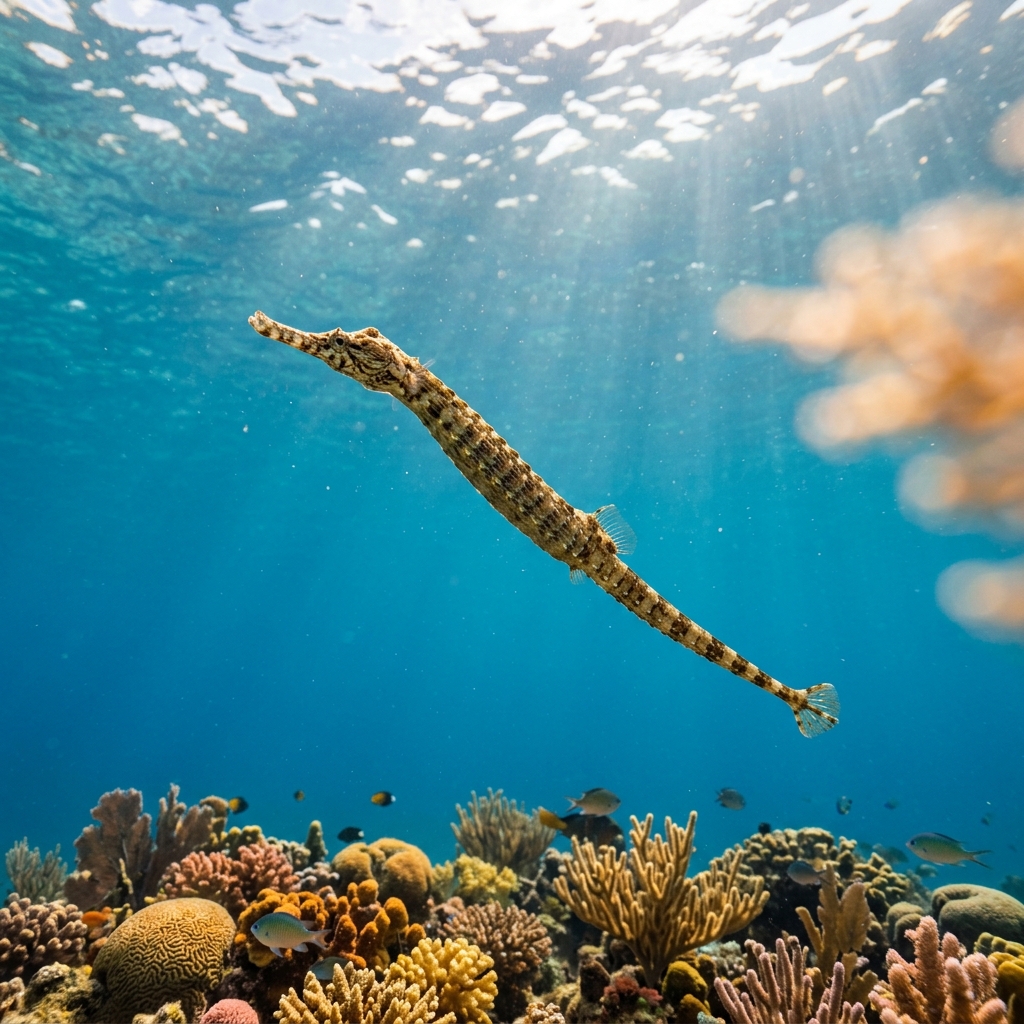
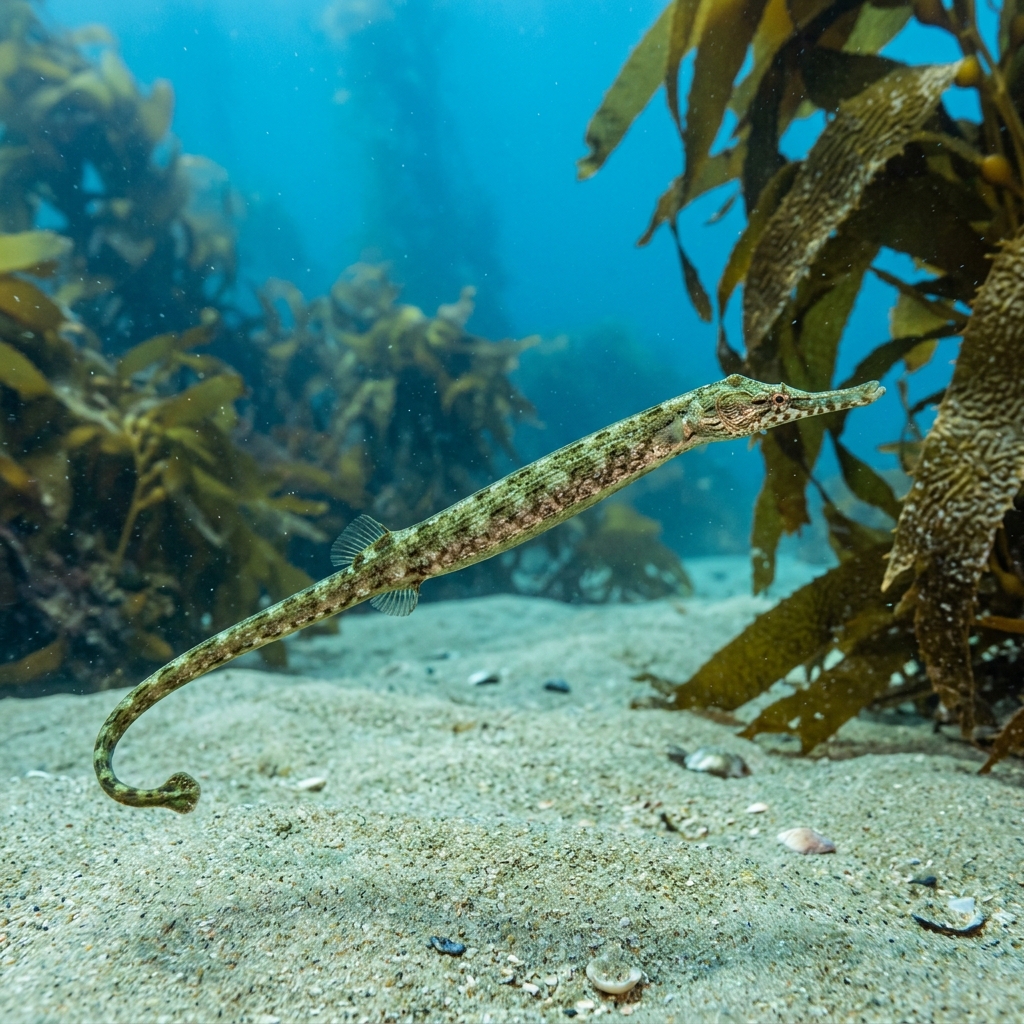
Slender and elongated, reaching around 35 cm, this pipefish is built to disappear inside a kelp forest. Its body is typically brown to olive-green, patterned with pale banding that mimics the stipes and blades of kelp. The rigid, segmented trunk and tube-like snout are the key underwater cues. Males can be picked out by the swollen brood pouch running along the underside of the body when they are carrying eggs.
Kelp pipefish rely almost entirely on camouflage, pressing themselves against kelp fronds and holding perfectly still when a diver approaches. Move slowly and scan each blade of kelp methodically rather than the open water column. When hunting, they make small, quick darting movements to pick tiny crustaceans off the kelp, which is often the only motion that gives them away.
Like other syngnathids, it is the male that carries the developing eggs in a brood pouch on his underside until they hatch, doing the gestational work usually associated with females.
In the Northern Hemisphere, sightings concentrate from August through December, so late summer into early autumn is the window to target.
Most sightings come from the British Columbia Coast in Canada and the Pacific Coast of the United States, making temperate North American kelp forests the strongest bet for finding one. Baja California, Mexico is also represented, with additional model-predicted range extending to Japan's Izu Peninsula and South Korea's East Coast. Move slowly through kelp beds in any of these regions and scrutinise the fronds carefully.
Mapping where Kelp Pipefish is logged…
The British Columbia Coast and the Pacific Coast of the United States are where real diver observations cluster most strongly. Baja California in Mexico is also a documented area, and the species' range extends into Japanese and South Korean waters, though sightings there are rarer.
Sightings in the Northern Hemisphere concentrate between August and December. Targeting late summer through autumn in the Pacific kelp-forest regions of North America gives you the best realistic odds.
Look for a long, rigid, tube-snouted fish around 35 cm, coloured brown to olive-green with pale banding that blends into kelp. The segmented armour-plated body and distinctly tubular snout distinguish it from any nearby fish. Males carrying eggs show a noticeably swollen belly pouch.
They typically reach around 35 cm in length, making them one of the larger pipefish species in Pacific coastal waters. Their slender profile means they still look surprisingly discreet against a kelp stipe of similar width.
Uncommon is the most typical sighting frequency across logged dive sites. Their camouflage is highly effective in kelp, so even in areas where they live, spotting one requires slow, deliberate searching rather than a casual swim-through.
Site and sighting data is aggregated from diver logs, iNaturalist and GBIF. For taxonomy and conservation status:
Seahorse
1,346 sites