Pugettia richii
A rare, 2cm find in British Columbia's cold water (9-15C) - here's how to spot Kelp Crab on your next dive.
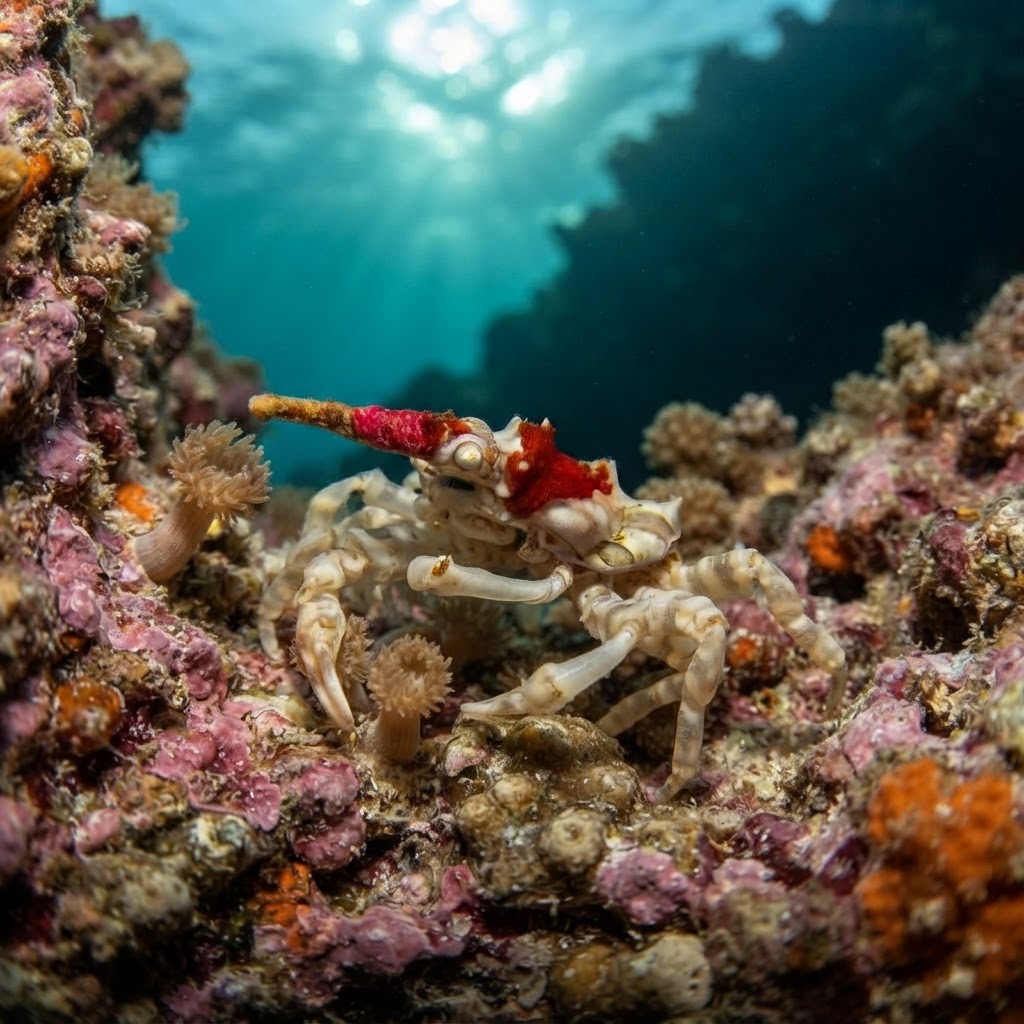
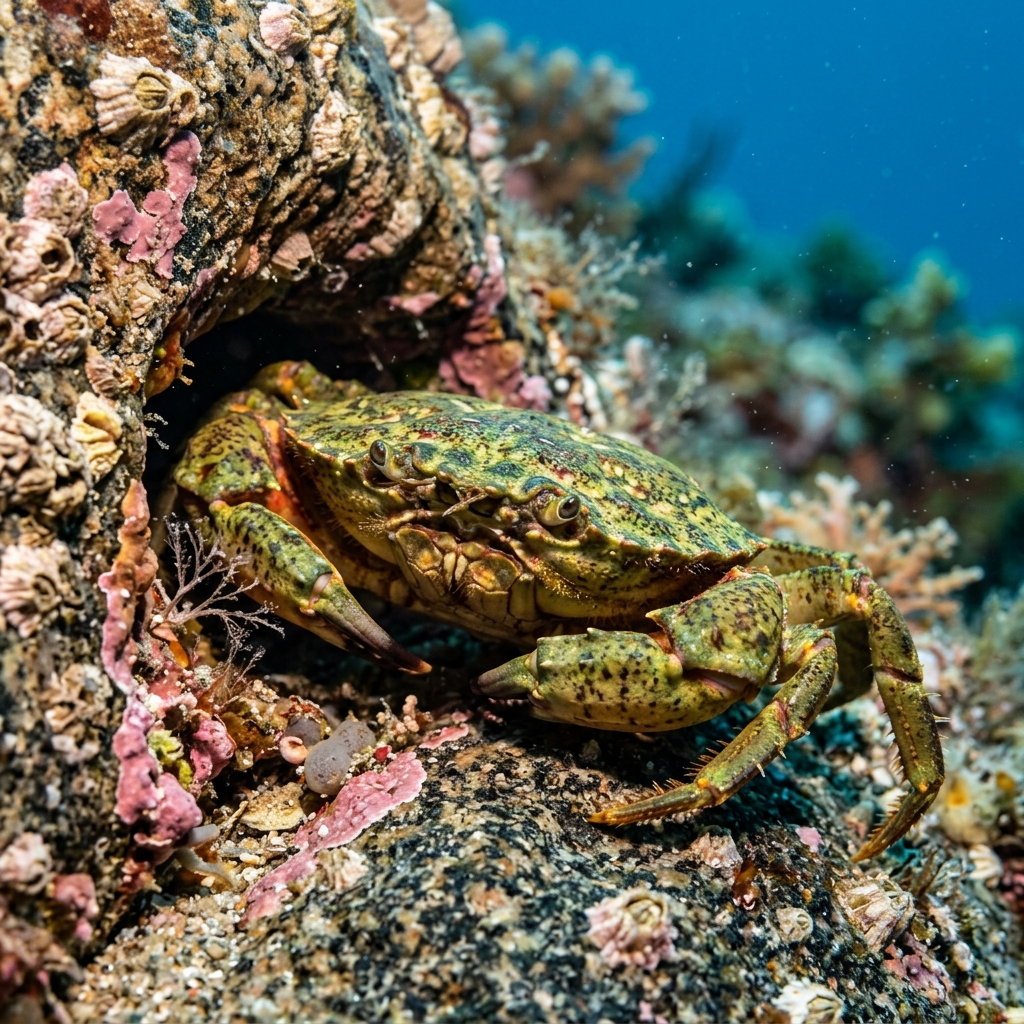
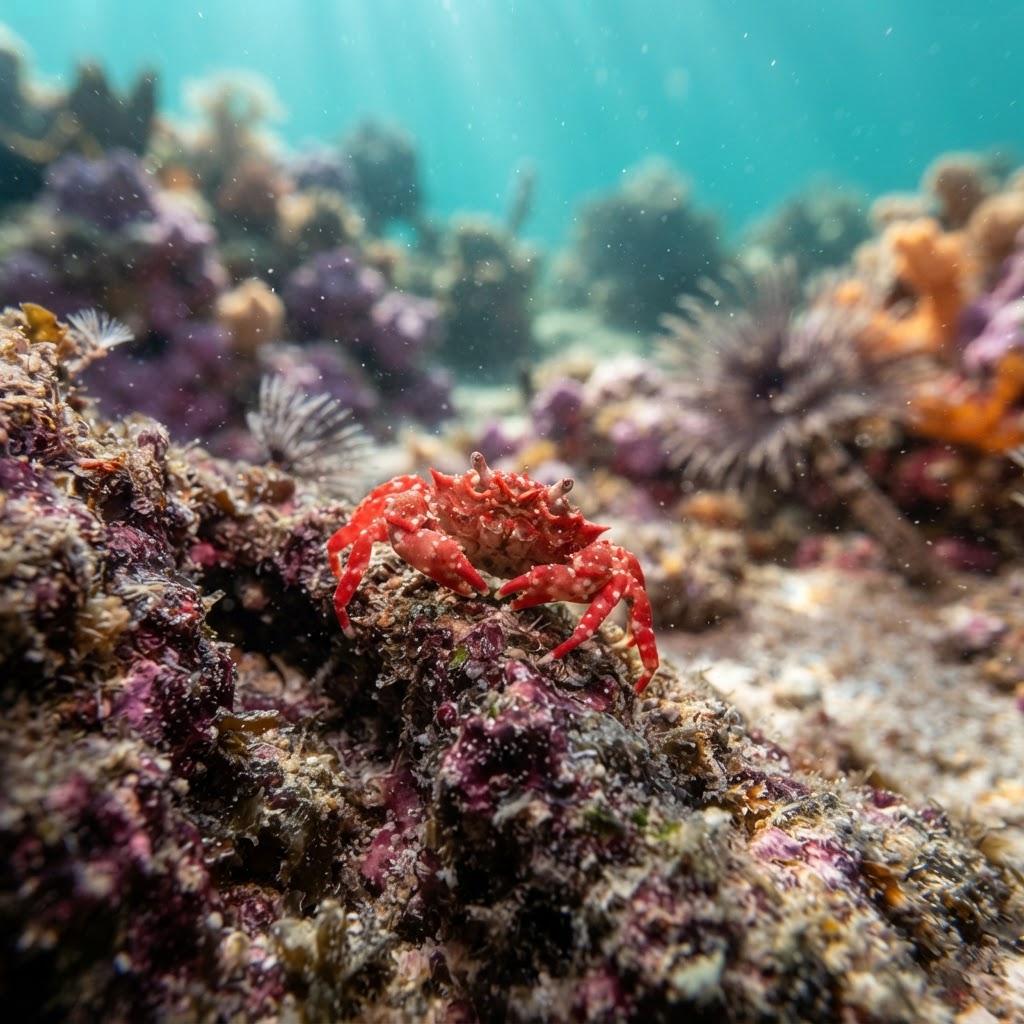
Tiny, only about 2cm across the shell, with a triangular, spider-like body and long, thin walking legs. Colour runs mottled brown to reddish, matching the kelp and algae it clings to, which makes it easy to swim straight past. Look for a pointed, narrowed front (rostrum) between the eyes rather than a rounded crab shape.
Expect to find it tucked among kelp fronds and rocky crevices, moving slowly and relying on its dull colouring to blend in rather than fleeing. It shows little reaction to divers, mostly because it's easy to miss rather than because it's bold. Best spotted with a slow, methodical scan of kelp stipes and holdfasts rather than open swimming.
Like many spider crabs in its family, it likely uses camouflage over speed as its main defence, letting algae and debris on its shell do the hiding for it.
Sightings show no clear seasonal pattern, and with a temperature niche of 9.3 to 15.3C it's built for cold water year-round, so any month diving British Columbia's kelp forests is fair game.
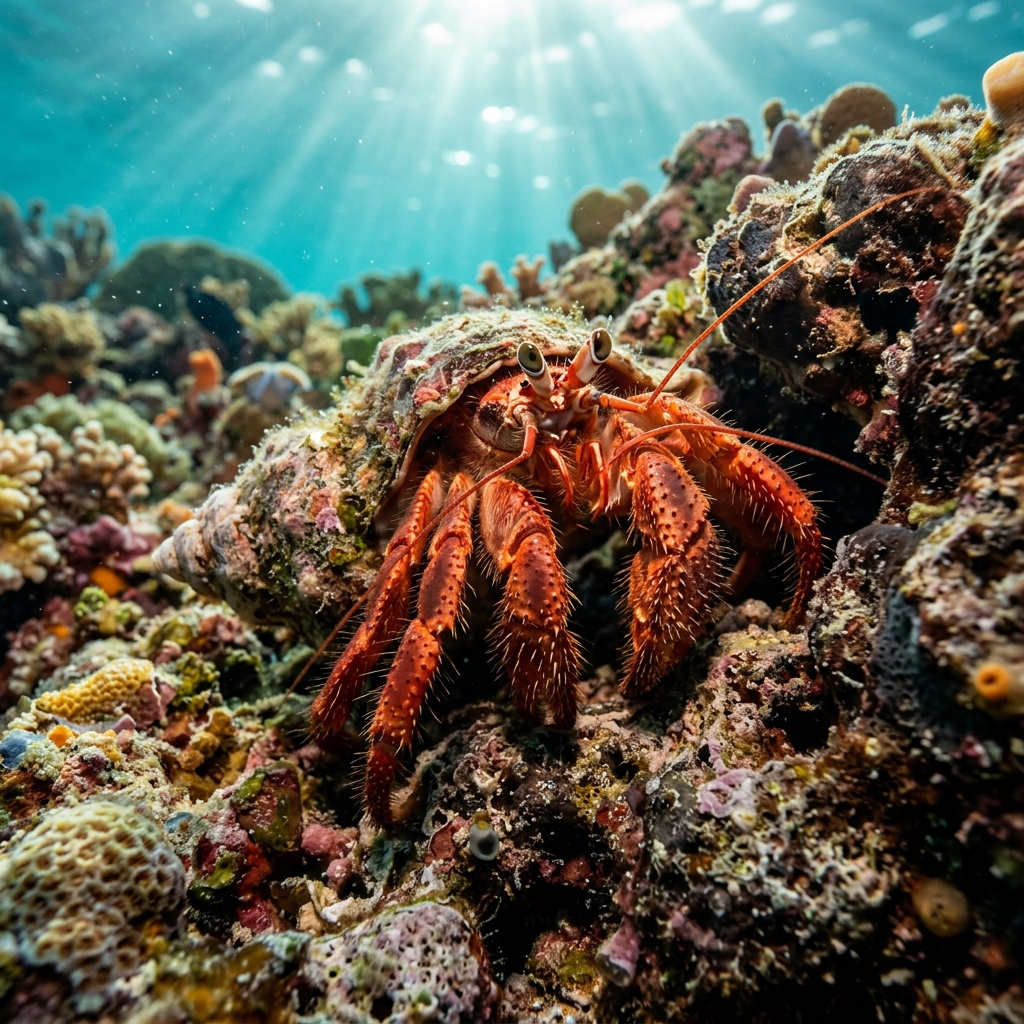
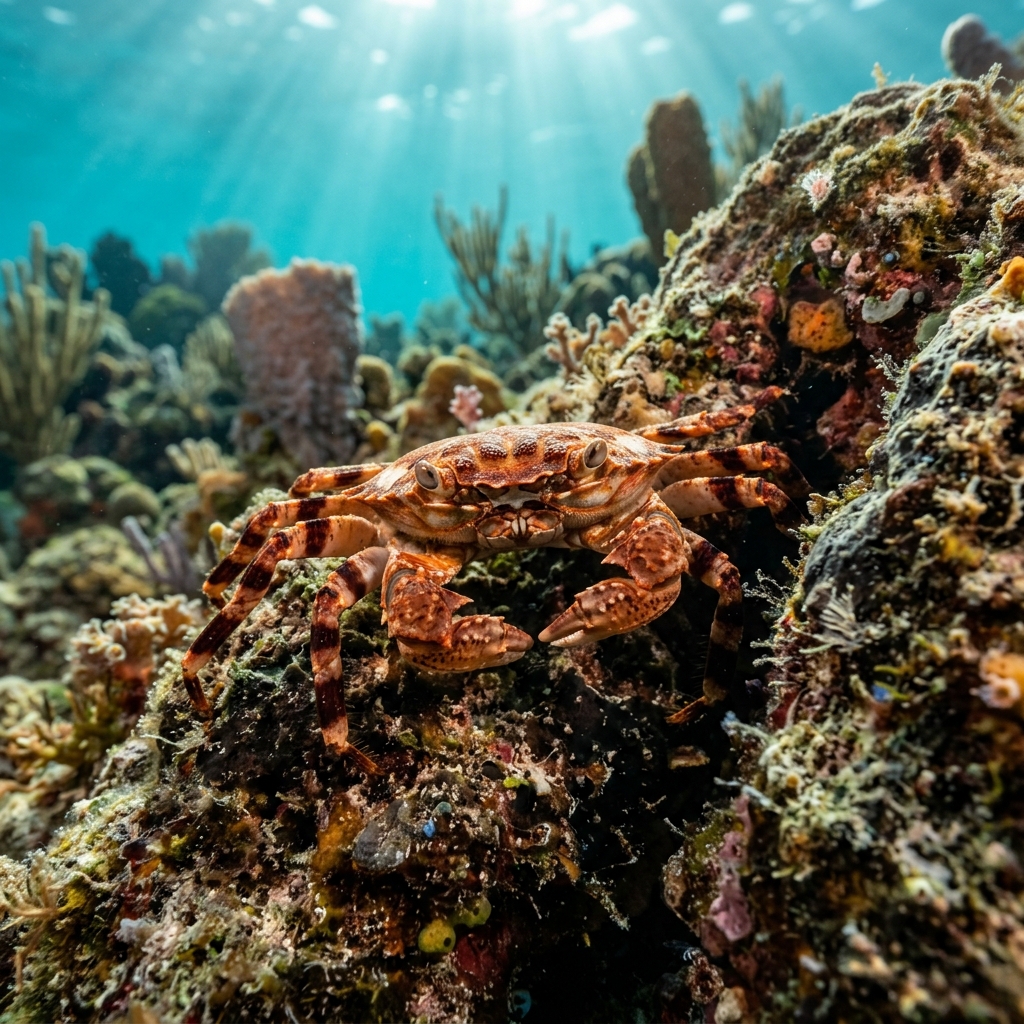
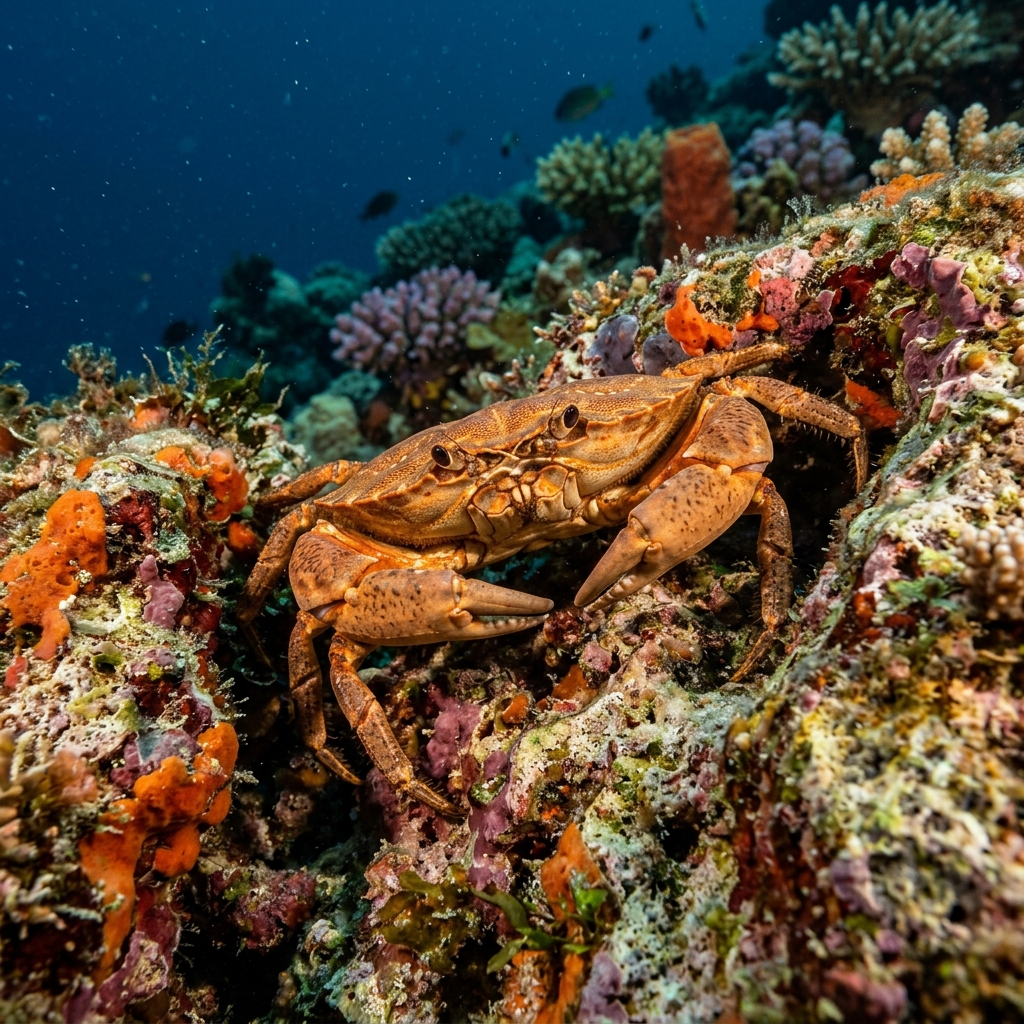
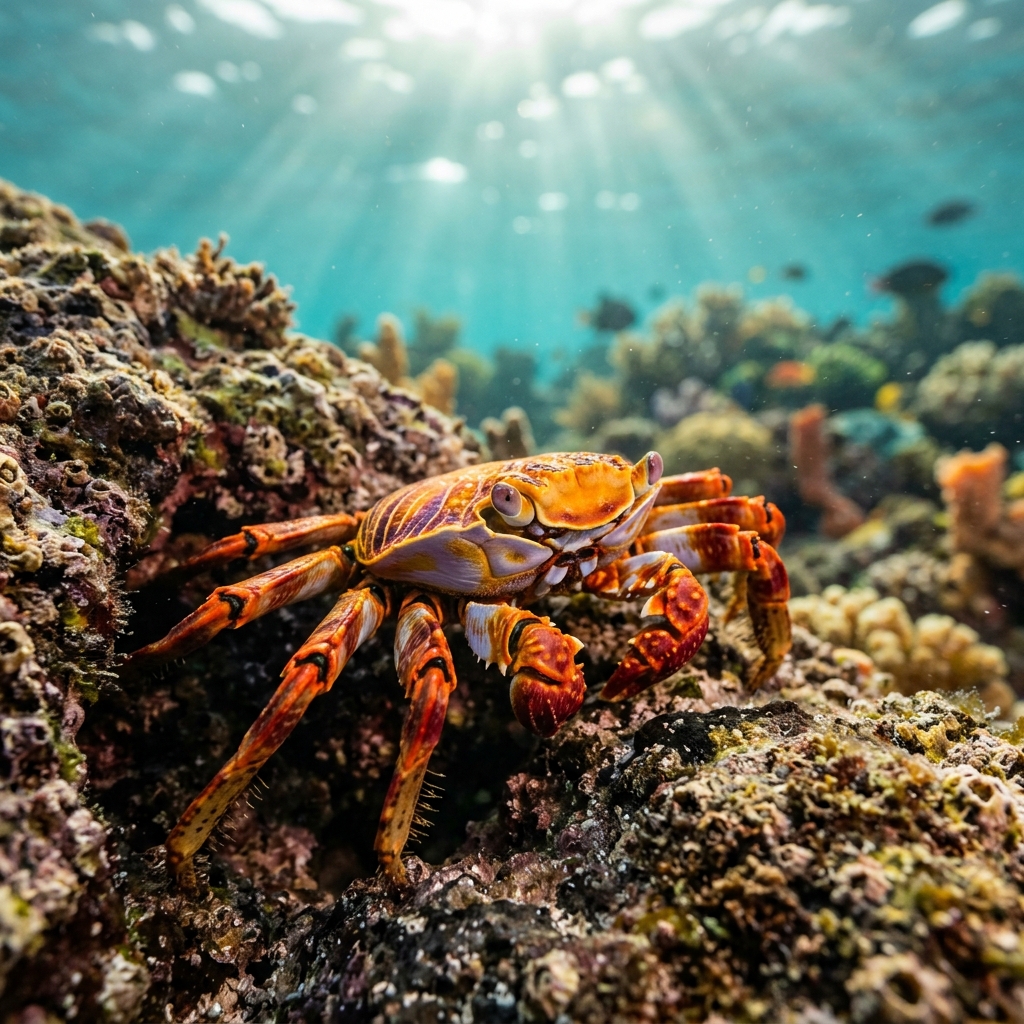
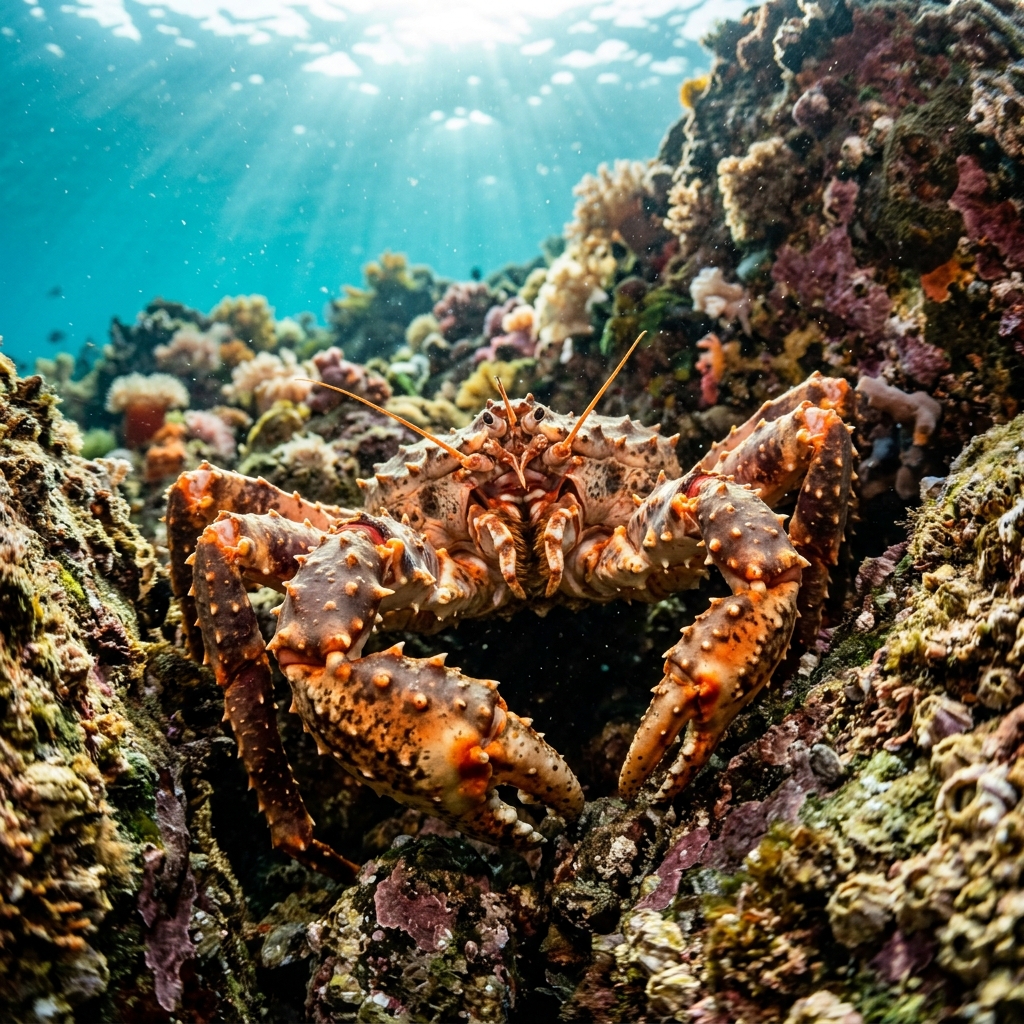
Reef neighbours a diver could mistake it for. Use the identification notes above to tell them apart.
Logged exclusively at sites in British Columbia, Canada, making it a west-coast Canadian speciality rather than a species you'll stumble on elsewhere. Divers working the kelp forests and rocky reefs of British Columbia have the best documented shot at finding one.
Mapping where Kelp Crab is logged…
Every logged sighting comes from British Columbia, Canada, making it a cold-water specialist of the Pacific Northwest kelp forests rather than a species found on tropical reefs.
There's no strong seasonal signal in the data, and it tolerates a cold range of 9.3 to 15.3C, so it can turn up on British Columbia dives at any time of year.
Look for a tiny, 2cm triangular crab with long spindly legs and a mottled brown shell, usually clinging motionless to kelp fronds or rocky crevices rather than moving in the open.
They're small, typically reaching only about 2cm across the shell, so most divers need a close, slow look at kelp and rock surfaces to notice one at all.
No. They pose no danger to divers and are far too small and slow to be anything but a curiosity to spot among the kelp.
Rather than swimming away from threats, it depends on matching the colour and texture of surrounding kelp and algae to stay hidden, a classic spider-crab defence strategy.
Site and sighting data is aggregated from diver logs, iNaturalist and GBIF. For taxonomy and conservation status:
European Green Crab
2,469 sites