Paralabrax clathratus
Kelp bass patrol California's Pacific Coast kelp forests from June to October. Here's how to spot them, where to dive, and what to expect underwater.
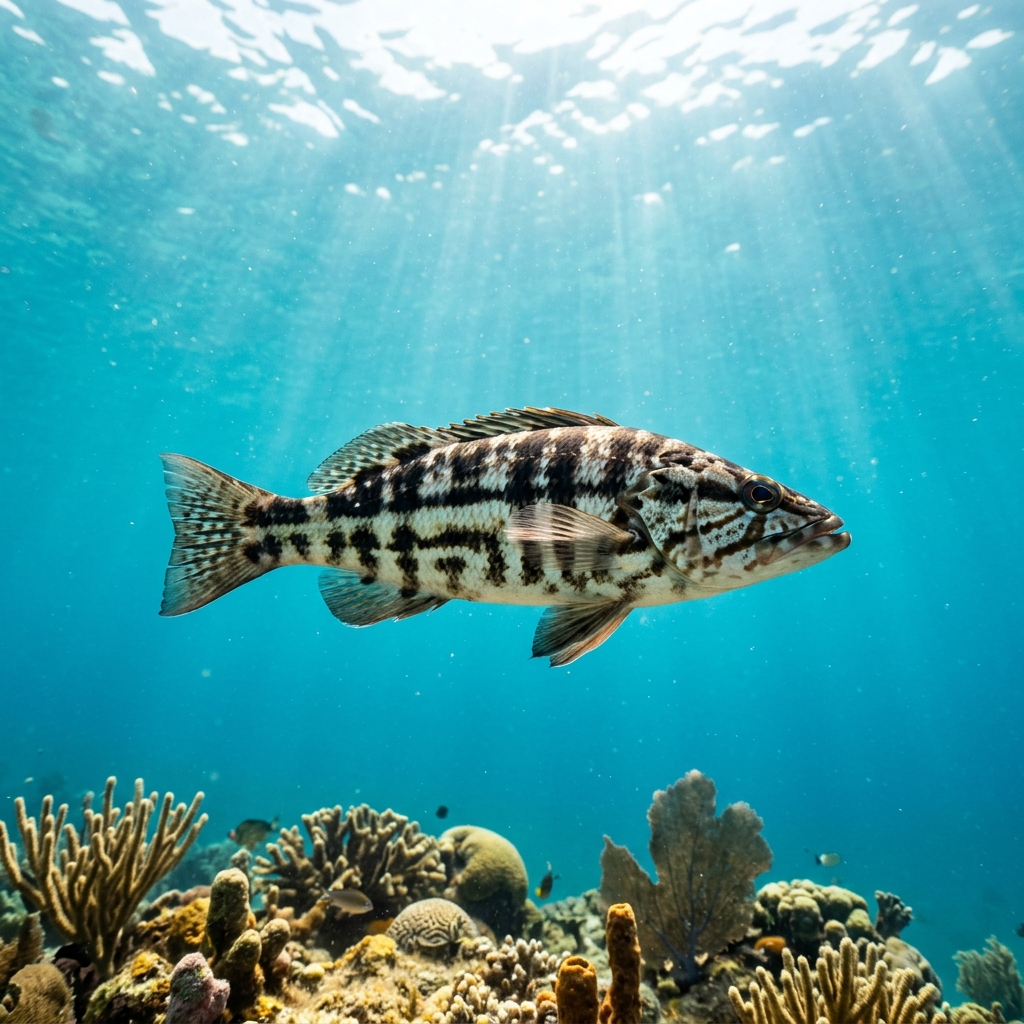
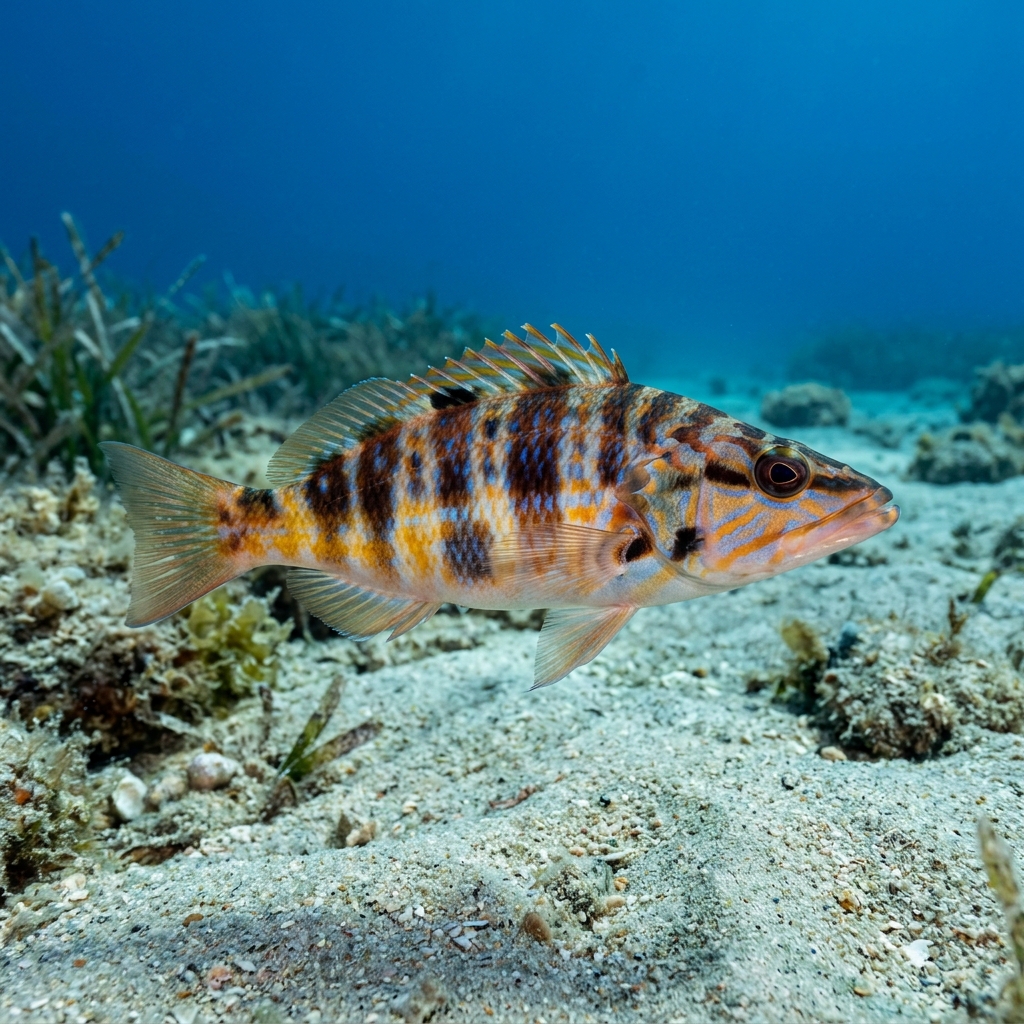
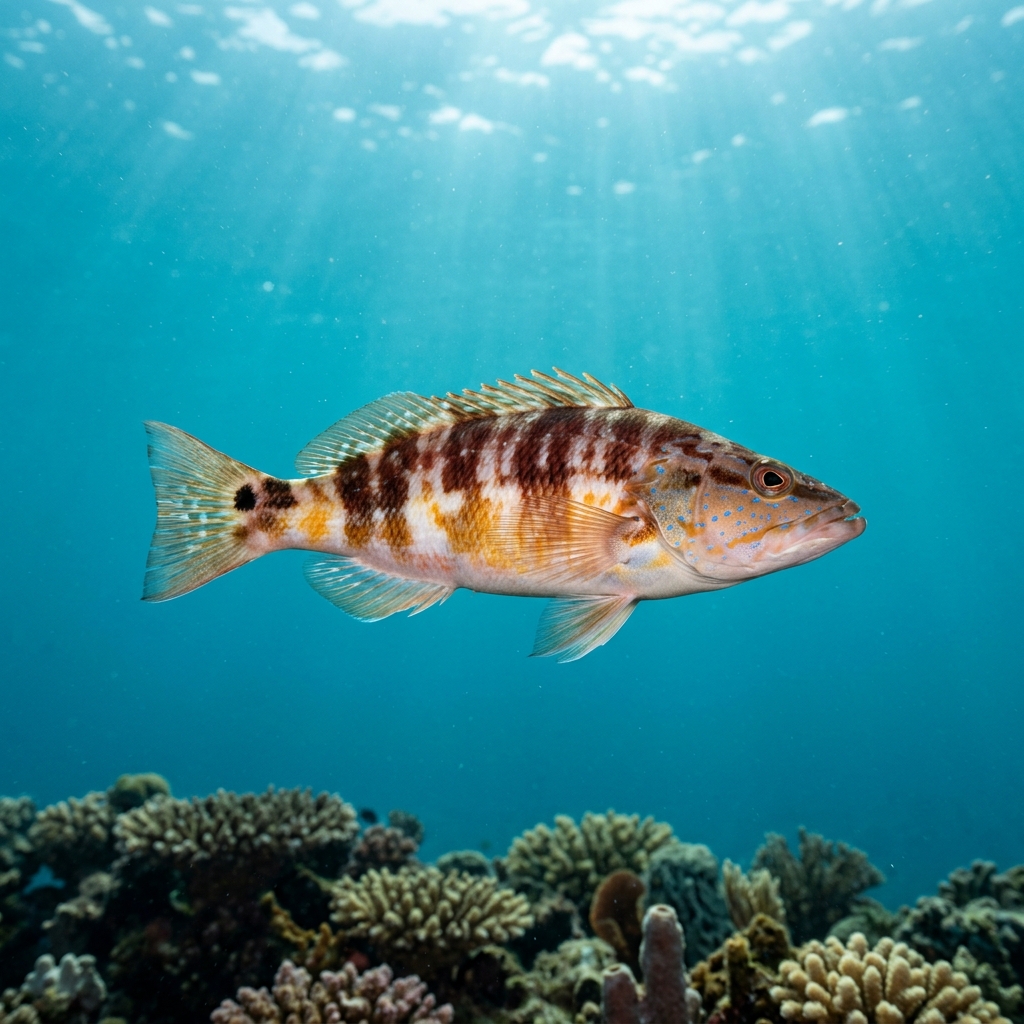
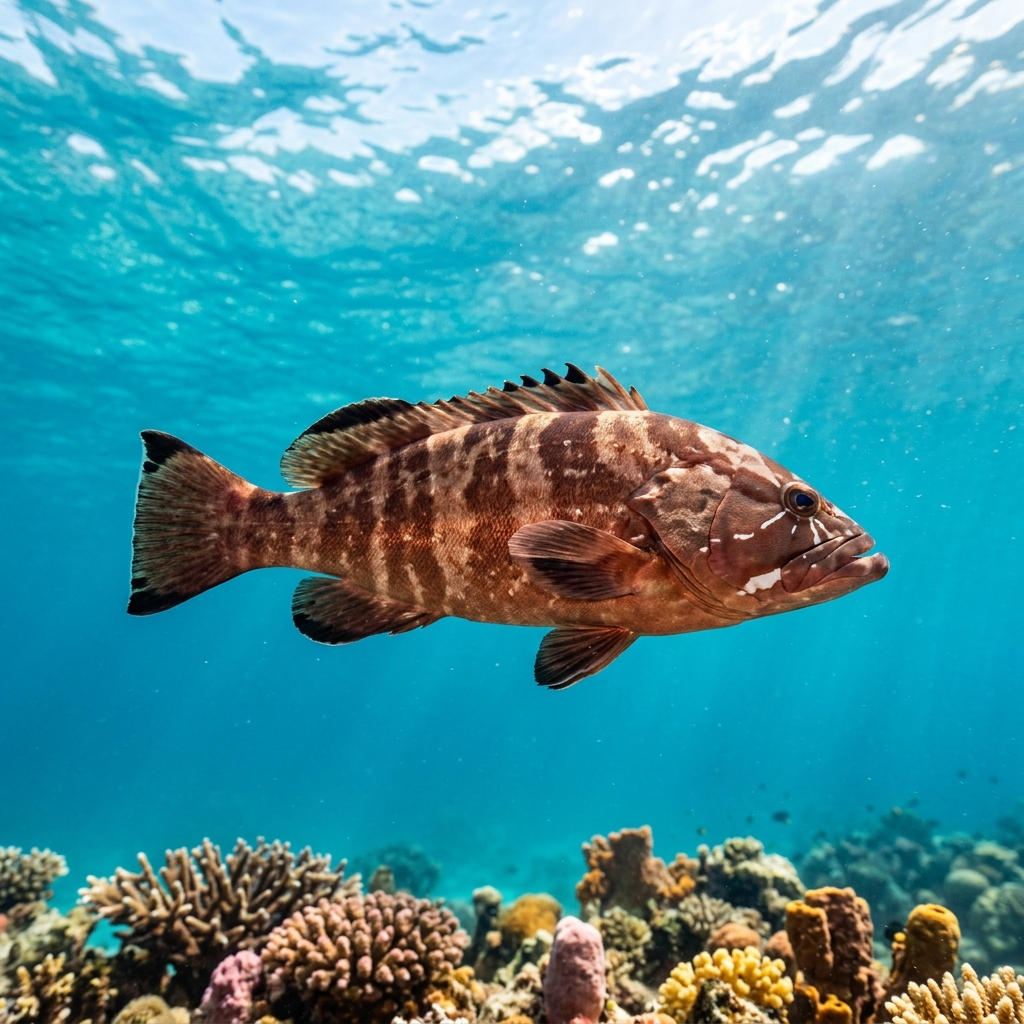
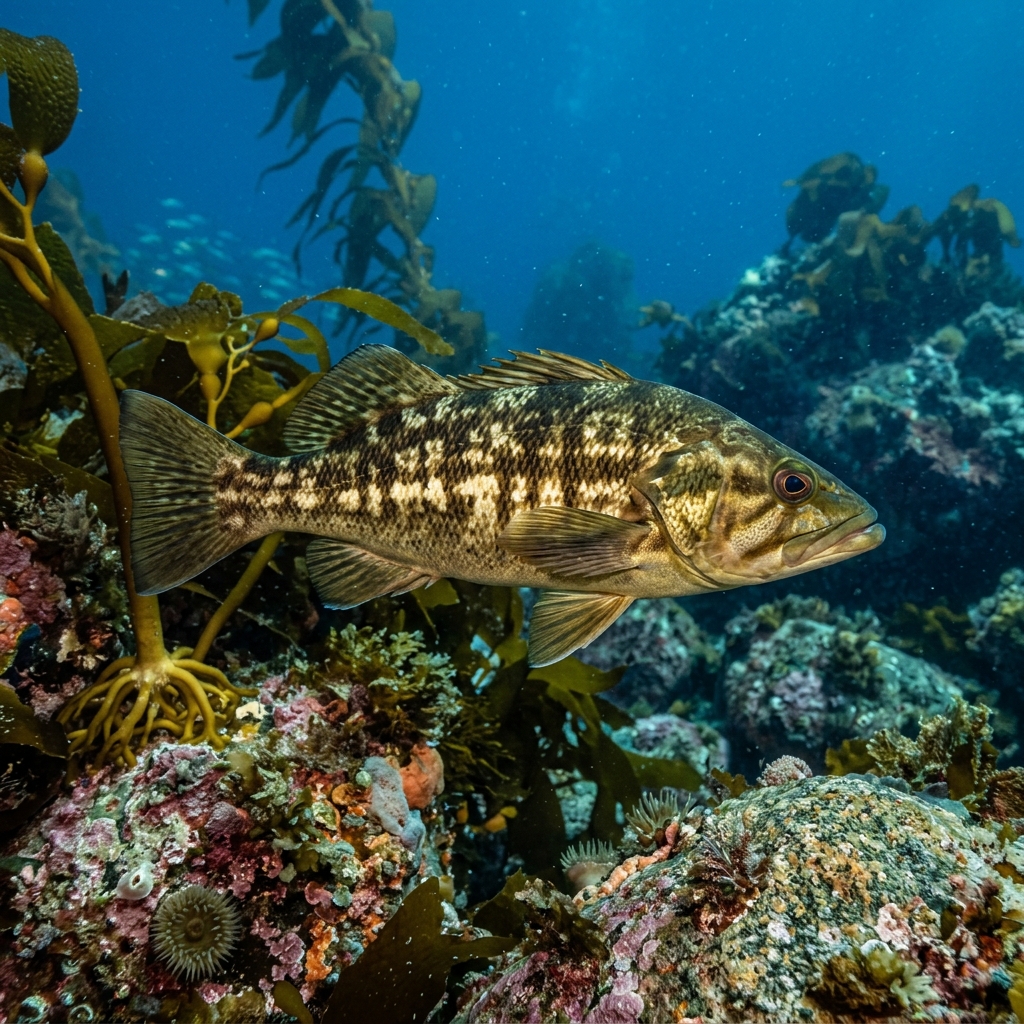
A stocky, medium-sized bass reaching around 50 cm, with a mottled brown-and-pale pattern that helps it blend into the dappled light of kelp forests. The body is laterally compressed and robust, with a notched dorsal fin and a large mouth typical of an ambush predator. Look for the irregular pale blotching across the back and sides, this lattice-like pattern is the key field mark that sets it apart from other reef fish sharing the same habitat.
Kelp bass are curious fish, they will often drift closer to investigate a diver rather than bolt, which makes for relaxed observation. During the day they patrol defined stretches of the kelp forest, and you are as likely to find one hovering mid-water among the fronds as sitting near the bottom. Larger individuals can be noticeably territorial, especially during the summer spawning period, and may posture aggressively at other fish passing through their patch.
Kelp bass are highly site-faithful; individuals have been documented holding territories within the same stretch of kelp forest for years, which means if you spot one on a dive, there is a good chance it will be in exactly the same spot on your next visit.
Sightings concentrate between June and October in Northern Hemisphere waters, which aligns with the warmer end of their observed temperature range (up to around 20 °C). Outside those months encounters become less reliable.
Kelp bass are almost entirely a California and Baja California experience, with the overwhelming majority of sightings logged along the Pacific Coast of the United States. A smaller but solid number of sites extend into Northern Pacific Mexico, making the Baja Peninsula a natural southern extension of the range for divers wanting to combine warm-side conditions with the same species.
Mapping where Kelp Bass is logged…
Kelp bass are most reliably logged along the Pacific Coast of the United States, particularly in California's kelp forest dive sites. They also appear at sites along the Northern Pacific coast of Mexico, including Baja California, where the kelp forest habitat extends southward.
June through October is the peak window, based on logged sightings. Water temperatures along the California coast climb toward 20 °C during these months, which sits at the warmer end of the species' comfort range and coincides with spawning activity that keeps fish active and visible.
Focus on the mottled brown-and-pale lattice pattern across the back and sides, this irregular blotching is the standout field mark. Kelp bass have a robust, compressed body with a notched dorsal fin and a large mouth. At around 50 cm they are a solid, medium-sized fish, noticeably chunkier than most of the smaller wrasse or surfperch sharing the same kelp.
Most kelp bass encountered on dives are in the 30 to 50 cm range, with the largest individuals occasionally exceeding 50 cm. Fish at the upper end of that range are typically older adults holding established territories in mature kelp forest.
No. Kelp bass pose no real risk to divers. Large territorial individuals may posture at other fish during spawning season, but this behaviour is not directed at people. Their curious nature actually makes them one of the more approachable fish in the kelp forest.
Kelp bass are opportunistic carnivores that feed on smaller fish, squid, and invertebrates. Divers sometimes witness short, fast pursuit bursts as a bass accelerates through the kelp after prey, a good reminder to watch the fish rather than just the scenery when one is patrolling nearby.
Site and sighting data is aggregated from diver logs, iNaturalist and GBIF. For taxonomy and conservation status:
Blacktip Grouper
2,726 sites