Kaloplocamus ramosus
A rare, spiky orange nudibranch found on muck dives in Victoria, Australia and the Azores, in 18-24C water year-round.
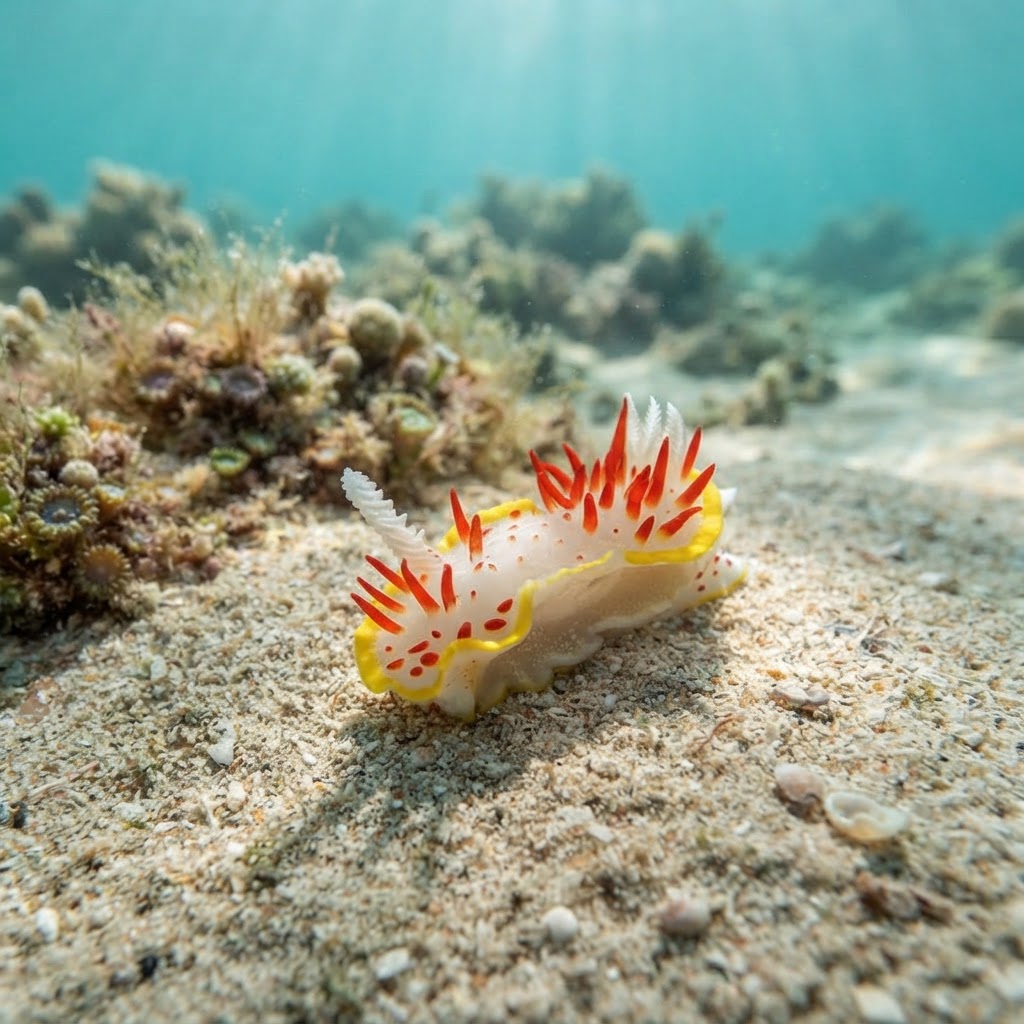
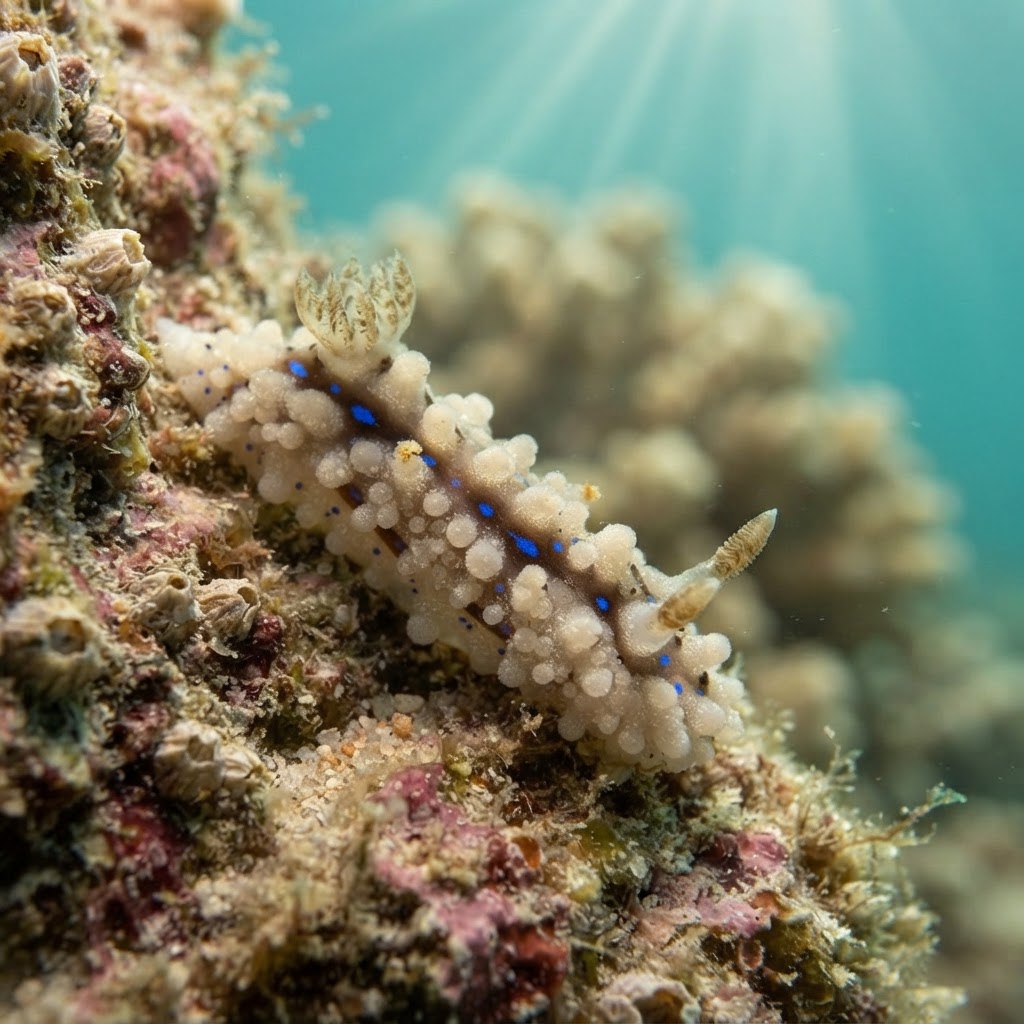
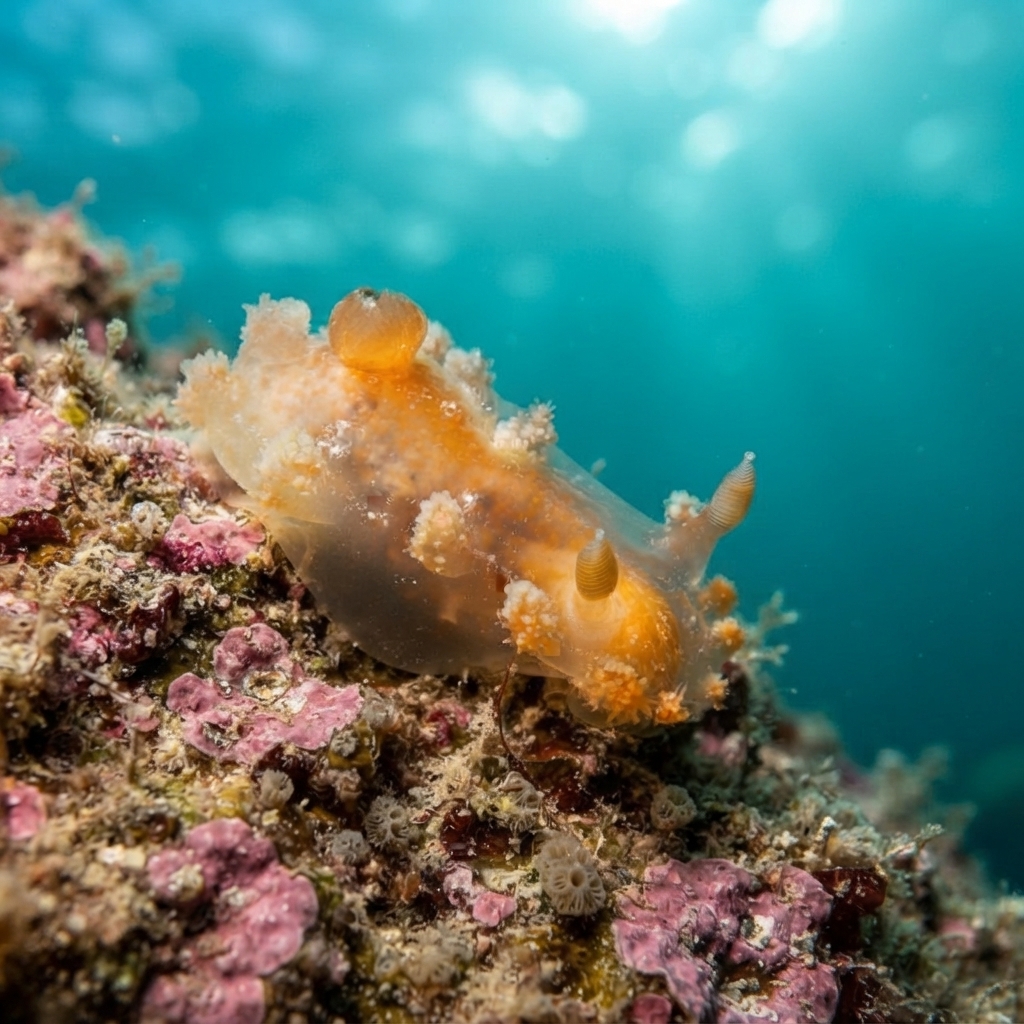
A small nudibranch with a translucent-to-orange body studded with branching, finger-like tubercles (bumps) that give it a shaggy, spiky silhouette rather than a smooth dorid shape. Look for orange-tipped projections along the mantle edge and a pair of rhinophores (sensory stalks) that often carry the same knobby texture as the body. Its small size and rough outline make it easy to walk past on a reef wall unless you are searching slowly with a torch.
Divers find it slow-moving and stationary on rock and rubble, usually grazing rather than reacting to a torch or camera. It's logged as rare at most sites where it occurs, so sightings tend to come from divers doing deliberate, slow searches along reef walls rather than casual passes.
Like other polycerid nudibranchs, it likely feeds on hydroids or bryozoans, using its spiky tubercles for camouflage against similarly textured encrusting growth rather than for defence.
Sightings don't show a clear seasonal pattern, so treat it as a year-round find in both Victoria and the Azores. Water in the 18 to 24C range where it's been recorded spans most of the diving calendar in these temperate regions.
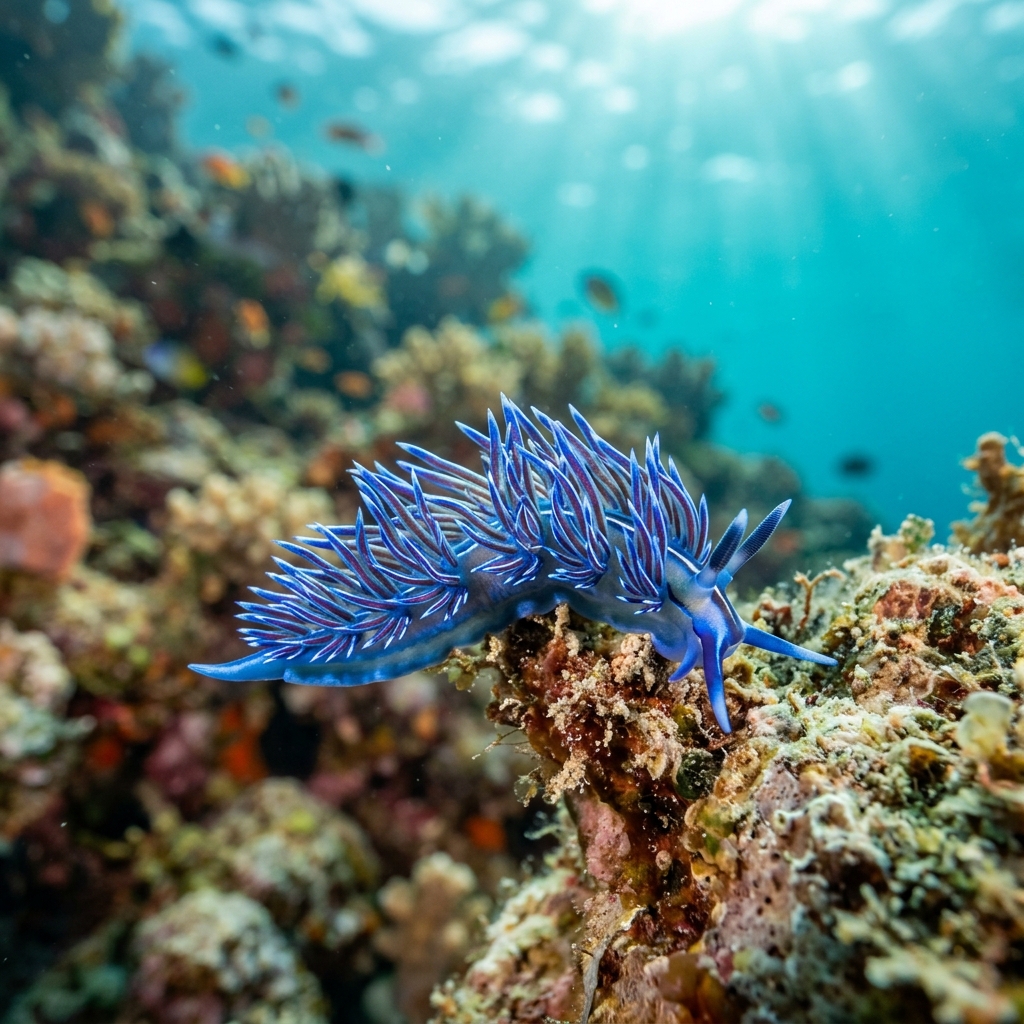
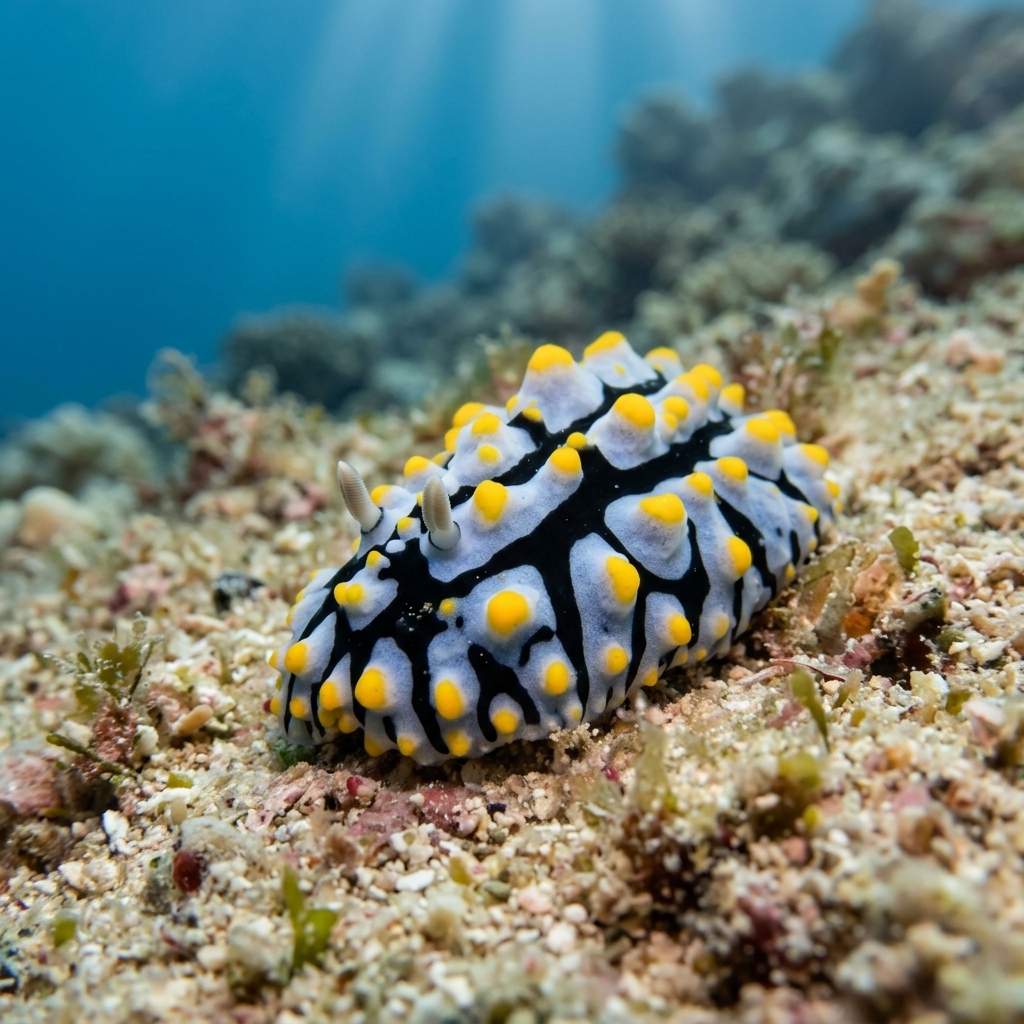
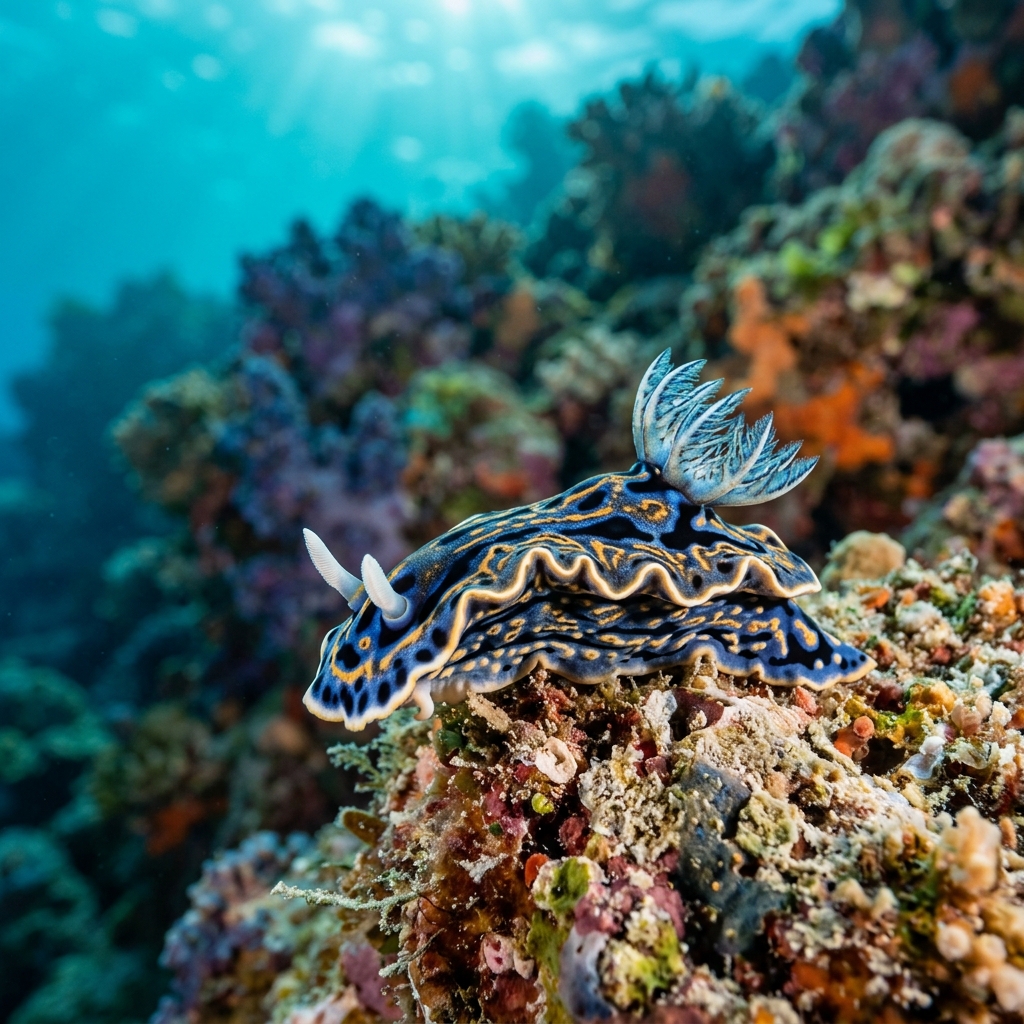
Reef neighbours a diver could mistake it for. Use the identification notes above to tell them apart.
Most reliably logged around Victoria in Australia, where it turns up across a wide spread of temperate reef sites, and it also holds a smaller but steady presence around Terceira and Graciosa in the Azores. Both regions are cool-temperate rocky reef systems rather than tropical coral, which fits this species' niche.
Mapping where Kaloplocamus ramosus is logged…
It's most commonly logged around Victoria, Australia, with a smaller but consistent presence around Terceira and Graciosa in the Azores. Both are cool-temperate rocky reef destinations rather than tropical reef systems.
There's no strong season in the sighting data, so it's considered a year-round find in both Victoria and the Azores, matching the 18 to 24C water it's typically recorded in.
Look for a small nudibranch with a rough, spiky outline from branching orange-tipped tubercles covering its body and mantle edge. It lacks the smooth, glossy look of typical Chromodoris species, making its shaggy texture the key giveaway.
Exact size data isn't confirmed, but like most polycerid nudibranchs it's a small species, generally under a few centimetres, best spotted with a slow, close search of the substrate.
No, it poses no danger to divers. It's a small, slow-moving nudibranch that simply grazes on the reef and has no sting or venom of concern to people.
Site and sighting data is aggregated from diver logs, iNaturalist and GBIF. For taxonomy and conservation status:
Blue Dragon
3,163 sites