Cancer borealis
Reddish, boulder-like crab logged across the Northeast US and Nova Scotia in cool 6 to 12°C water, year-round on rocky bottoms.
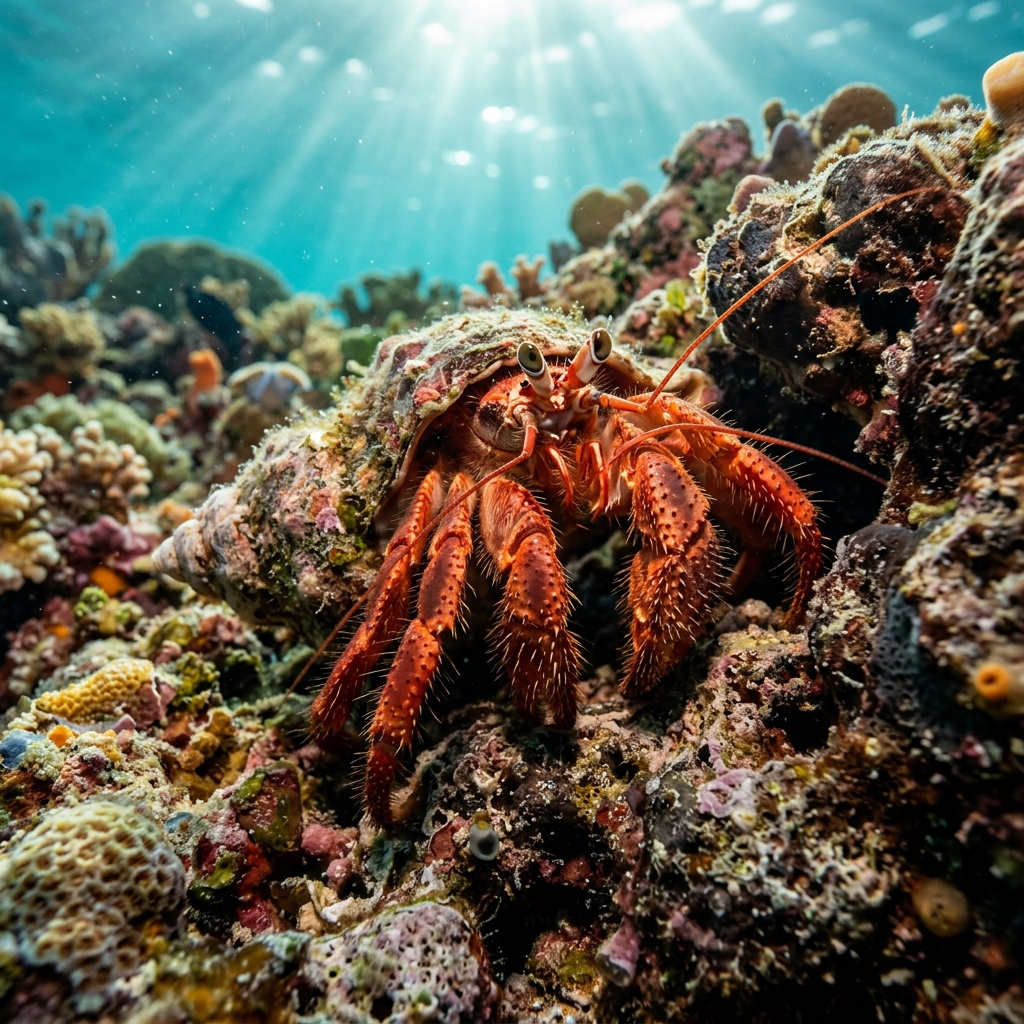
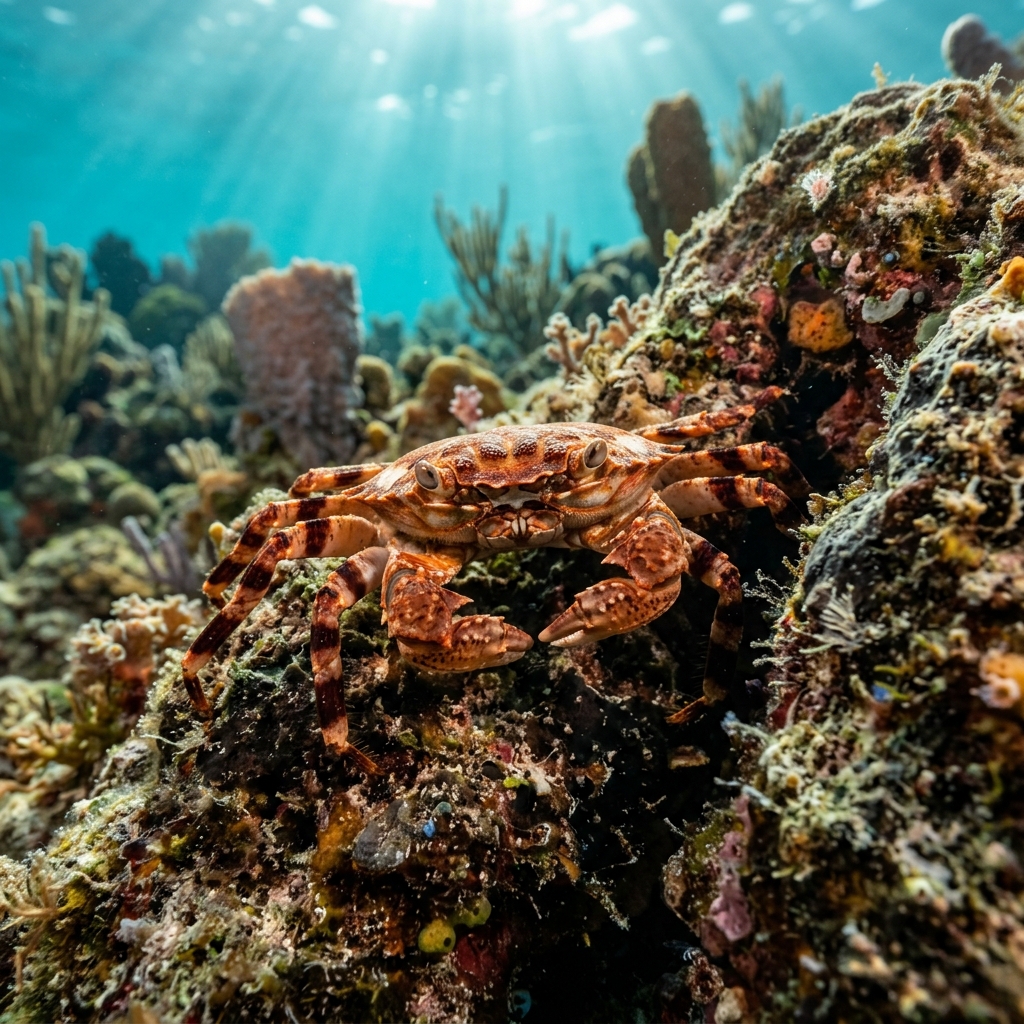
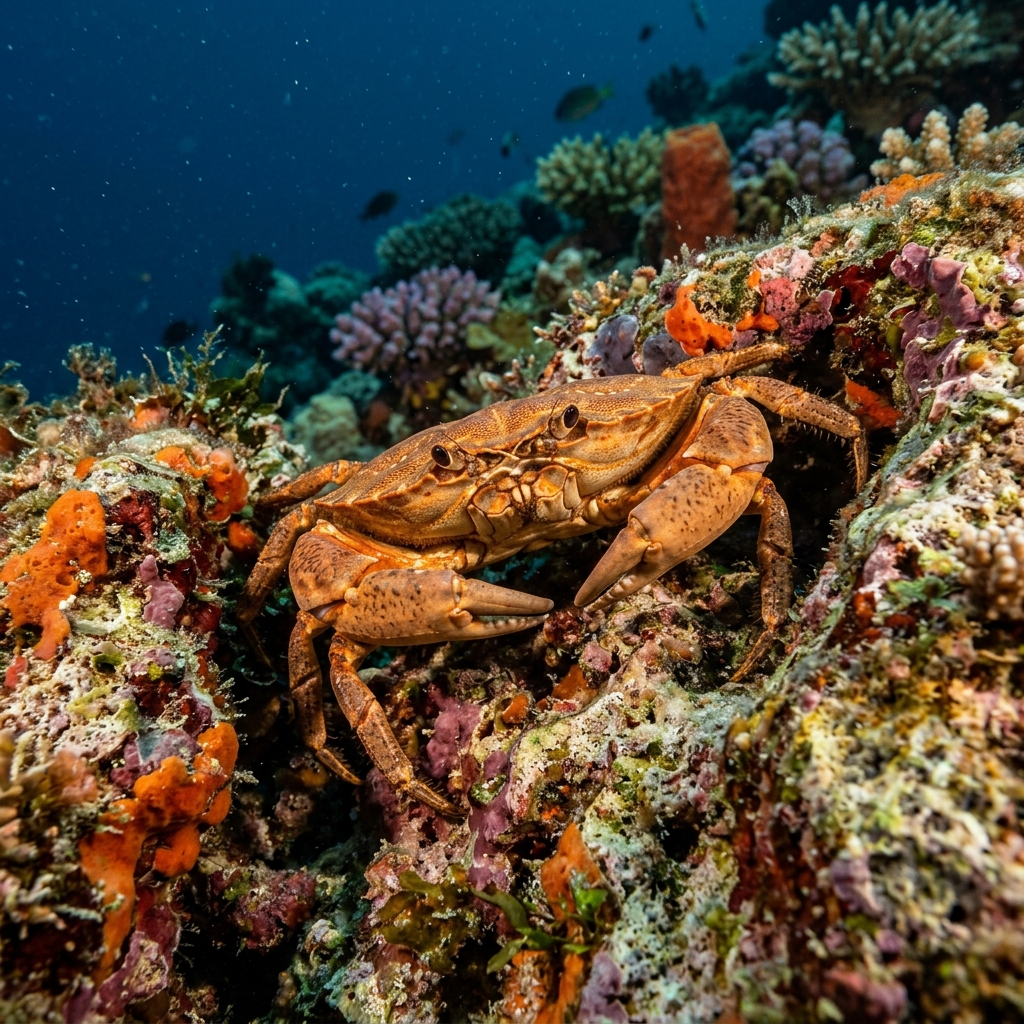
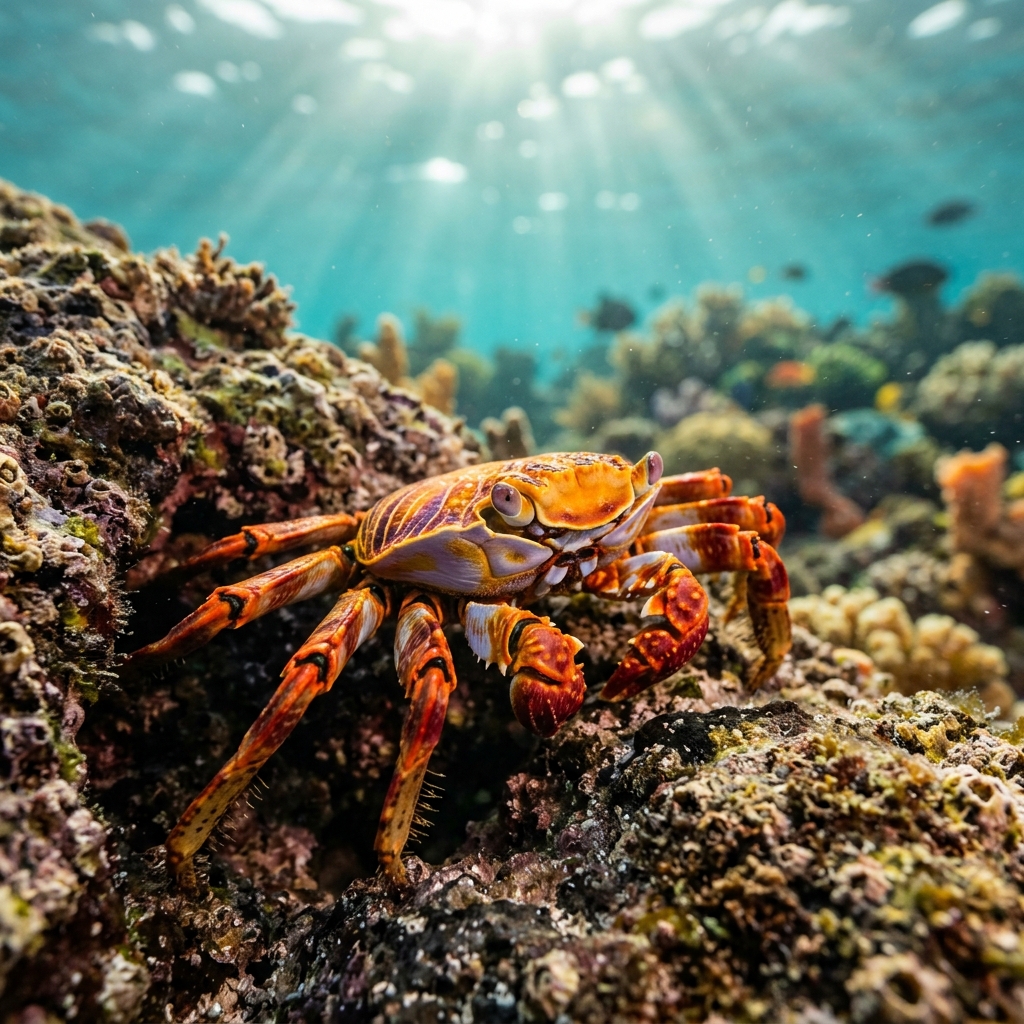
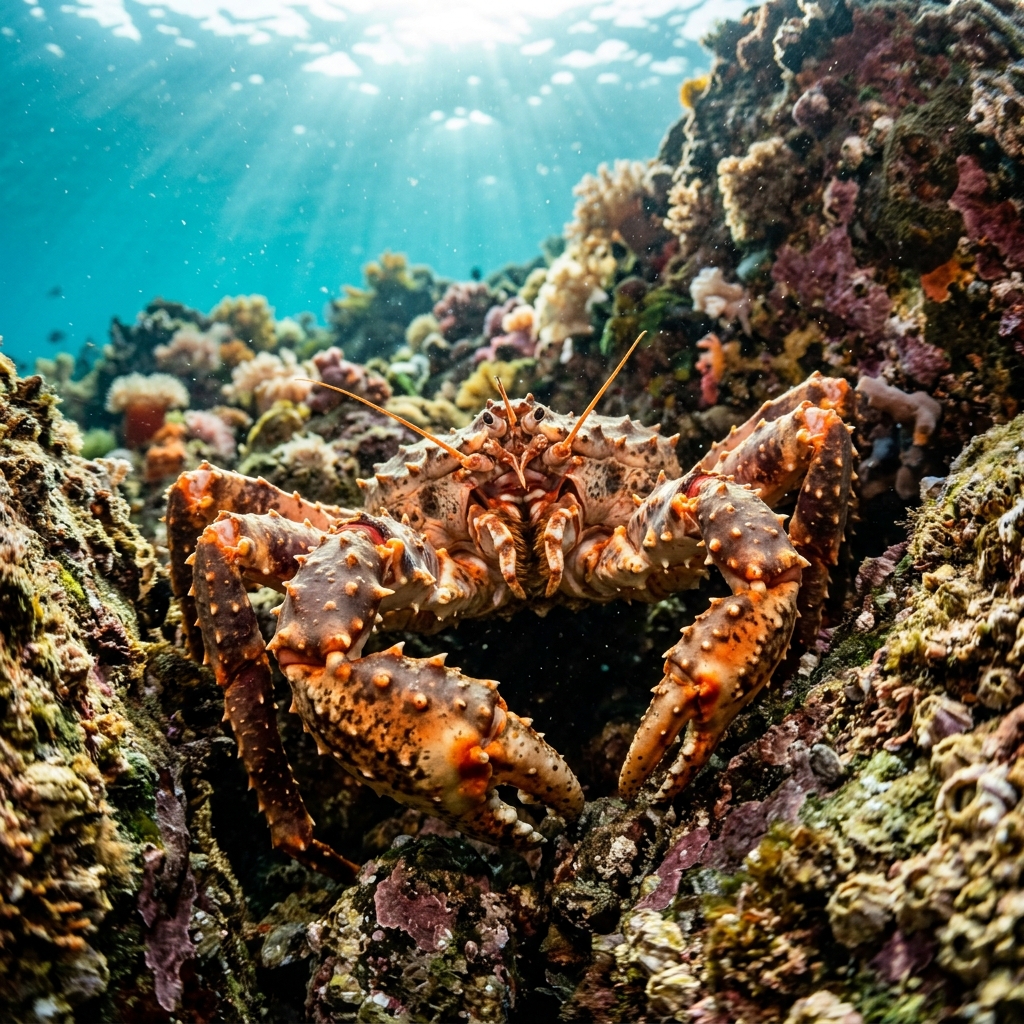
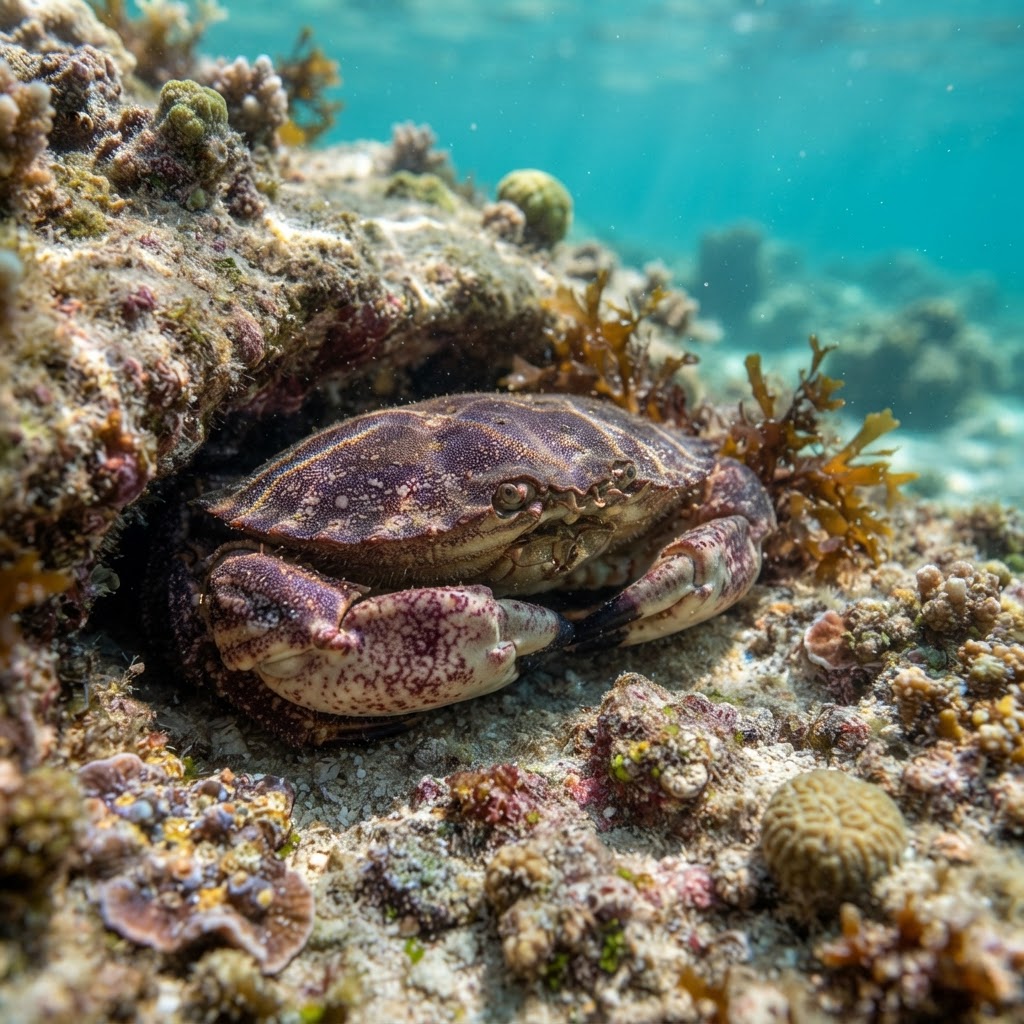
Broad, rounded shell around 11 cm across, coloured a mottled brick-red to purplish-brown that blends well with rocky rubble. Look for the finely scalloped, wavy edge along the front of the shell and the dark purple-black tips on the claws. It sits low and flat against rock or under ledges rather than swimming or perching in the open, which combined with its size and colour usually separates it from other crabs on the same bottom.
Divers most often find these crabs tucked under rock ledges, in crevices, or partly wedged into rubble and cobble bottoms rather than out in the open. They tend to hold still or shuffle backward defensively when approached rather than bolt, and a slow, careful look under ledges is usually how divers spot one. Most logs describe single individuals rather than groups, in line with a solitary, bottom-hugging lifestyle.
Jonah crabs are known to migrate seasonally between shallow coastal rock and much deeper offshore water, so the animal a diver meets on a nearshore ledge may spend other parts of the year far beyond diving depth.
No clear seasonal pattern shows up in the sightings, and with a comfort range of roughly 6.3 to 12.3°C it stays active on cool rocky bottoms through most of the diving calendar in these regions.
Most reliably logged on cool-water rocky sites in the Northeast United States and Nova Scotia, Canada, with a smaller but steady presence in New Brunswick. These are the strongholds for the species, with sightings ranging from occasional to reliably common depending on the site.
Mapping where Jonah Crab is logged…
The strongest sightings come from the Northeast United States and Nova Scotia, Canada, with additional records from New Brunswick. Look on rocky reef sites with ledges and crevices rather than sand or coral.
Sightings don't show a strong seasonal pattern, so they are logged across the diving year in cool water between about 6 and 12°C. There's no need to time a trip around a particular month for this species.
Check for a mottled reddish-brown shell about 11 cm wide with a wavy, finely scalloped front edge, plus dark purple-black claw tips. It usually sits tucked under a rock ledge or wedged in rubble rather than out in the open.
They typically reach around 11 cm across the shell, a solid handful-sized crab rather than a small one. Size alone helps rule out many smaller reef crabs when you're trying to identify one.
No, they pose no real risk to divers. Like most crabs they may pinch defensively if handled, so the simplest approach is to observe from a short distance and leave them undisturbed under their ledge.
They are known to make seasonal migrations between shallow coastal rock and deep offshore water, meaning the population divers see nearshore can shift through the year as crabs move to different depths.
Site and sighting data is aggregated from diver logs, iNaturalist and GBIF. For taxonomy and conservation status:
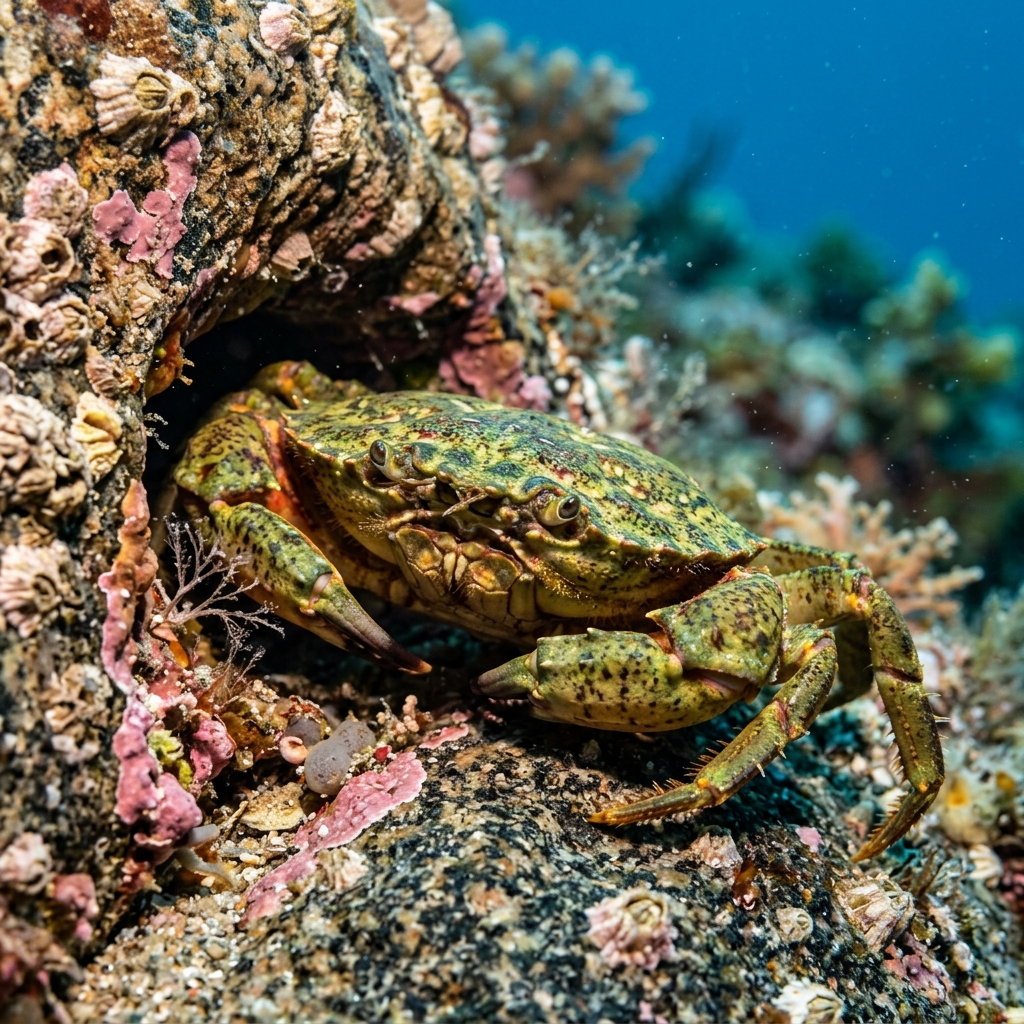
European Green Crab
2,469 sites