Calamus bajonado
Blunt-nosed and copper-toned, Jolthead Porgy turns up on reefs from the Yucatán Peninsula to Lighthouse Reef, Belize, year-round in warm water.
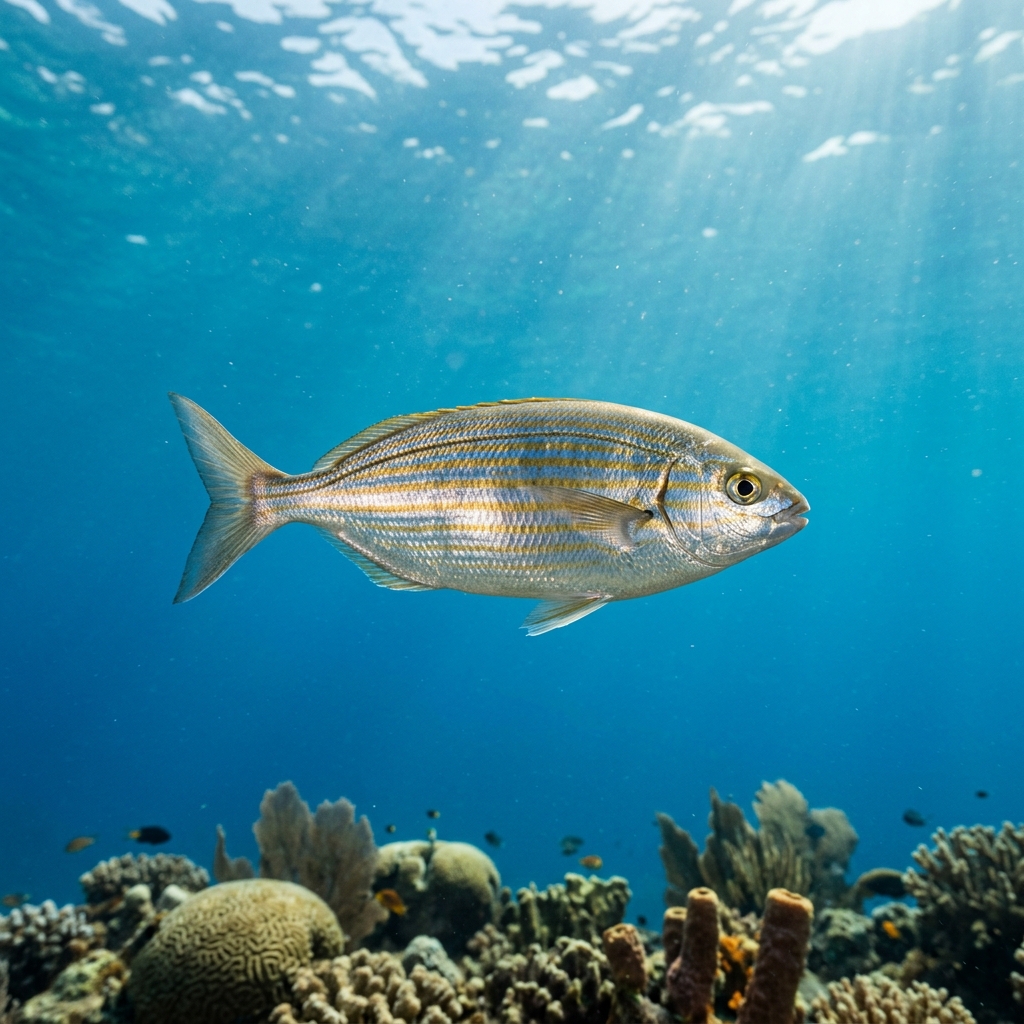
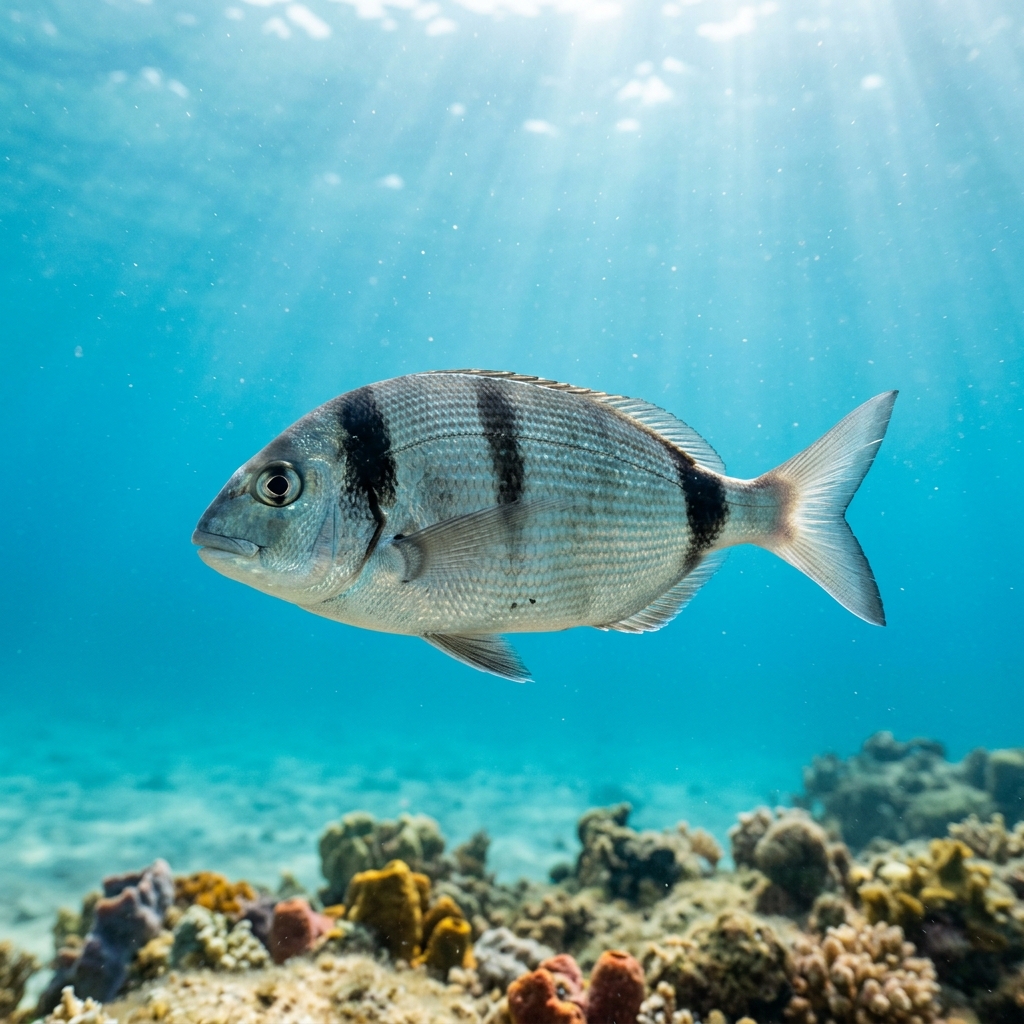
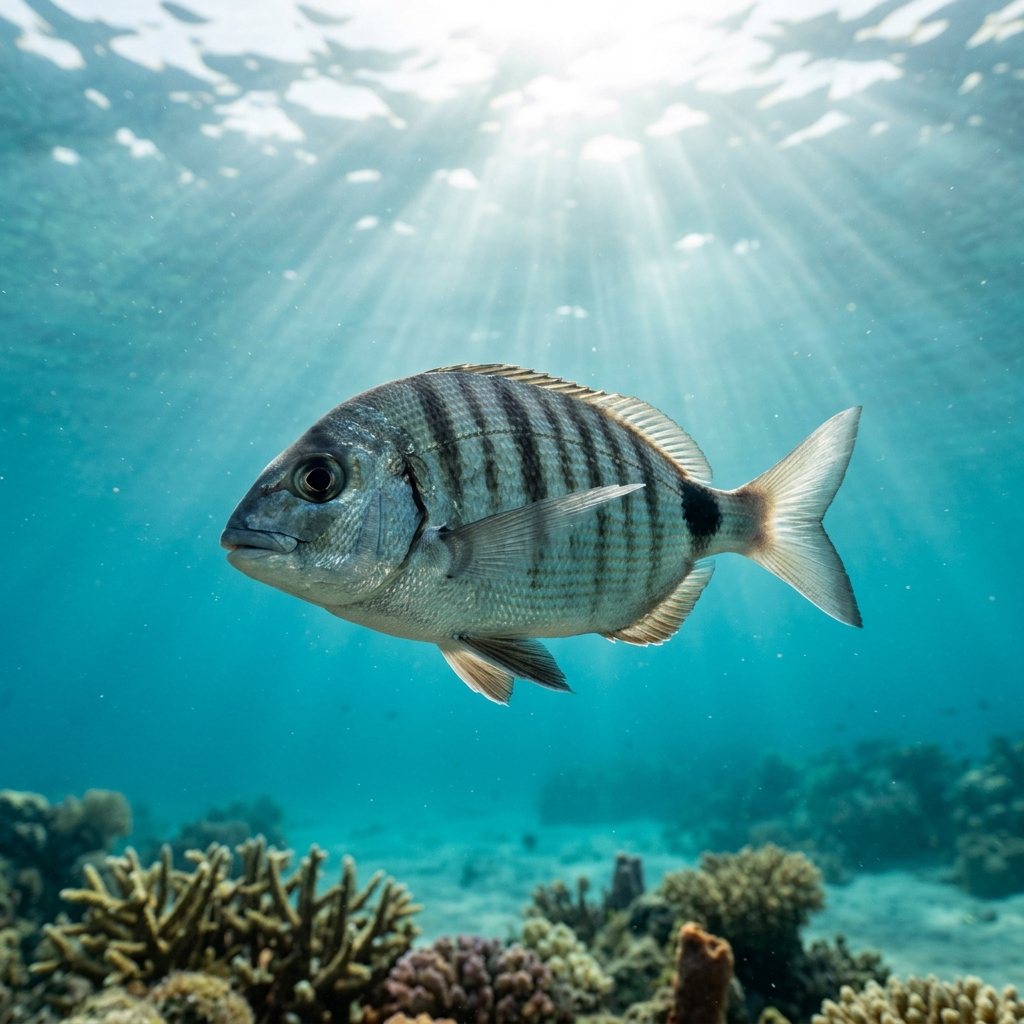
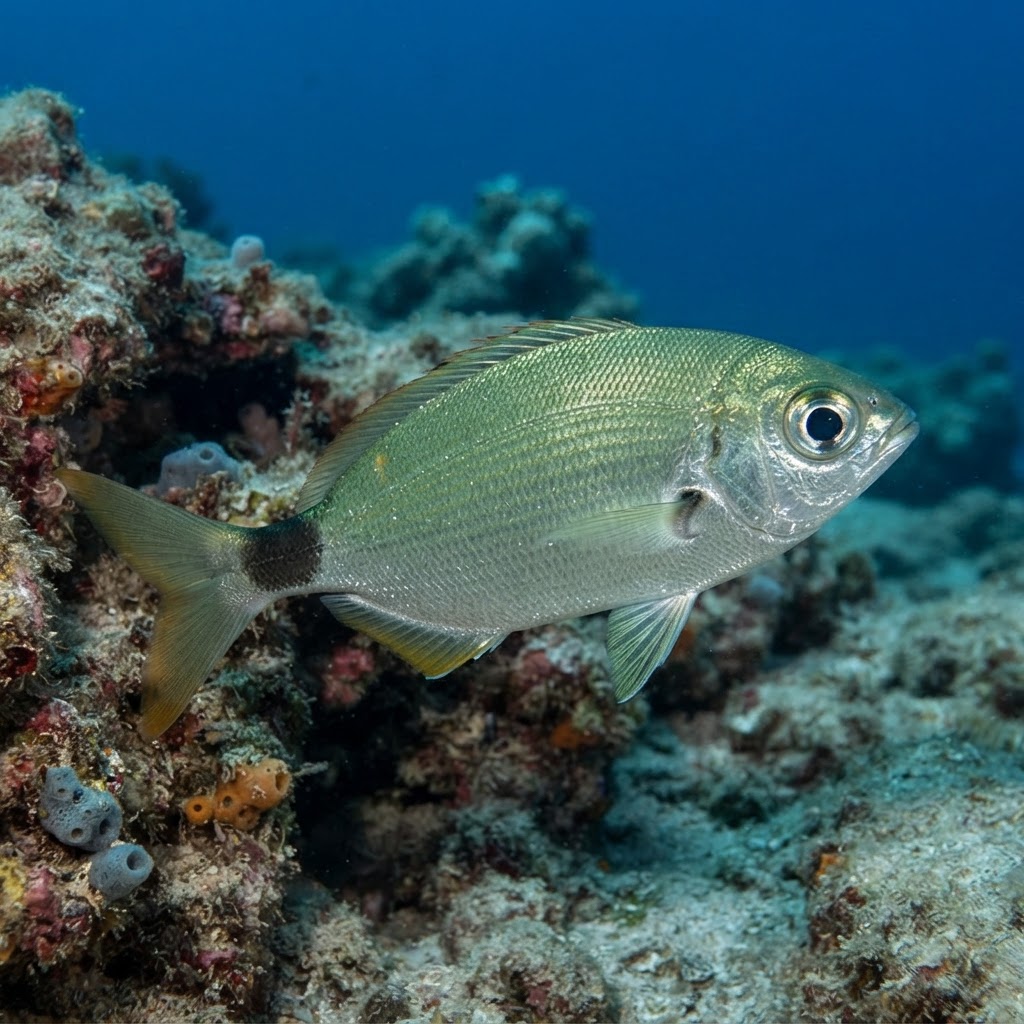
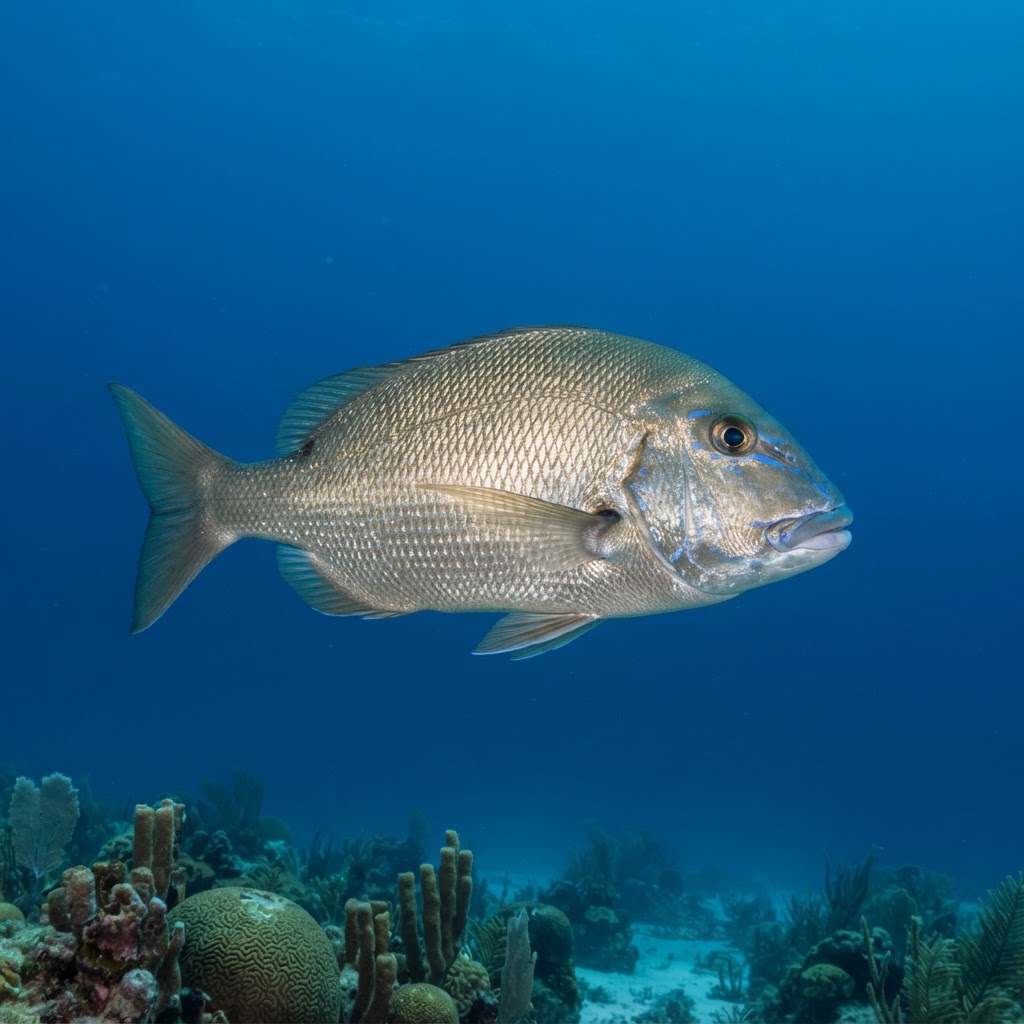
Look for a deep, oval-bodied fish with a noticeably blunt, steep forehead and a small mouth set low for grubbing in sand and rubble. Adults run a coppery silver over the flanks, often with a faint blue sheen around the face, and can reach around 53 cm, making them one of the larger porgies you'll cross on a reef edge. There's no bold pattern to key on here; the giveaway is that steep-faced profile combined with its habit of hanging just off the reef over sand.
Expect to find it cruising alone or in small loose groups over sand patches and rubble at the base of reef structure, nose-down and picking through the substrate for hard-shelled prey. It's not a fish that reacts much to divers; most sightings are simply logged as uncommon rather than dramatic, so a slow drift past the reef base is usually all it takes to spot one. Divers describe it as unhurried and easy to approach without it bolting for cover.
That blunt, almost vertical forehead houses strong crushing plates in the throat, which it uses to break open molluscs and crustaceans picked off the sand, a jaw setup shared across the sea bream family.
Sightings don't show a clear seasonal pattern, and with a comfortable range of roughly 18.6 to 27.5 C it can turn up on Caribbean and Florida reefs at any time of year. Plan the dive around the destination's usual conditions rather than chasing a specific month for this fish.
This one is most reliably logged around the Yucatán Peninsula in Mexico and Lighthouse Reef in Belize, with a further scatter of sightings across Florida, the Bay Islands in Honduras, Bonaire's Leeward Coast and Basse-Terre in Guadeloupe. It's a Caribbean and western Atlantic reef fish through and through, so target reef and rubble edges in any of these regions rather than open water.
Mapping where Jolthead Porgy is logged…
It's most consistently reported around the Yucatán Peninsula in Mexico and Lighthouse Reef in Belize, with additional sightings in Florida, the Bay Islands of Honduras, Bonaire and Guadeloupe. It favours reef edges bordering sand or rubble across the wider Caribbean and western Atlantic.
There's no strong seasonal pattern in the sightings, so it's considered a year-round fish on the reefs where it occurs. Its comfortable temperature range, roughly 18.6 to 27.5 C, matches typical Caribbean and Florida conditions across the calendar.
Look for a deep-bodied, coppery-silver fish with a distinctly blunt, steep forehead and a small downturned mouth. It's usually seen alone or in small groups hovering just off the reef over sand, feeding rather than schooling in open water.
They typically reach around 53 cm in length, making them one of the larger members of the sea bream family found on Caribbean reefs.
No, they pose no threat to divers. They're a calm, bottom-feeding fish that tolerates a diver's presence without fleeing or showing defensive behaviour.
Its steep, blunt forehead houses powerful crushing plates in the throat that let it break open hard-shelled molluscs and crustaceans picked from sand and rubble, a specialised feeding trick shared with other sea bream.
Site and sighting data is aggregated from diver logs, iNaturalist and GBIF. For taxonomy and conservation status:
Saddled Bream
3,846 sites