Plectroglyphidodon johnstonianus
Blue-speckled reef dweller logged from Hawaii to Rarotonga to the Tuamotus, thriving year-round in warm 25-29C shallows.
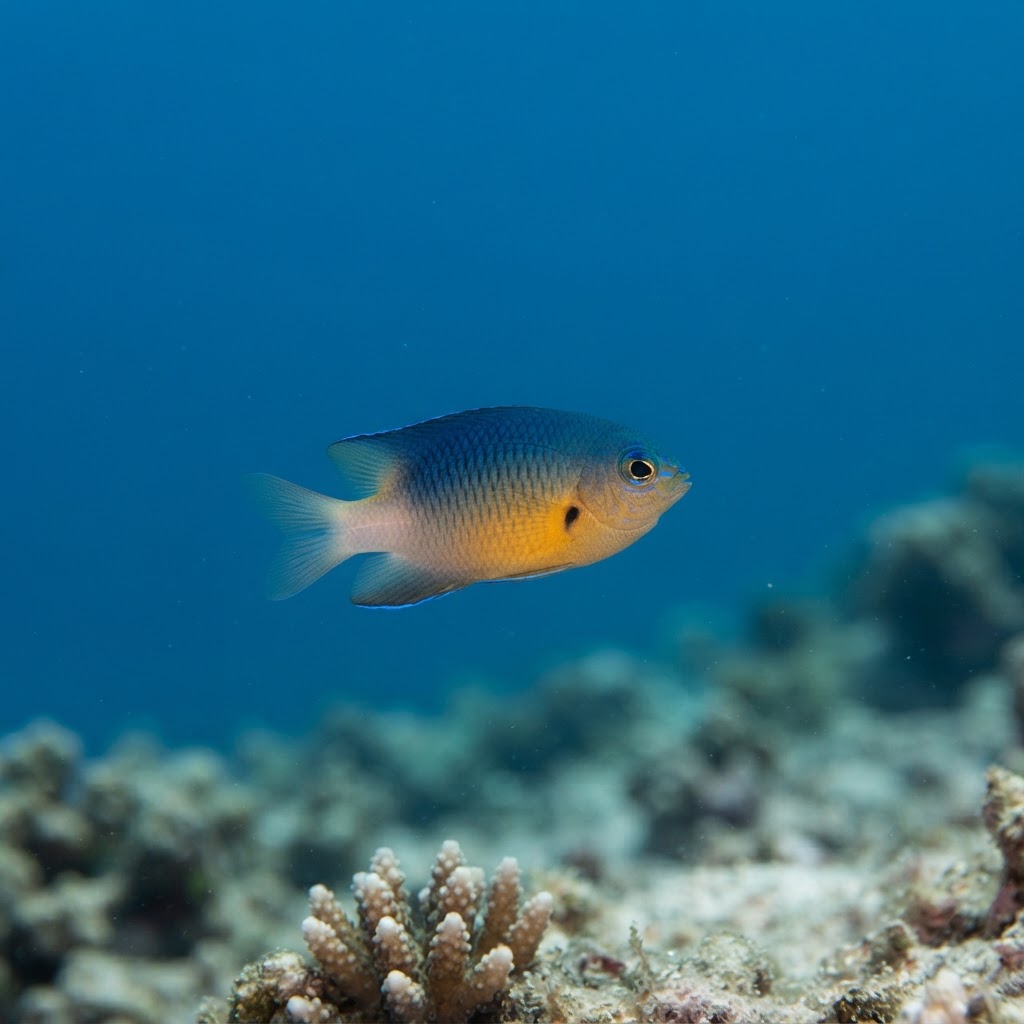
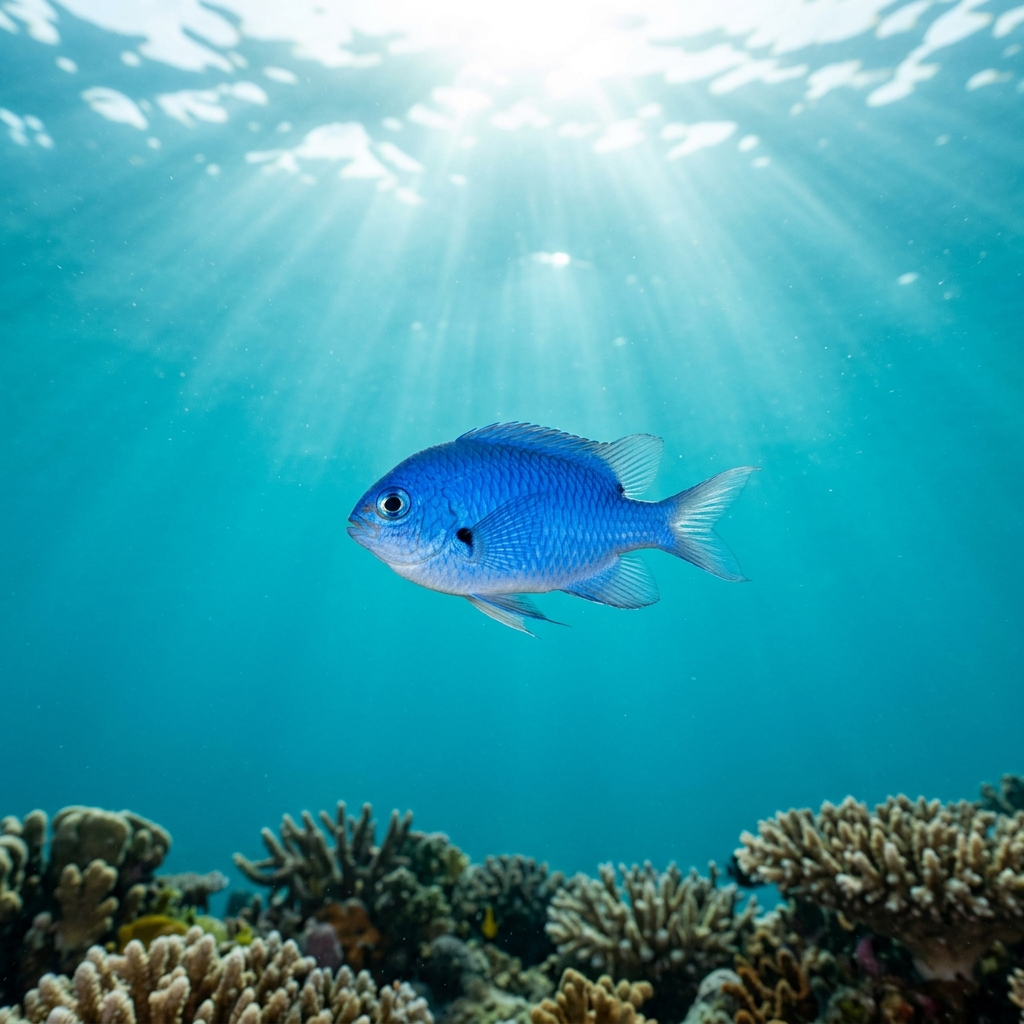
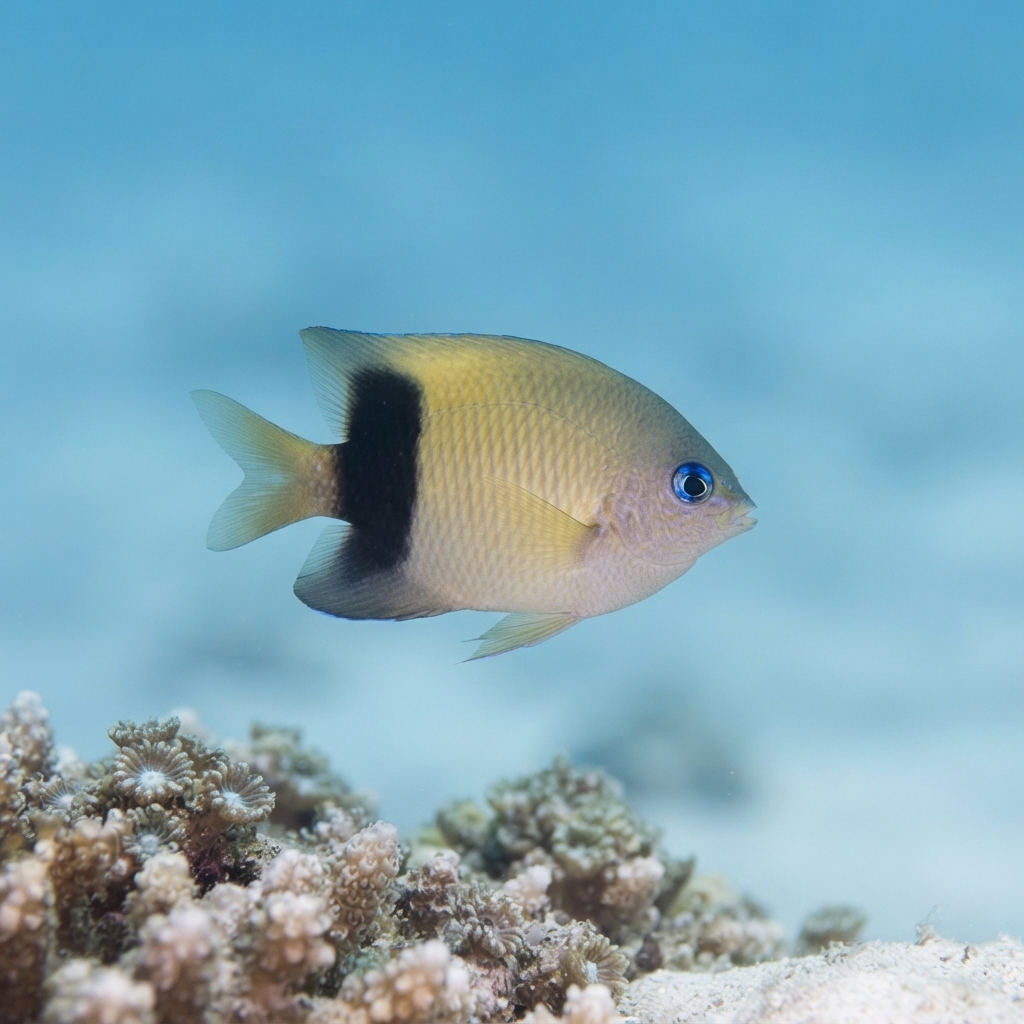
A small oval-bodied damselfish around 9 cm, dark brown to blackish overall with scattered iridescent blue spots peppered across the head and upper body. The tail is pale to yellowish, which helps separate it from plainer brown damselfish at a glance. It hovers close to branching coral rather than roaming open water, so the blue flecks are usually the first thing you notice as light hits them.
Usually spotted hovering just above its home coral head, darting back to cover the moment a diver gets too close rather than fleeing across the reef. It is territorial around its patch of branching coral, chasing off smaller intruders while staying wary of larger ones. Most sightings are uncommon rather than common, so expect to check a few coral heads before one shows itself.
Like other damselfish, it tends to guard a small patch of live coral as both home and feeding ground, picking at algae and small invertebrates within a tight territory it rarely strays far from.
Comfortable across a 24.7 to 29.2C range, so it sits on tropical and subtropical reefs year-round with no strong seasonal window in the data. Dive it whenever conditions suit the region, from Hawaii to Reunion.
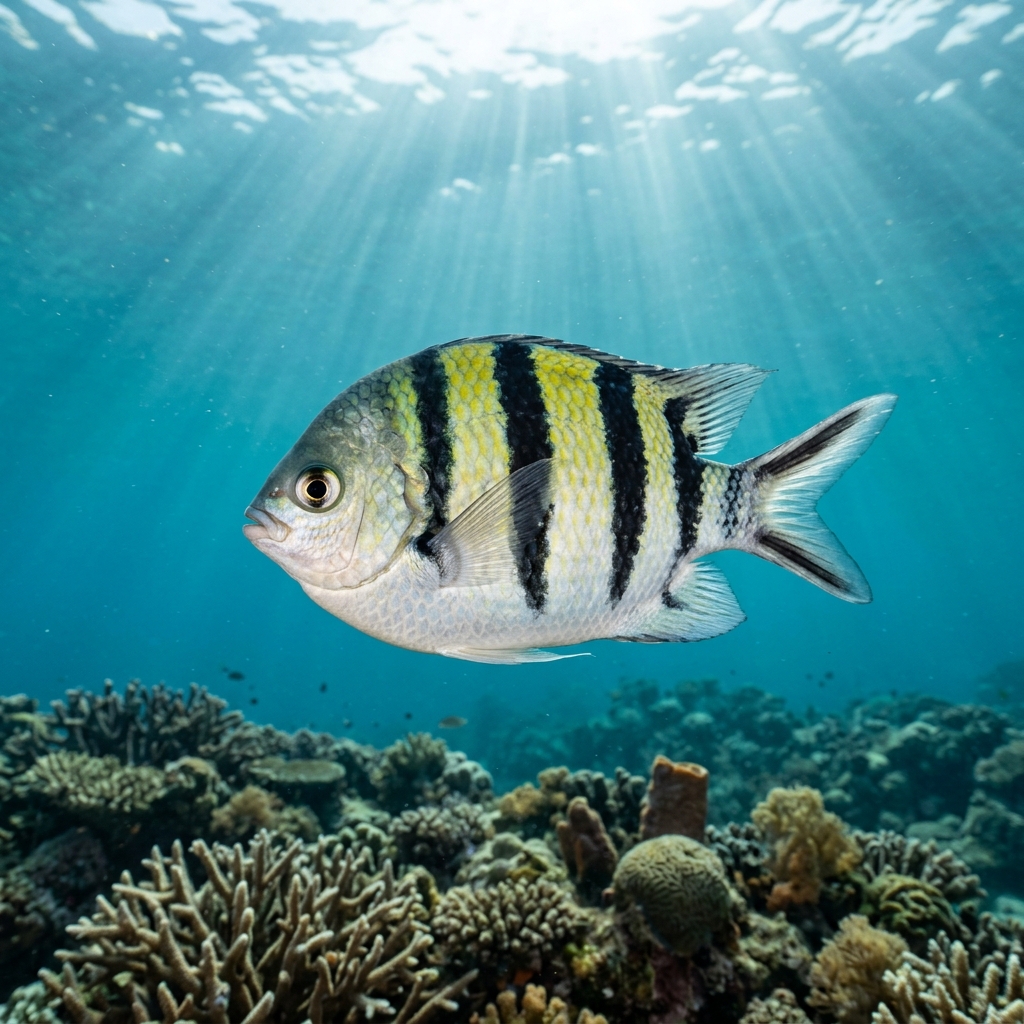
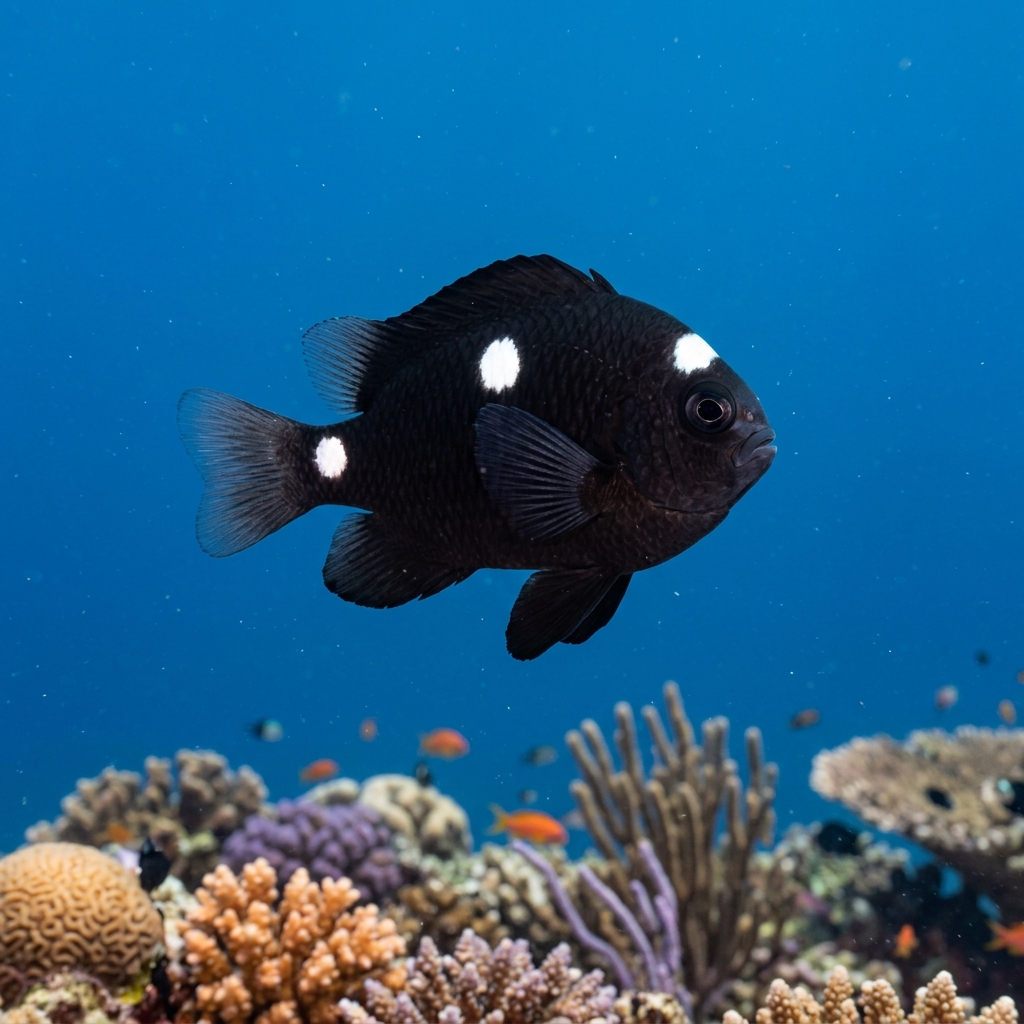
Reef neighbours a diver could mistake it for. Use the identification notes above to tell them apart.
Most reliably logged in Hawaii, with strong numbers also out of Rarotonga in the Cook Islands and Western Australia. It also turns up consistently across the Tuamotu Islands and Society Islands in French Polynesia, plus Saint-Leu in Reunion and KwaZulu-Natal in South Africa.
Mapping where Johnston Island Damselfish is logged…
Hawaii is the most consistent place to find it, with good numbers also around Rarotonga in the Cook Islands, Western Australia, and French Polynesia's Tuamotu and Society Islands. Reunion's Saint-Leu coast and South Africa's KwaZulu-Natal coast also have logged sightings.
There is no strong seasonal pattern in the sightings, and it tolerates a wide 24.7 to 29.2C range, so it is present on reefs year-round wherever water stays in that band.
Look for a small dark brown fish, about 9 cm, with scattered iridescent blue spots on the head and back and a pale tail. It stays close to its home coral head rather than swimming in open water.
They max out around 9 cm, making them one of the smaller reef damselfish you will encounter, easy to overlook against coral branches.
No. They are harmless to divers, though like most damselfish they may dart aggressively at anything that strays too close to their coral patch, a bluff rather than a real threat.
Site and sighting data is aggregated from diver logs, iNaturalist and GBIF. For taxonomy and conservation status:
Dascyllus
3,697 sites