Opistognathidae spp.
Spot jawfish across the Philippines, Indonesia and the Cayman Islands in warm water from 24-29 °C. Here's where divers find them and what to look for.
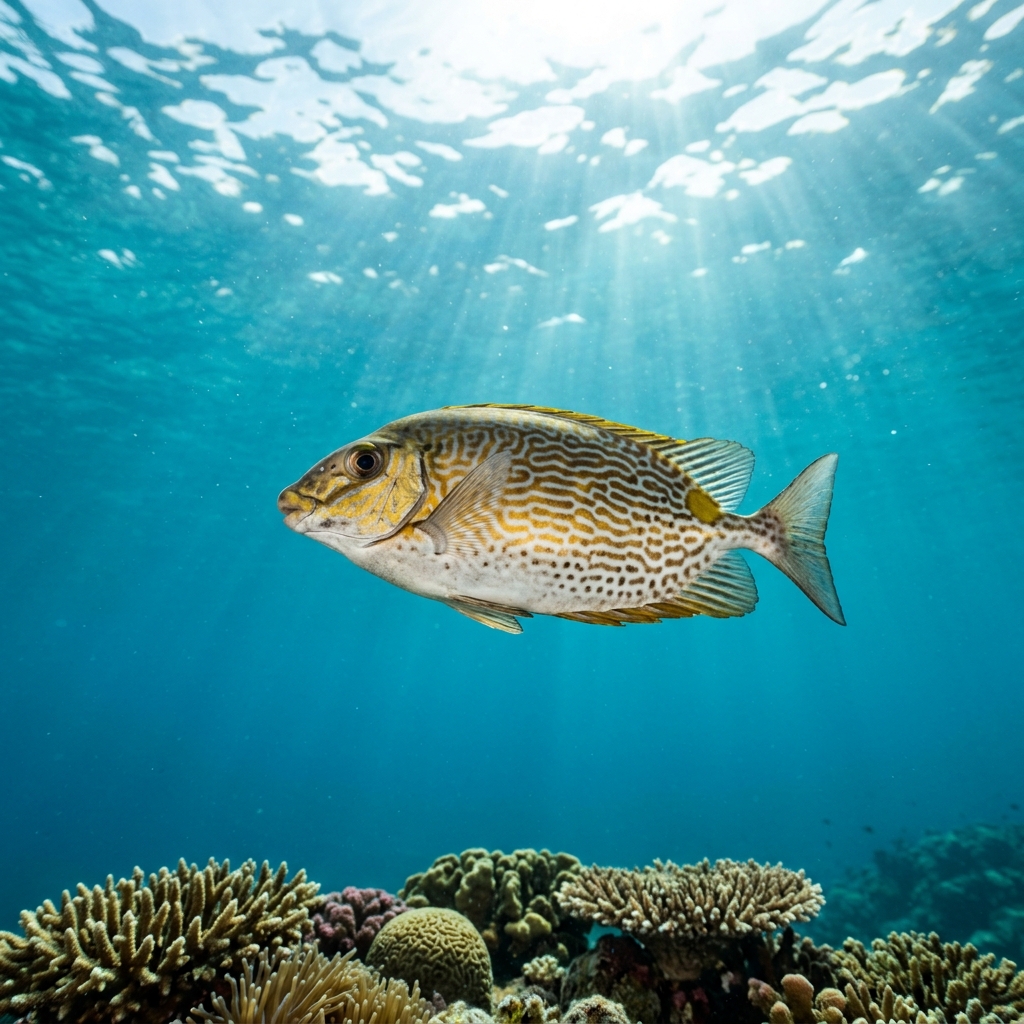
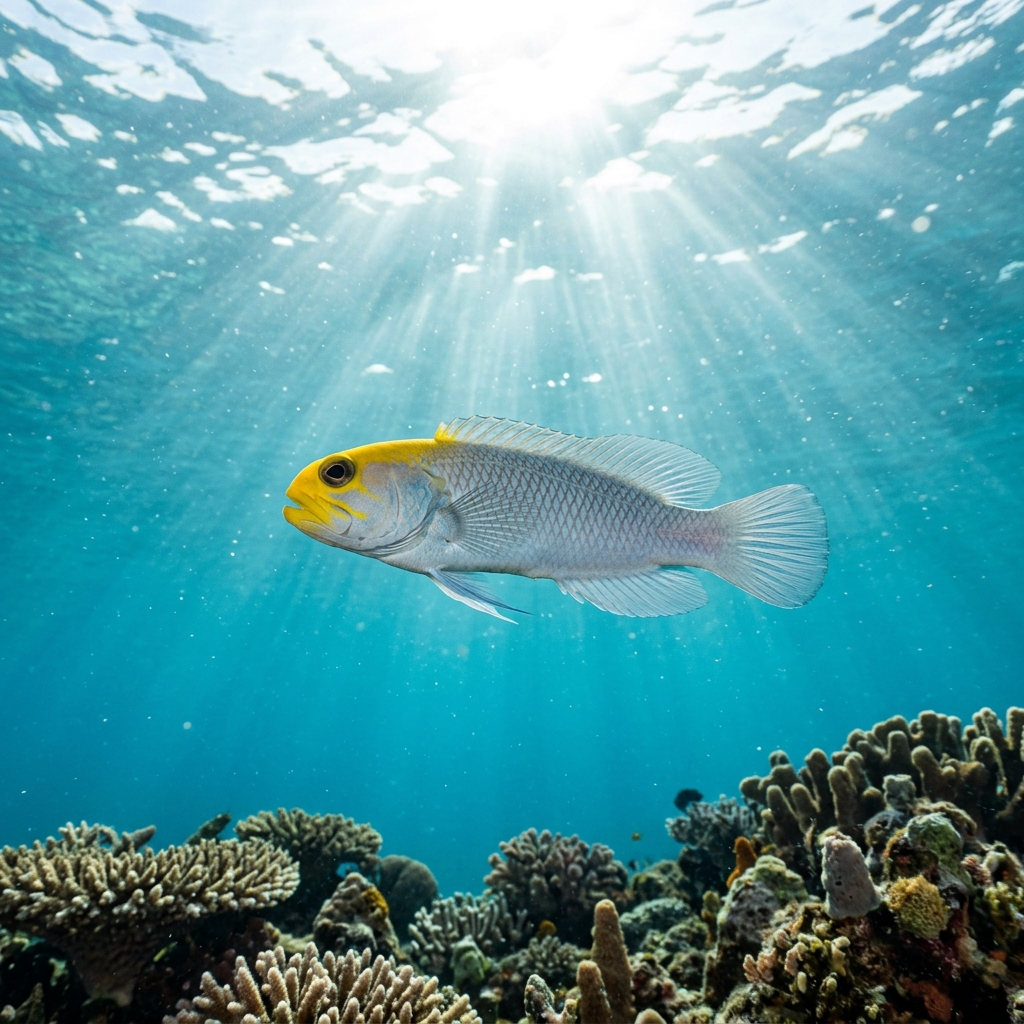
Jawfish are small, big-headed fish most divers notice because of their comically large mouth and habit of hovering vertically above a burrow in sand or rubble. Body colouration varies considerably across the family, from pale yellow and blue to mottled brown and orange, but the large eyes set high on the head and the wide, downturned jaw are the consistent giveaway. Most species rarely exceed 10 cm in the water, and you will almost always find them within a body-length of a burrow they have excavated themselves. When spooked, they reverse into the hole tail-first in an instant.
Jawfish are burrow-dwellers: you find them hovering upright just above the entrance to a self-built hole in sand or rubble, retreating tail-first the moment they feel threatened. They rarely stray far, so once you locate the burrow you can watch from a short distance as they resume their sentinel posture. Males of many species incubate eggs in their mouth, a behaviour occasionally observed by patient divers who spot a male with a noticeably distended jaw.
Male jawfish are mouthbrooders, meaning the male holds a clutch of fertilised eggs in his mouth until they hatch. A male doing this will periodically tumble the eggs by opening his jaw wide, giving divers who spot this behaviour the impression the fish is yawning.
There is no strong seasonal pattern in the data, and with sightings recorded across warm tropical and subtropical reefs that sit between about 24 and 29 °C, jawfish are effectively present year-round wherever they occur.
Most sightings are logged in the Philippines, particularly across Western Visayas and the reefs around Palawan and Apo Reef, making the Philippine archipelago the best single destination for the family. Indonesia runs a close second, with strong records from Nusa Tenggara and the Banda Sea, as well as Maluku and Papua. Further afield, Florida's southeast dive sites, the Cayman Islands, Cocos Island in Costa Rica, and Baja California in Mexico all have reliable records.
Mapping where Jawfish is logged…
Jawfish are most reliably encountered in the Philippines, especially in Western Visayas and around Palawan and Apo Reef. Indonesia is another strong option, with records from Nusa Tenggara, the Banda Sea, Maluku, and Papua. Divers also log them regularly in Florida, the Cayman Islands, Cocos Island in Costa Rica, and Baja California in Mexico.
Jawfish show no strong seasonal pattern in diver records and are found on tropical reefs where water temperatures sit between roughly 24 and 29 °C. That means they can be encountered year-round at most sites where they occur.
Look for a small, big-headed fish hovering vertically above a burrow in sand or rubble. The disproportionately large mouth, high-set eyes, and the habit of reversing tail-first into a hole when approached are the most reliable clues. Colouration varies by species, but the burrow-hovering posture is unique to the family.
Most species encountered by divers are small, typically under 10 cm in the water, though a few larger members of the family can approach 50 cm. Their compact size and burrow lifestyle mean you need to look close to the substrate to spot them.
Yes. In many jawfish species the male incubates the entire egg clutch inside his mouth until hatching, a strategy called mouthbrooding. A mouthbrooding male will periodically open his jaw wide to tumble and aerate the eggs, which look like a compact yellow or orange ball. It is one of the more distinctive behaviours you can observe on a reef.
No. Jawfish pose no threat to divers. Their main defence is simply disappearing into their burrow. Even a large jawfish species can do little more than give a defensive nip if harassed directly, which is easily avoided by keeping a respectful distance.
Site and sighting data is aggregated from diver logs, iNaturalist and GBIF. For taxonomy and conservation status:
Soldierfish
3,612 sites