Gymnocrotaphus curvidens
Rare sparid found in the Western Cape's cool Atlantic waters, 18-27.5C, year-round with no clear season.
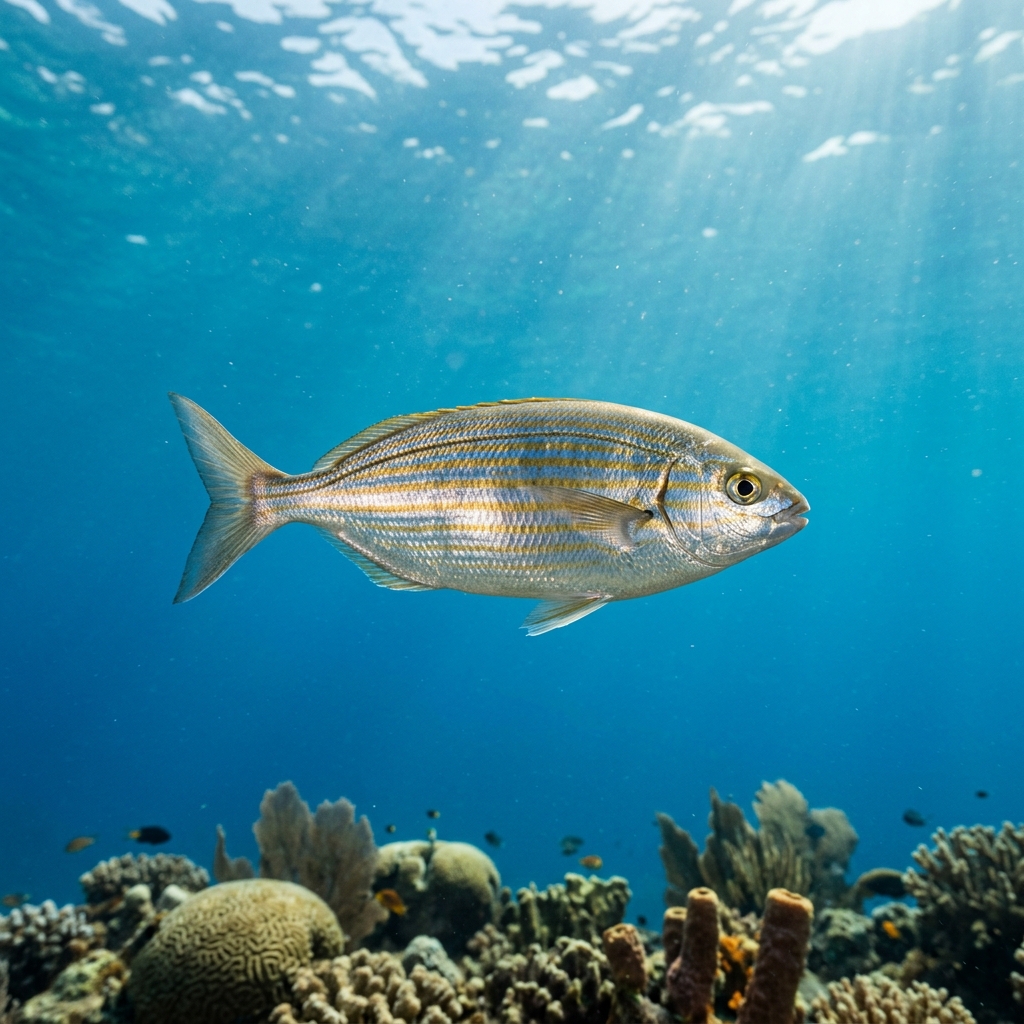
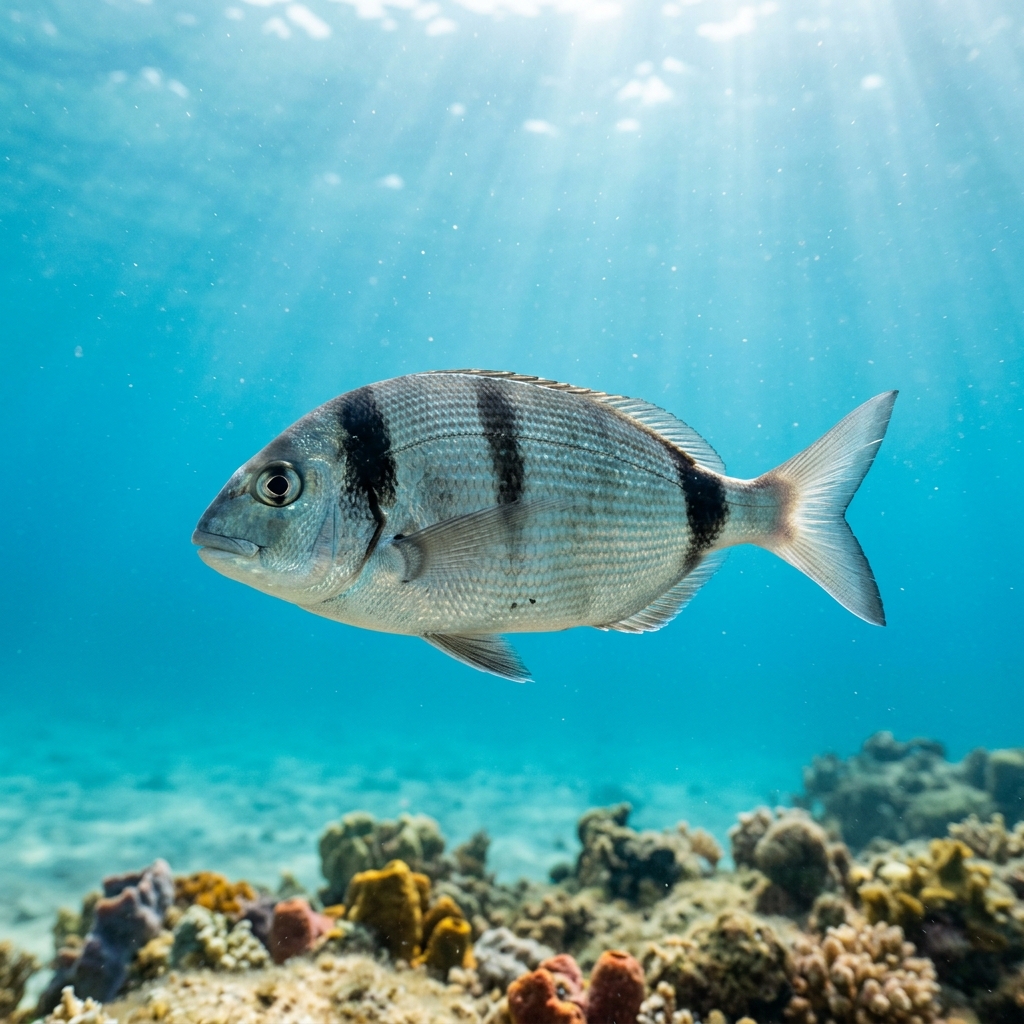
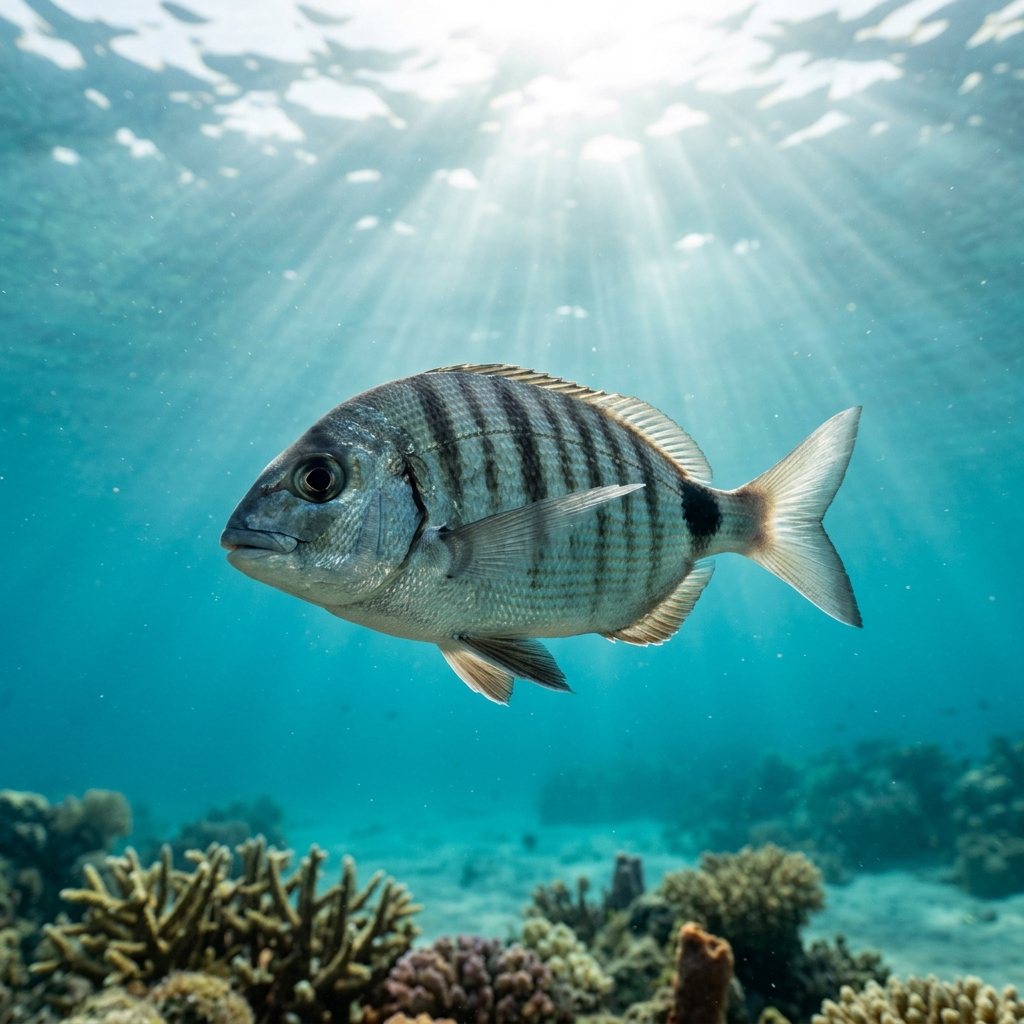
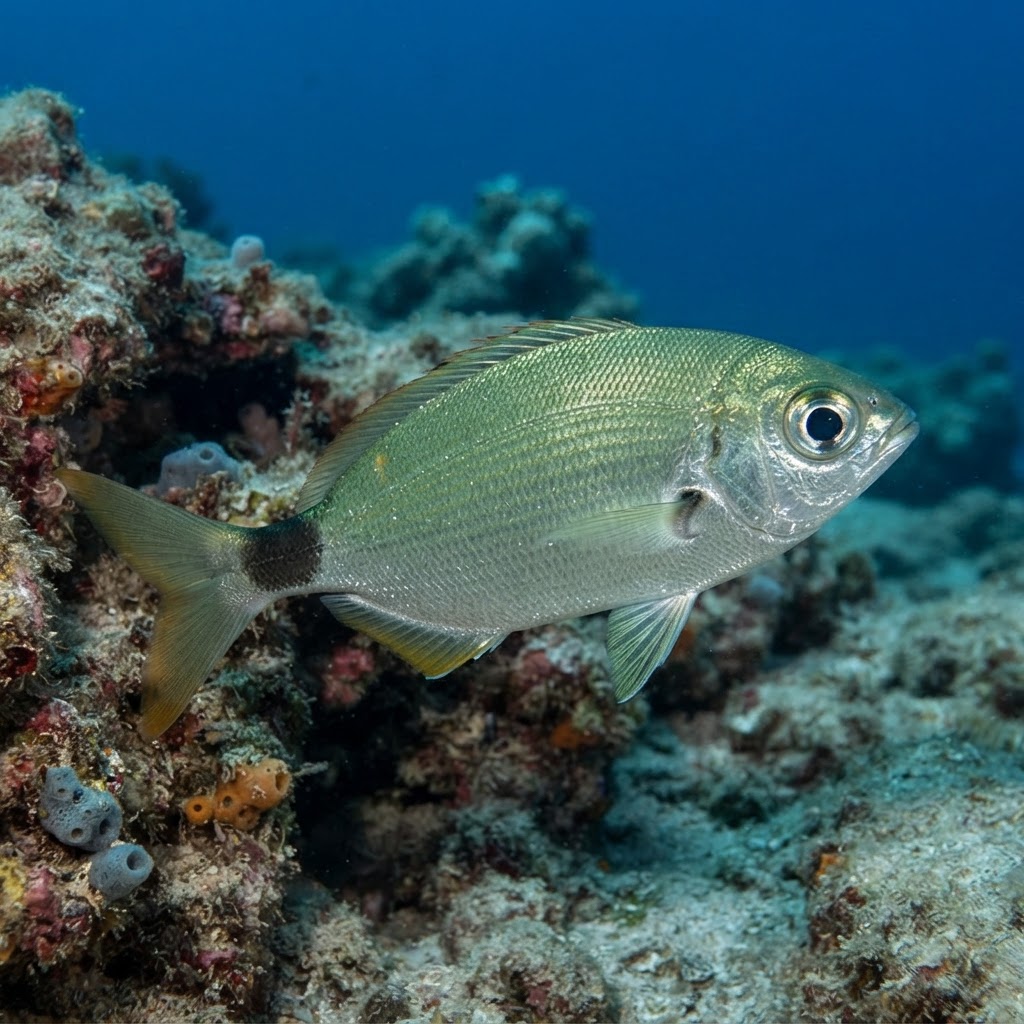
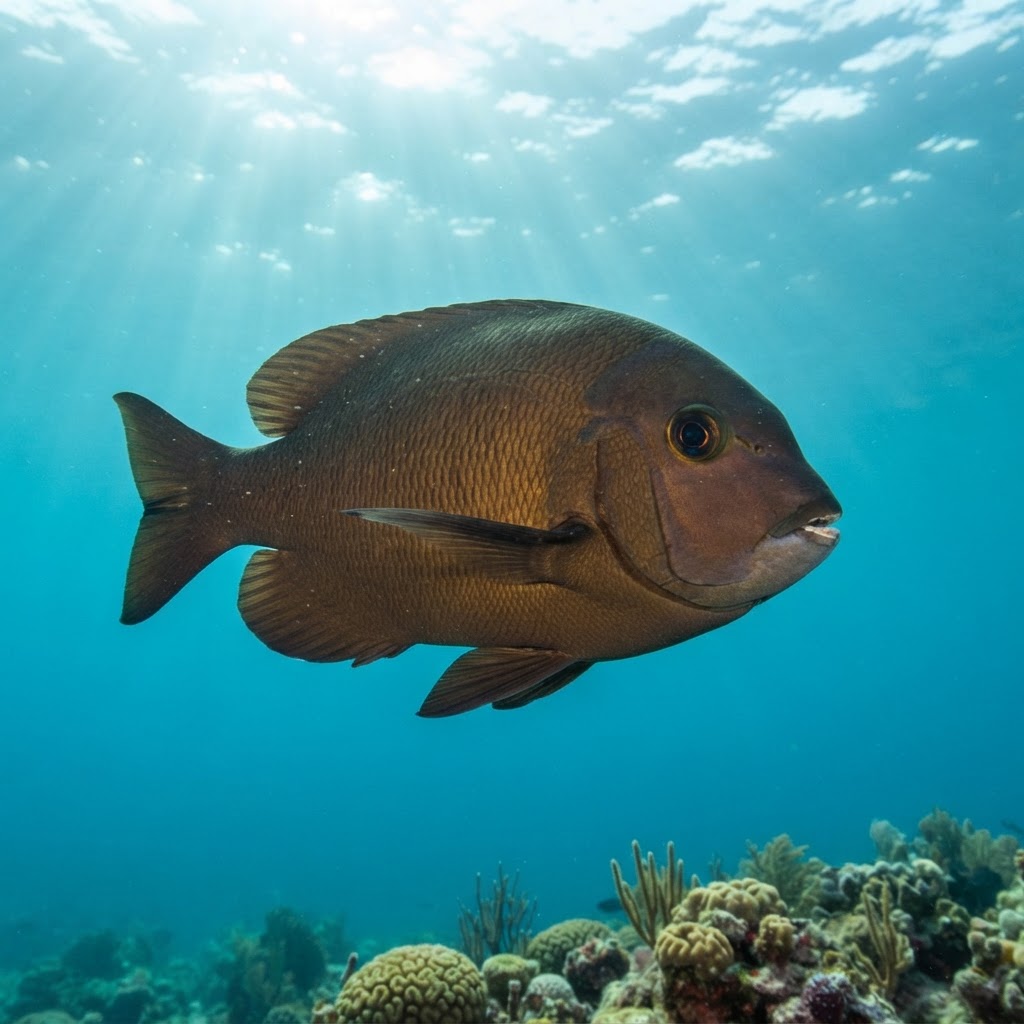
Look for a deep-bodied, stocky fish around 35 cm with a brownish to olive-grey body and a blunt, almost bulldog-like snout. The head profile is steep and rounded, and up close you can sometimes see the curved, protruding teeth that give it its scientific name (curvidens means curved teeth). It sits low over reef and rock structure rather than schooling in open water, so most sightings are of a single fish tucked close to the bottom.
Divers typically find it holding position close to rocky reef structure rather than swimming in the open, using its stout body to work in and around crevices. It is logged as rare at every site where it has been recorded, so even divers who know the area should not expect a reliable encounter on any given dive. It does not appear to react strongly to divers, more often just holding its ground near cover.
Its curved, forward-angled teeth are built for prising food off rock and reef surfaces rather than chasing prey, which fits its habit of staying close to hard structure instead of roaming open water.
Sightings show no detectable seasonal pattern, and the recorded temperature range of 18 to 27.5C spans most of the year in the Western Cape, so it is best treated as a year-round possibility rather than a seasonal target.
Every logged sighting comes from South Africa, concentrated in the Western Cape, making this the only region divers currently report it from. If you are diving the cool reefs and rocky ledges around the Western Cape, keep an eye on structure close to the bottom rather than the open water.
Mapping where Janbruin is logged…
All confirmed sightings come from South Africa's Western Cape, where it is found on rocky reef close to the bottom. It has not been reported from other regions in current diver records.
There is no clear seasonal pattern in sightings, and the water temperature range recorded (18 to 27.5C) covers most of the year in the Western Cape, so it is a year-round possibility rather than a seasonal one.
Look for a stocky, deep-bodied fish about 35 cm long with a brownish-olive colour, a blunt steep head, and curved teeth visible up close. It sits low near rocky reef structure rather than swimming in open water.
They typically reach around 35 cm in length, making them a medium-sized reef fish rather than a large one.
Its curved teeth, which give the species its scientific name, are adapted for prising food from rock surfaces rather than chasing prey in open water, matching its habit of staying close to reef structure.
Site and sighting data is aggregated from diver logs, iNaturalist and GBIF. For taxonomy and conservation status:
Saddled Bream
3,846 sites