Luria isabella
Look close on reef rubble in Bali or Kwajalein Atoll: this glossy little cowrie hides in plain sight in warm 24-30C water year-round.
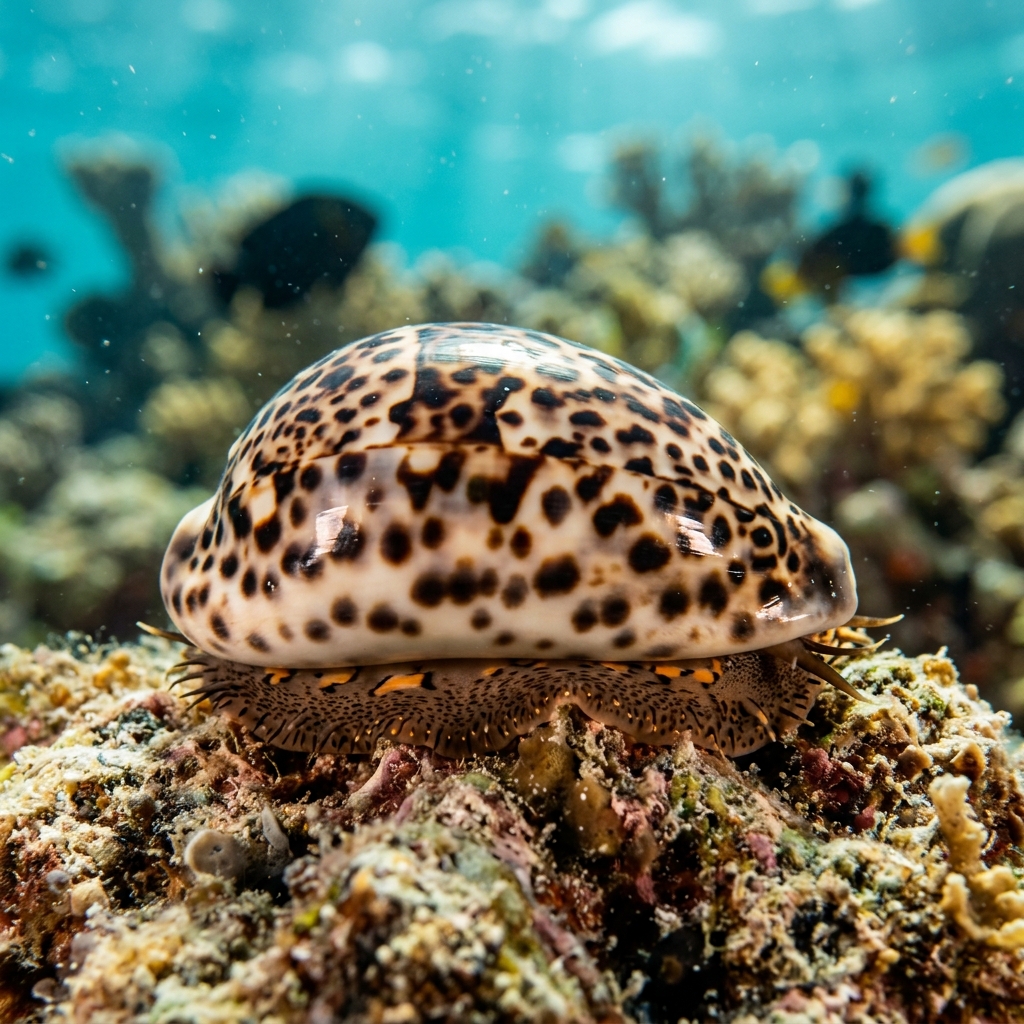
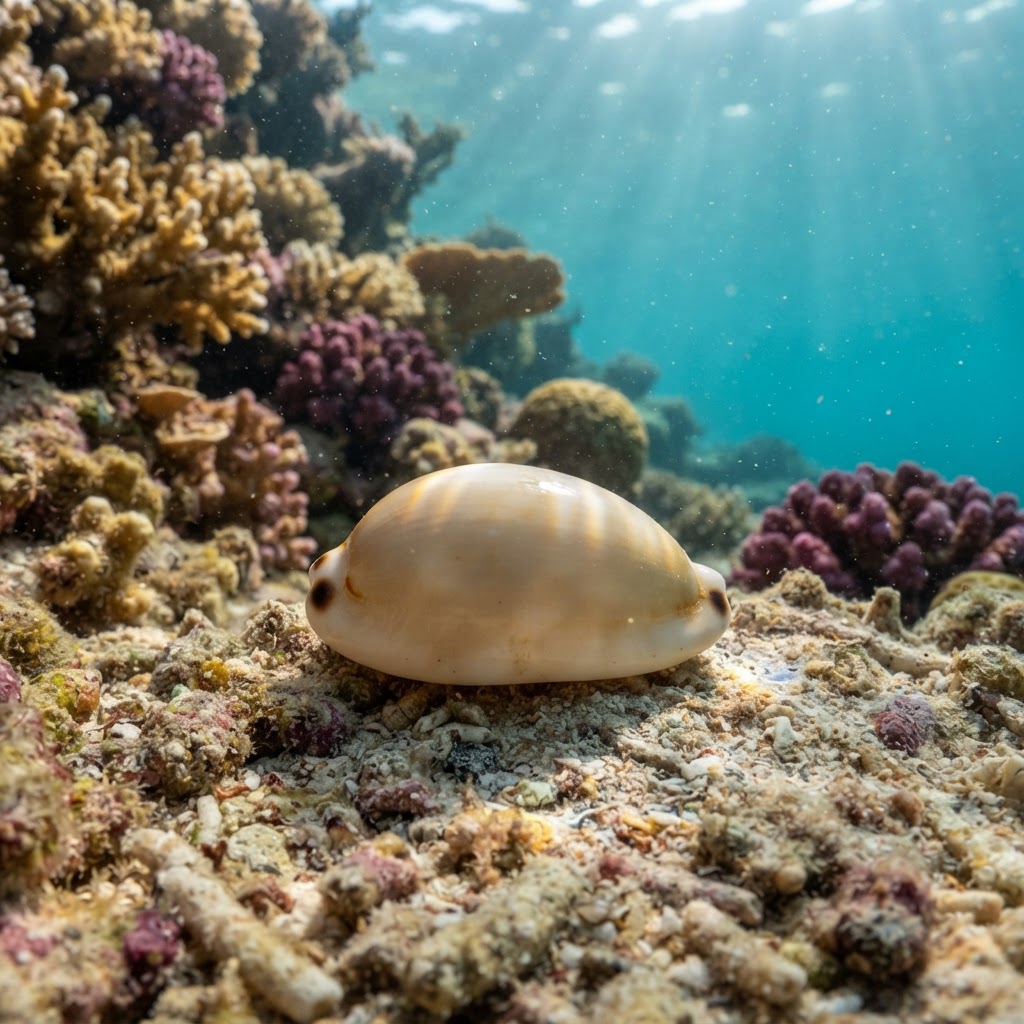
Small, glossy shell with a rounded, almost egg-like shape and a smooth, high-shine surface that looks almost polished or wet even out of water. Colour runs violet-brown to grey with darker mottling toward each end of the shell, and the underside shows a long narrow opening lined with tiny teeth. The living animal often wraps its soft mantle up over the shell while active, giving it a mottled, fleshier look than the bare shell alone. It stays small, easy to miss against rubble and coral debris unless you are looking closely.
Divers usually find it tucked into rubble, coral crevices or under ledges during the day, often with its mantle drawn up over the shell so it reads more as a smear of mottled colour than a distinct shell shape. It moves slowly and shows little reaction to divers, relying on staying hidden rather than fleeing. Night dives and careful torch scanning over rubble and debris zones tend to turn up more sightings than daytime cruising.
Like other cowries, it feeds mostly at night, grazing algae and detritus off rubble and rock, then retreats to shaded crevices by day, which is why daytime sightings depend so much on knowing exactly where to look.
No clear seasonal pattern shows up in the sightings, and its comfort range of roughly 24 to 30 C matches warm tropical reefs year-round, so there is no particular month to target. Any dive trip to its core regions gives you a fair shot at spotting one on a given day.
Most reliably logged in Bali, Indonesia and Kwajalein Atoll in the Marshall Islands, with a further reliable presence in Hawaii and the Society Islands of French Polynesia. Smaller numbers turn up around Saint-Paul in Reunion, with occasional sightings in Guam and New South Wales, Australia. At any of these sites it stays an uncommon to rare find rather than a guaranteed one, so it rewards divers who slow down and check rubble patches and reef crevices.
Mapping where Isabella Cowrie is logged…
Bali in Indonesia and Kwajalein Atoll in the Marshall Islands are the most reliable regions, followed by Hawaii and French Polynesia's Society Islands. It also turns up occasionally around Reunion, Guam and New South Wales.
There is no strong season in the sighting data. It favours warm water between roughly 24 and 30 C, so it is present on tropical reefs throughout the year.
Look for a small, glossy, egg-shaped shell in violet-brown to grey tones with darker mottling near the ends. The live animal often drapes its mantle over the shell, so it can look more like a mottled smear on rubble than a distinct shell.
Exact size data is not confirmed, but like most cowries in this genus it stays small, generally just a few centimetres long, and is easy to overlook against reef rubble.
No. It is a small, slow-moving, harmless snail that poses no risk to divers and simply relies on hiding rather than defending itself.
It is mostly nocturnal, grazing algae and detritus off rubble and rock at night before withdrawing into shaded crevices during the day, which is why night dives often produce better sightings.
Site and sighting data is aggregated from diver logs, iNaturalist and GBIF. For taxonomy and conservation status:
Elysia Timida
573 sites