Notolabrus inscriptus
An uncommon temperate wrasse most reliably logged around North Island, New Zealand in 17-23C water year-round.
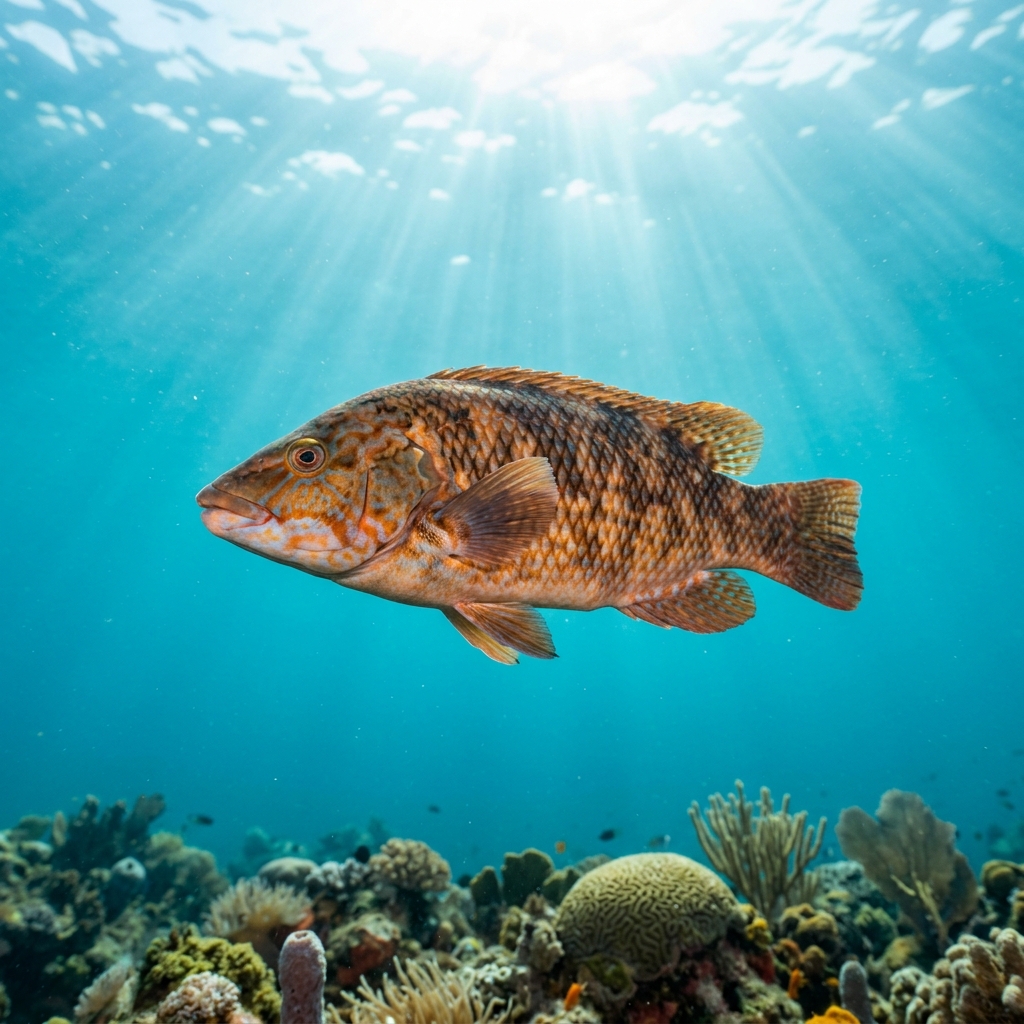
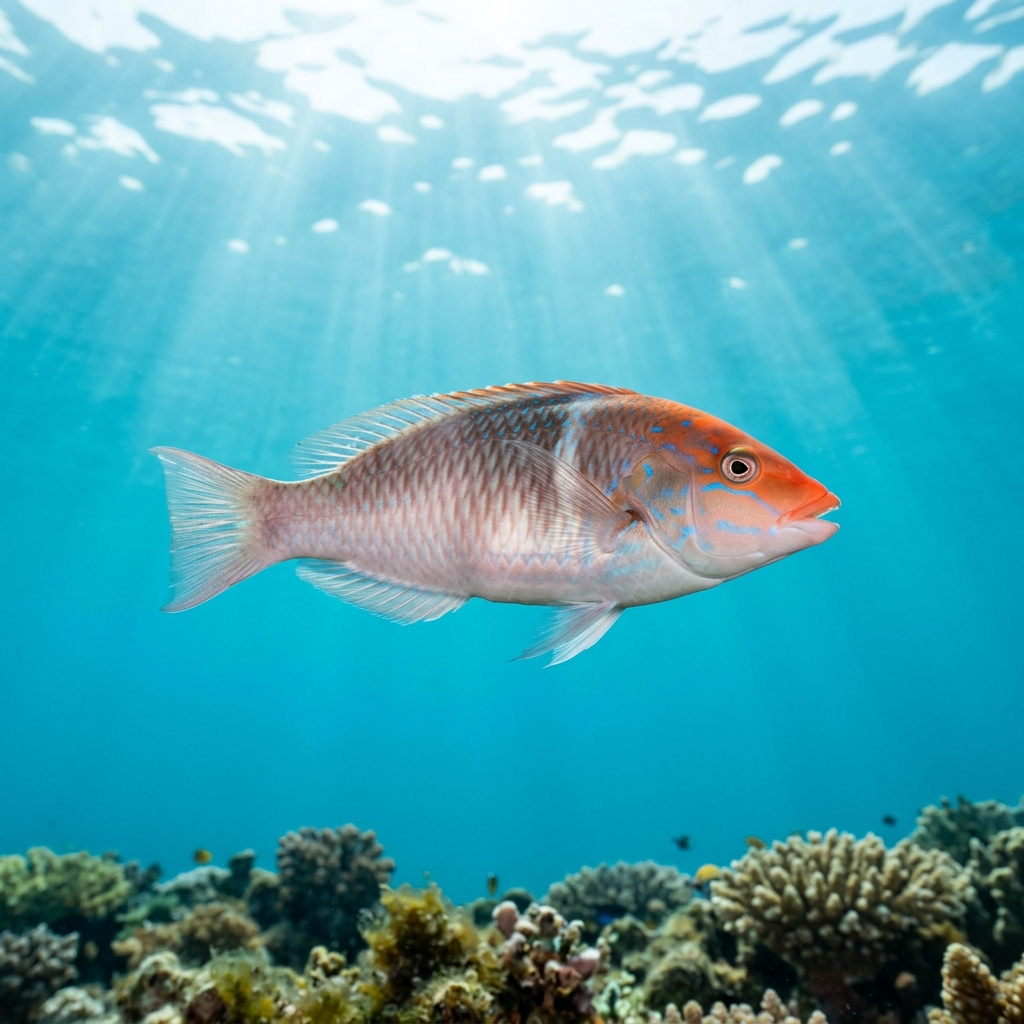
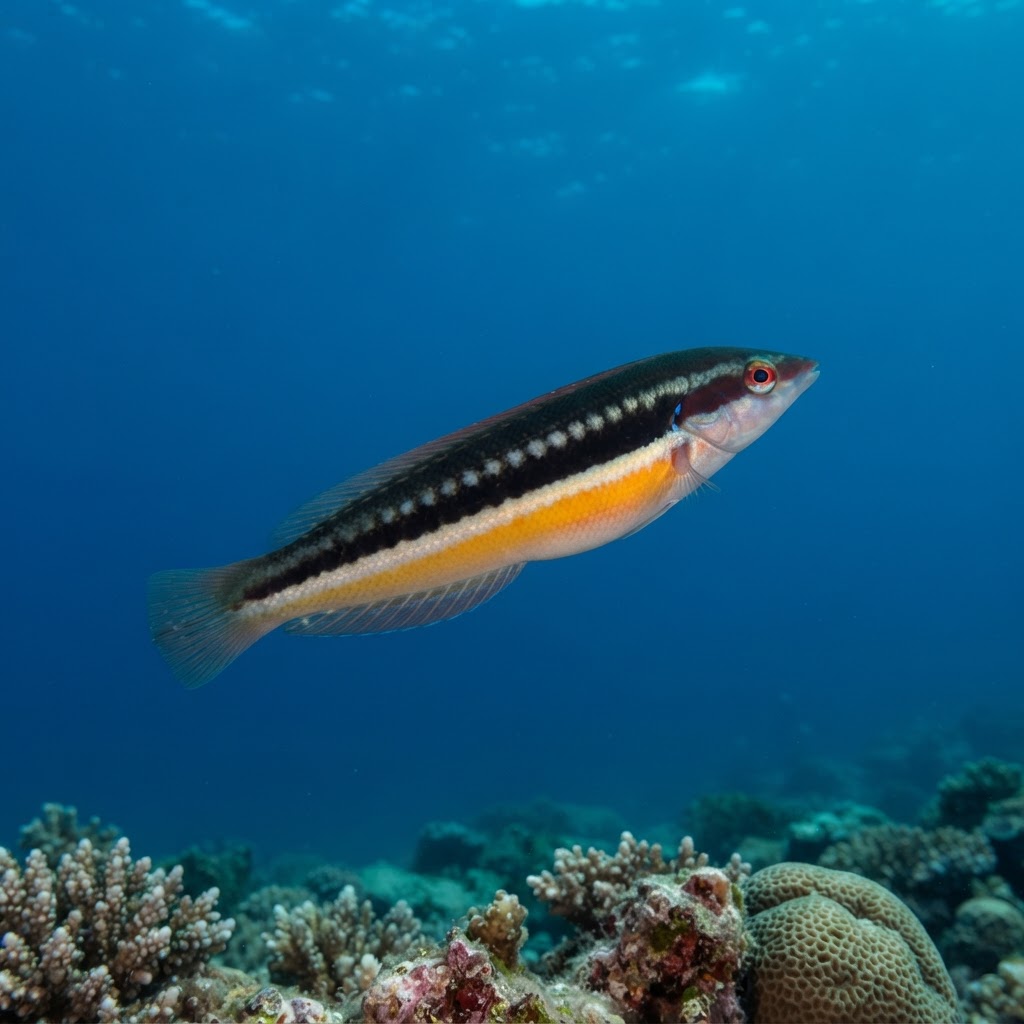
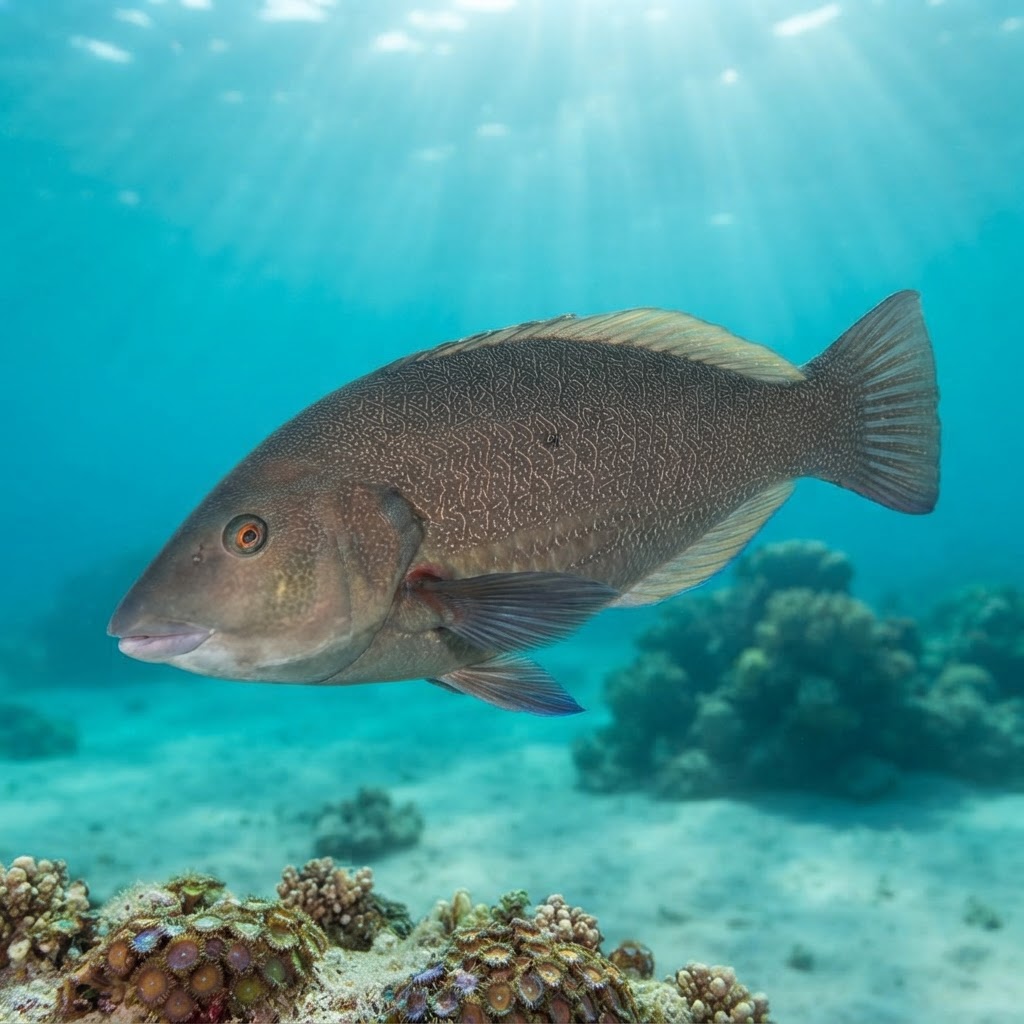
A stocky, deep-bodied wrasse reaching around 35 cm, with a mottled pattern of greens, browns and reddish tones that blends into rocky reef and kelp habitat rather than standing out. The blunt head and thick lips are typical of the genus, and there is no strong single stripe or spot to key on, so body shape and its temperate, rocky-reef setting are the best clues. Colour intensity varies between individuals, which can make quick water identification tricky compared with reef fish that carry bold, fixed markings.
Divers typically find it moving low over rocky reef and around kelp beds, picking at the substrate rather than schooling or patrolling open water. It is logged as an uncommon sighting even at the sites where it occurs, so encounters tend to be brief, unhurried passes rather than repeated close approaches. It shows no particular association with divers and generally keeps its distance, behaving more like a background reef resident than an inquisitive species.
Like many wrasses in the Labridae family, it likely forages by picking invertebrates from rock and kelp surfaces, a feeding style that keeps it close to structure rather than out in open water.
Sightings show no detectable seasonal pattern, so treat this as a year-round species where you find it. It sits comfortably in a 16.7 to 22.7C temperature range, which matches the mild temperate water it inhabits through most of the year.
Most logged around North Island, New Zealand, which accounts for the bulk of recorded sightings, with additional records from New South Wales in Australia and around Norfolk Island. It is a rocky-reef and kelp-associated species, so look for it on temperate reef dives in these regions rather than on tropical coral reefs.
Mapping where Inscribed Wrasse is logged…
North Island, New Zealand is the most reliable region, with further sightings logged in New South Wales, Australia and around Norfolk Island. It favours temperate rocky reefs rather than tropical coral systems.
There is no clear seasonal pattern in the sighting data, so it can be encountered year-round. It is recorded in water between about 17 and 23C, consistent with mild temperate conditions through most of the year.
Look for a stocky wrasse up to about 35 cm with a mottled green-brown pattern that camouflages against rocky reef and kelp. It lacks a single bold marking, so its blunt head, thick lips and rocky-reef habitat are the more useful clues than colour alone.
They typically reach around 35 cm in length, making them a mid-sized member of the wrasse family rather than a small reef fish.
No, they are not considered dangerous to divers. They are a shy, uncommon reef fish that generally keeps its distance rather than approaching or displaying defensive behaviour.
Site and sighting data is aggregated from diver logs, iNaturalist and GBIF. For taxonomy and conservation status:
Bird Wrasse
3,632 sites