Hypoplectrus indigo
Small deep-blue reef fish logged widely in Honduras's Bay Islands, comfortable in 26-28°C water and dived year-round.
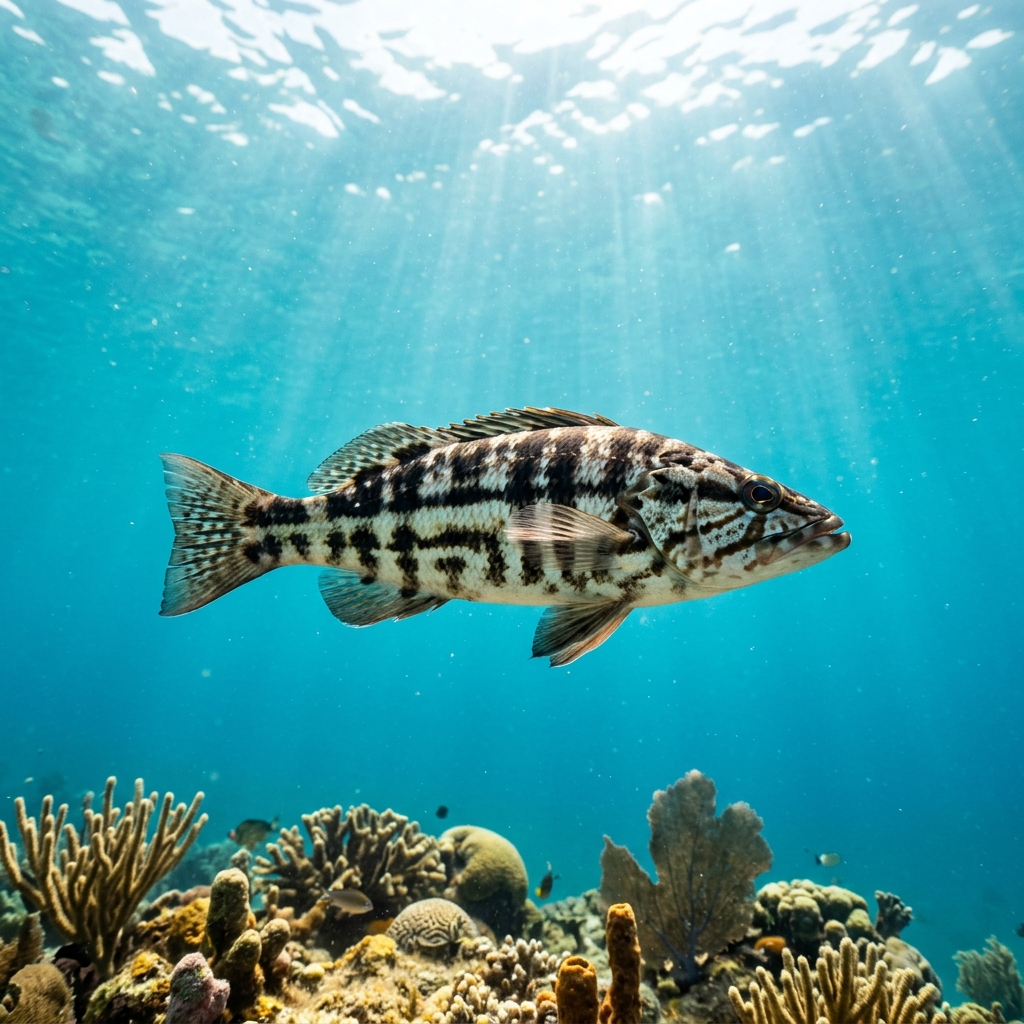
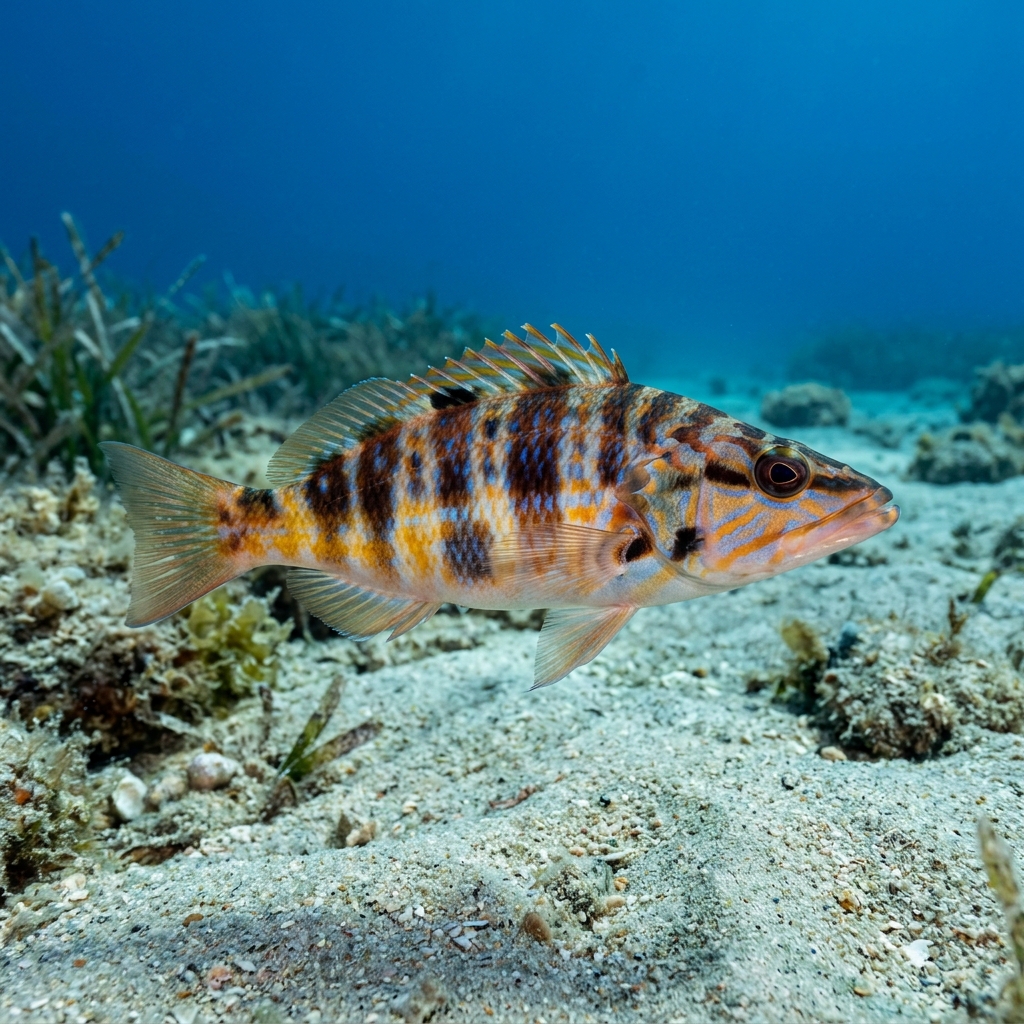
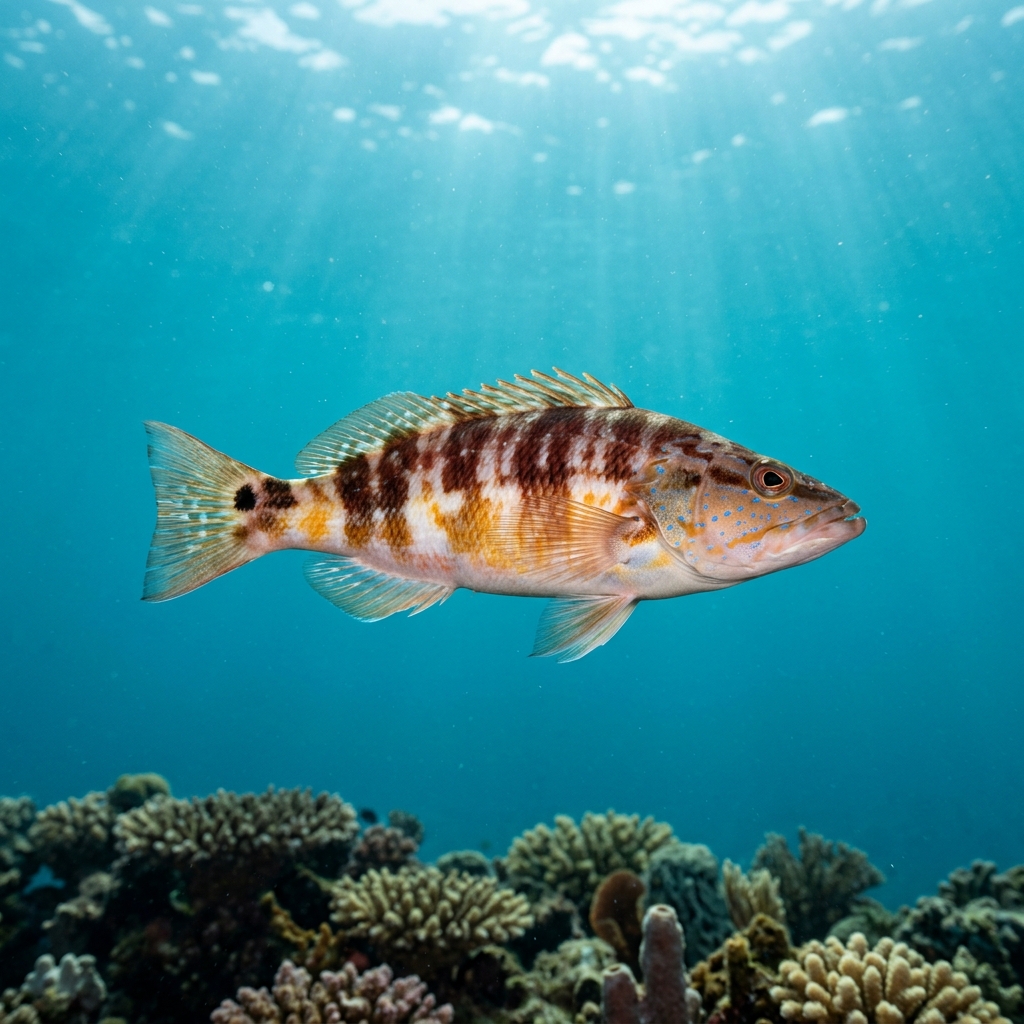
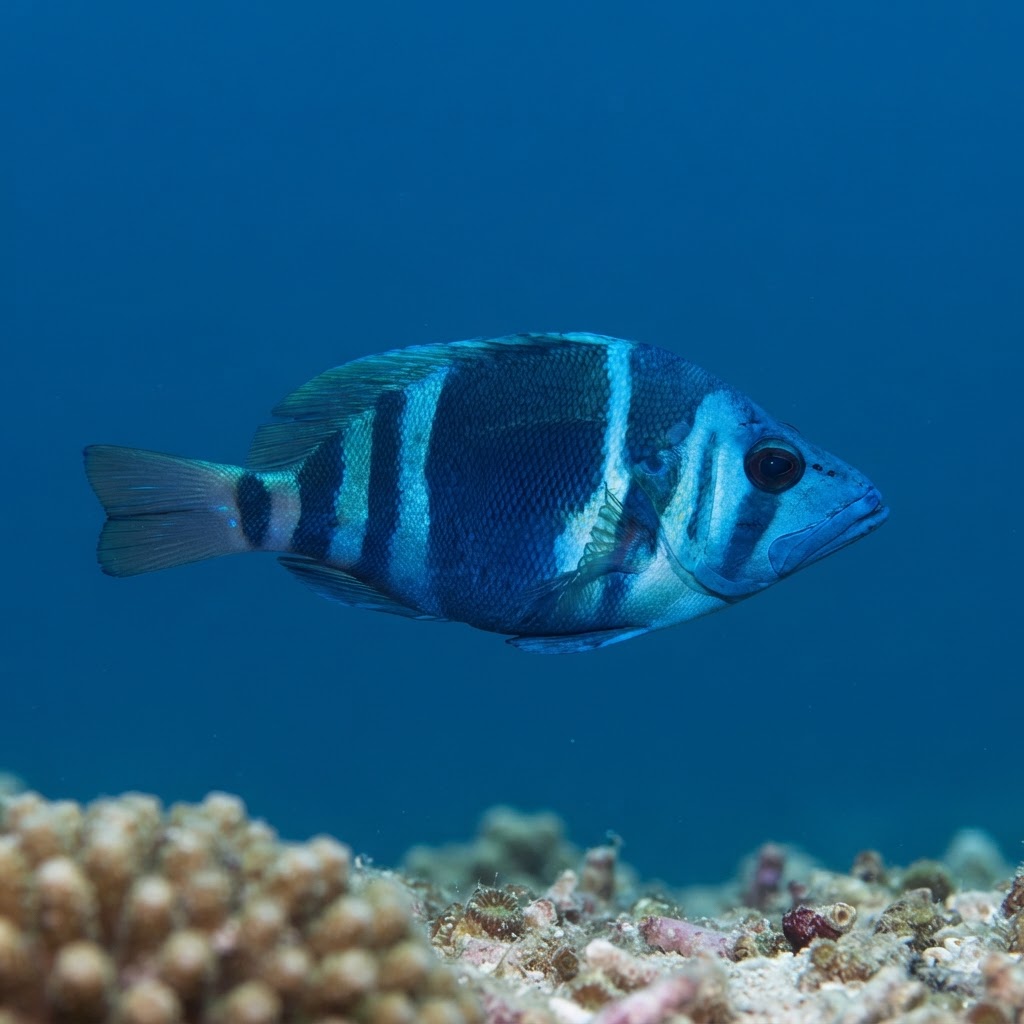
Small, slender-bodied fish around 9 cm, coloured a deep uniform indigo blue that can look almost black in low light. Look for faint darker bars or mottling along the flanks and a slightly pointed snout typical of hamlets. It hovers rather than darts, holding a steady position near the reef rather than schooling, which makes the solid blue colour easy to pick out against coral or sand.
Divers typically find it hovering solo or in loose pairs close to the reef structure, holding its position rather than fleeing at the approach of a diver. It sticks to a fairly narrow depth band on the reef face, picking through crevices and rubble for small prey, and doesn't react much to torches or slow approaches, making it a good subject for a patient look rather than a chase.
Like other hamlets, it's thought to be a simultaneous hermaphrough capable of both producing eggs and sperm, and pairs are known to trade sexual roles back and forth during spawning, a trait that's made the hamlet group a favourite study subject for reef fish reproduction.
No clear seasonal pattern shows in the data, and with a comfortable range of 26.4 to 28.2°C it's a year-round resident on the reefs where it occurs rather than a seasonal visitor.
Most reliably logged in Honduras, especially across the Bay Islands, which accounts for the bulk of sightings. Beyond Honduras it turns up regularly in Jamaica (Montego Bay, Negril), the US Virgin Islands (Saint John), the British Virgin Islands (Tortola and the Southern Islands), Puerto Rico (Culebra), Belize (Lighthouse Reef) and the Cayman Islands (Grand Cayman).
Mapping where Indigo Hamlet is logged…
The strongest population by far is in Honduras's Bay Islands, where it's logged far more often than anywhere else. It's also a fairly reliable find in Jamaica, the US and British Virgin Islands, Puerto Rico, Belize and the Cayman Islands.
There's no strong season in the sighting data, and it sits comfortably in warm 26 to 28°C reef water year-round, so any month on a Caribbean dive trip should give you a shot at one.
Look for a small, slim fish around 9 cm long, coloured a solid deep blue with faint darker mottling, hovering near reef structure rather than schooling or darting about.
They stay small, typically around 9 cm as adults, which is standard for hamlets in general.
It's a simultaneous hermaphrodite, carrying both male and female reproductive tissue at once, and pairs are known to alternate roles when spawning rather than sticking to one sex.
No. They're small, harmless reef fish that ignore divers rather than reacting defensively.
Site and sighting data is aggregated from diver logs, iNaturalist and GBIF. For taxonomy and conservation status:
Blacktip Grouper
2,726 sites