Chlorurus capistratoides
Uncommon but steady find on reefs in Sabah, the Seychelles Inner Islands and Koh Phi Phi, in warm 27.5 to 29.3 C water year-round.
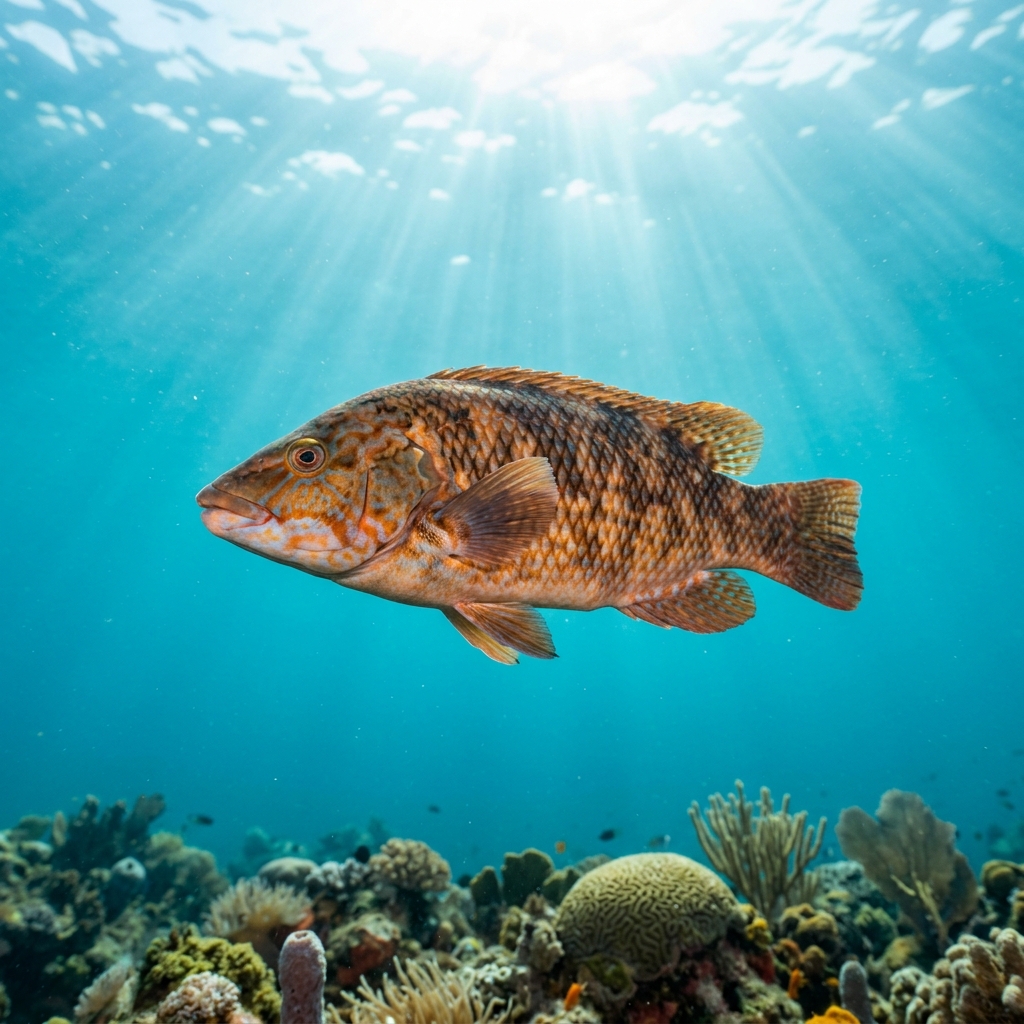
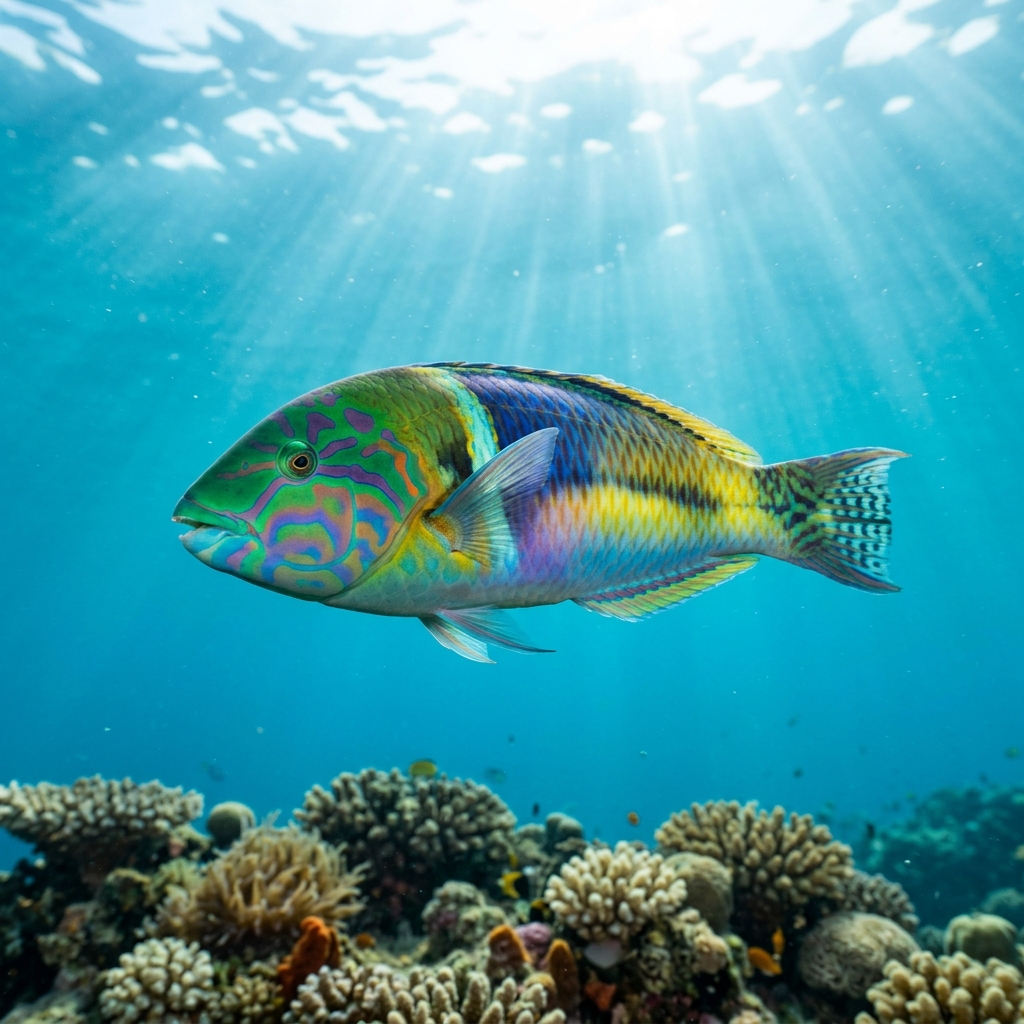
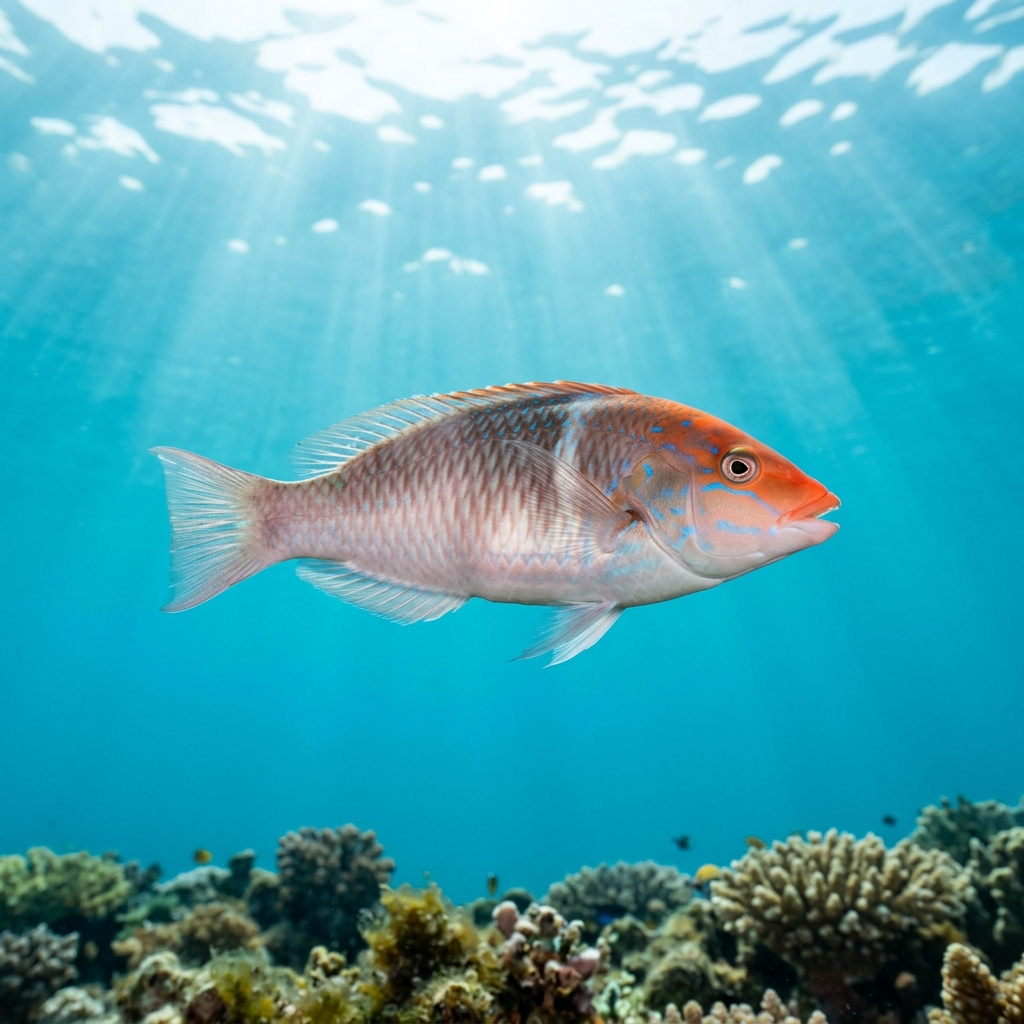
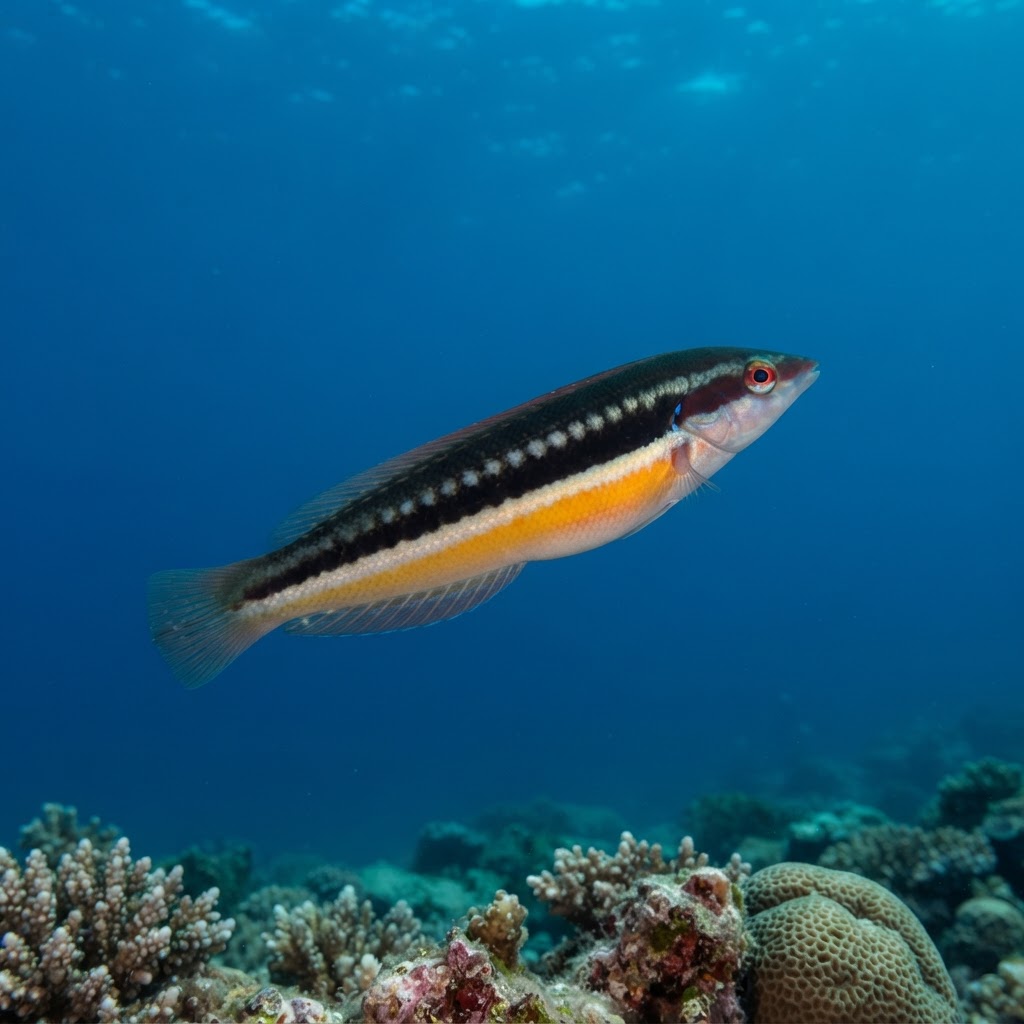
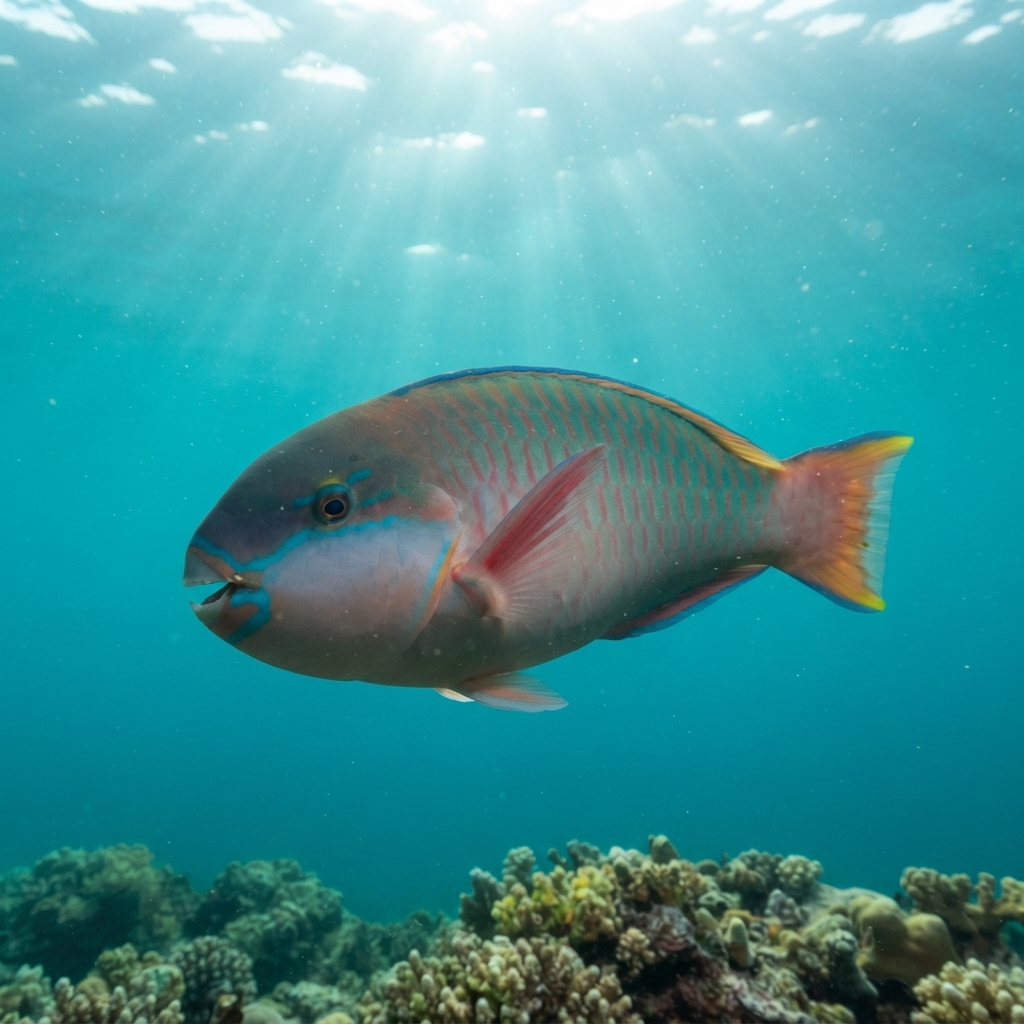
A stocky, medium-sized parrotfish reaching around 28 cm, with a blunt, fused beak-like mouth built for scraping algae off rock and coral. Look for the typical parrotfish body shape, oval and slightly compressed, moving in short bursts low over the reef rather than cruising open water. As with most parrotfish, colouration shifts with life stage, so the fish you see grazing alone may look quite different from one in a mixed group nearby.
Divers typically spot it working the reef alone or in loose company with other grazers, rasping algae from dead coral and rock rather than holding still for a photo. It tends to stay low and close to structure, keeping a cautious distance from divers rather than approaching, and is usually one fish among many reef grazers rather than a headline sighting.
Parrotfish grazing is a real reef-maintenance job: their beak-like jaws scrape algae off dead coral surfaces, which keeps space open for new coral growth, and their digestion turns crunched-up reef rock into fine sand.
No clear seasonal pattern shows up in the sightings, and the water temperature range logged, 27.5 to 29.3 C, sits within comfortable tropical norms all year, so it's a fair bet on any dive trip to these regions regardless of month.
Most reliably logged in Sabah, Malaysia and around the Inner Islands of the Seychelles, with a further strong showing on Thailand's Andaman coast at Koh Phi Phi and Phuket. Smaller but consistent numbers turn up in the Philippines around Palawan and in Indonesia's Nusa Tenggara region.
Mapping where Indian Parrotfish is logged…
Best chances are in Sabah, Malaysia and the Inner Islands of the Seychelles, both strong spots in the sighting data. Thailand's Koh Phi Phi and Phuket, plus Palawan in the Philippines, also produce regular sightings.
There's no detected seasonal pattern, and water temperatures logged range from 27.5 to 29.3 C year-round, so it can be seen on any month's dive trip to its core regions.
Look for a stocky parrotfish around 28 cm with a fused, beak-like mouth used to scrape algae off reef surfaces. It moves in short, low bursts over the reef rather than swimming in open water, usually alone or among other grazers.
They typically reach around 28 cm, a modest size that keeps them easy to overlook against busier reef fish.
No, it poses no danger to divers. It keeps its distance and focuses on grazing algae rather than interacting with people.
Their fused beak scrapes algae directly off dead coral and rock, and the crushed material passes through as fine sand, meaning parrotfish quietly help produce the white sand seen on tropical reefs.
Site and sighting data is aggregated from diver logs, iNaturalist and GBIF. For taxonomy and conservation status:
Bird Wrasse
3,632 sites