Arothron immaculatus
Uncommon but reliable off Oman's Daymaniyat Islands and Malaysia's east coast, in warm 24-29C water year-round.
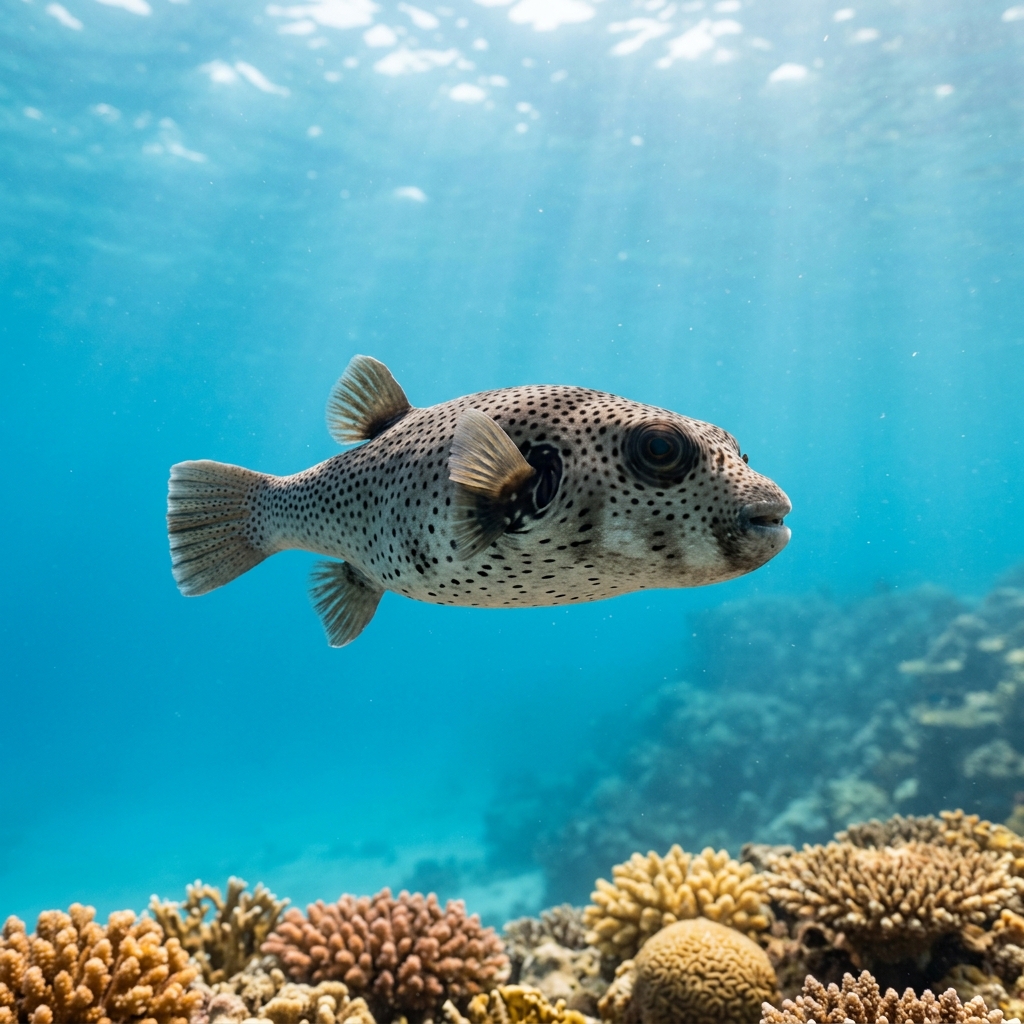
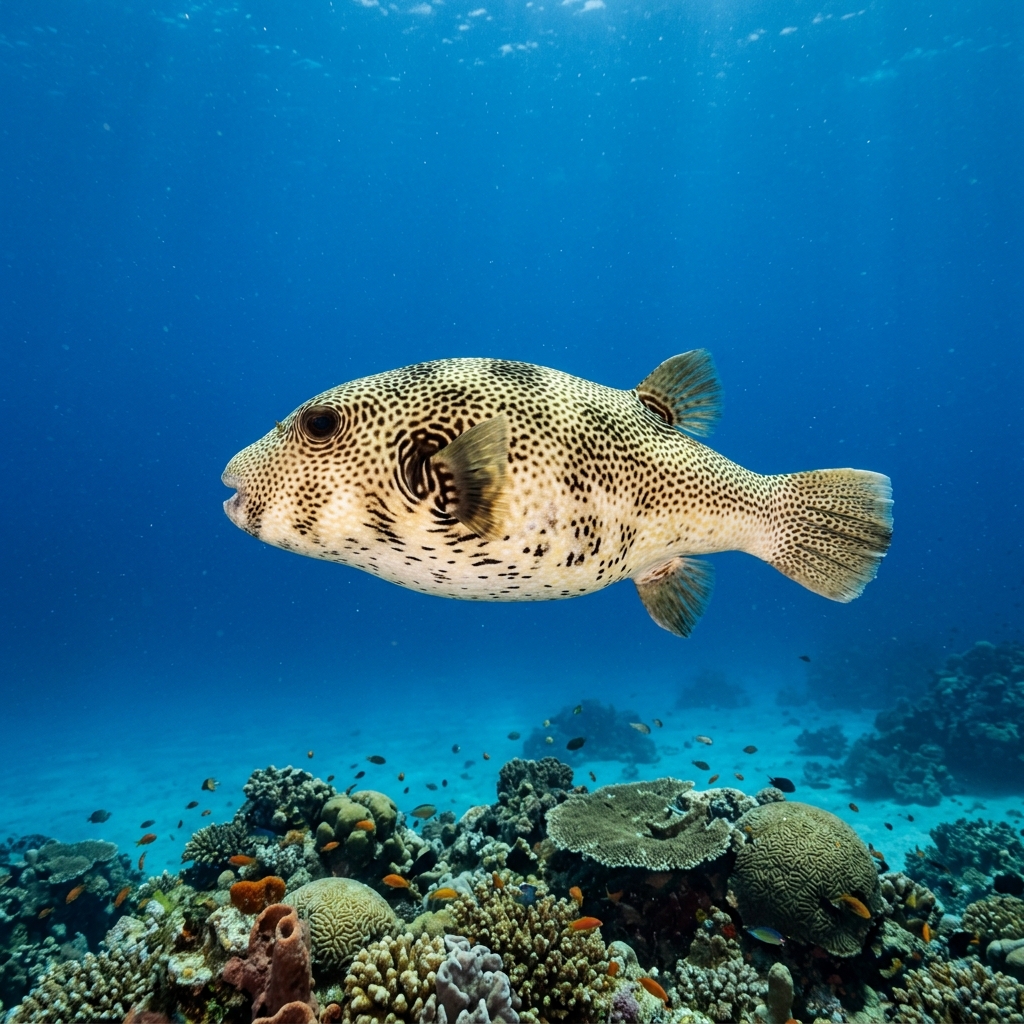
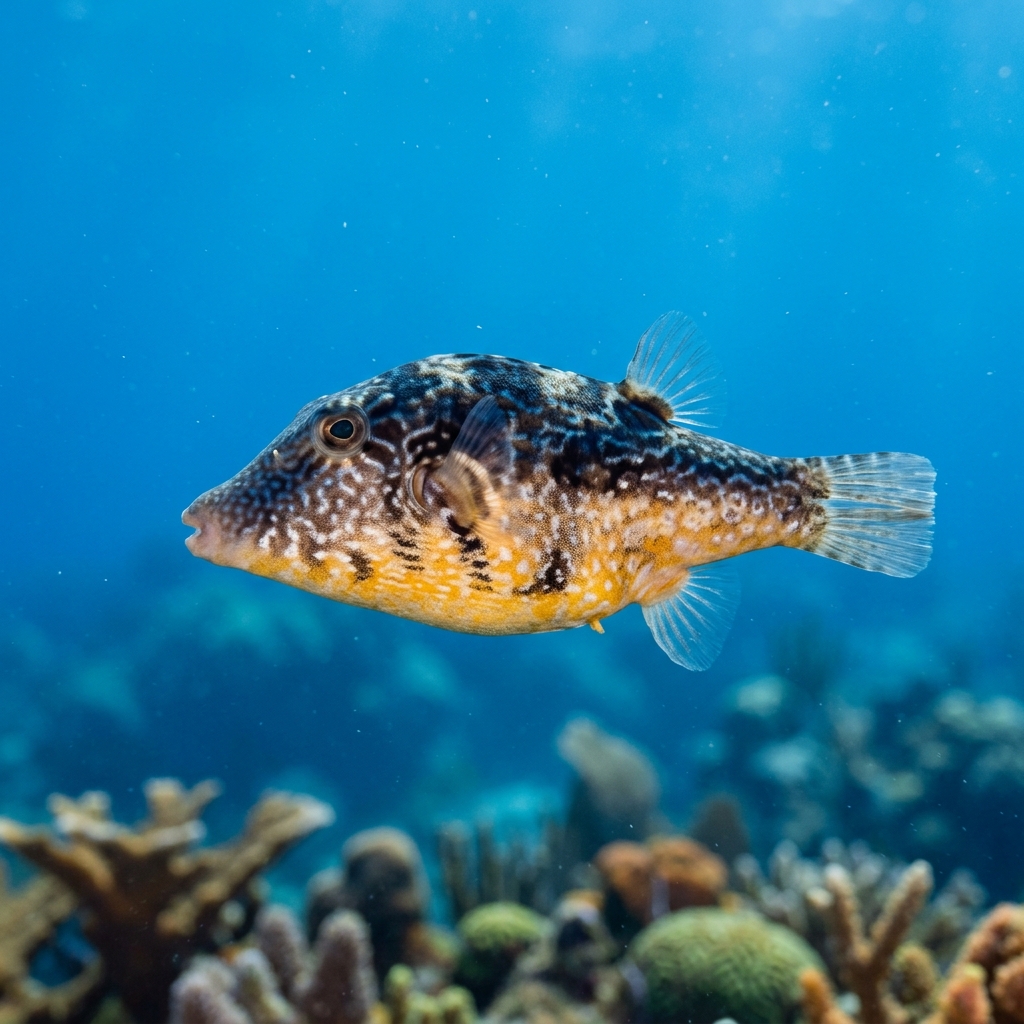
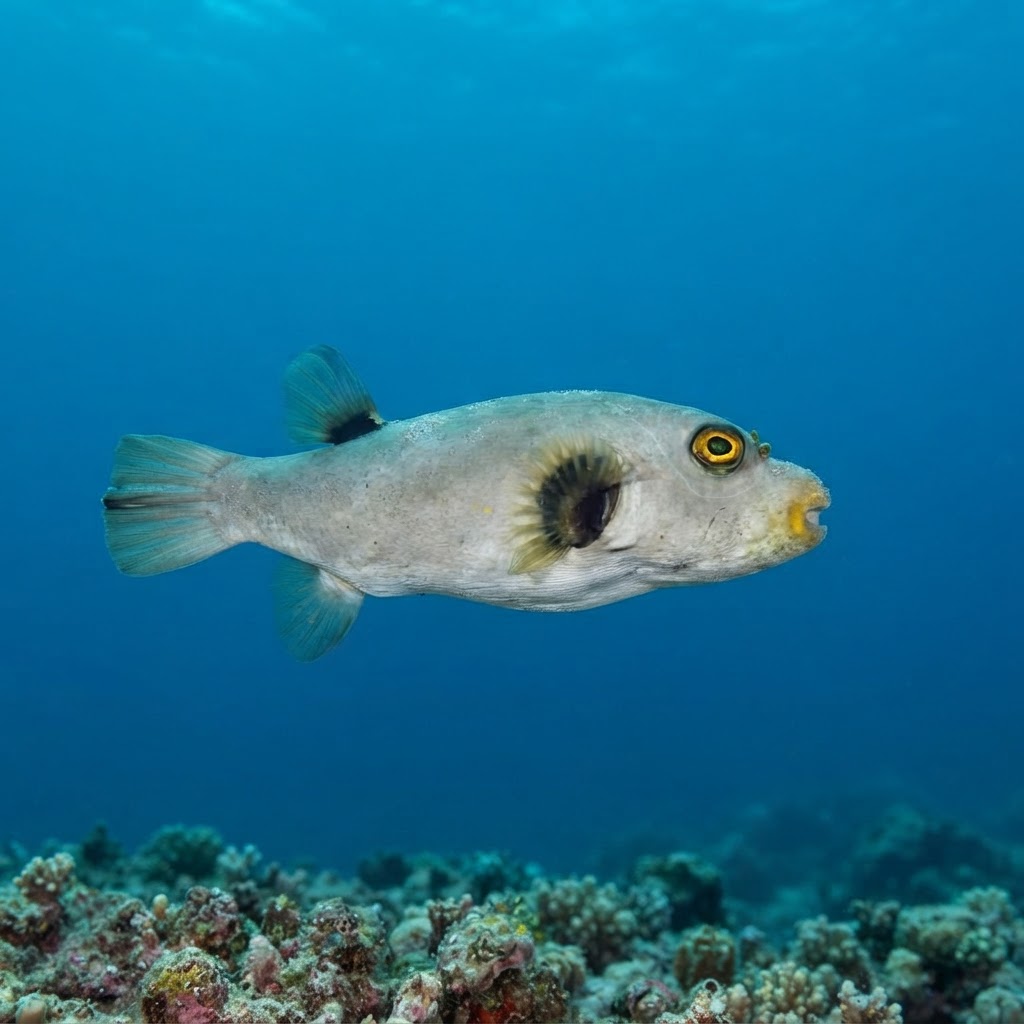
Grows to around 25 cm, with a plump, tapering body and the plain, almost unmarked pale grey to yellowish-brown colouring that gives this puffer its name. Look for fine dark speckling around the eyes and gill area and a dark margin on the tail fin, without the bold spots or網 patterns of most other Arothron species. It hovers with slow, deliberate fin strokes rather than darting, which is often the first clue you're looking at a puffer rather than a similarly shaped reef fish.
Usually seen cruising alone over reef flats and rubble patches, low in the water column, picking at the substrate for food rather than following a fixed patrol route. It tends to hold its ground when a diver approaches, drifting off at an unhurried pace rather than bolting, which makes it an easy subject for a slow, considered photo. Most sightings are logged as uncommon rather than frequent, so treat any encounter as a nice bonus on a reef dive rather than a given.
Like other Arothron pufferfish, it can inflate by gulping water when threatened and carries tetrodotoxin in its skin and organs, a defence that keeps most predators from bothering it twice.
No clear seasonal pattern shows up in the sightings, and its comfort range of roughly 24 to 29C spans most tropical reef conditions year-round, so any month is a fair bet at the sites above.
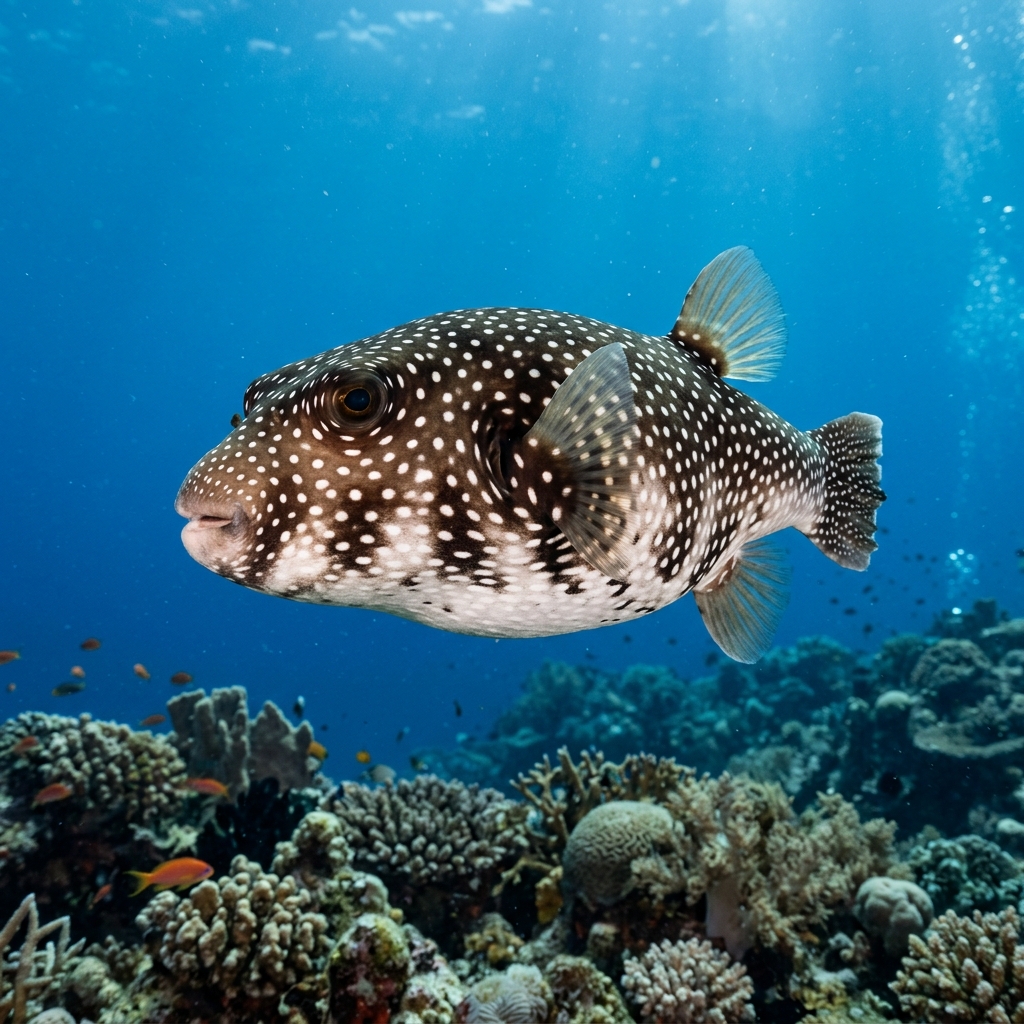
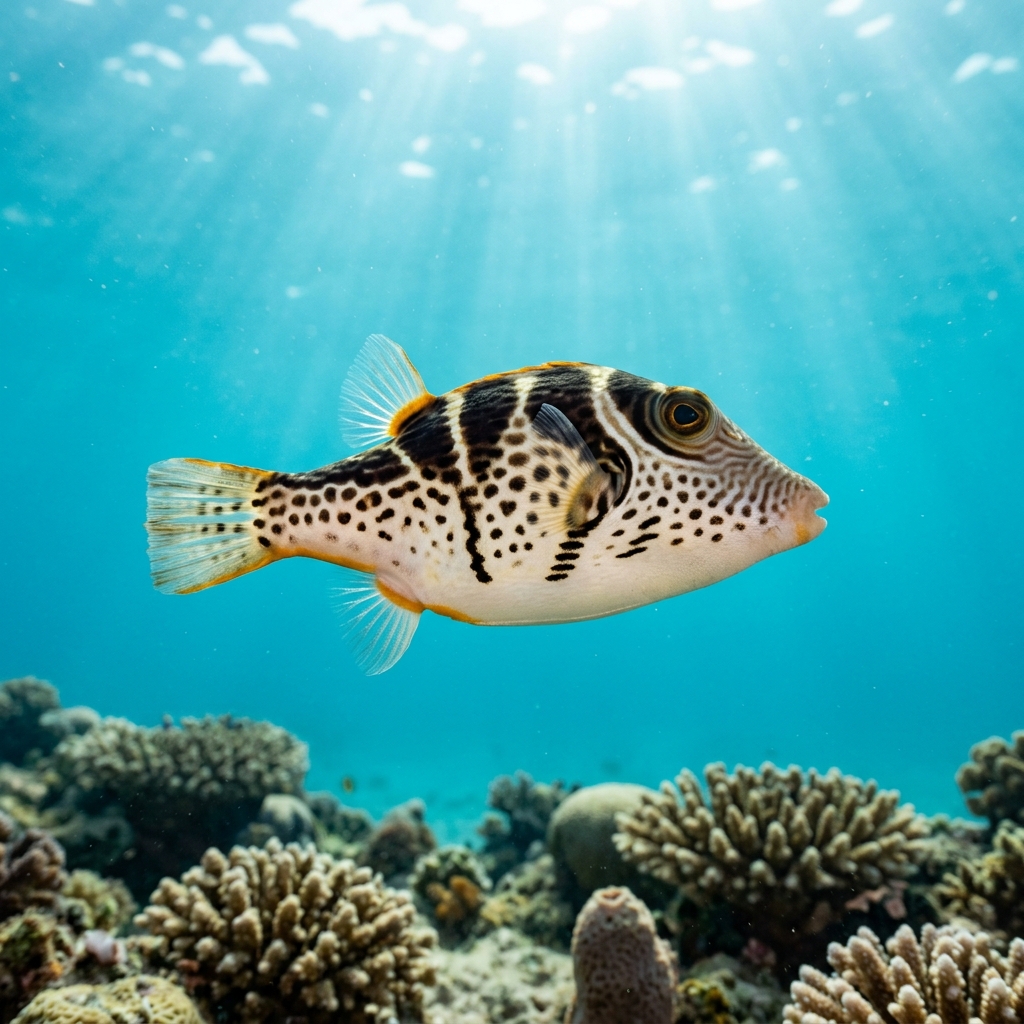
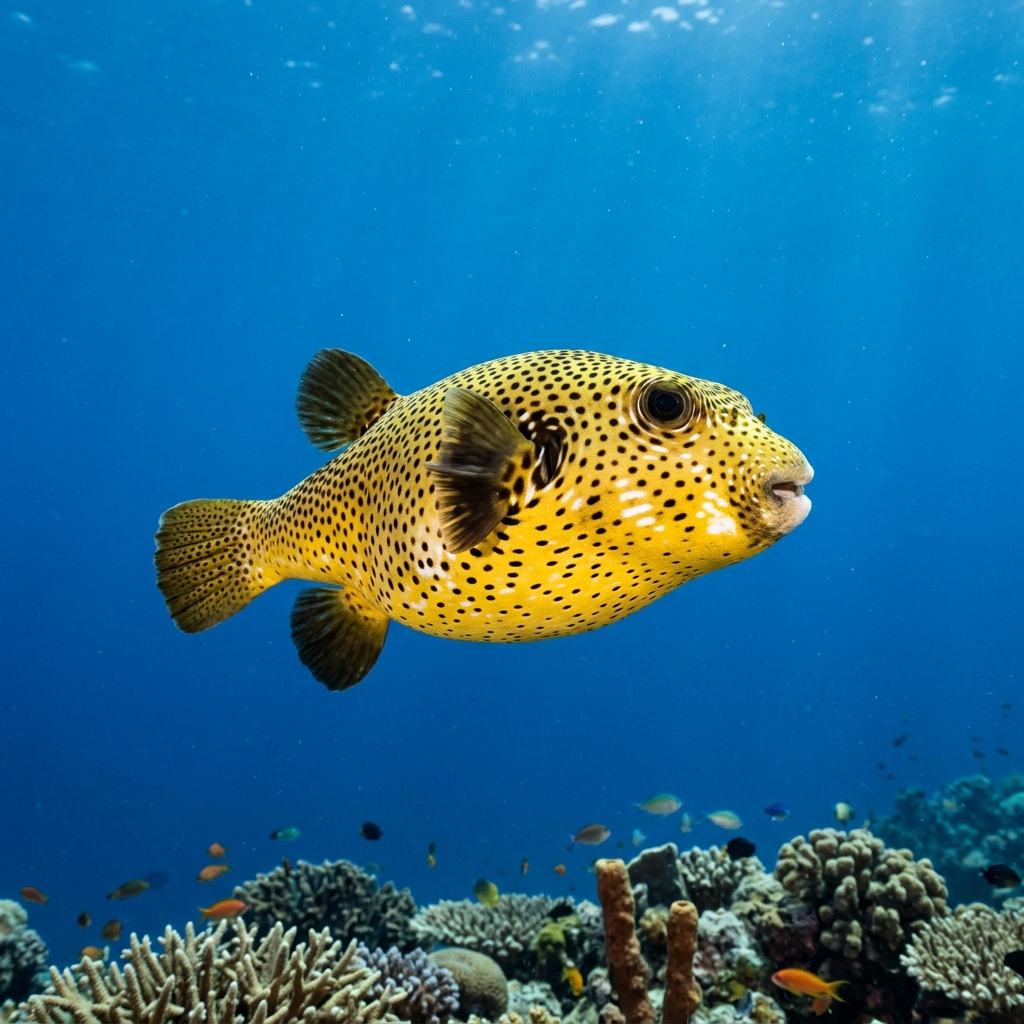
Reef neighbours a diver could mistake it for. Use the identification notes above to tell them apart.
Most reliably logged around Oman's Daymaniyat Islands and along Peninsular Malaysia's east coast, with solid numbers also out of Goa in India and Hikkaduwa in Sri Lanka. Divers also report it steadily along the East African and southwest Indian Ocean coast, including Ponta do Ouro in Mozambique, Mafia Island in Tanzania, and Reunion, plus Phuket in Thailand and KwaZulu-Natal in South Africa.
Mapping where Immaculate Pufferfish is logged…
Best chances are around Oman's Daymaniyat Islands and Malaysia's east coast, with steady sightings also in Goa (India), Hikkaduwa (Sri Lanka), Mozambique's Ponta do Ouro, and Tanzania's Mafia Island.
There's no strong season in the sightings data, and it tolerates a wide 24 to 29C range, so it's a year-round find on the reefs where it's logged.
Look for a plain grey-brown to yellowish body with no bold spots, fine dark speckling near the eyes, and a dark-edged tail fin. It's about 25 cm long and moves slowly rather than darting.
Around 25 cm on average, a modest size for the pufferfish family and easy to mistake for a juvenile of a larger relative if you don't check the colour pattern.
No, they pose no threat to divers and will simply swim off if approached. Like all pufferfish they carry toxins in their tissue, but this only matters if handled or consumed, not for observing them underwater.
Site and sighting data is aggregated from diver logs, iNaturalist and GBIF. For taxonomy and conservation status:
Valentini Pufferfish
2,830 sites