Hypselodoris tryoni
Tryon's Hypselodoris turns up across the Philippines, Indonesia and Malaysia in warm 27-29 °C water. Here's how to recognise it and where to look.
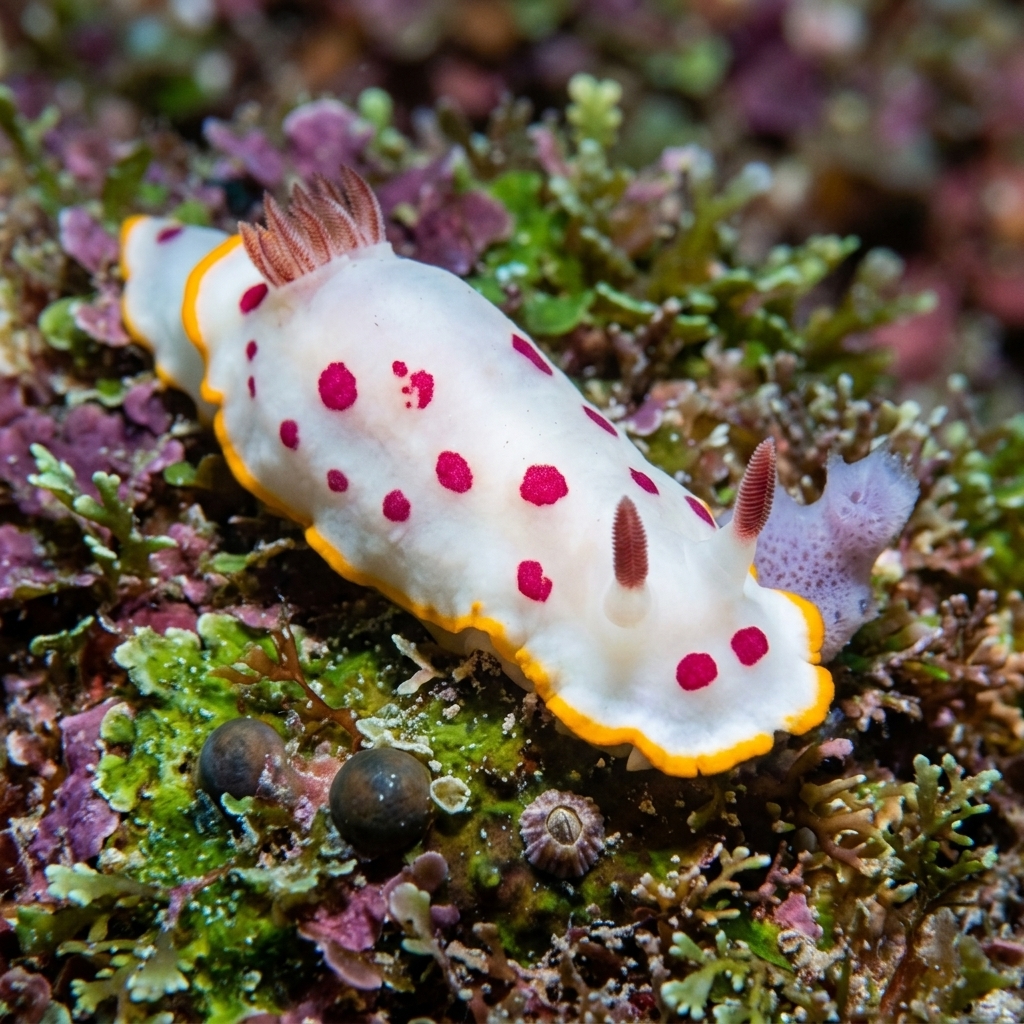
A small, elongated chromodorid nudibranch with a vivid blue body lined by bold orange and white stripes running head to tail along the mantle margin. The bushy gills and rhinophores (scent-sensing head projections) are typically purplish or lilac, creating a striking contrast against the warm tropical substrate it rests on. In the water it appears compact and slow-moving, rarely stretching beyond a few centimetres, which makes it easy to overlook against colourful sponges and encrusting organisms.
Tryon's Hypselodoris is typically found crawling slowly over sponges, encrusting organisms, and reef rubble, pausing to feed in the open where patient divers can get a good look. It shows little reaction to a careful diver hovering nearby, though sudden movement or bright torch beams can cause it to curl or slow. Most sightings are solitary individuals; like many nudibranchs, it does not school or aggregate.
As a chromodorid nudibranch, Tryon's Hypselodoris sequesters toxic compounds from the sponges it eats, making its vivid colours an honest warning to would-be predators rather than decoration.
Northern Hemisphere sites can produce sightings year-round given the consistently warm water (observed between 26.7 and 29.3 °C) across the Indo-Pacific. In Southern Hemisphere locations such as Australia and New Caledonia, sightings concentrate between August and March.
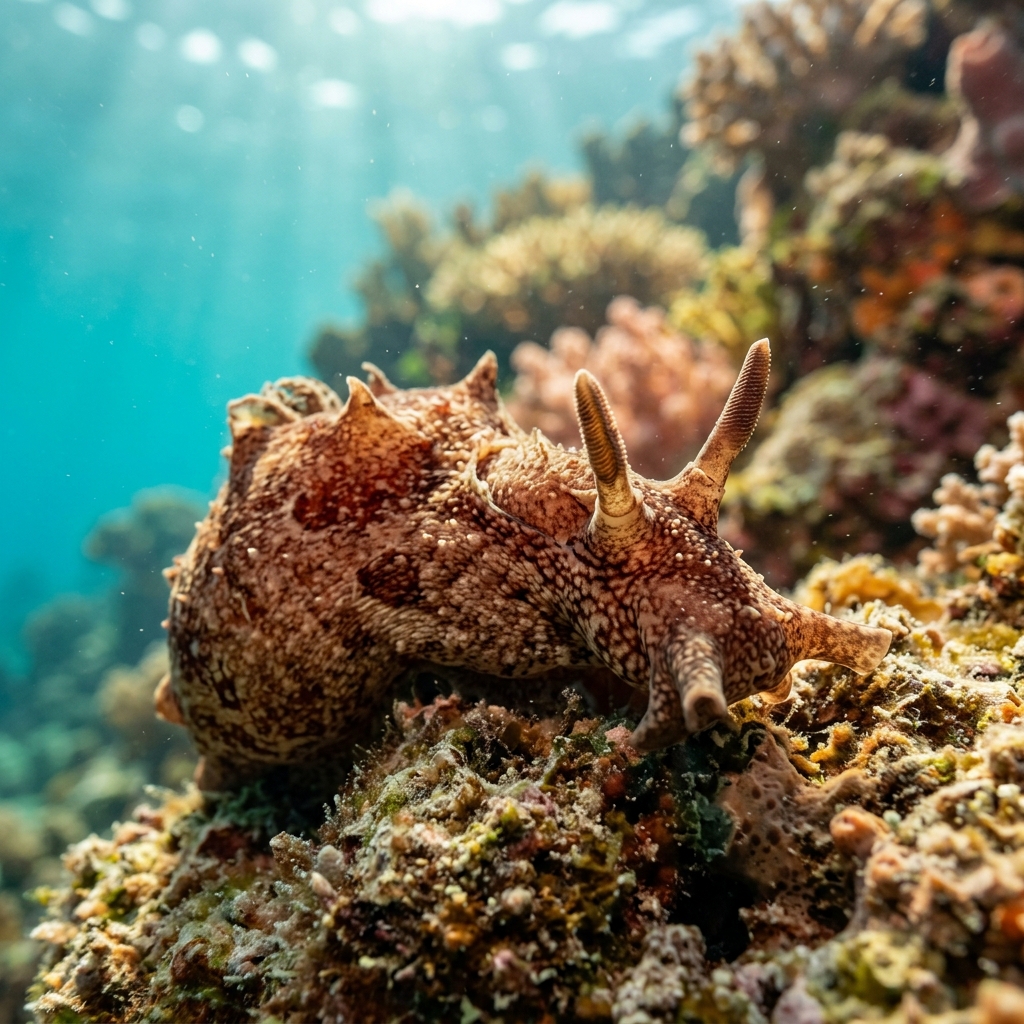
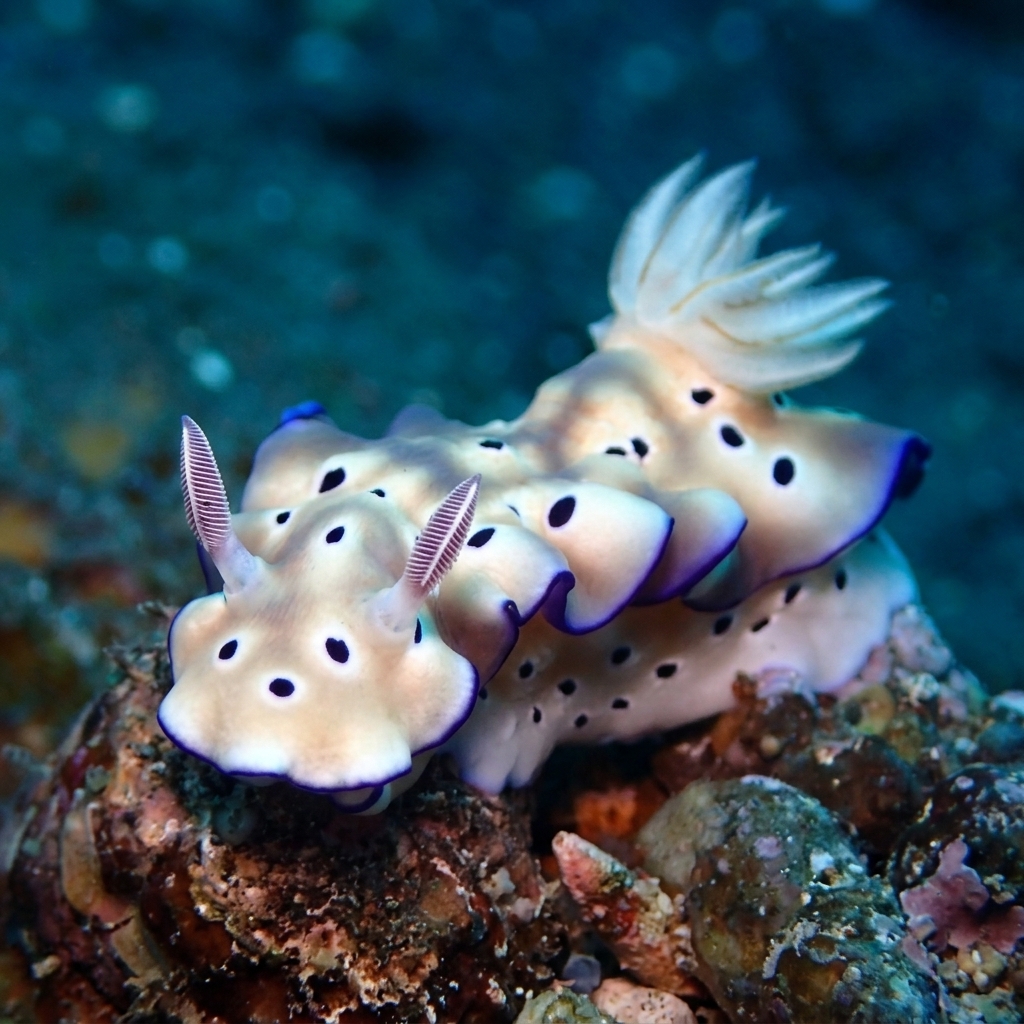
Reef neighbours a diver could mistake it for. Use the identification notes above to tell them apart.
Most commonly logged in the Philippines, with particularly strong sighting records across Luzon and the Visayas, and in the Malaysian waters around Pulau Tioman, Perhentian, and Redang. Indonesia is another reliable destination, especially Bali, Lombok, and the Sulawesi sites. Smaller but real records also come from Australia, New Caledonia, Taiwan, Vietnam, and Timor-Leste.
Mapping where Tryon's Hypselodoris is logged…
The Philippines is the standout destination, with Luzon and the Visayas producing the most records. Malaysia's Pulau Tioman, Perhentian, and Redang are strong alternatives, and Bali and Sulawesi in Indonesia are also reliable. Records extend to Australia, New Caledonia, Vietnam, Taiwan, and Timor-Leste.
In the Philippines, Indonesia, and Malaysia, the warm, stable water temperatures mean this nudibranch can turn up throughout the year. In southern destinations like Australia and New Caledonia, sightings peak between August and March based on logged observation data.
Look for a small blue nudibranch with orange and white stripes running along the mantle edge and purplish, feathery gills and rhinophores on top. It moves slowly over sponges and reef rubble, which is typically where you will find it. Its vivid colours are distinctive even in low-light conditions.
Exact size data for this species is limited in diver records, but as a chromodorid nudibranch it is typically a small animal, usually only a few centimetres in length. Looking closely at sponge surfaces and reef rubble is the best way to spot one.
Like other chromodorid nudibranchs, it feeds on sponges and retains the toxic or distasteful compounds from them in its own tissues. Its bold colours serve as aposematic (warning) colouration, signalling to potential predators that eating it would be a bad experience.
Site and sighting data is aggregated from diver logs, iNaturalist and GBIF. For taxonomy and conservation status:
Light-spotted Aegires
3,168 sites