Hypselodoris bennetti
Spot Bennett's Hypselodoris in New South Wales, Australia, active Aug to Mar in 18-23°C water. Learn how to identify this colourful nudibranch underwater.
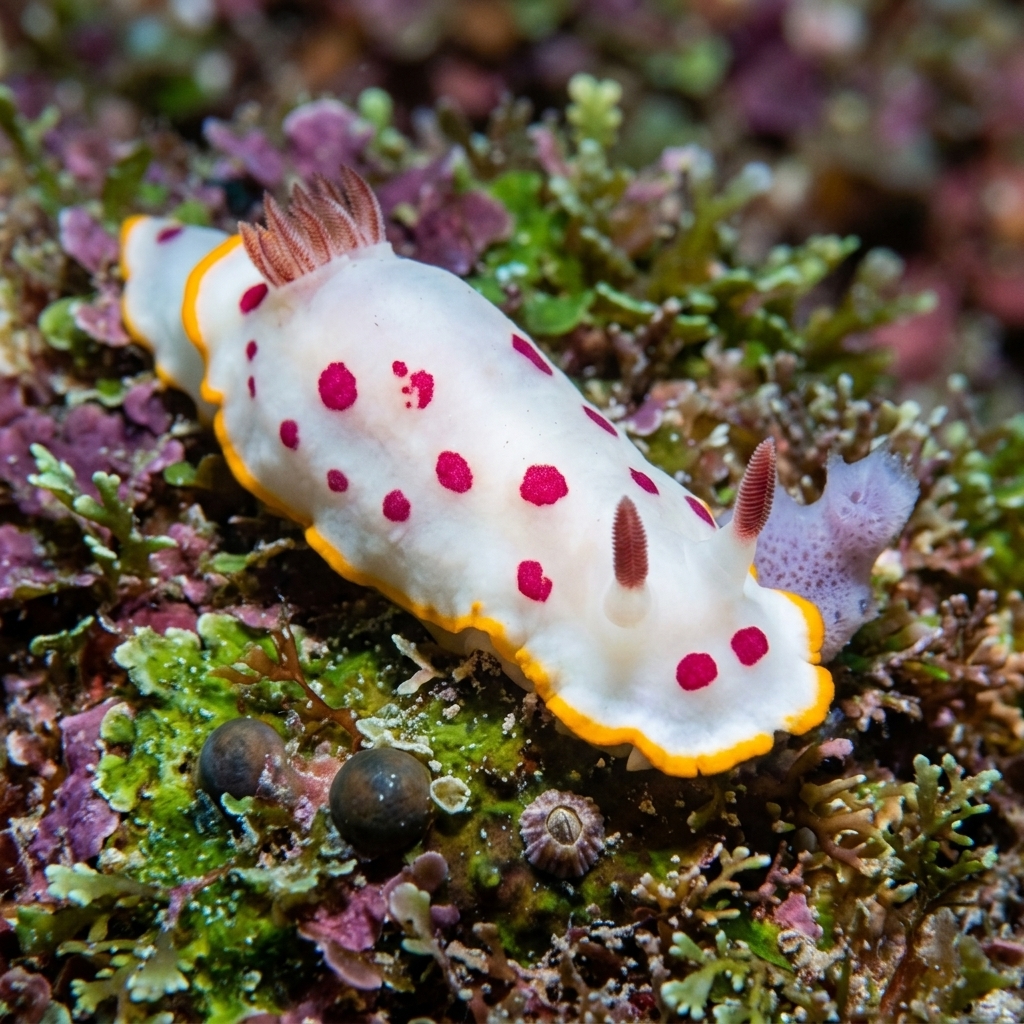
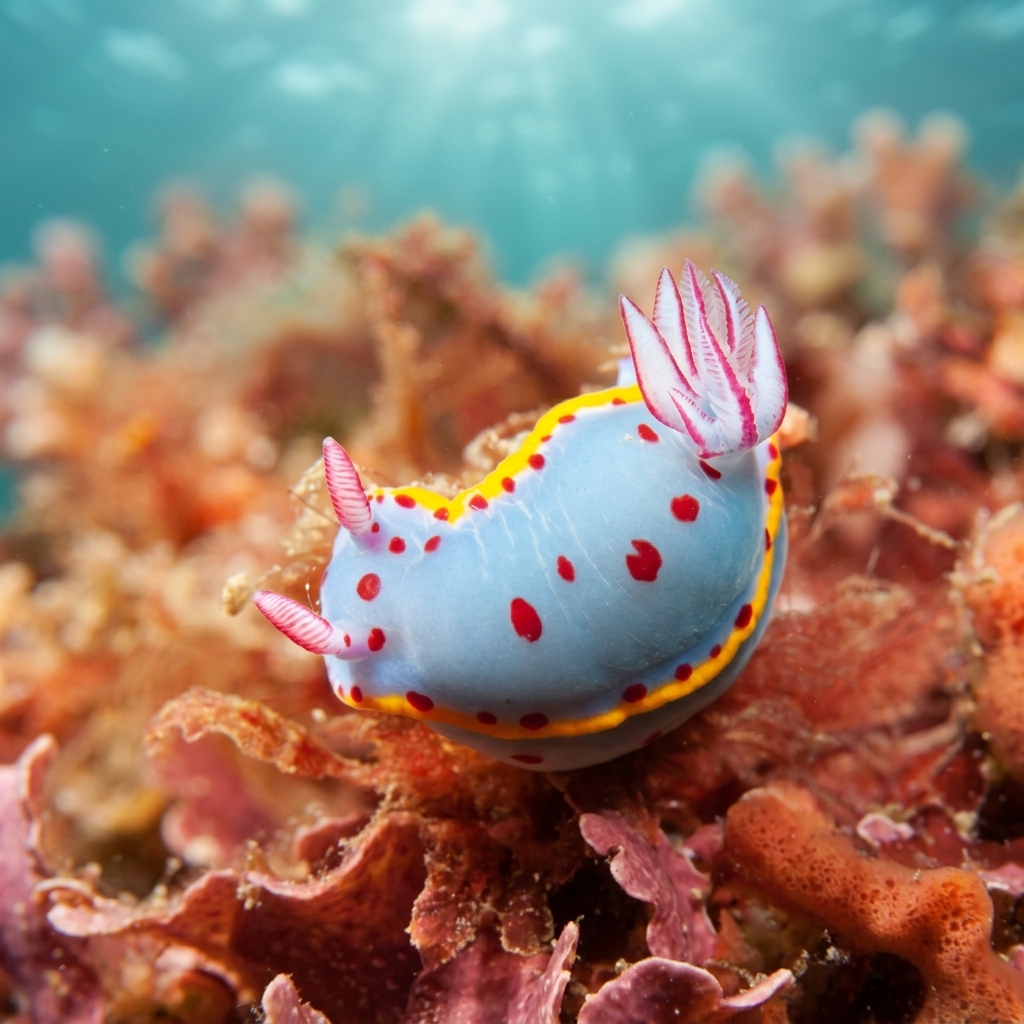
A vibrant chromodorid nudibranch with a white to pale blue body edged in bold contrasting colour bands, look for the distinctive orange-tipped gills (cerata) fanning up from the back and the similarly coloured rhinophores (sensory clubs) at the front. It moves slowly across the reef, which gives you plenty of time to study the lateral mantle fringe and confirm the colour pattern. Most encounters are with solitary adults; there is no recorded visual difference between juveniles and adults that would complicate field ID.
You'll most often find one crawling unhurriedly across rocky reef or rubble, grazing on sponges. It shows little reaction to divers and will continue moving steadily, making it easy to observe and photograph at close range. Like most nudibranchs it is primarily a daytime animal and tends to be found in the shallower, well-lit parts of the reef.
As a chromodorid nudibranch, Bennett's Hypselodoris sequesters toxic chemicals from the sponges it eats and stores them in its mantle, making its bright colours a warning to predators rather than decoration.
Sightings concentrate between August and March in the Southern Hemisphere, aligning with the cooler to warming water period when temperatures sit in the 18-23°C range typical for New South Wales reefs.
Reef neighbours a diver could mistake it for. Use the identification notes above to tell them apart.
Almost all logged sightings come from Australia, with New South Wales overwhelmingly the top region, this is essentially a New South Wales speciality. A small number of records exist from Victoria, so southern Australian dive sites are your best search area.
Mapping where Bennett's Hypselodoris is logged…
New South Wales, Australia, is by far the best place to look, accounting for the vast majority of logged sightings. A handful of records also exist from Victoria. If you're diving the rocky reefs of the New South Wales coast, you're in the right place.
Sightings peak between August and March along the New South Wales coast. This covers late winter through summer and into early autumn, when water temperatures sit in the 18-23°C range that suits the species.
Look for a slow-moving nudibranch with a pale blue or white body, a coloured mantle border, and orange-tipped gills fanning upward from the back. The matching coloured rhinophores at the front are a reliable second feature to confirm. It's the combination of border colour, gill colour, and body tone that distinguishes it.
It's rated as uncommon at most sites where it's been recorded, with some sites reporting it as rare and a smaller number where it's considered common. You'll need to look carefully, slow down on rocky reef sections and check sponge patches.
Site and sighting data is aggregated from diver logs, iNaturalist and GBIF. For taxonomy and conservation status:
Light-spotted Aegires
3,168 sites