Naso tonganus
Grey-brown surgeonfish with a bony head bump, most reliably logged around Tumon Bay and Guam's North Coast in 25-29C water.
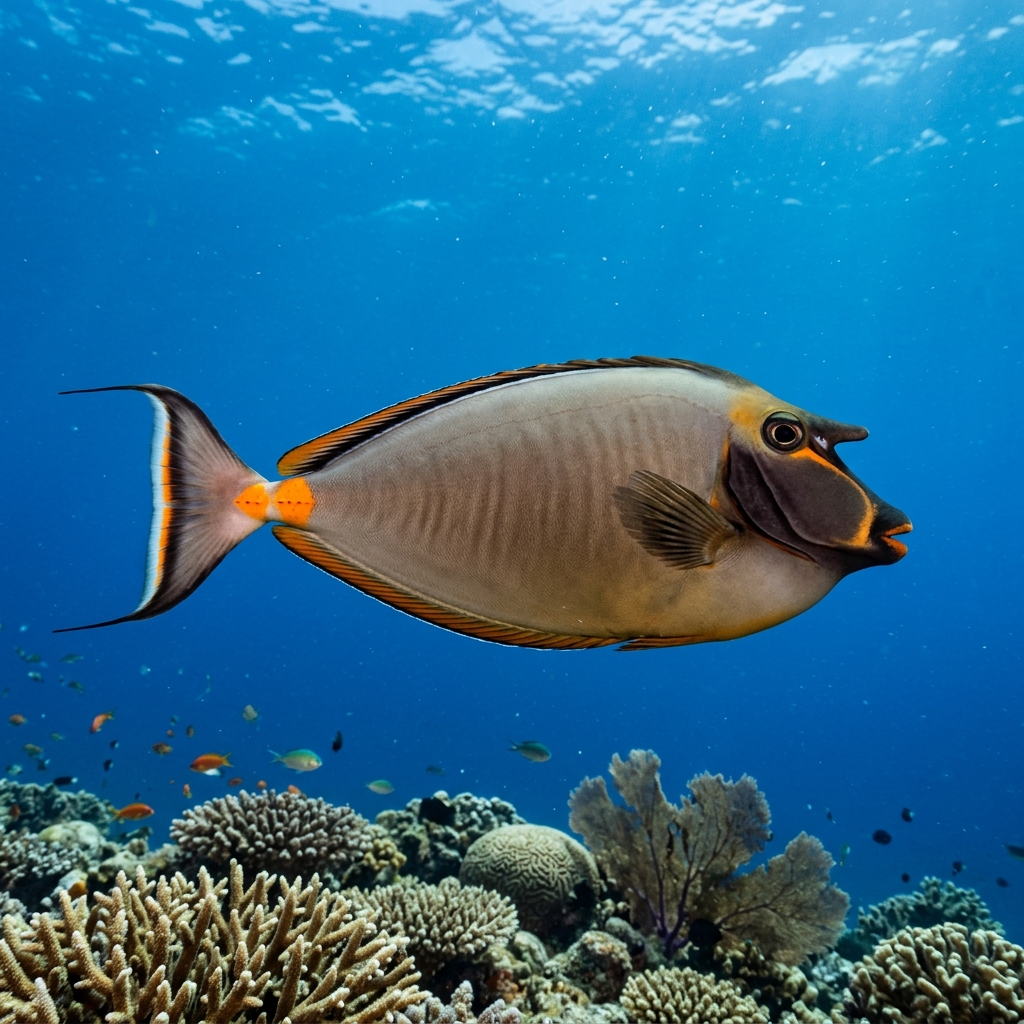
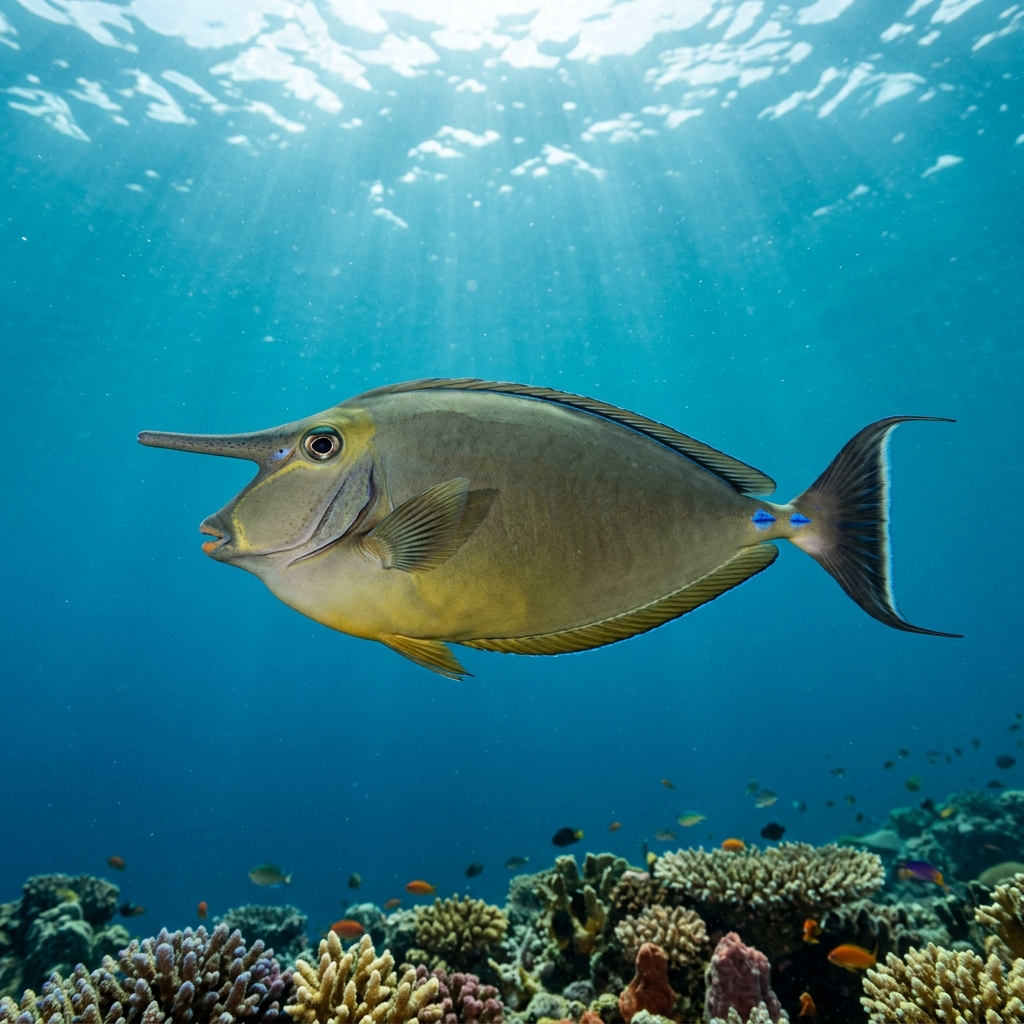
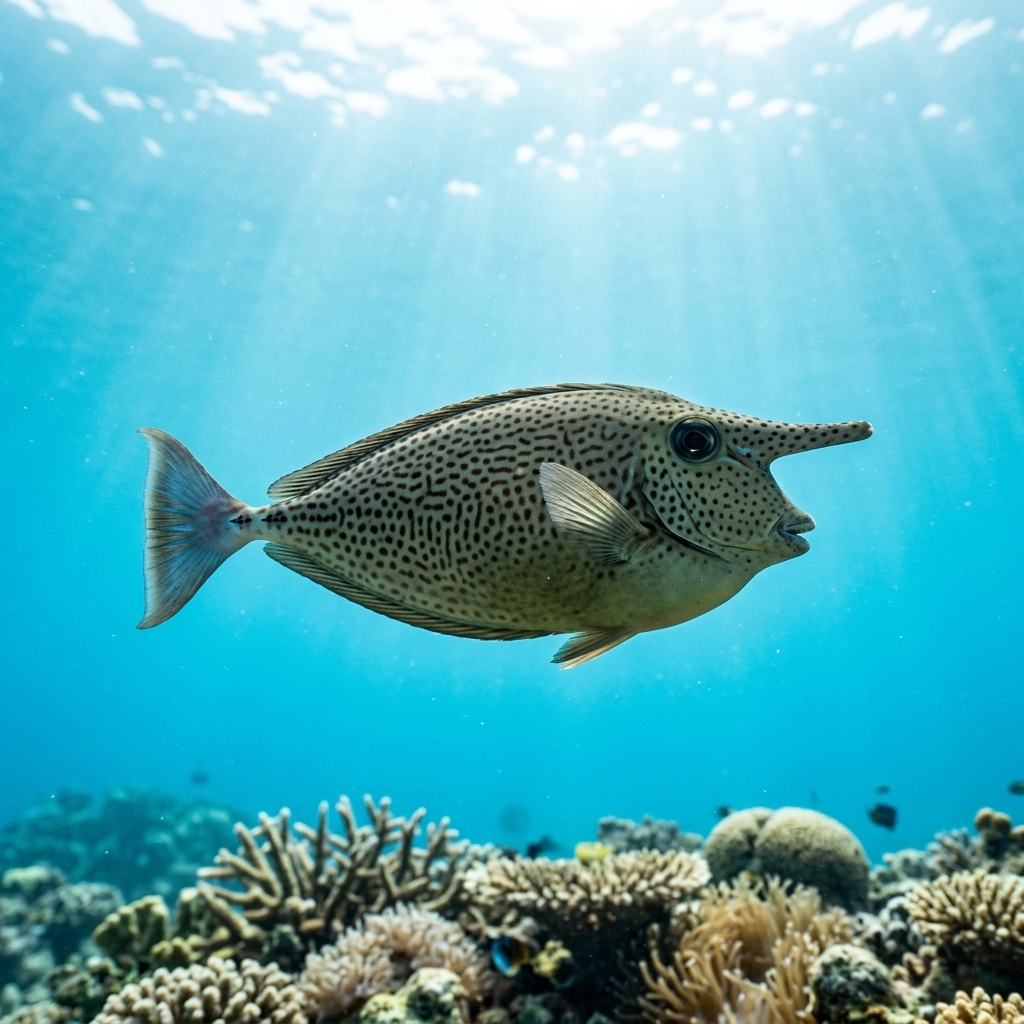
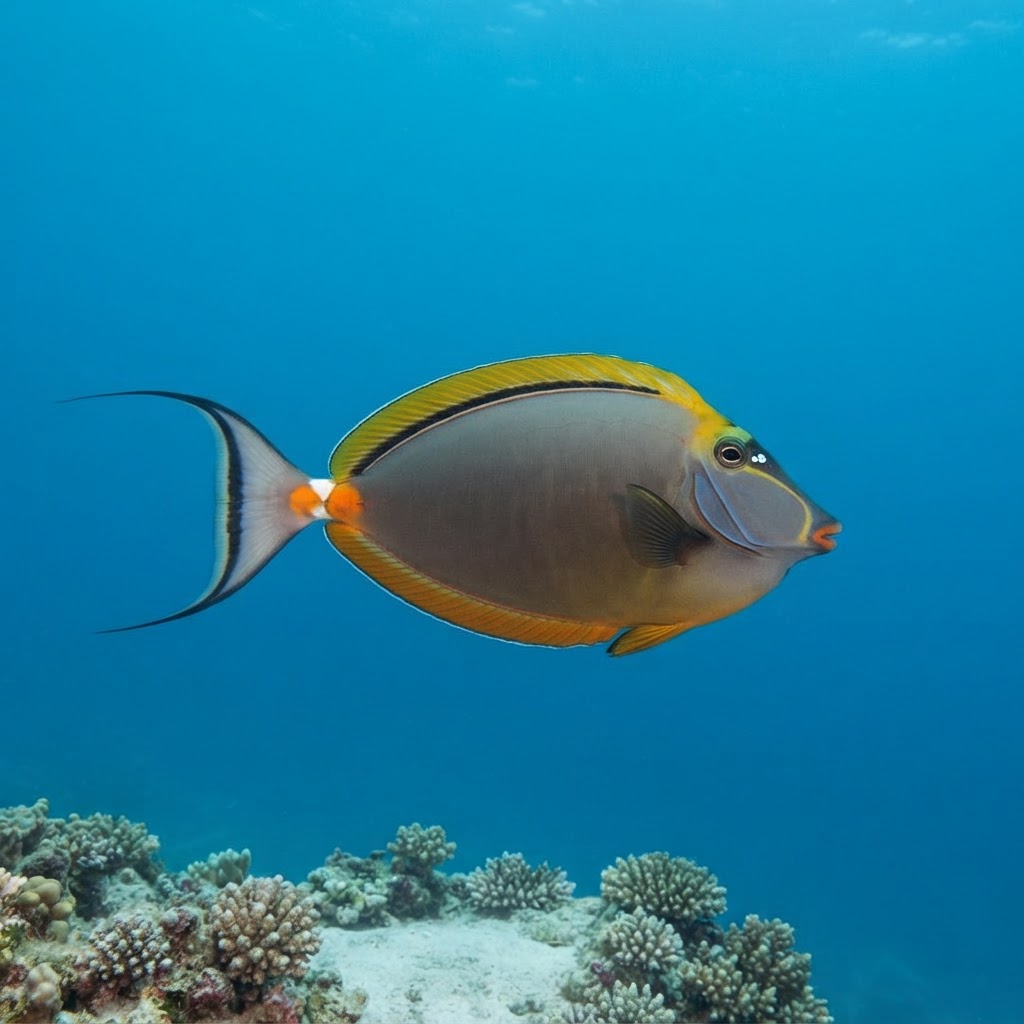
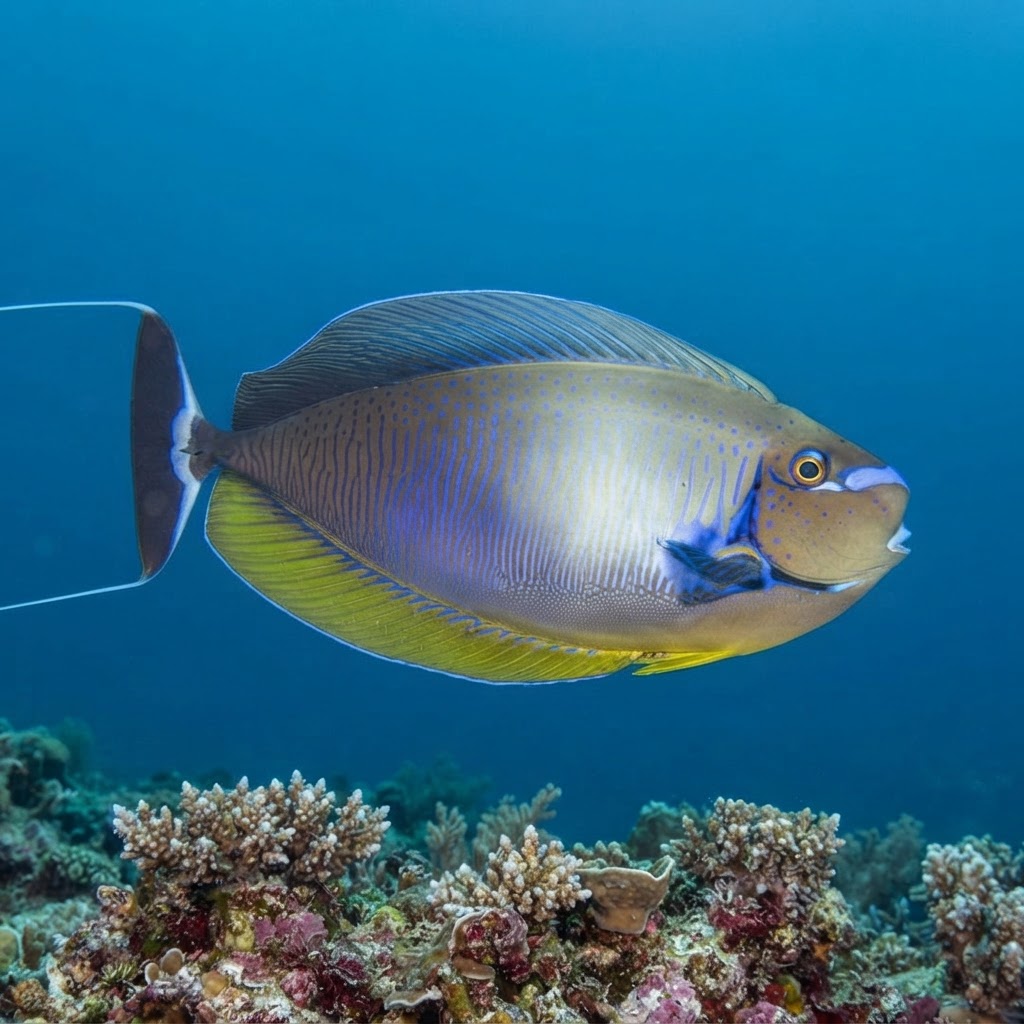
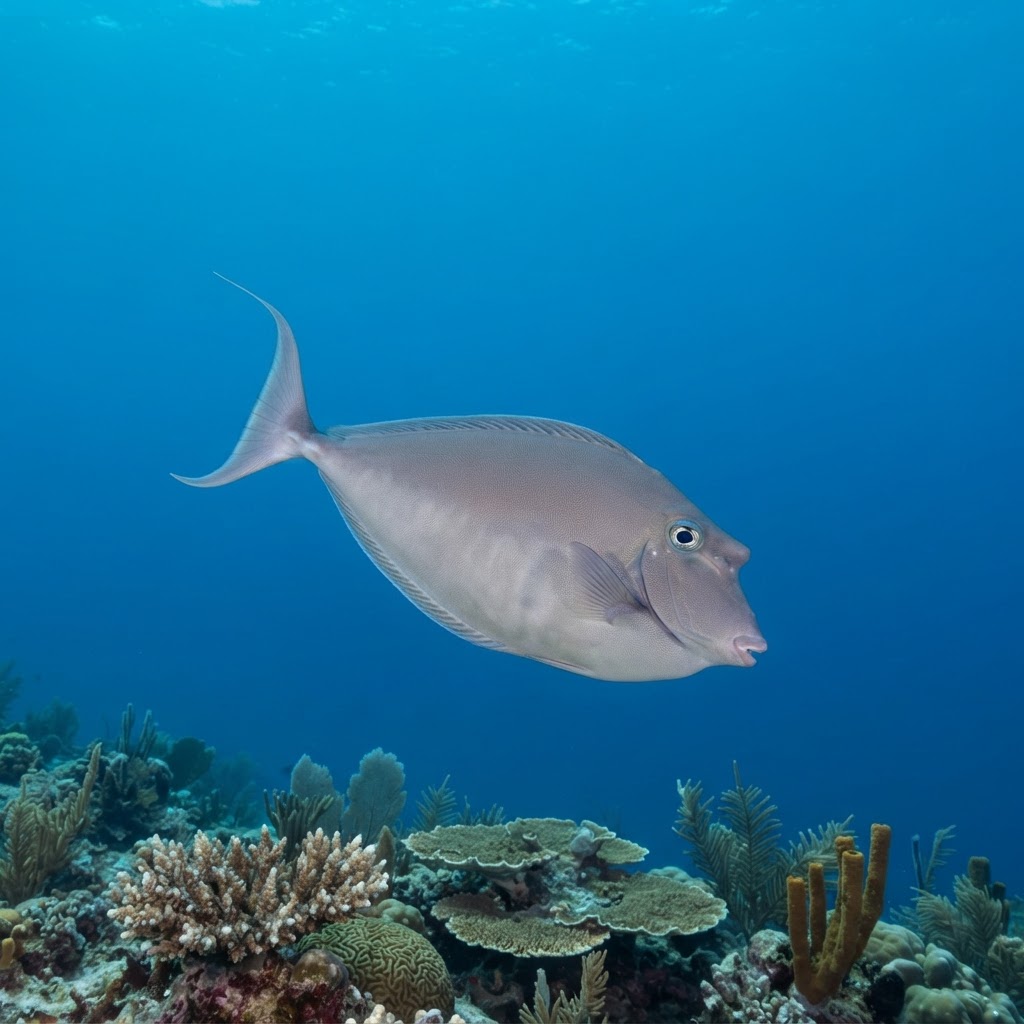
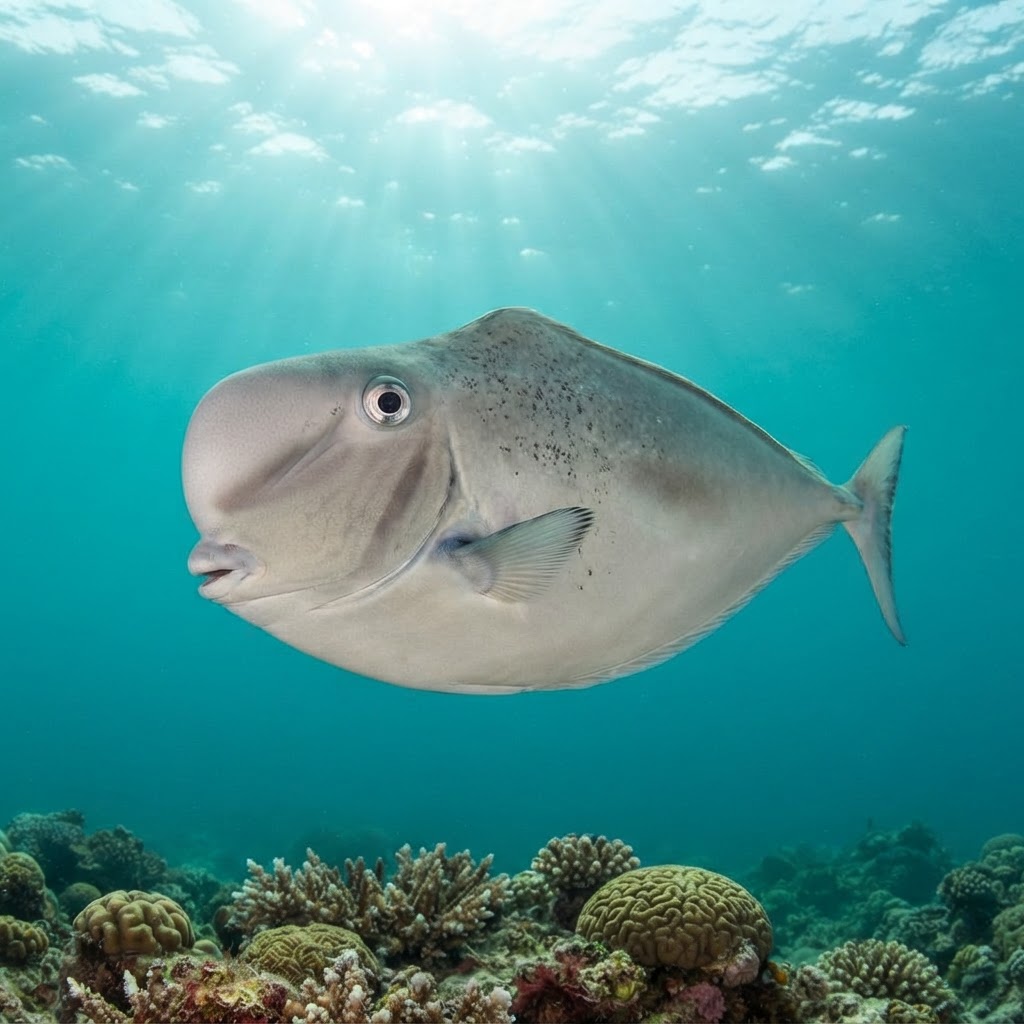
Grows to around 42 cm and shows a deep, brownish-grey body with a distinctive bony bump rising from the forehead, the feature that gives this unicornfish its name. Look for the smooth, slightly humped facial profile rather than a long horn, which sets it apart from spike-nosed relatives. The tail is broad and pale-edged, and the body colour can shift between dull grey and olive depending on mood and light.
Divers typically find it cruising alone or in small loose groups over reef flats and slopes, grazing on algae rather than reacting much to bubbles or fin kicks. It tends to keep a bit of distance and drift off unhurried rather than dart for cover, making brief, unremarkable sightings rather than close encounters.
The head bump is bone, not a soft horn, and it keeps growing more pronounced as the fish ages, so bigger adults look noticeably more humped than younger ones of the same species.
No clear seasonal pattern shows up in the sighting data, and its comfortable range of roughly 24.5 to 28.9C matches tropical reefs year-round, so any month is a fair bet.
Reef neighbours a diver could mistake it for. Use the identification notes above to tell them apart.
Most reliably logged in Guam, with sightings clustered around Tumon Bay and the North Coast, and it also turns up on reefs in Queensland, Australia. Across the sites where divers have recorded it, it stays an uncommon find rather than a guaranteed one.
Mapping where Humpnose Unicorn is logged…
Guam is the strongest spot, with sightings around Tumon Bay and the North Coast, and it has also been logged on reefs in Queensland, Australia.
There's no detected season in the sighting record, and its preferred water temperature of about 24.5 to 28.9C holds year-round on the reefs where it's found, so timing isn't critical.
Look for a grey-brown surgeonfish around 42 cm with a smooth, bony bump on the forehead rather than a long horn. The tail is broad with a pale edge, and it usually swims alone or in small, unhurried groups.
They reach around 42 cm in length, a solid mid-size surgeonfish rather than one of the giants of the family.
Its signature head bump is solid bone that keeps enlarging with age, so the biggest, oldest fish on a reef often look far more pronounced in the face than younger ones of the exact same species.
Site and sighting data is aggregated from diver logs, iNaturalist and GBIF. For taxonomy and conservation status:
Orangespine Unicornfish
961 sites