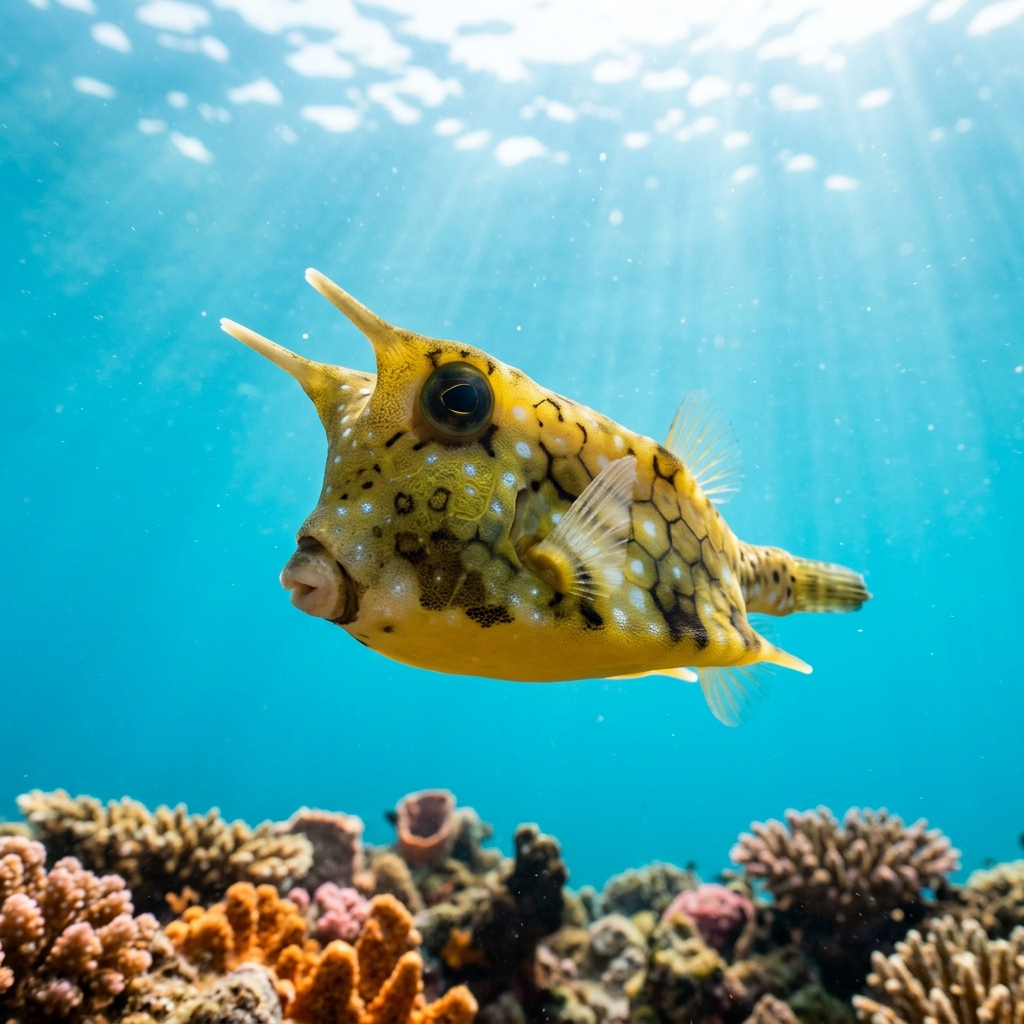
Tetrosomus gibbosus
Look for a triangular, hump-backed box on the sand in South Sinai or Eilat, water around 22-28C, sightings year-round.
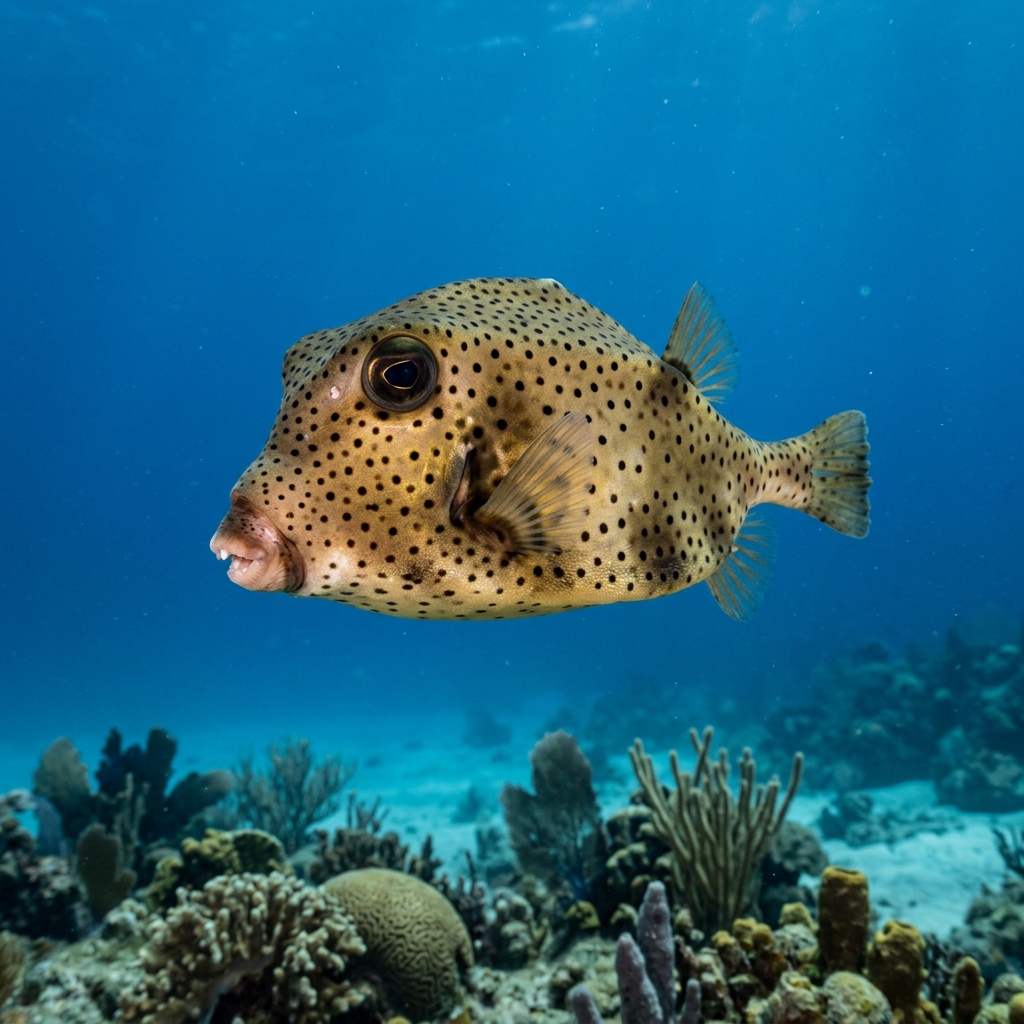
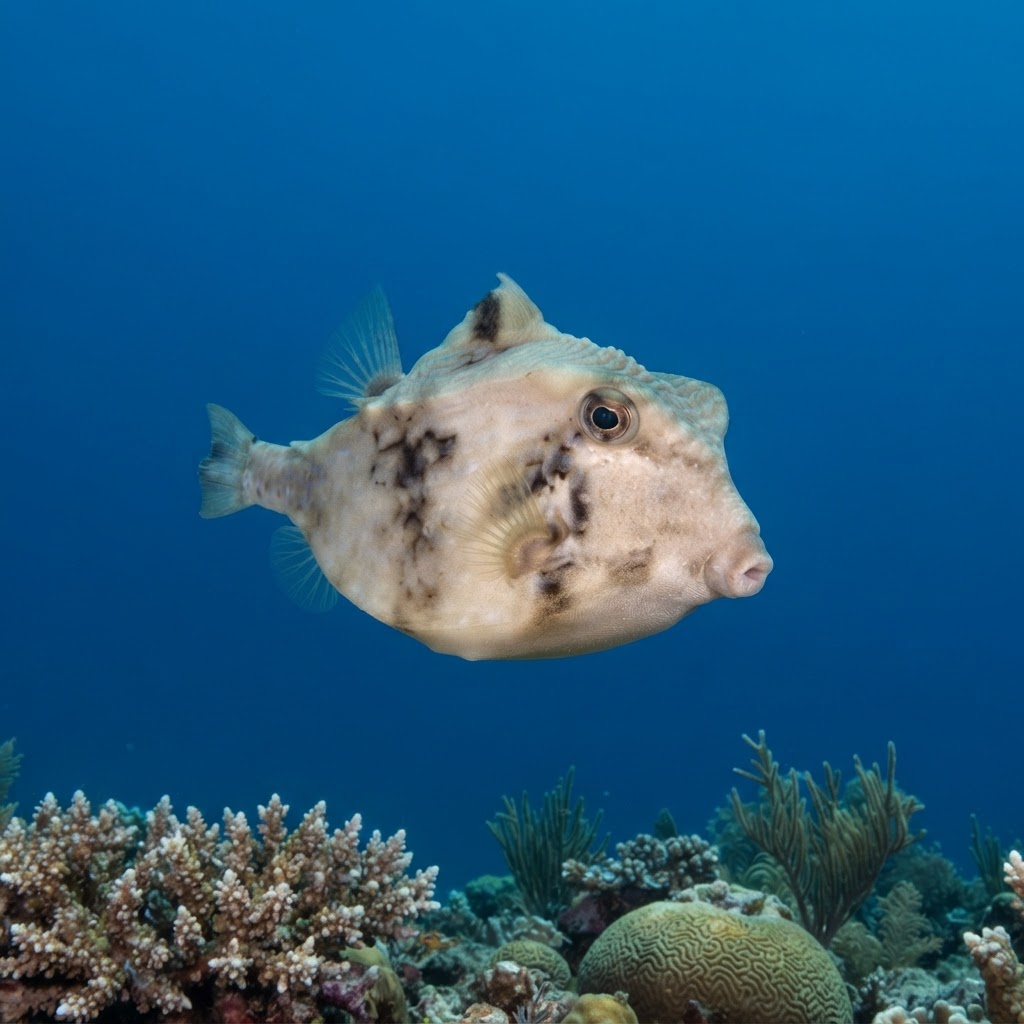
Boxy, triangular body armoured in fused bony plates, with a raised bump behind the head that gives it the 'humpback' name. Colour runs pale grey to sandy tan with faint darker mottling, blending well against reef rubble and sand. Only around 21 cm long, it moves with slow, stiff fin beats rather than a fish-like swimming motion, and the flat underside plus pointed snout make it look almost like a swimming pyramid.
Usually found resting or shuffling slowly over sand and rubble patches near reef bases, using its stiff, armoured body and small fins to hover rather than dart. It is unhurried around divers and often lets you approach close before easing away, making it a good subject for a slow, low approach and a torch check on night dives when it tends to sit out in the open.
Like other boxfish, its body is a rigid bony box rather than a flexible fish skeleton, so it can secrete skin toxins when stressed as a passive defence instead of relying on speed to escape predators.
Sightings are logged year-round with no clear seasonal peak, which fits its comfort range of roughly 22 to 28C found across northern Red Sea and Gulf of Aqaba dive sites in most months.
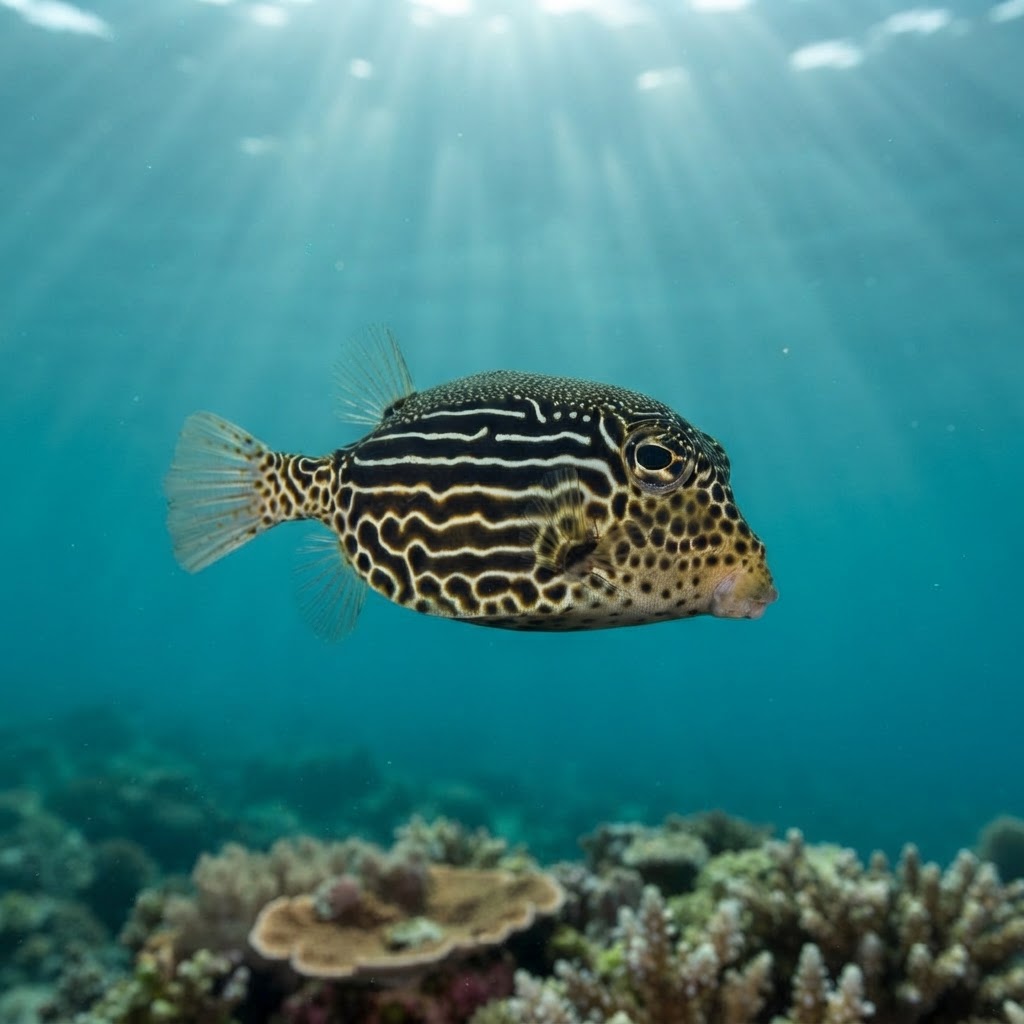
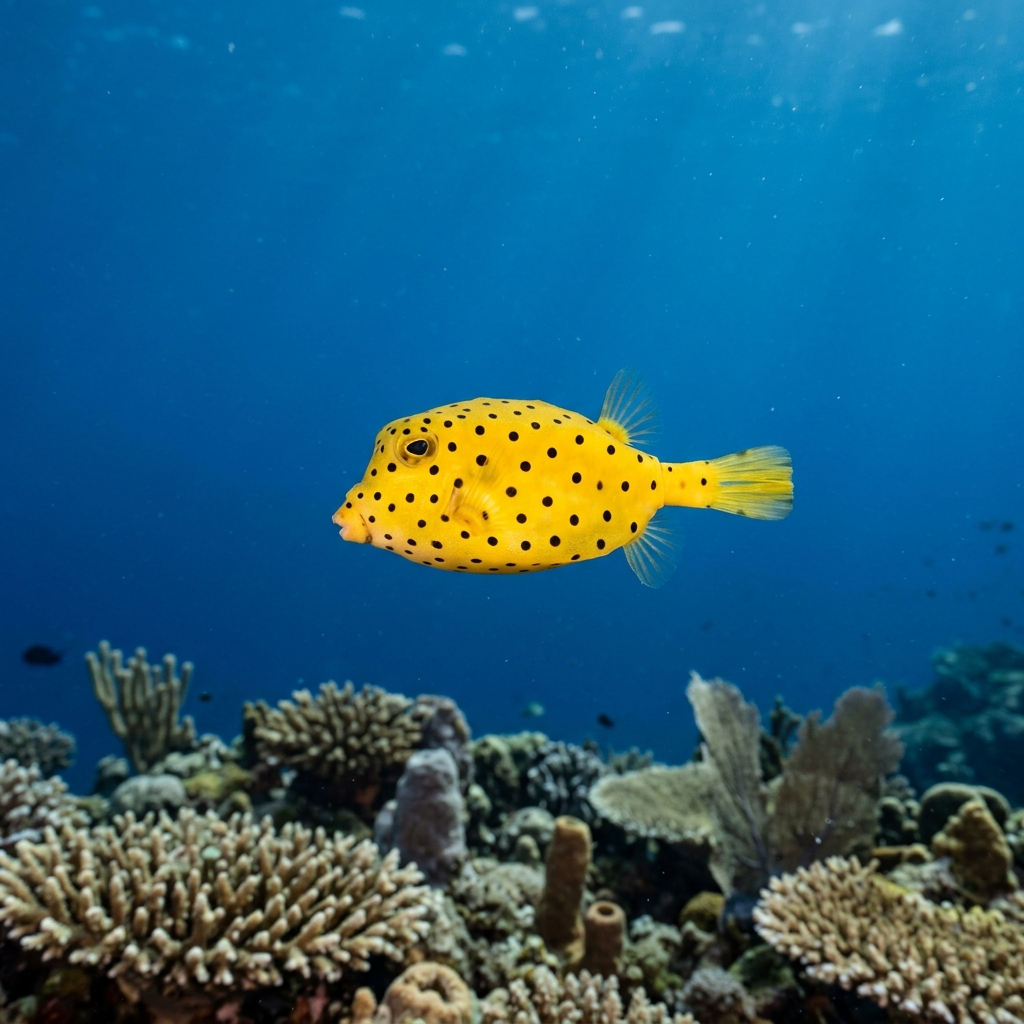
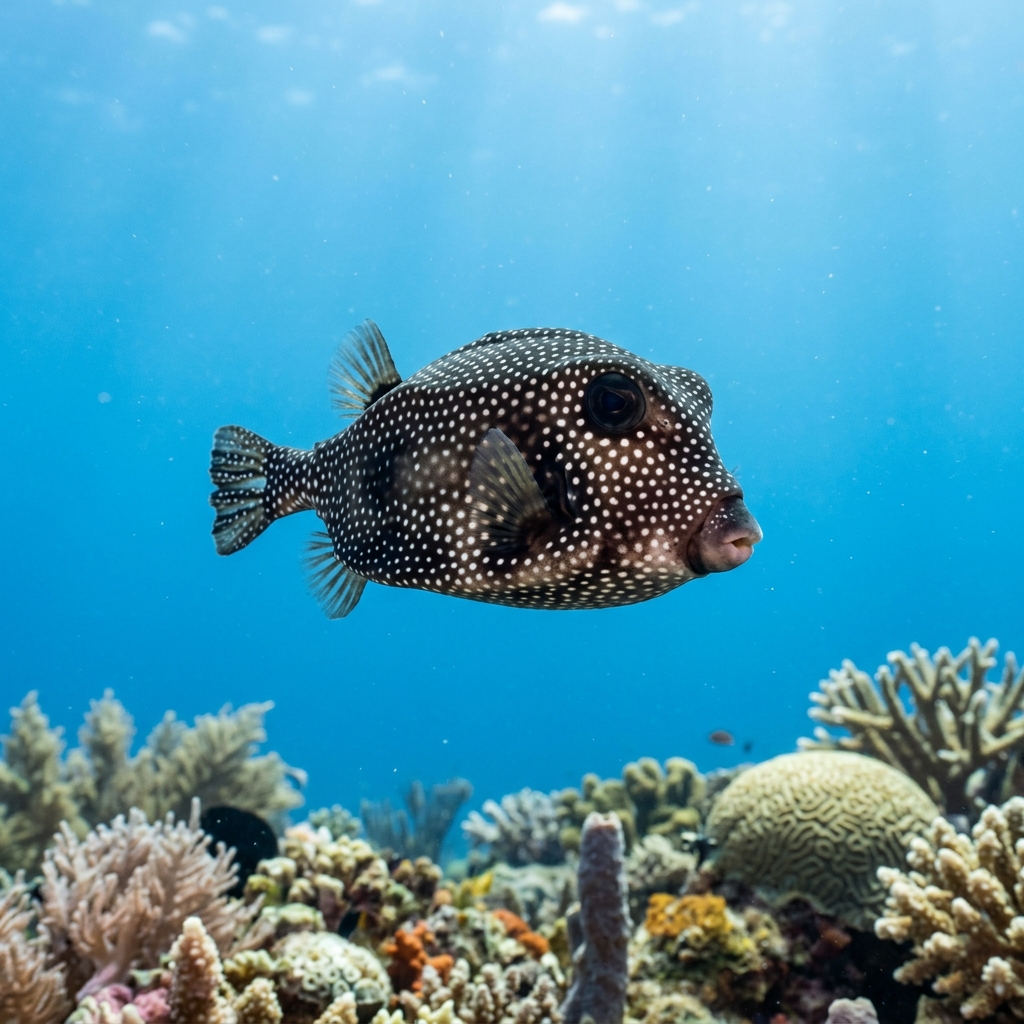
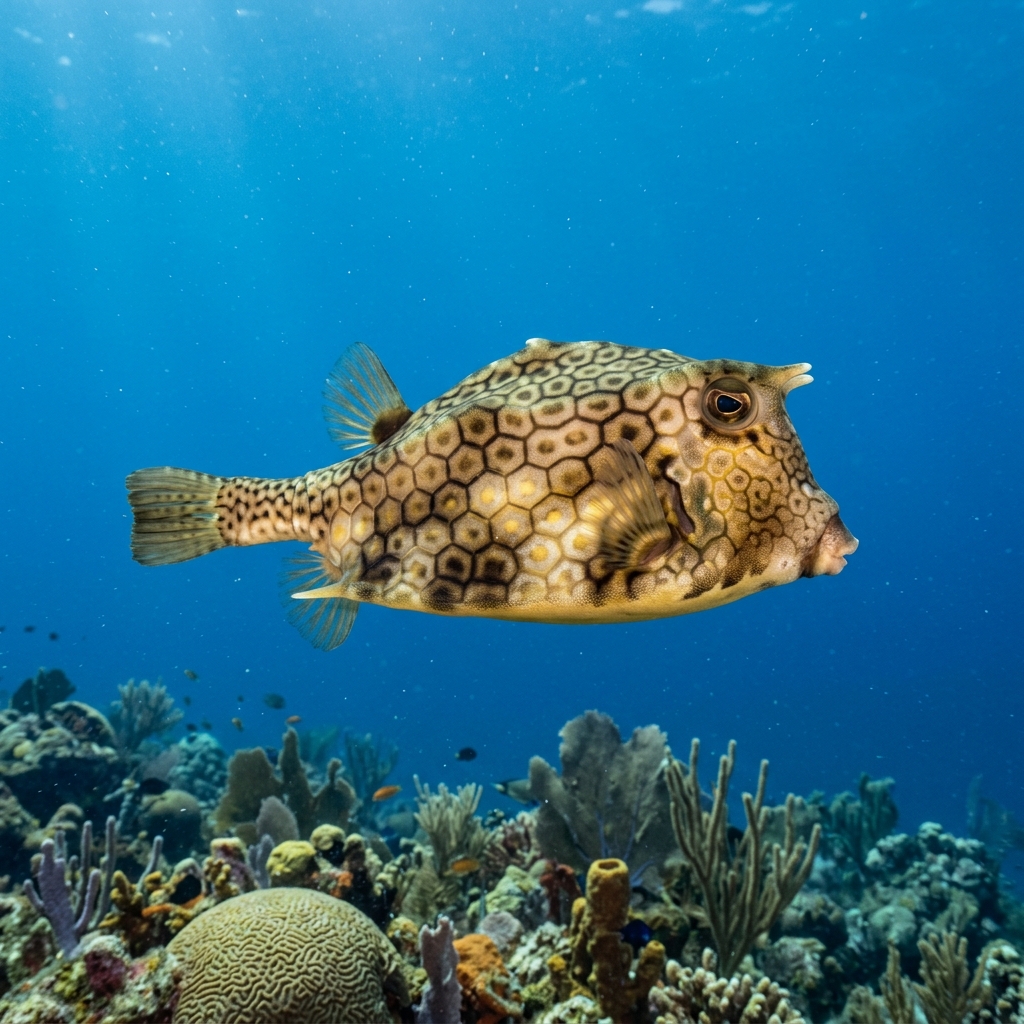
Reef neighbours a diver could mistake it for. Use the identification notes above to tell them apart.
Most reliably logged in Egypt's South Sinai, with strong numbers also reported from Eilat in Israel and Aqaba in Jordan, three sites that all sit along the same stretch of northern Red Sea coast. Smaller but consistent counts come from Muscat in Oman, with an occasional sighting as far out as Luzon in the Philippines.
Mapping where Humpback Turretfish is logged…
South Sinai in Egypt has the most logged sightings, with Eilat in Israel and Aqaba in Jordan close behind. Muscat in Oman is another dependable spot, and it has also been recorded off Luzon in the Philippines.
There is no strong seasonal pattern in the sightings, so it is considered a year-round find on Red Sea and Gulf of Aqaba reefs where water sits between about 22 and 28C.
Look for a small, triangular, boxy body around 21 cm long, pale grey to tan with faint mottling, and a distinct hump behind the head. It sits low over sand and rubble and moves with slow, stiff fin strokes rather than swimming like a typical fish.
They stay small, typically around 21 cm in length, making them easy to overlook against sand and rubble unless you are looking closely.
No, they pose no threat to divers and are not aggressive. Like other boxfish they can release skin toxins if badly stressed, so it is best simply to avoid handling them.
Its skeleton is fused into a rigid bony box rather than flexible fish bone, which is why it swims stiffly and relies on armour and mild toxins for defence instead of speed.
Site and sighting data is aggregated from diver logs, iNaturalist and GBIF. For taxonomy and conservation status:
Honeycomb Cowfish
1,691 sites