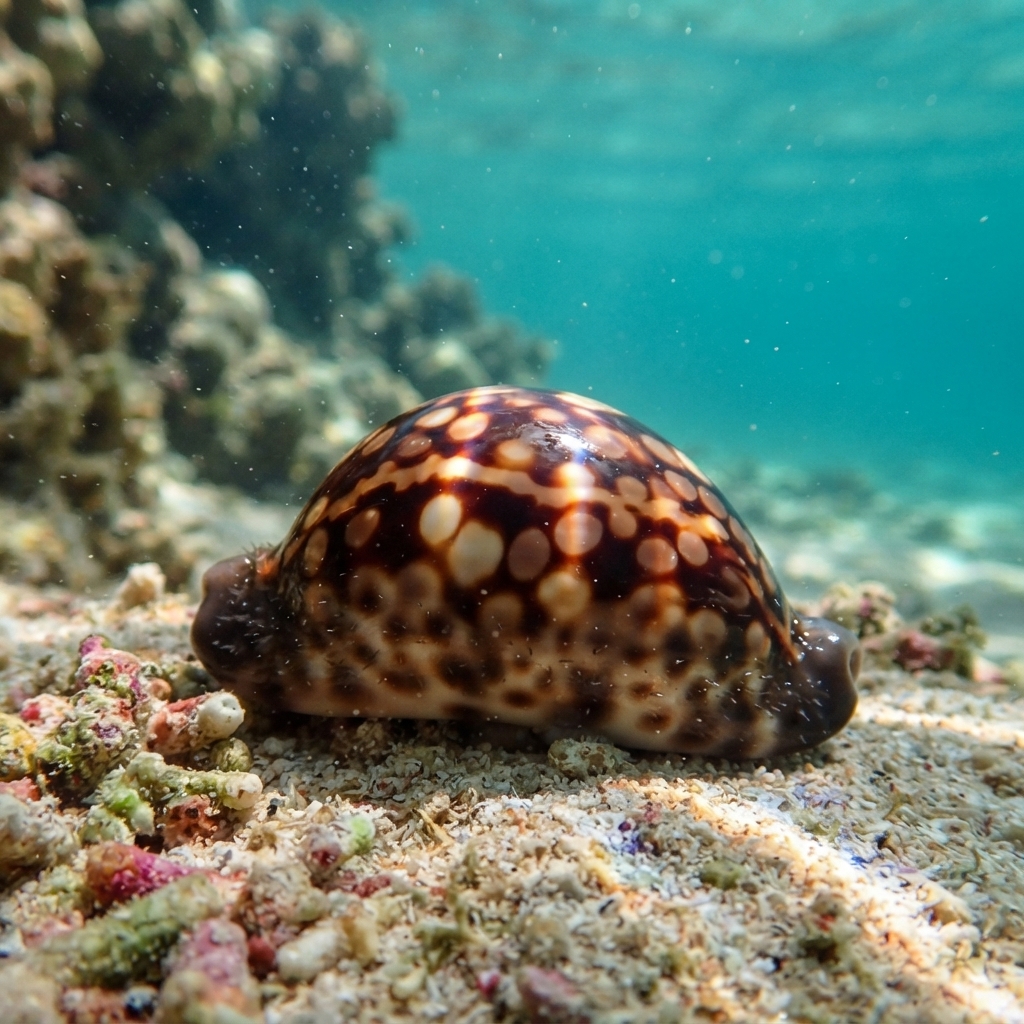
Mauritia mauritiana
Spot this glossy brown-humped cowrie on Hawaii's reef flats or Reunion's lava shores, active on rocky reef at night.
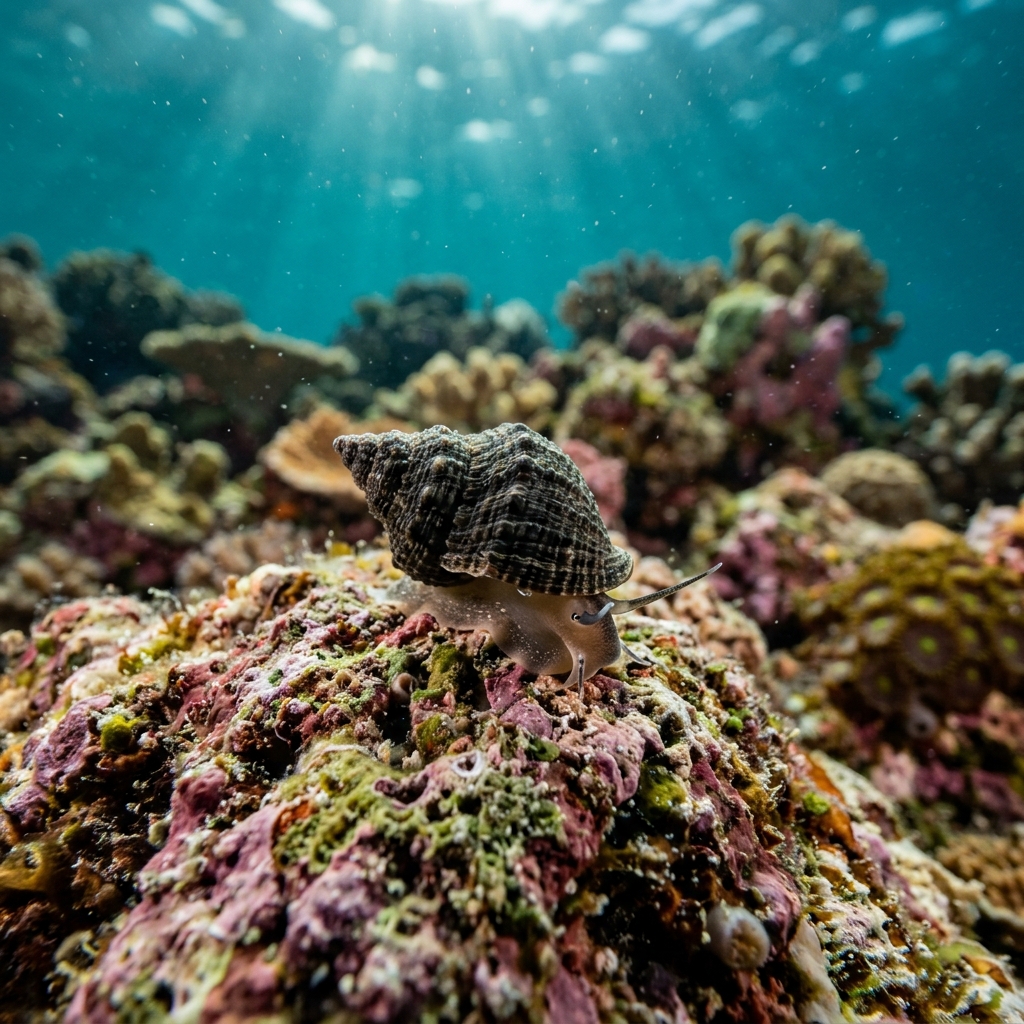
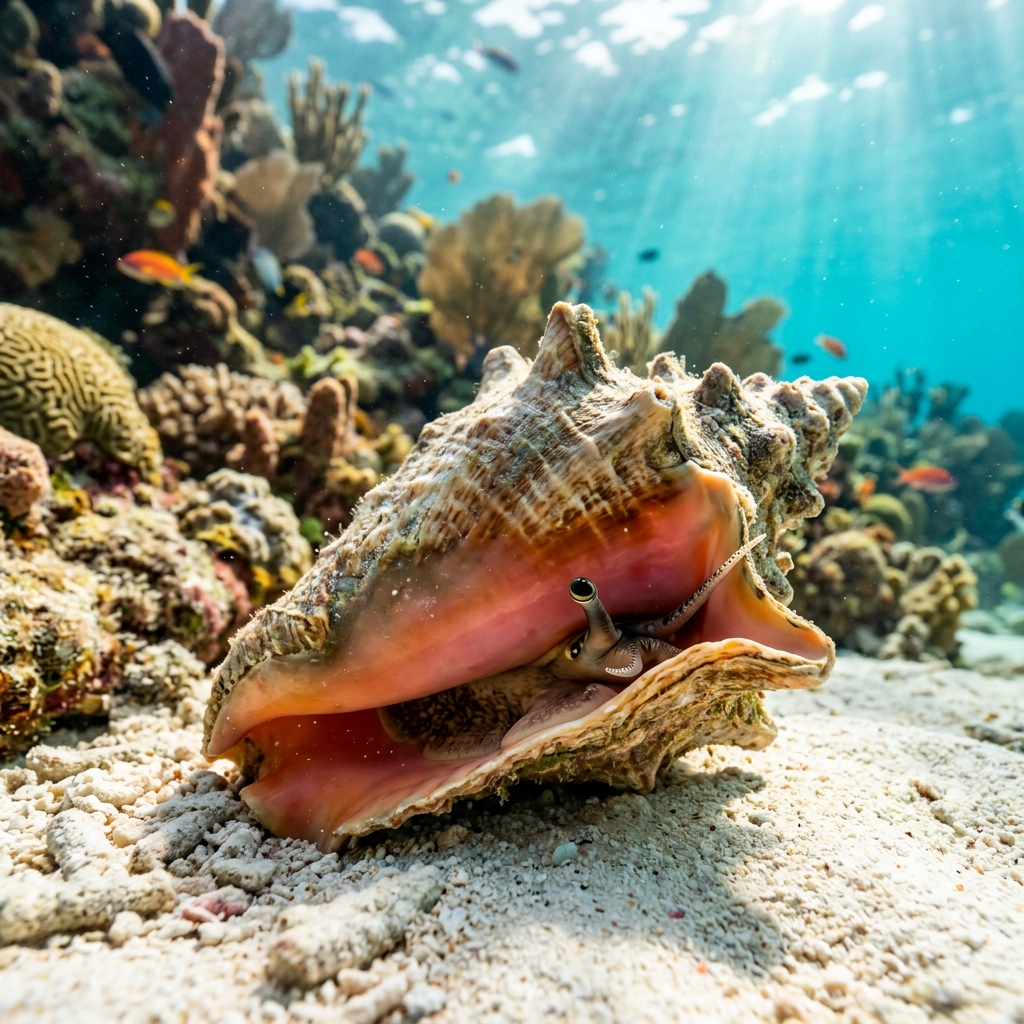
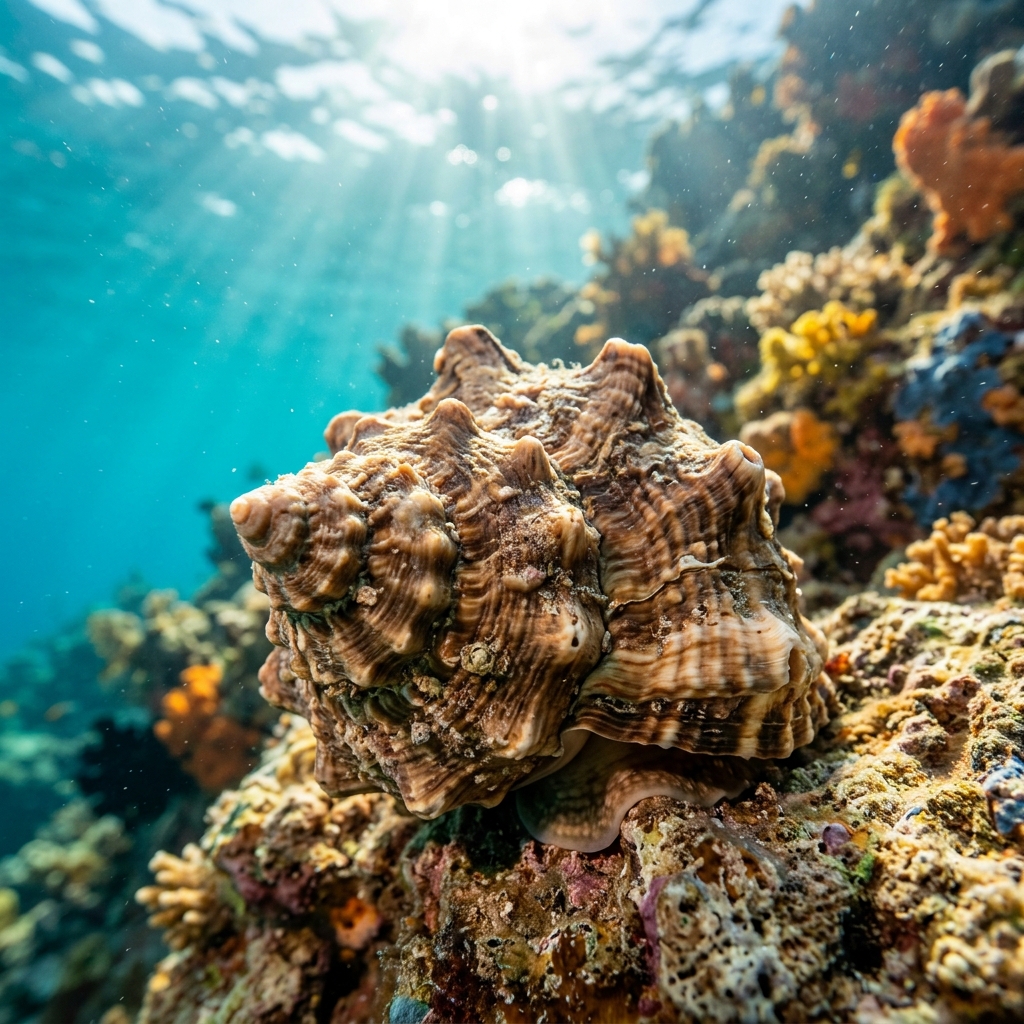
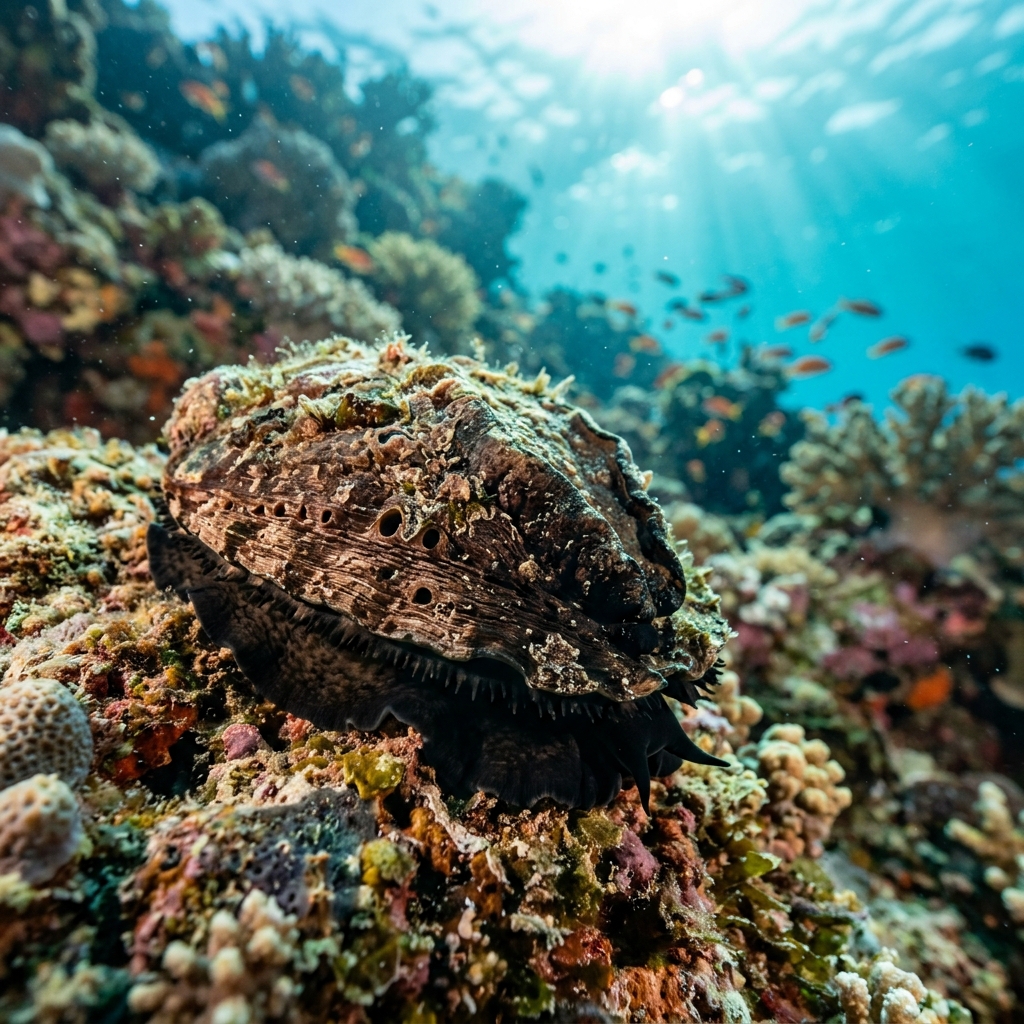
Look for a glossy, dome-backed shell with a raised humped ridge running along the top, coloured deep brown to near-black with a paler underside and cream-spotted margins where the mantle folds over. It sits low and heavy on rock or reef rubble, usually only a few centimetres long, and the shell surface has a distinct waxy sheen when the mantle is retracted. At night the fleshy mantle often extends to partly cover the shell, giving it a mottled, fleshy look rather than a hard glassy one.
This is a nocturnal grazer, tucked into crevices or under rock ledges by day and emerging after dark to feed on algae across reef flats and rocky shorelines. Divers and snorkellers doing night dives or dusk searches have the best odds, since by day the mantle is drawn tight over the shell and it blends into the substrate. It moves slowly and shows no reaction to torch light or divers beyond a slow withdrawal if directly touched.
Like other cowries, it feeds by extending a soft mantle over its own shell, which is how the glossy polished surface stays free of algae and growth even while it lives exposed on rock.
No clear seasonal pattern shows up in the sightings, and it turns up across a temperature range of roughly 22.6 to 28.6 C, so it is a year-round find on the reefs where it lives rather than a seasonal visitor.
Hawaii is by far the most reliable place to find this cowrie, logged across dozens of sites there, with a second strong population on the volcanic shorelines of Saint-Paul in Reunion. A smaller number of sightings come from Kwajalein Atoll in the Marshall Islands, so Pacific and Indian Ocean rocky reef edges are the places to focus a search.
Mapping where Humpback Cowrie is logged…
Hawaii is the most reliable place, with sightings logged across many reef and rocky shore sites there. Saint-Paul in Reunion also has a strong population, and it has been recorded in the Marshall Islands' Kwajalein Atoll.
There is no distinct season in the data, and it tolerates a wide range of warm reef temperatures, so it can be found year-round. Night dives or dusk searches give the best chance since it is largely nocturnal.
Look for a glossy, dark brown shell with a raised humped ridge along its back and a paler, spotted underside. It sits close to rock or rubble and rarely exceeds a few centimetres, with a fleshy mantle that can spread over the shell when active.
No. It has no venom, no bite, and no defensive behaviour beyond withdrawing into its shell, making it completely safe to observe or photograph up close.
It grazes on algae and organic film across rocky reef surfaces at night, using a mantle that also protects and polishes its shell while feeding.
Site and sighting data is aggregated from diver logs, iNaturalist and GBIF. For taxonomy and conservation status:
Triton Shell
2,297 sites