Ostracion rhinorhynchos
Boxy, blue-grey and easy to miss: track down horn-nosed boxfish on reefs in Visayas, the Philippines and Northern Territory, Australia, year-round.
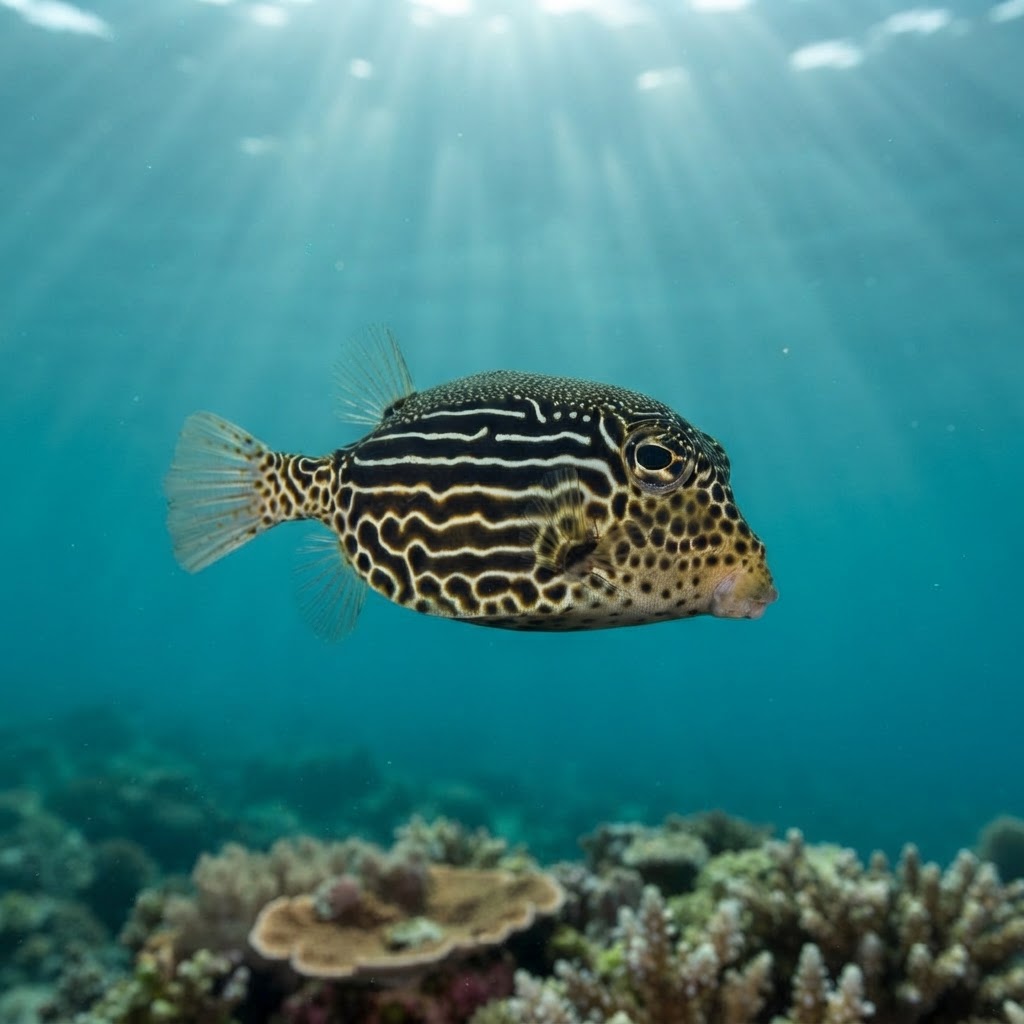
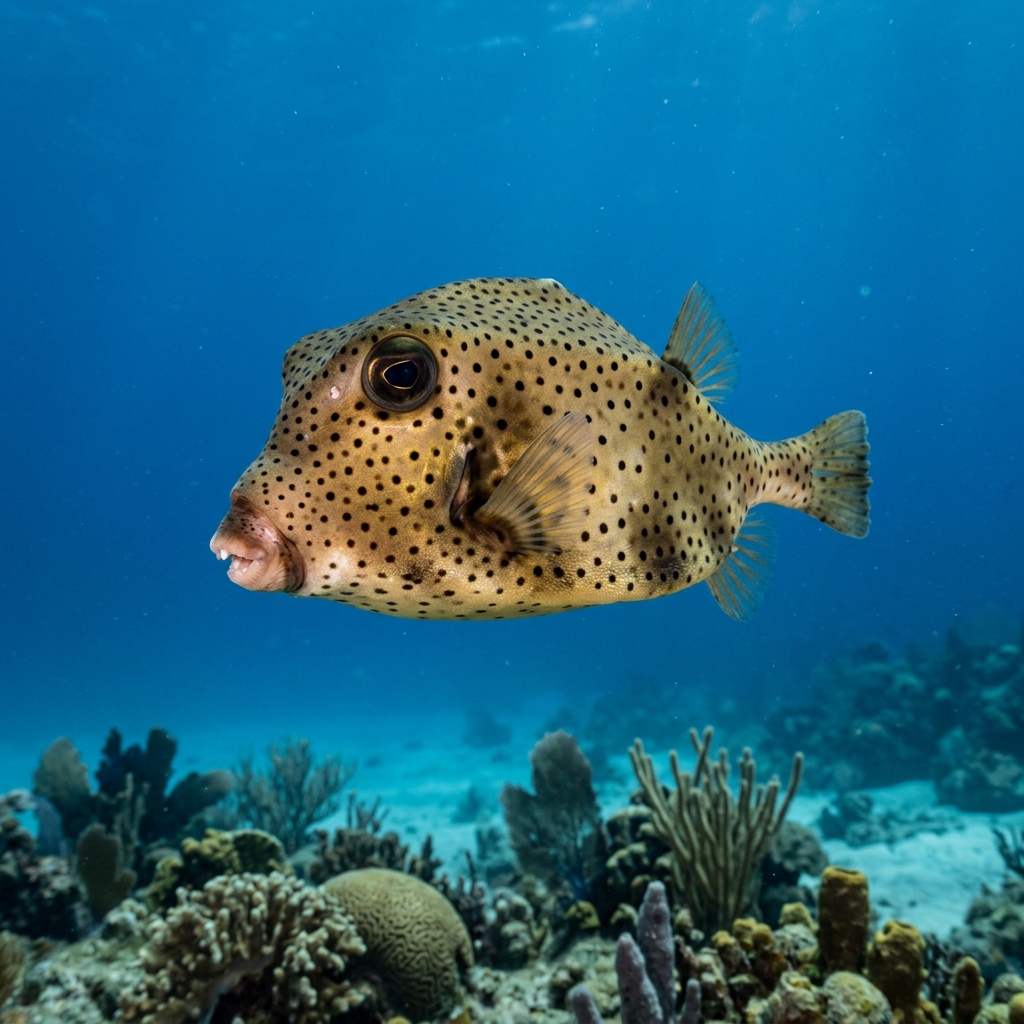
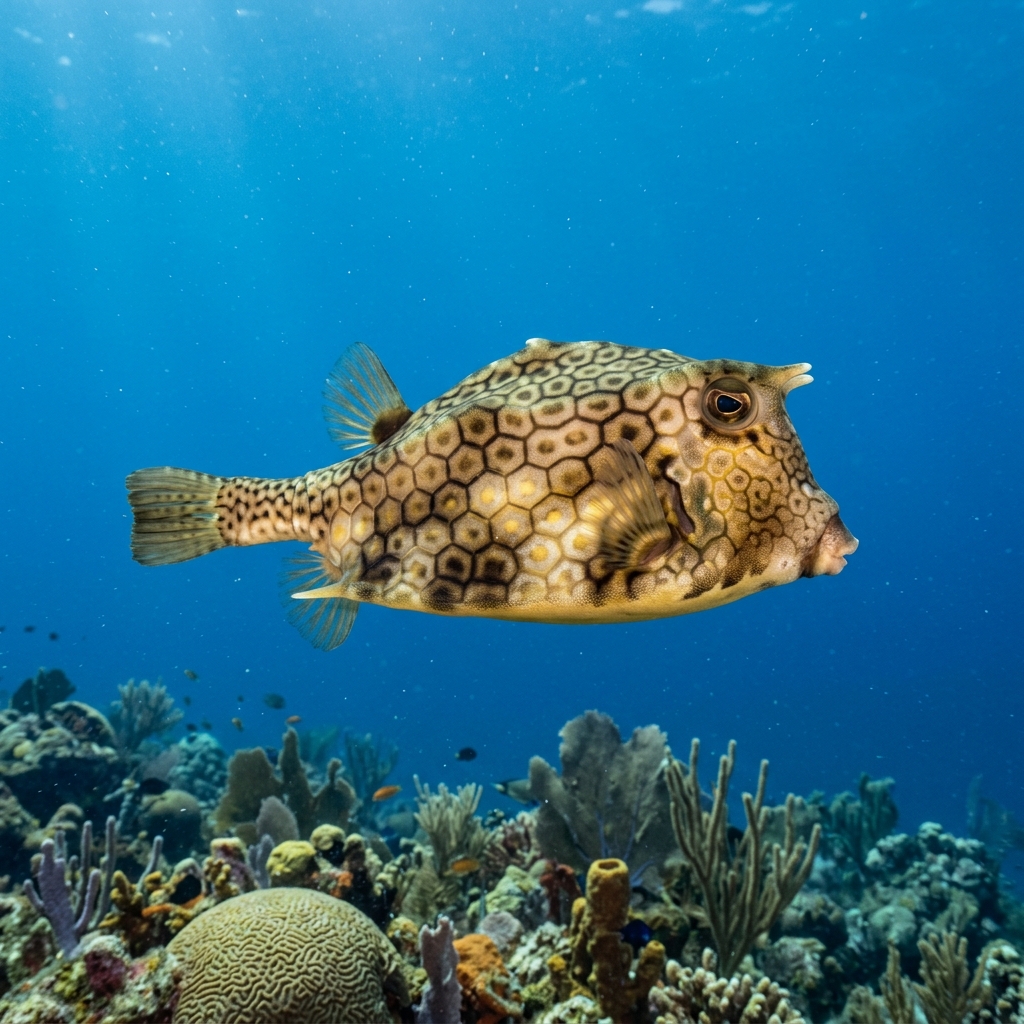
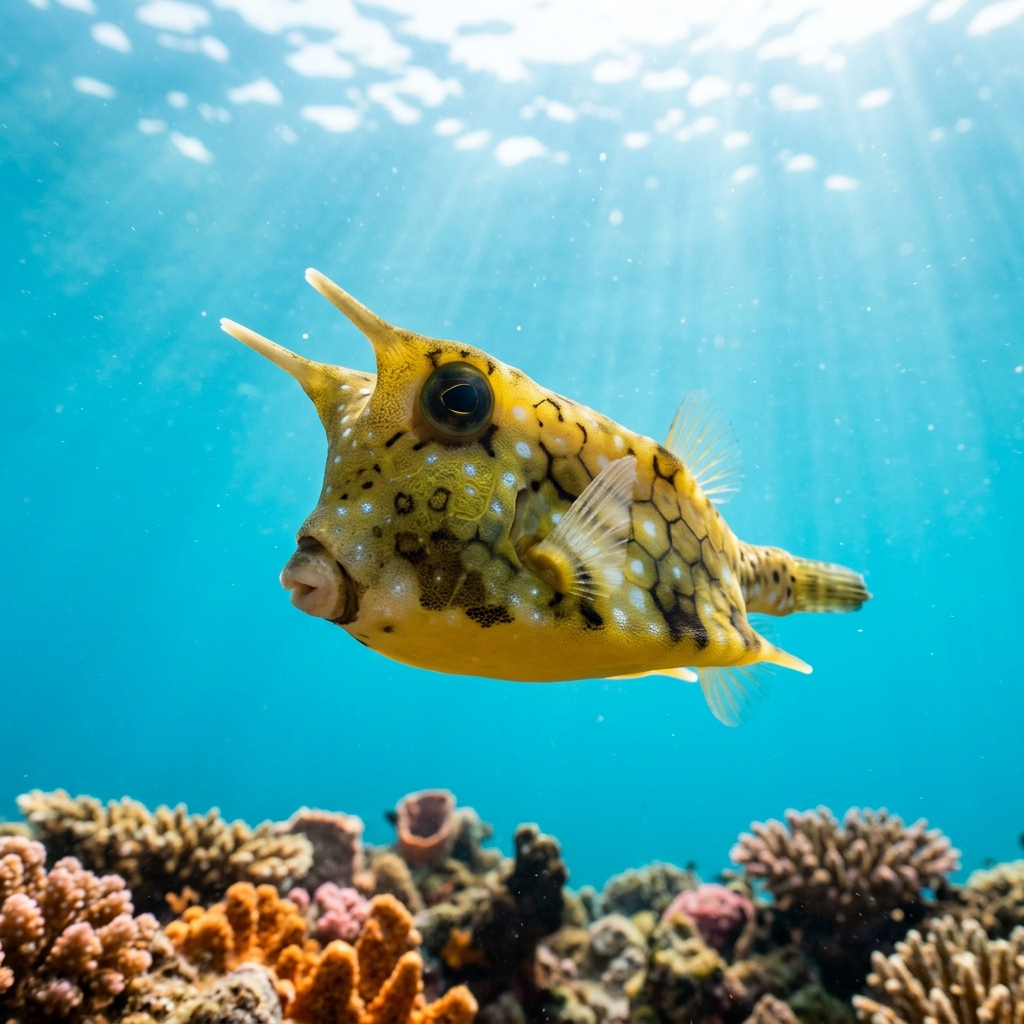
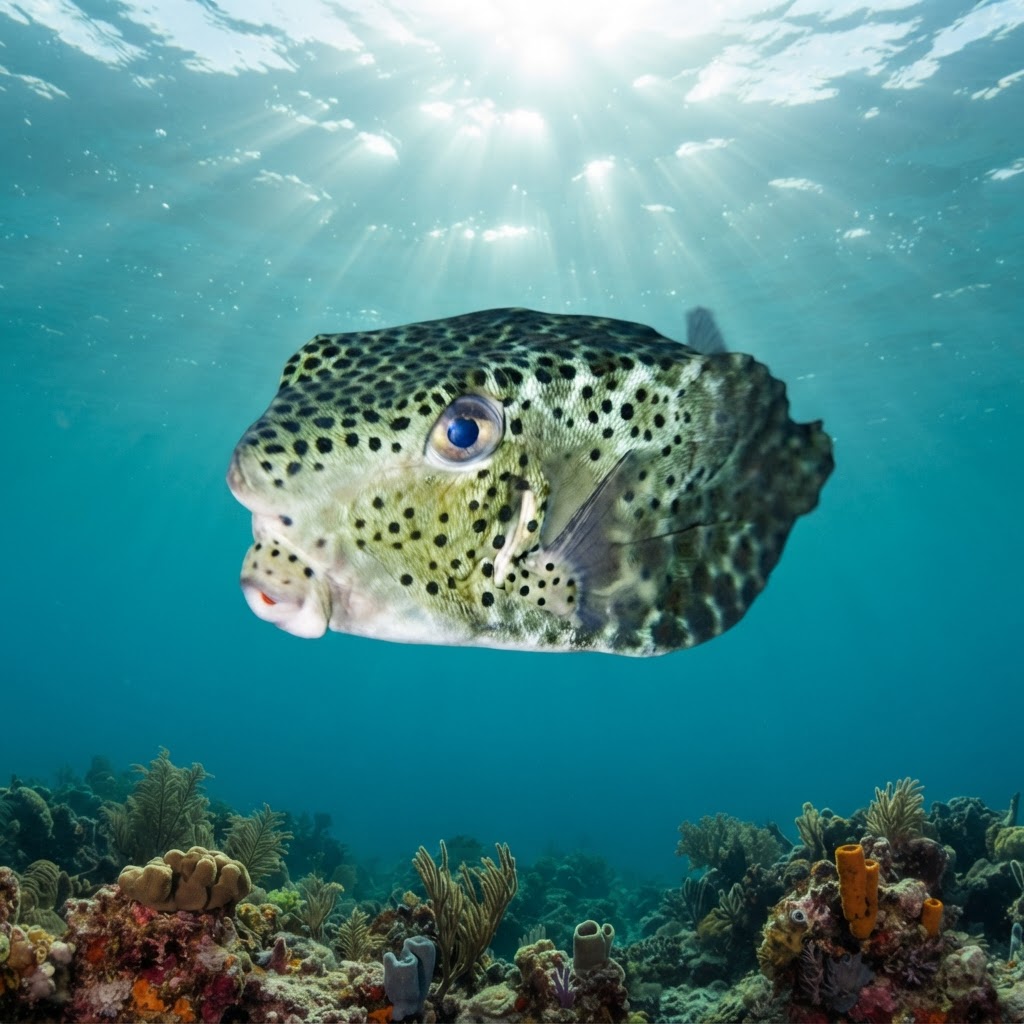
Boxy, almost cube-shaped body around 24 cm long, held rigid as it hovers rather than flexes through the water. Skin is grey to olive-blue and covered in small dark spots, with the hexagonal plates of the shell (a fused bony carapace) visible up close. The face carries a short snout that gives the species its name, and small fins beat rapidly to push the stiff body along in a slow, almost mechanical glide.
Usually spotted moving slowly and low over the reef or tucked near rubble and coral rather than out in open water, using its stiff body and small fins to hover and reposition rather than swim in bursts. It tends to ignore divers rather than flee, drifting along at its own pace, and logs suggest it is more often picked out solo than in groups.
Like other boxfish, its rigid bony shell replaces the flexible spine most fish rely on, so it can secrete skin toxins as a passive defence when stressed rather than relying on speed to escape.
Sightings show no clear seasonal pattern, and with a comfort range of roughly 24 to 28 C it turns up on tropical and subtropical reefs across the year rather than in a specific window.
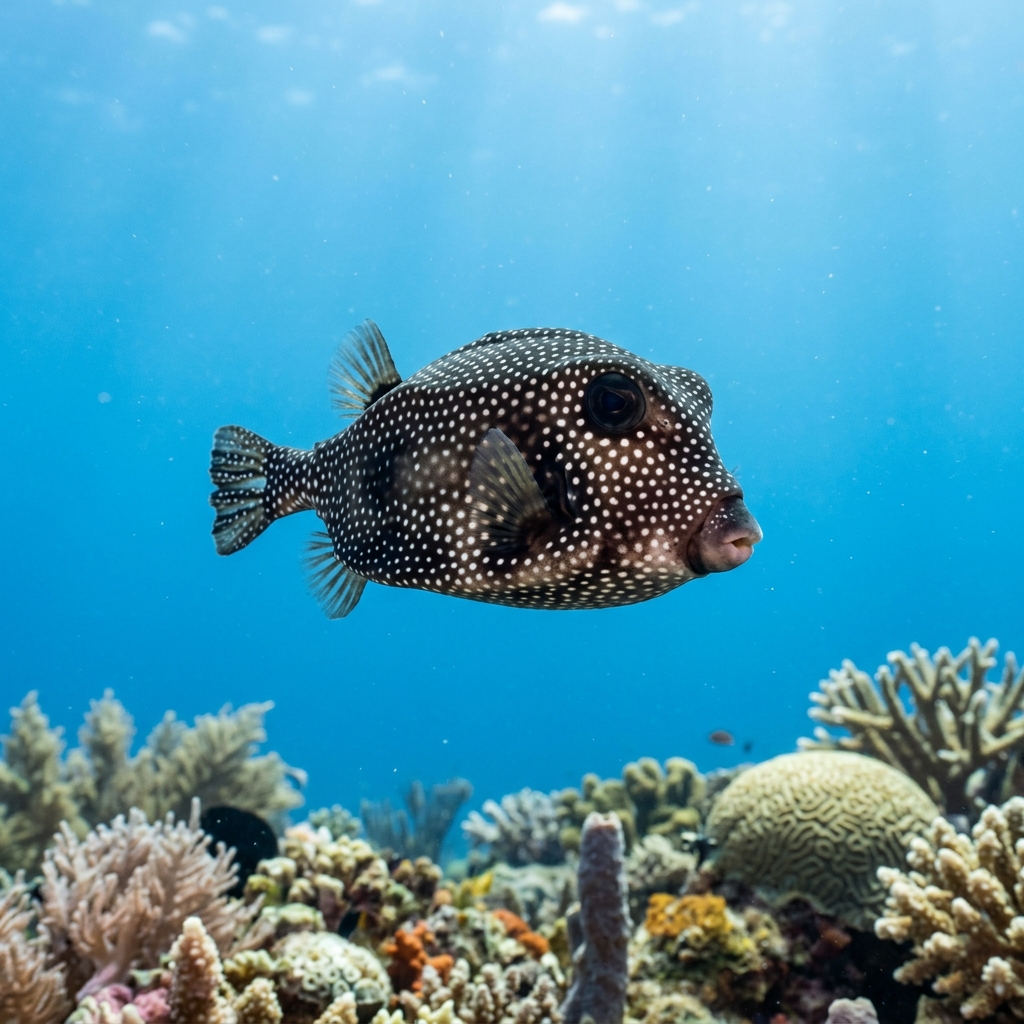
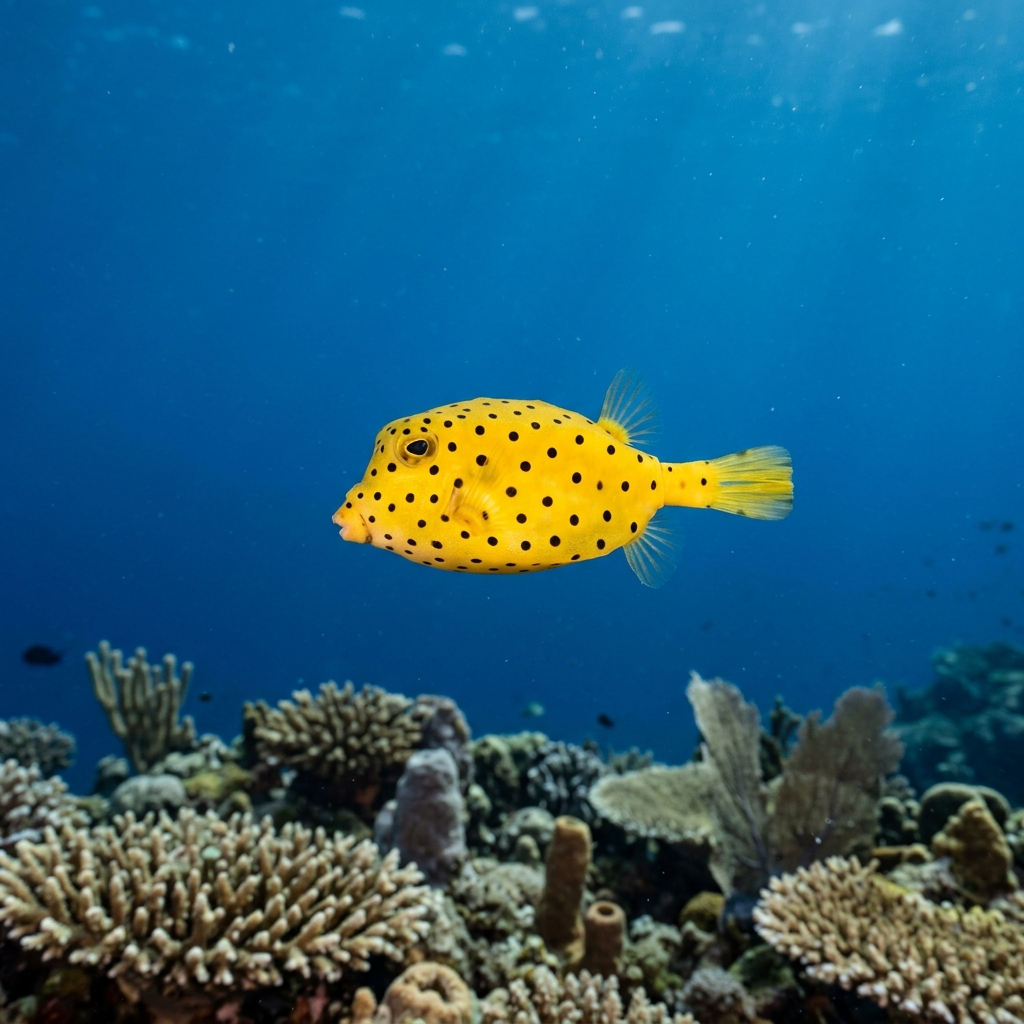
Reef neighbours a diver could mistake it for. Use the identification notes above to tell them apart.
Most consistently logged in the Visayas region of the Philippines and Northern Territory in Australia, with a reliable presence around Sai Kung in Hong Kong and Krabi in Thailand. Divers also find it off Goa in India, and it has been recorded on reefs in Sulawesi, Indonesia.
Mapping where Horn-nosed Boxfish is logged…
Best-known spots are the Visayas region in the Philippines and Northern Territory in Australia, with further sightings around Sai Kung in Hong Kong and Krabi in Thailand. It also turns up off Goa, India and in Sulawesi, Indonesia, though usually as an uncommon or rare find rather than a guaranteed sighting.
There is no strong seasonal pattern in the sighting data, so it is considered a year-round species on the reefs where it lives, consistent with its preference for warm water between roughly 24 and 28 C.
Look for a rigid, box-shaped body around 24 cm long in grey to olive-blue tones covered in small dark spots. It moves with a slow, almost stiff hover rather than a typical fish swim, using small fins rather than body flexion.
They typically reach around 24 cm in length, a modest size that keeps them easy to overlook against reef rubble and coral heads.
Its body is encased in a fused bony shell instead of a flexible skeleton, and when threatened it can release skin toxins as a defence, a trait shared across the boxfish family.
Site and sighting data is aggregated from diver logs, iNaturalist and GBIF. For taxonomy and conservation status:
Honeycomb Cowfish
1,691 sites