Canthigaster janthinoptera
A 6cm puffer covered in dark hexagons, most reliably logged around Saint-Paul, Reunion and the Maldives' Northern Atolls in warm 25-29C water.
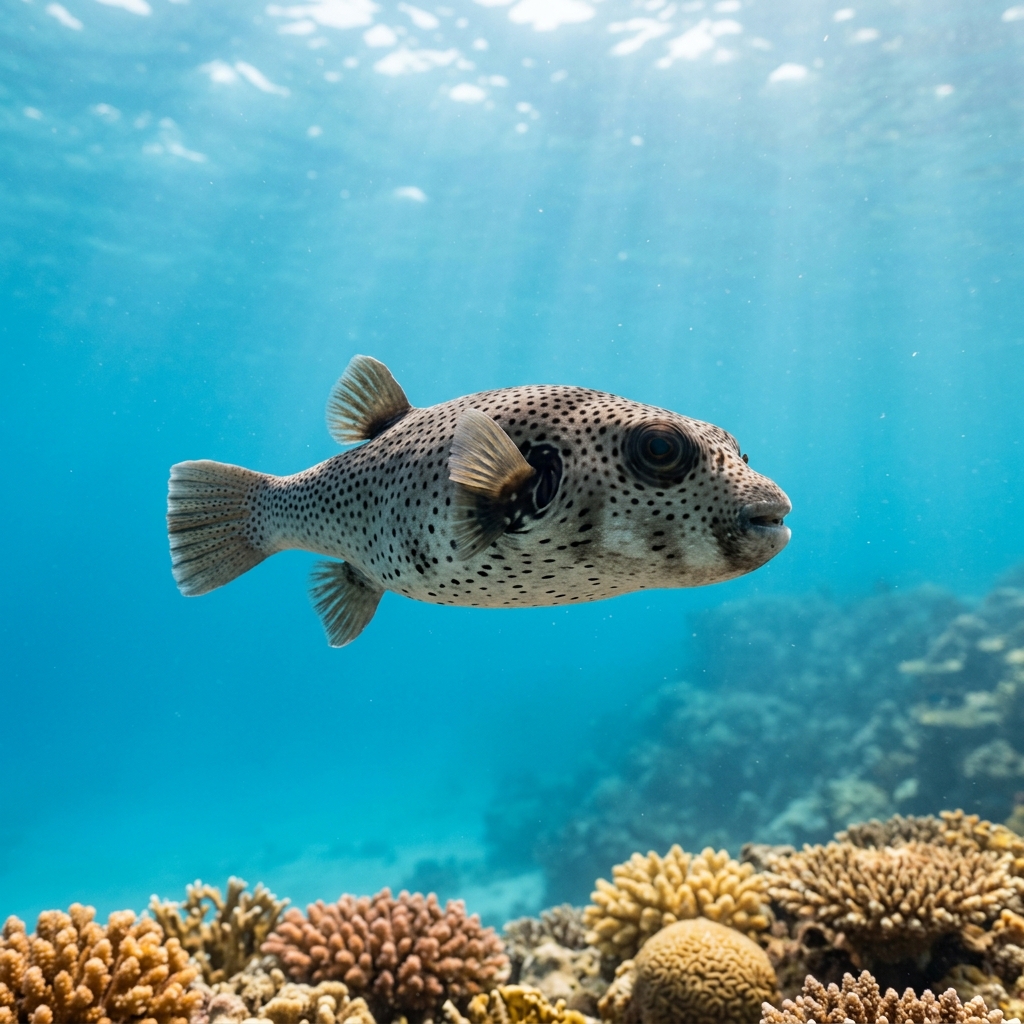
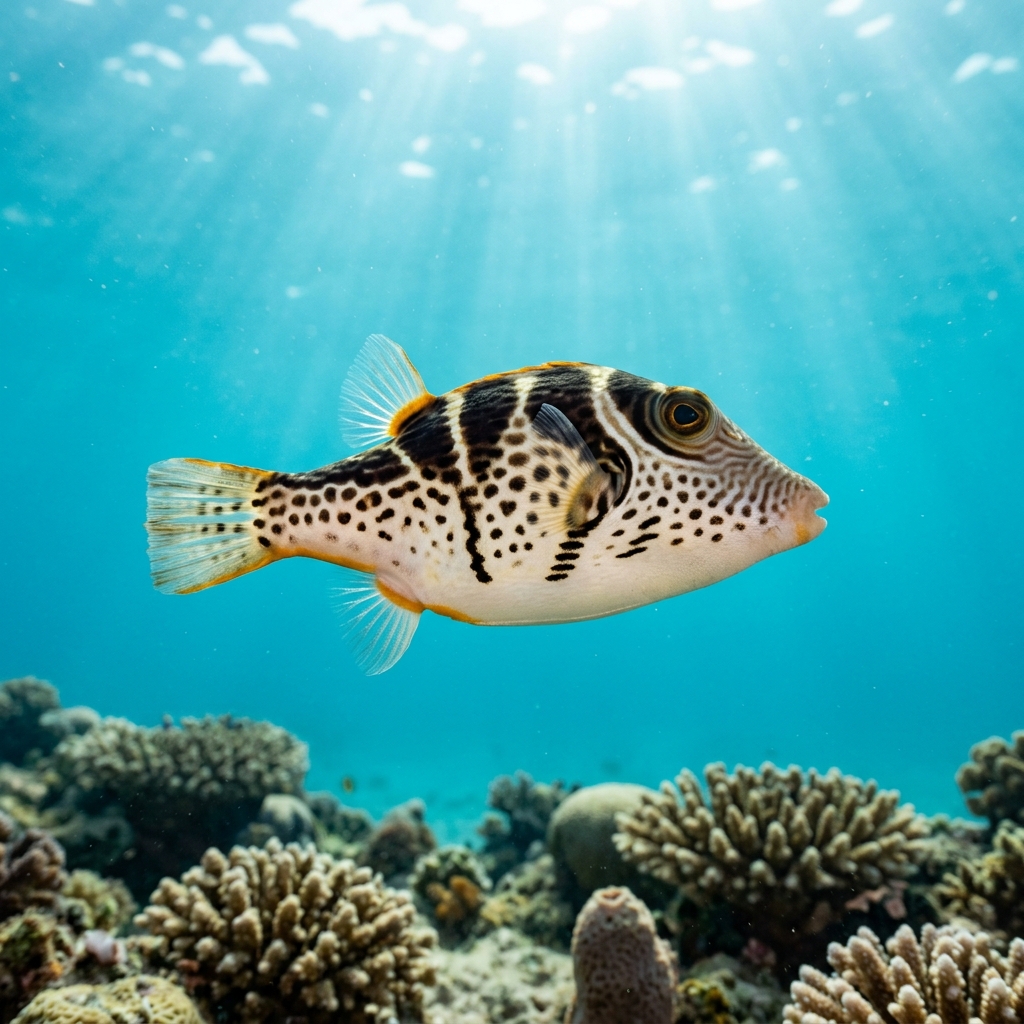
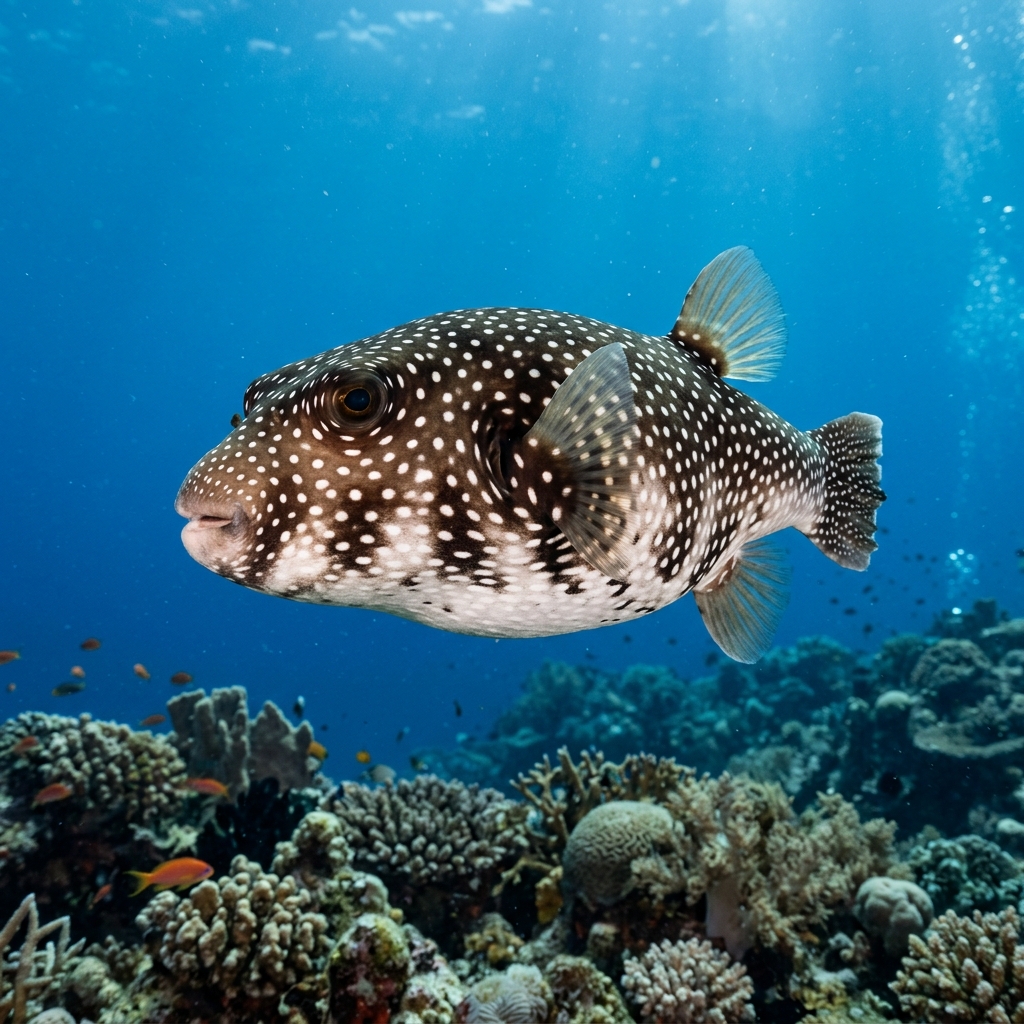
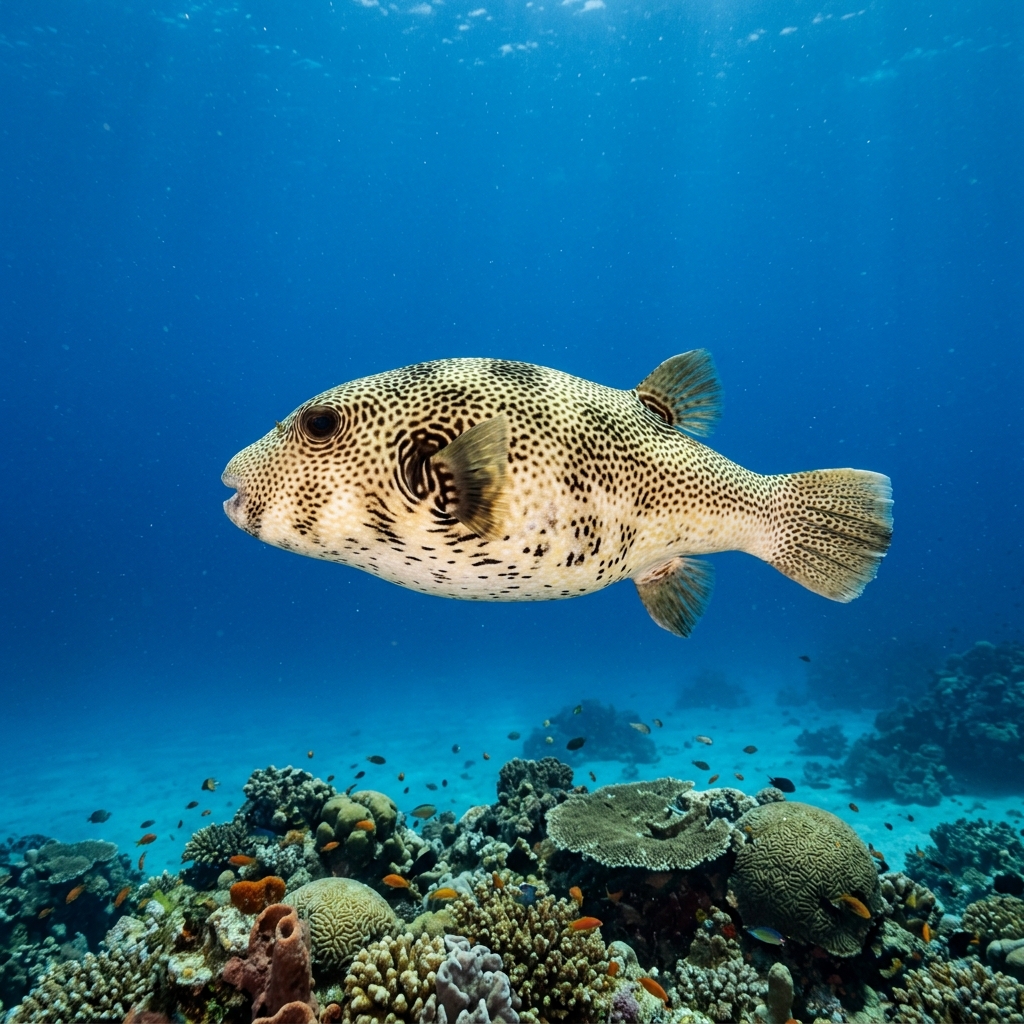
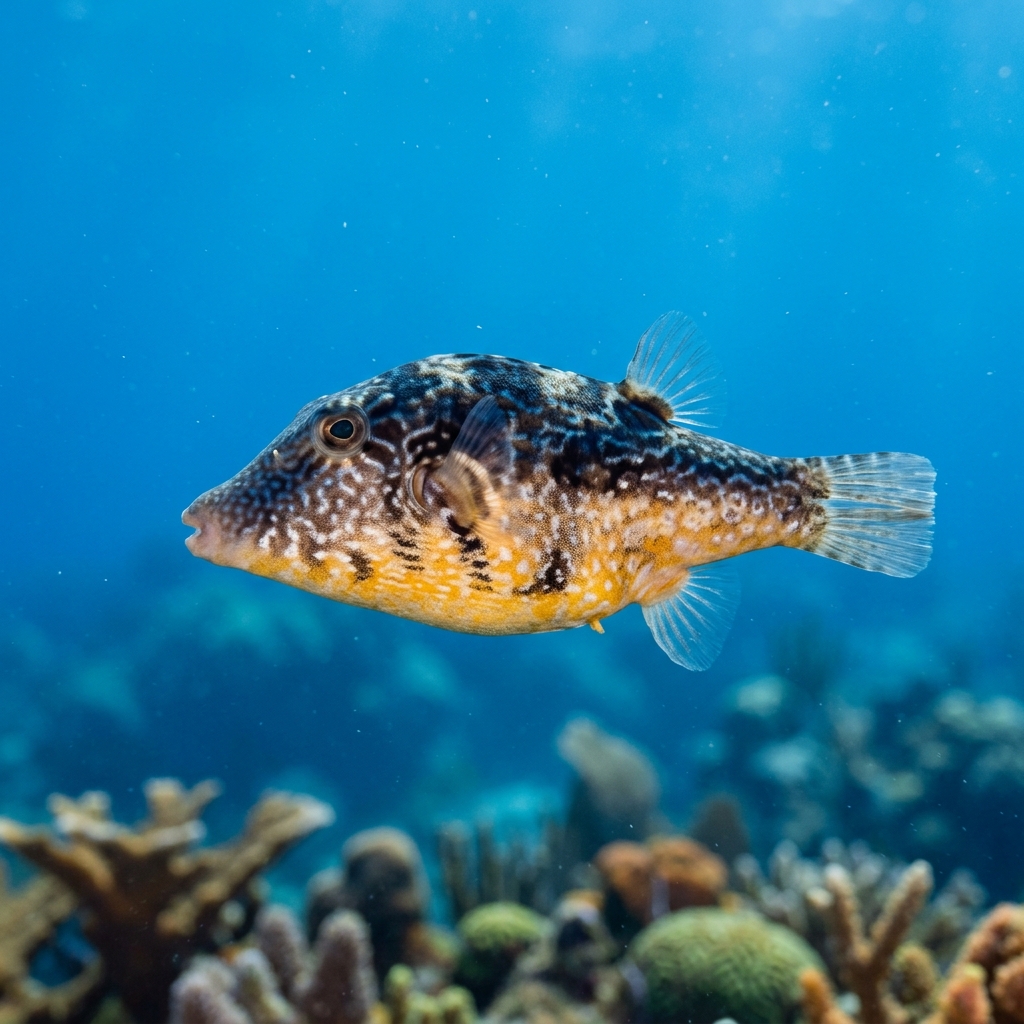
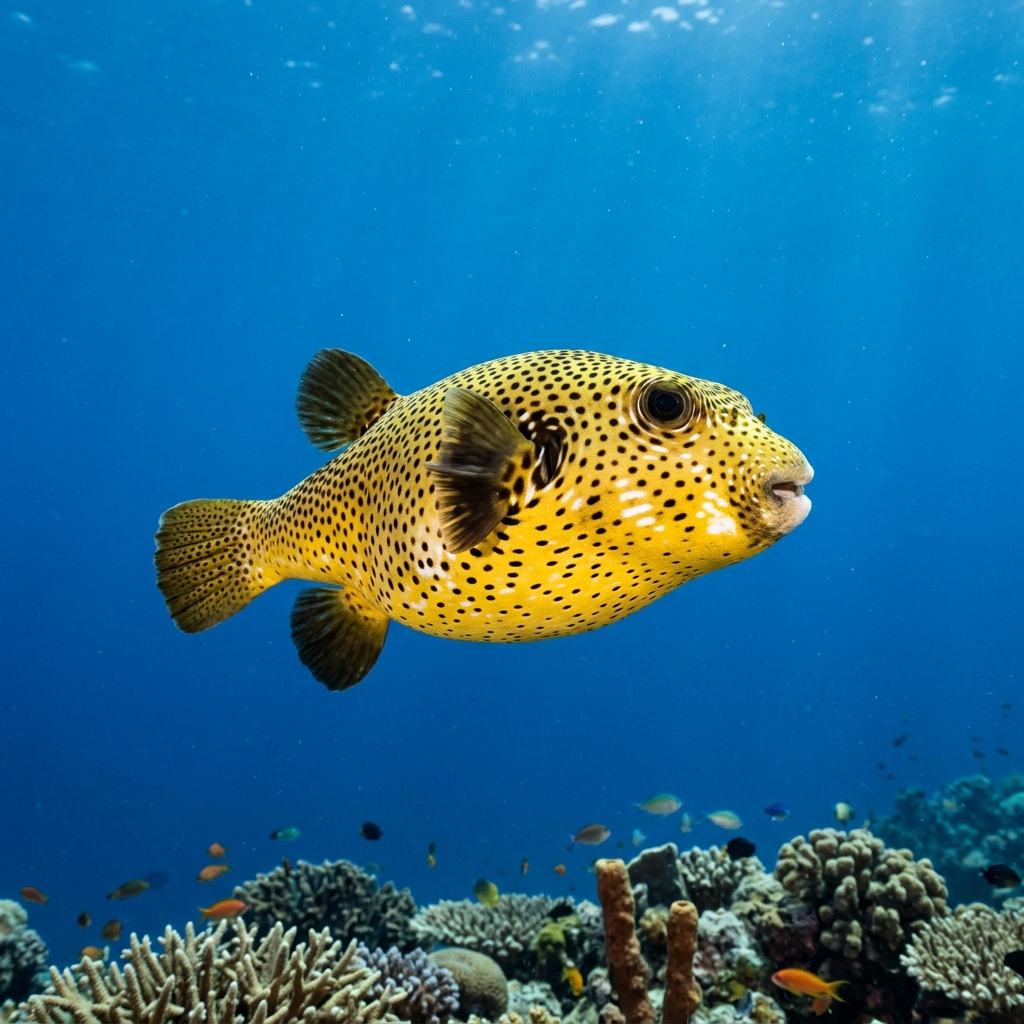
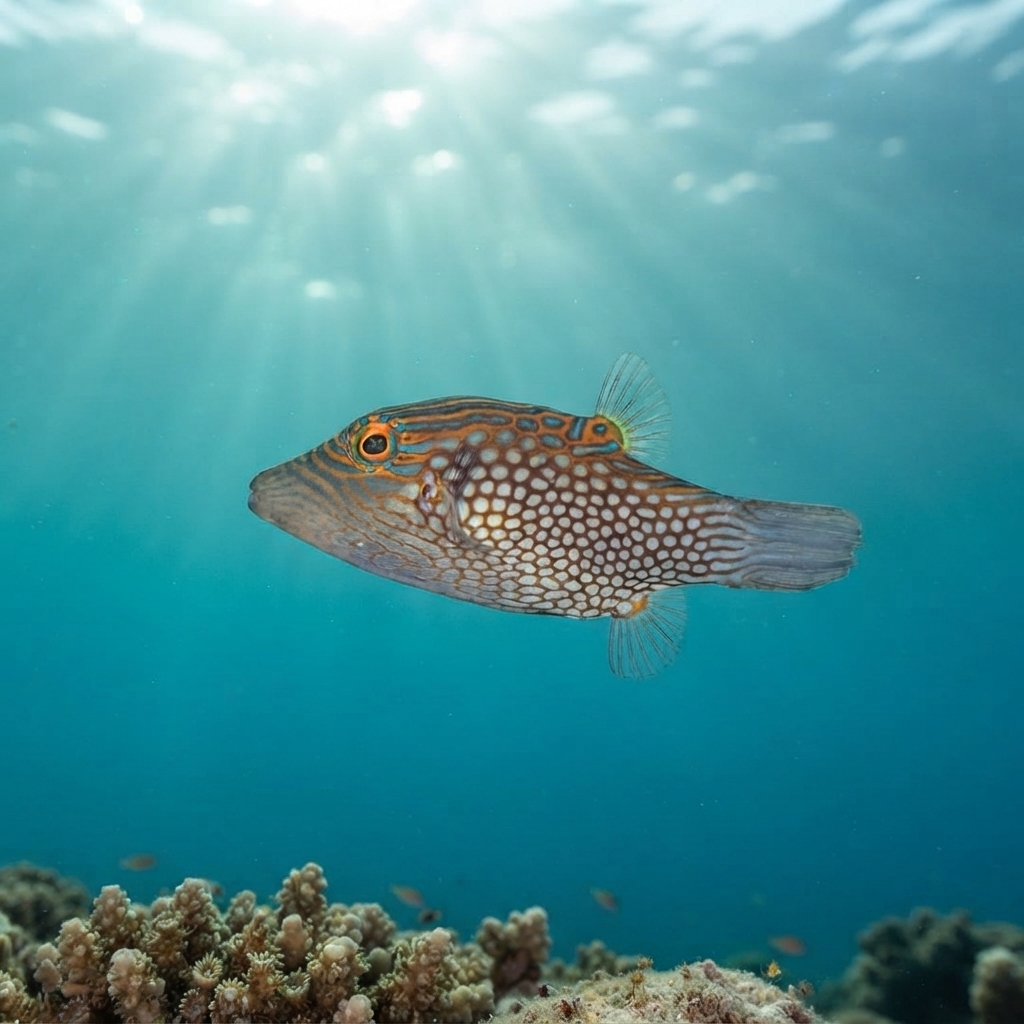
A pocket-sized puffer, rarely more than 6cm, covered head to tail in a tight dark hexagonal net pattern over a pale body, which is exactly where the honeycomb name comes from. The face and belly are lighter and mostly free of the pattern, giving a distinct contrast with the busier flanks. It has the typical toby silhouette: a blunt snout, small fins set well back, and a habit of hovering rather than swimming in open water.
Divers usually find it hovering low over coral rubble or tucked near small reef crevices rather than out in the open, moving with the slow, almost hesitant paddling typical of tobies. It tends to hold its ground rather than bolt when approached, though its small size and camouflage mean it is often missed entirely unless you slow down and scan the substrate closely. Most sightings come from single individuals rather than groups.
Like other pufferfish, it can inflate itself by gulping water if threatened, turning a slow-moving, easily overlooked fish into an awkward, hard-to-swallow ball for any predator that tries.
No clear seasonal pattern shows up in the sightings, and with a comfortable range of roughly 24.7 to 29.3C it stays on these reefs year-round, so any month you are diving Reunion or the Maldives is fair game.
Reef neighbours a diver could mistake it for. Use the identification notes above to tell them apart.
Most reliably found around Saint-Paul in Reunion and the Northern Atolls of the Maldives, both areas producing steady, if uncommon to rare, sightings. Smaller numbers turn up in Queensland, Australia and Sulawesi, Indonesia, and a scattering of dives in the Maldives' Central Atolls, so it is worth keeping an eye on rubble and coral edges anywhere across the Indian Ocean and western Pacific.
Mapping where Honeycomb Toby is logged…
Saint-Paul in Reunion and the Northern Atolls of the Maldives are the two most consistent areas, with occasional sightings also logged in Queensland, Australia and Sulawesi, Indonesia.
There is no strong seasonal pattern in the sightings, and the species tolerates a broad warm-water range of about 24.7 to 29.3C, so it is seen on these reefs throughout the year.
Look for a tiny puffer, around 6cm, with a dense dark hexagonal net pattern over a pale body and a lighter, plainer face and belly. It hovers low over rubble or reef edges rather than swimming in open water.
They stay small, typically reaching about 6cm in length, which is part of why they are so easy to swim past unnoticed.
Yes, it can gulp water to inflate its body when it feels threatened, a classic pufferfish defence that makes it awkward for predators to handle or swallow.
Site and sighting data is aggregated from diver logs, iNaturalist and GBIF. For taxonomy and conservation status:
Valentini Pufferfish
2,830 sites