Cantherhines pardalis
Small, spotted, and shy on reefs in the Philippines' Visayas and Seychelles' Inner Islands, in warm 25-29C water year-round.
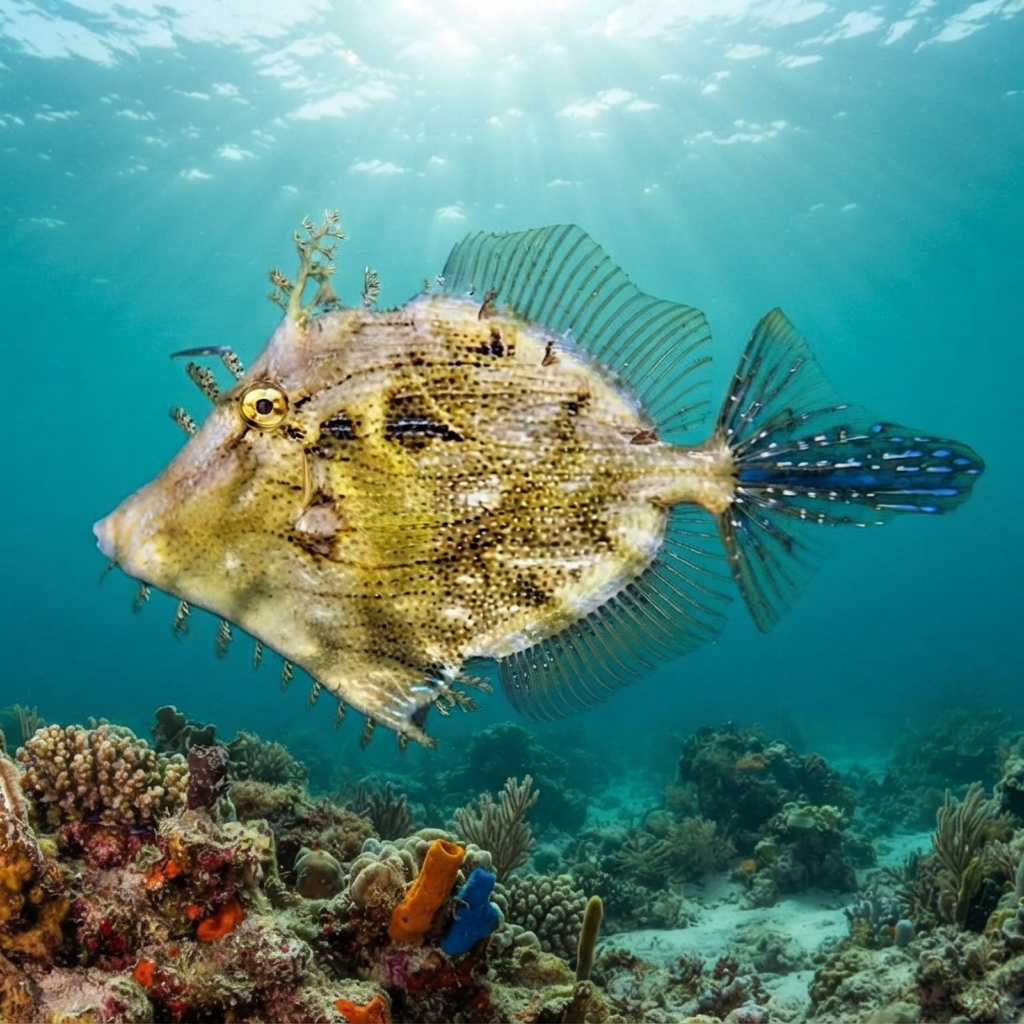
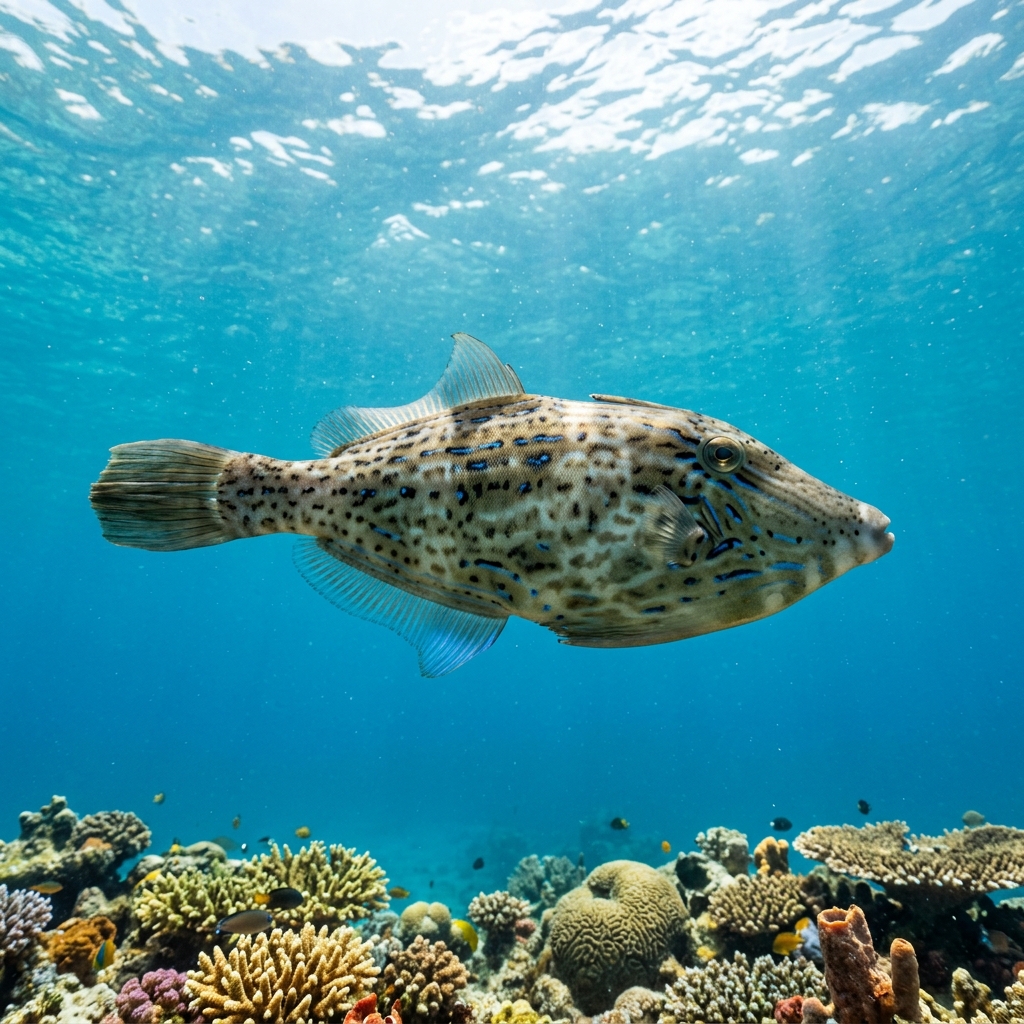
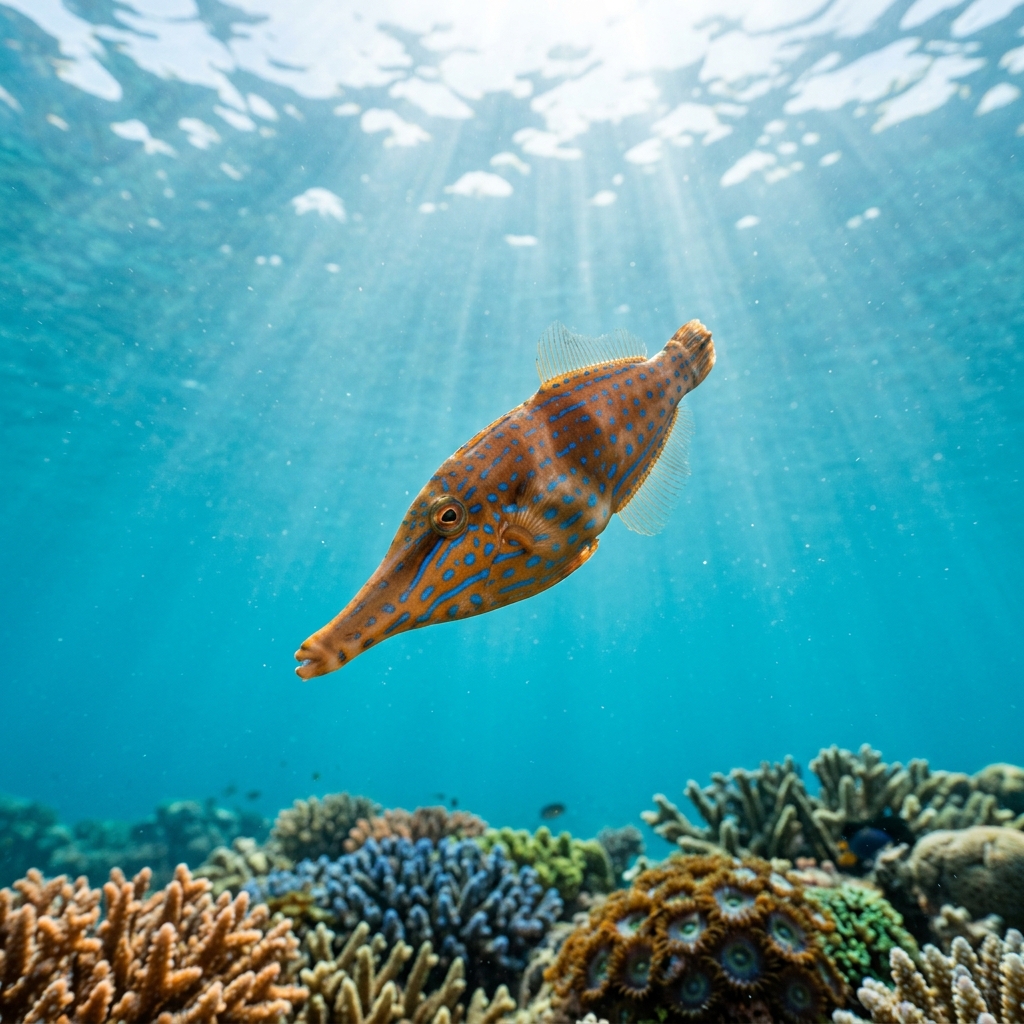
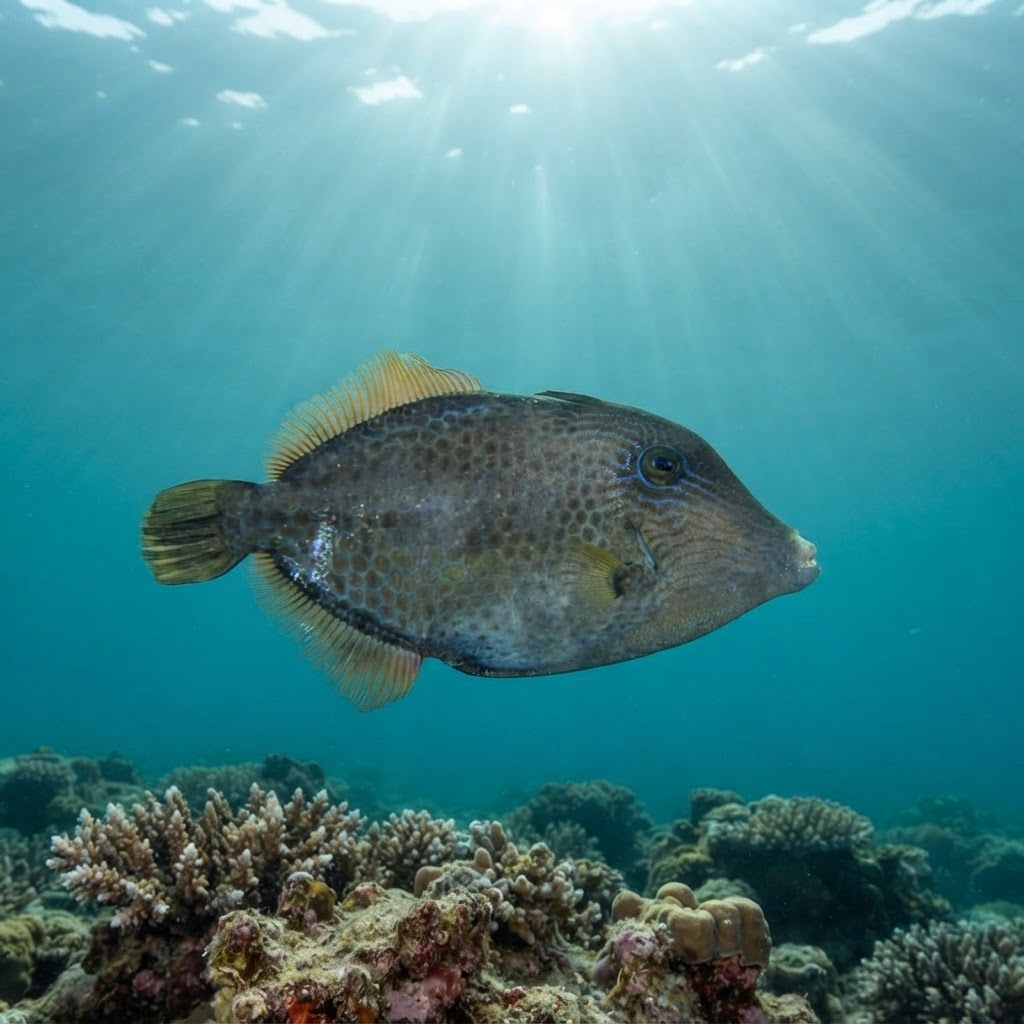
A small, deep-bodied fish around 17 cm, with a compressed, almost leaf-shaped profile and a pointed snout built for picking at coral. Its body is covered in a dense honeycomb pattern of dark-edged spots over a tan to olive base, which is the single best giveaway underwater. It swims with slow, deliberate fin flutters rather than darting, and often angles its body to blend against coral rubble or branching coral.
Usually spotted hovering low and close to coral heads or rubble patches, picking at coral polyps and small invertebrates rather than cruising open water. It tends to hold still or ease away slowly when divers approach rather than bolt, and its camouflage means many divers swim past it before noticing the honeycomb pattern. Most sightings are on daytime reef dives rather than night dives.
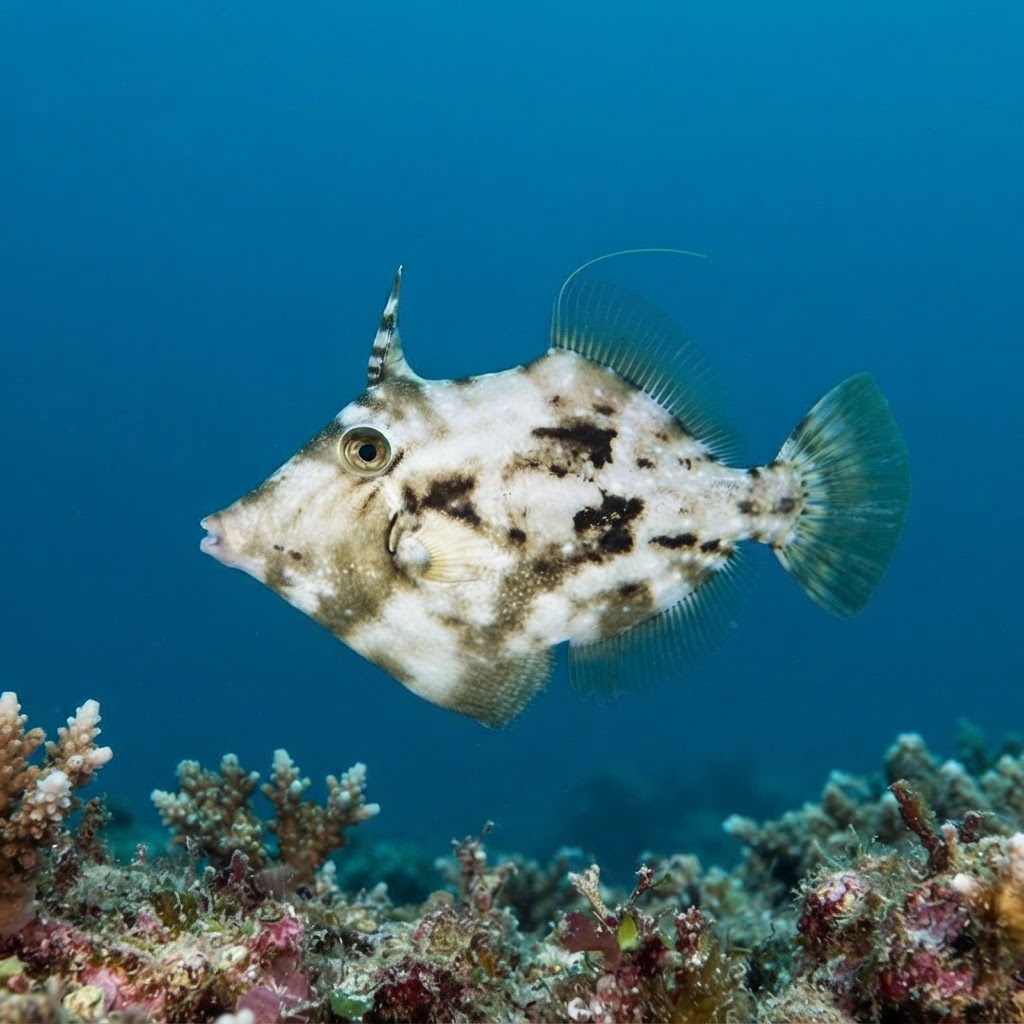
Like other filefish, it can lock a spine on its back upright to wedge itself into a crevice, making it hard for predators (and photographers trying to move it) to dislodge.
No clear seasonal pattern shows up in the sightings data, and its comfort range of roughly 25 to 29C matches tropical reefs year-round, so any month works at these sites.
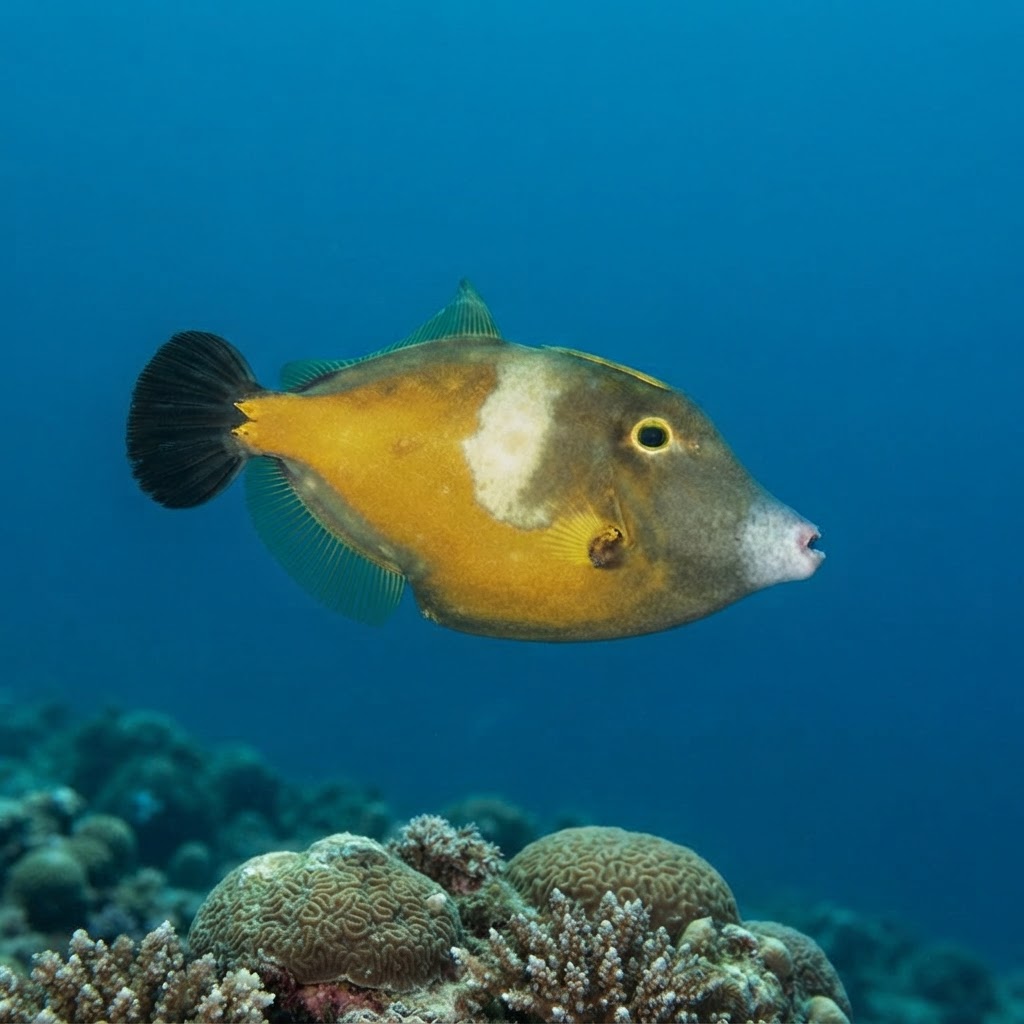
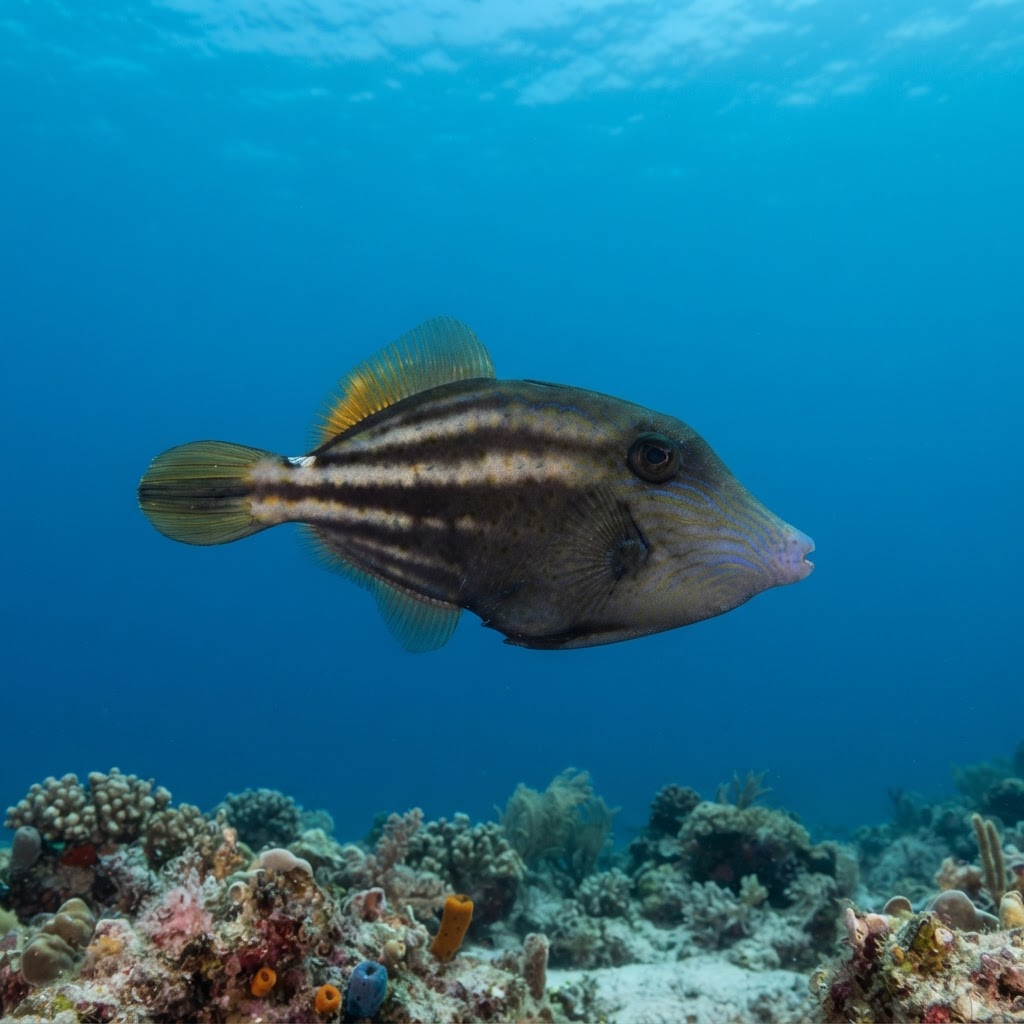
Reef neighbours a diver could mistake it for. Use the identification notes above to tell them apart.
Most reliably logged in the Philippines, especially around the Visayas and Palawan, and a strong sighting in the Seychelles' Inner Islands. Also a regular find in Tanzania's Zanzibar sites, Reunion's Saint-Leu, and Egypt's Red Sea Riviera and Marsa Alam & the Deep South, with further records from Indonesia's Nusa Tenggara, South Africa, and Australia.
Mapping where Honeycomb Filefish is logged…
Best bet is the Philippines, particularly the Visayas and Palawan, or the Seychelles' Inner Islands. Zanzibar in Tanzania, Saint-Leu in Reunion, and Egypt's Red Sea Riviera also produce regular sightings.
There's no strong season in the data, and it sits comfortably in 25 to 29C water, so it's a year-round sighting on the reefs where it occurs.
Look for a small, flattened, leaf-shaped fish around 17 cm covered in a dark honeycomb spot pattern over a brownish body. It hovers close to coral rather than swimming in open water and moves with slow fin flutters.
They typically reach about 17 cm in length, making them one of the smaller reef filefish divers encounter.
No, they pose no danger to divers. They're shy, small, and tend to retreat into the reef rather than approach or defend aggressively.
They can lock an upright spine on their back to jam themselves into a crevice, making them very difficult for a predator to pull out once wedged in.
Site and sighting data is aggregated from diver logs, iNaturalist and GBIF. For taxonomy and conservation status:
Orangespotted Filefish
836 sites