Rhynchocinetes spp.
Rare but rewarding: spot hinge-beak shrimp on night dives across Western Australia, South Australia and New Zealand's North Island.
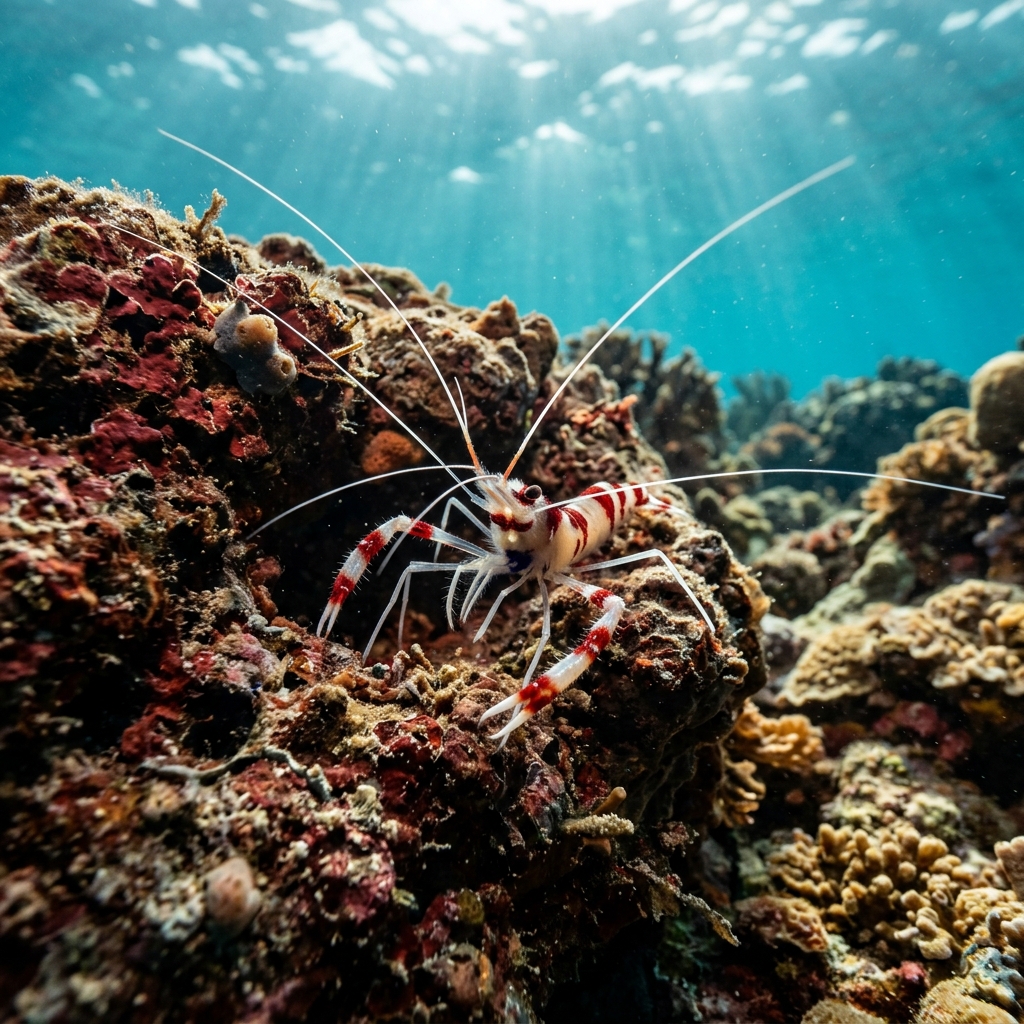
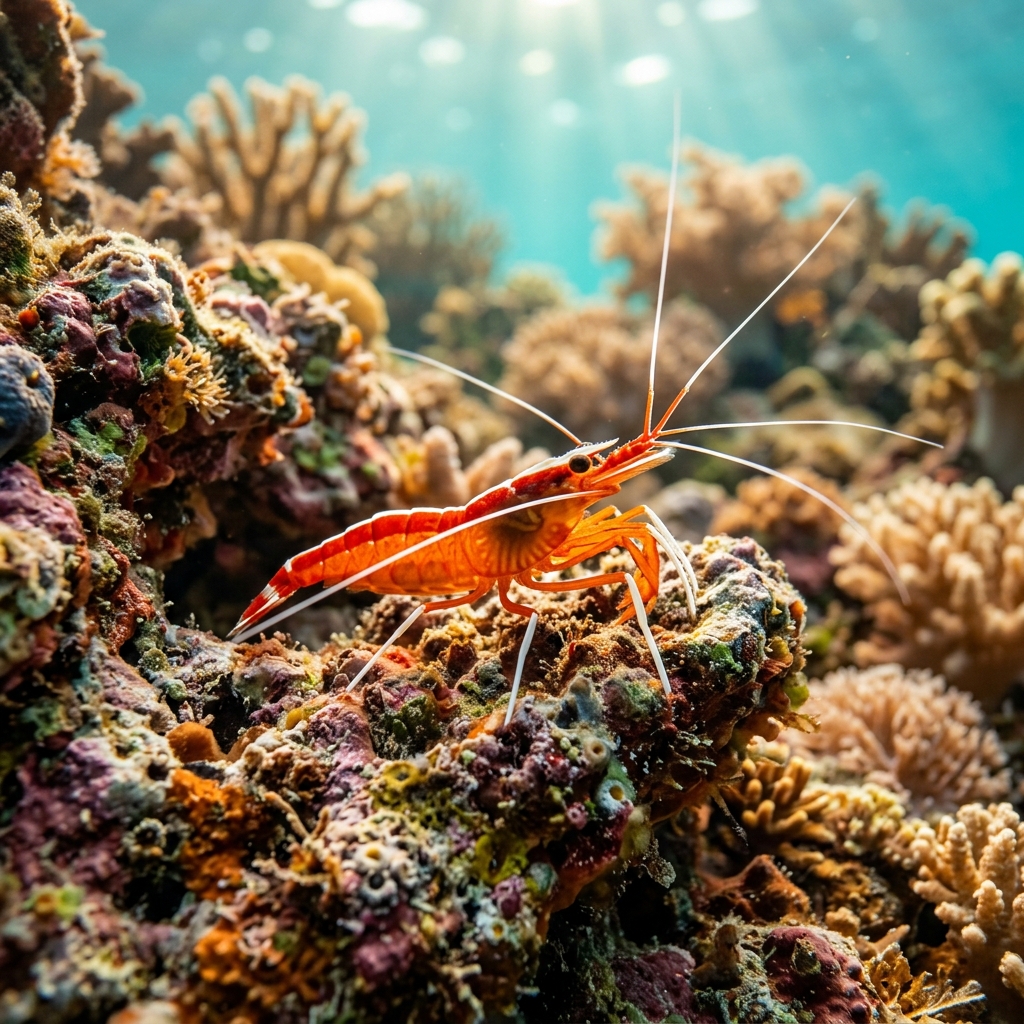
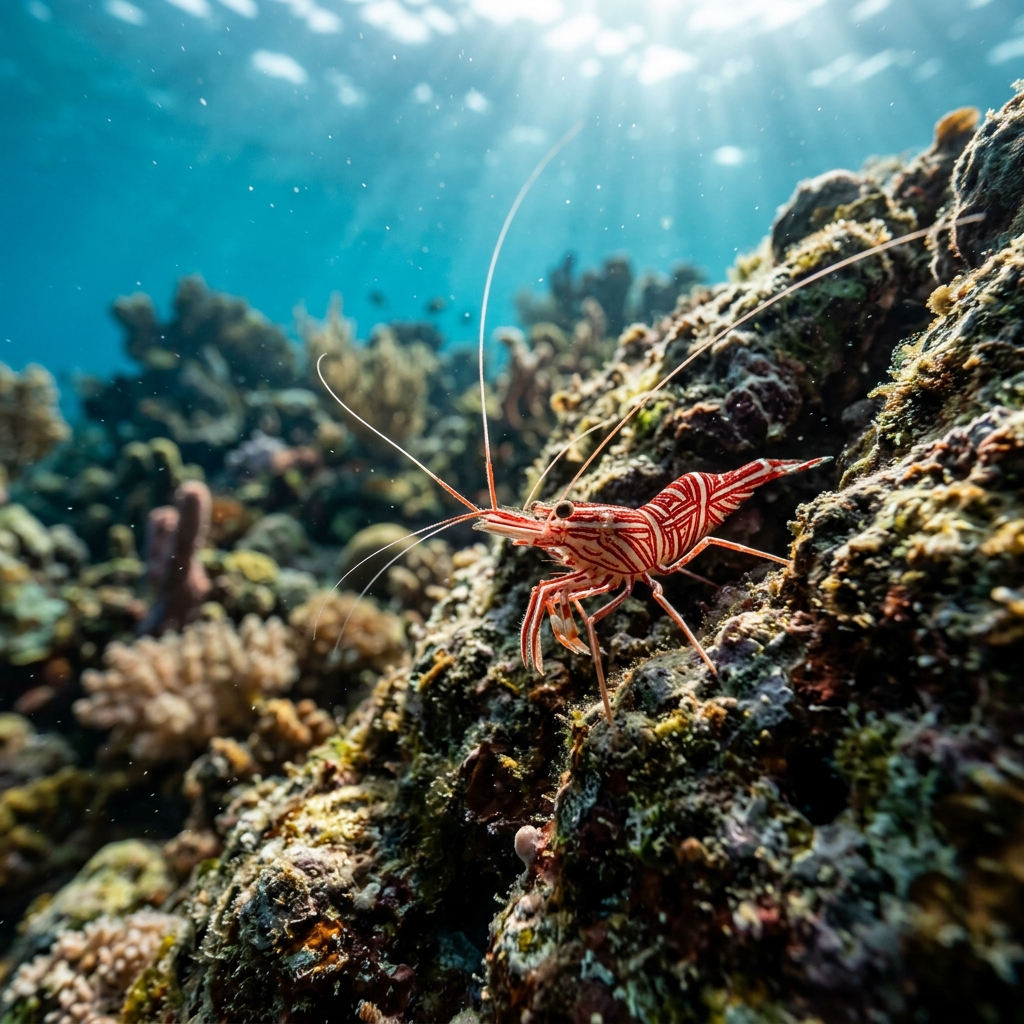
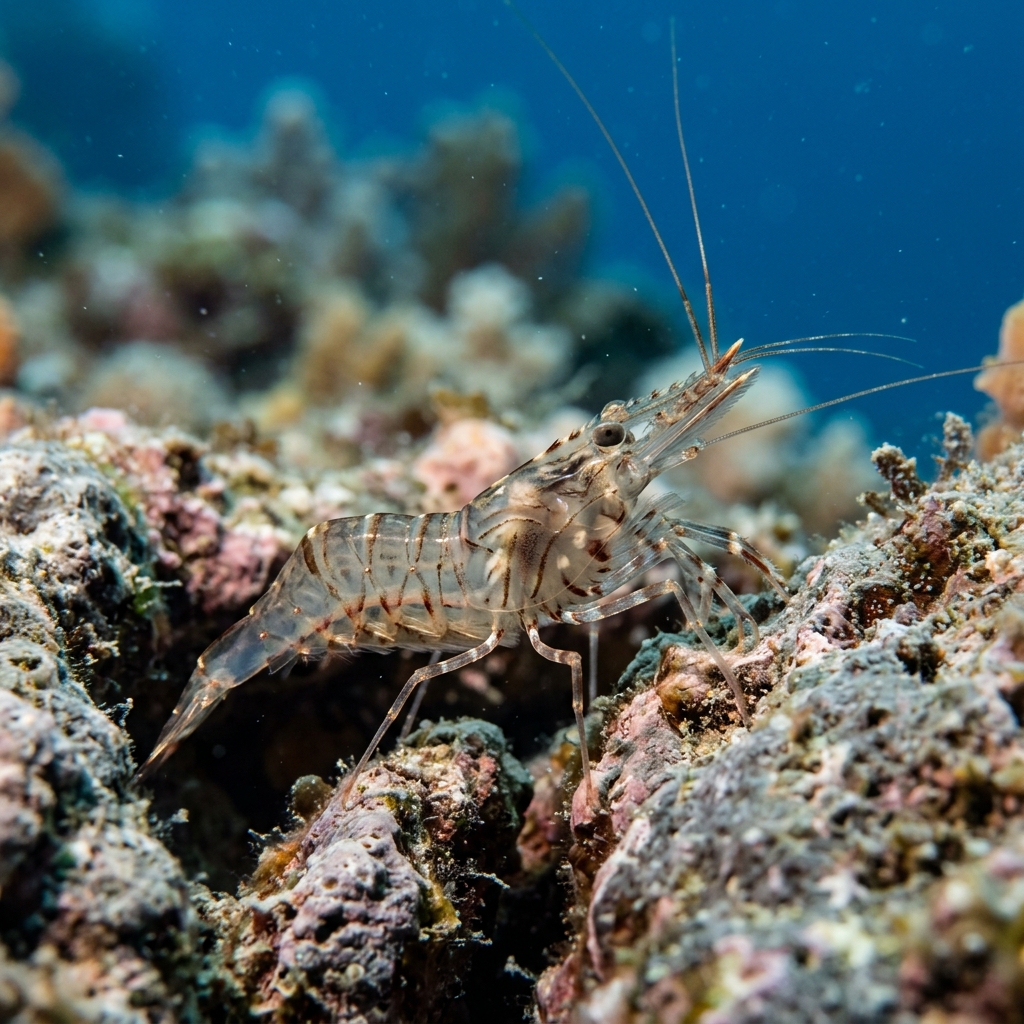
Small shrimp, usually just a few centimetres long, with a boldly striped red-and-white or orange-and-white body that stands out under torchlight. The giveaway is the eponymous beak: a long rostrum (the forward spike between the eyes) that hinges up and down rather than staying fixed, plus oversized dark eyes and long, wispy white antennae. They perch on ledges and rubble in small huddles rather than burying into sand, which helps separate them from similar-looking reef shrimp at a glance.
Divers most often log this one tucked under ledges, in crevices or among rubble and sponge cover, frequently in small clusters rather than alone. It is a classic night-dive subject, more active and easier to pick out with a torch after dark, and tends to sit still or retreat slightly rather than bolt when a light passes over it. During the day expect it to stay pushed further back into shadow and structure.
The hinged rostrum that gives this genus its name can flex up and down, an unusual joint among shrimp that most similar-looking species lack, and it is often the single easiest feature to confirm on a photo after the dive.
No clear seasonal pattern shows up in the data, so treat it as a year-round find. Its wide observed temperature range, from about 16 to 29 C, means it turns up on both cool temperate reefs and warmer subtropical sites without a tight seasonal window.
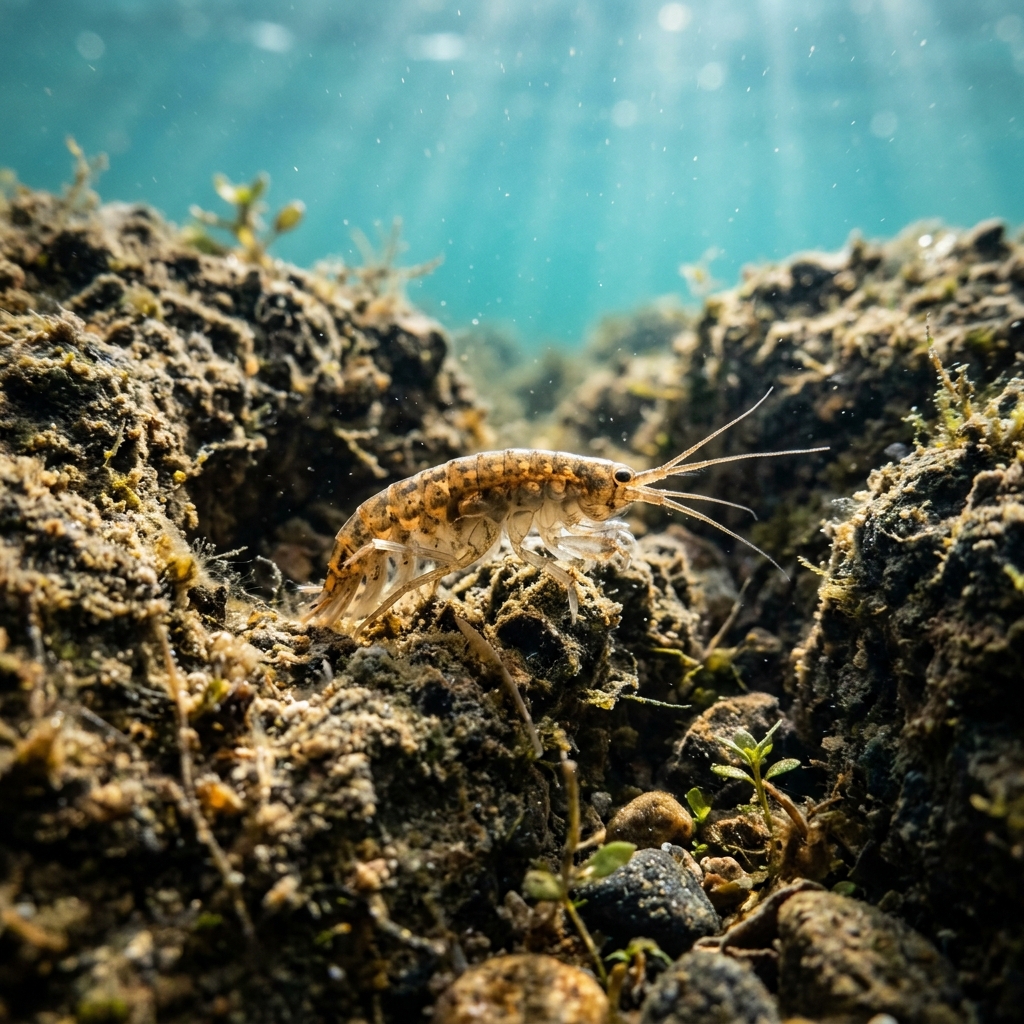
Reef neighbours a diver could mistake it for. Use the identification notes above to tell them apart.
This genus turns up most reliably in Australian waters, with the strongest concentration of logged sites in Western Australia, South Australia and New South Wales. Outside Australia it is a solid find on New Zealand's North Island and along Chile's coast around Antofagasta and Valparaíso, with a scattering of sites in Peru and Ecuador rounding out the South Pacific and South American range.
Mapping where Hinge-beak Shrimp is logged…
Best logged in Australia, especially Western Australia, South Australia and New South Wales. It also shows up reliably on New Zealand's North Island and along Chile's coast near Antofagasta and Valparaíso.
There is no strong seasonal signal in the sighting data, so they are considered a year-round find. Their comfort range of roughly 16 to 29 C covers both cooler and warmer months at most sites.
Look for a small red-and-white or orange-striped shrimp with big dark eyes, long antennae and a distinctive hinged rostrum that flexes at the base rather than staying rigid. It is usually found tucked under ledges or rubble, often in small groups.
No. They pose no threat to divers and are harmless to approach slowly with a torch for a closer look.
Its rostrum, the long spike between the eyes, is jointed and can hinge up and down, an unusual trait that gives the whole genus its common name and is the quickest way to confirm an ID on camera.
Site and sighting data is aggregated from diver logs, iNaturalist and GBIF. For taxonomy and conservation status:
Rockpool Prawn
2,179 sites