Phidiana hiltoni
Spot Hilton's Aeolid on the US Pacific Coast and in Caribbean waters like Guadeloupe and Colombia. Best in cool 12-17 °C water, Nov, Jan and Jul, Sep.
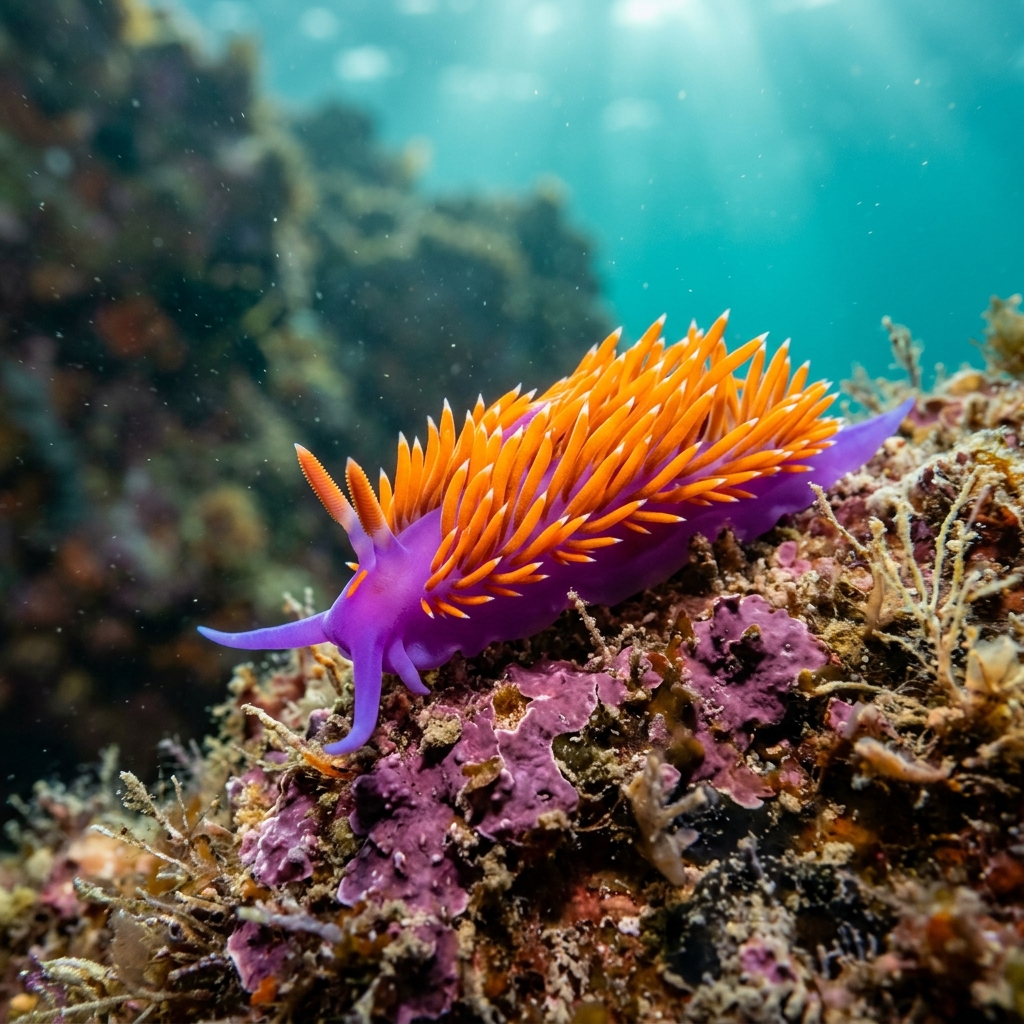
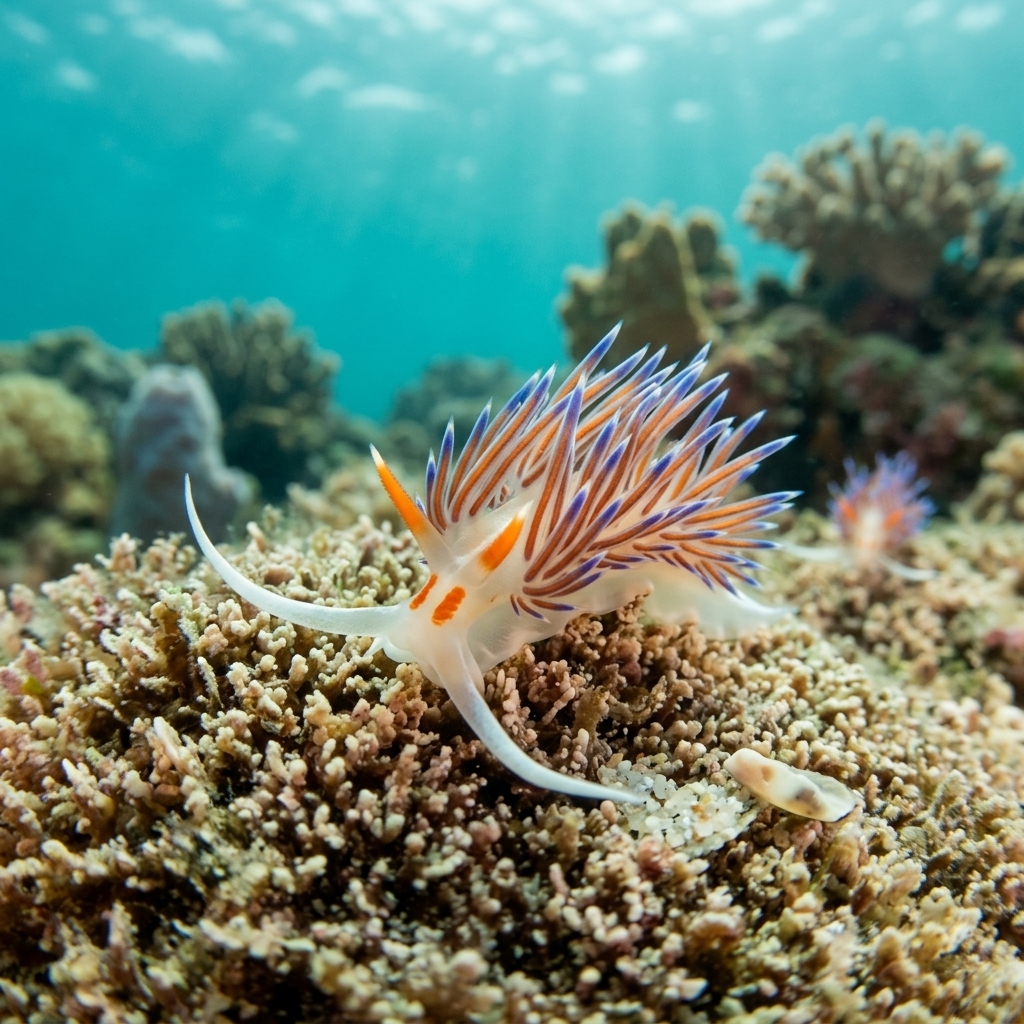
At around 3 cm, this is a small but vivid aeolid nudibranch with a slender, elongated body covered in rows of cerata (the finger-like projections along its back). The cerata are typically pale at the base and tipped with bright orange or red, giving the animal a flame-like appearance when viewed from above. Look for a white or translucent body with orange pigment concentrated around the head, including the oral tentacles and rhinophores (the sensory stalks on top of the head). It crawls slowly across rocky substrate or algae, which is usually your best clue to its location.
When you find one, it will almost certainly be crawling methodically across rock or algae, hunting small invertebrates. It pays divers very little attention, staying focused on foraging rather than retreating. Move slowly and approach low to the substrate for the best view without disturbing it.
Like other aeolid nudibranchs, Hilton's Aeolid can sequester stinging nematocysts (the venomous cells from its hydroid prey) into the tips of its cerata, potentially recycling them as a defence mechanism.
In the Northern Hemisphere, sightings concentrate in two windows: November through January, and July through September. This aligns with the species' cool-water preference, with observed temperatures ranging from about 13 to 17.5 °C.
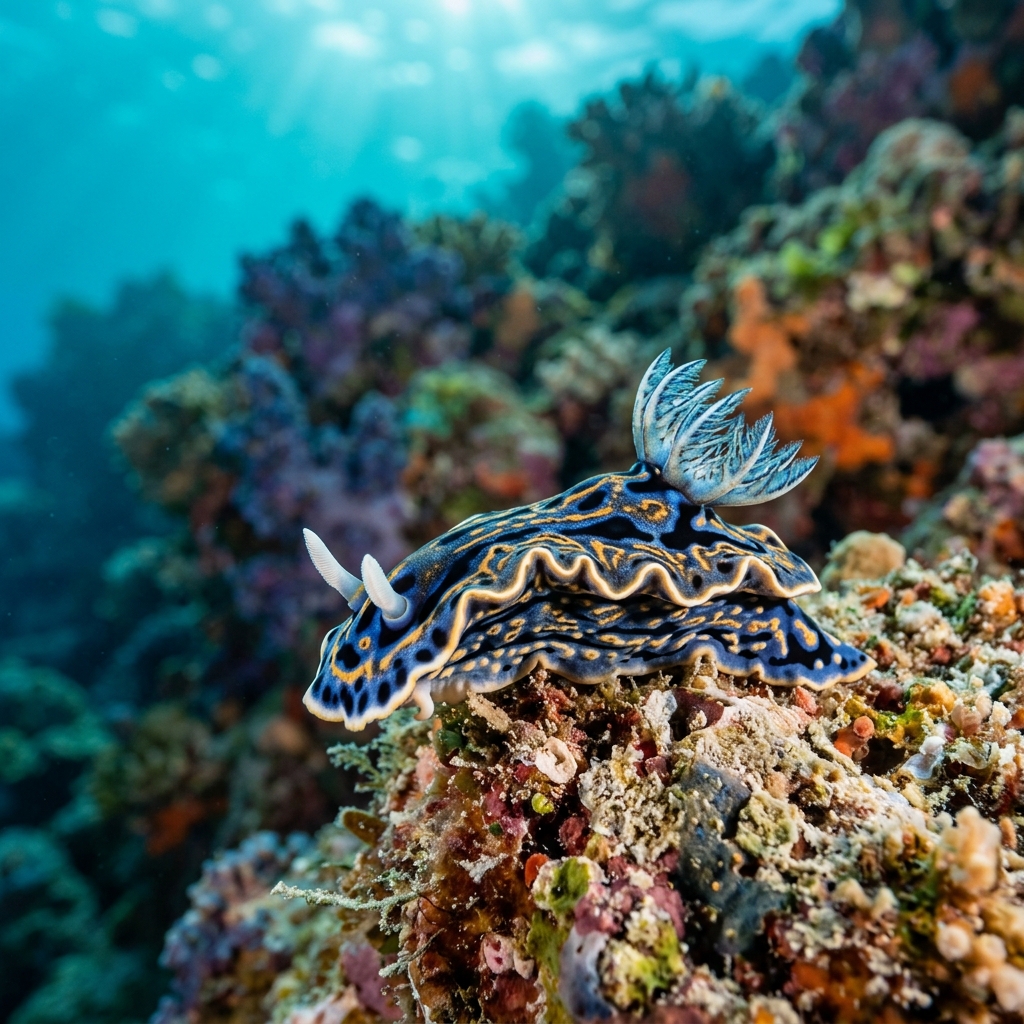
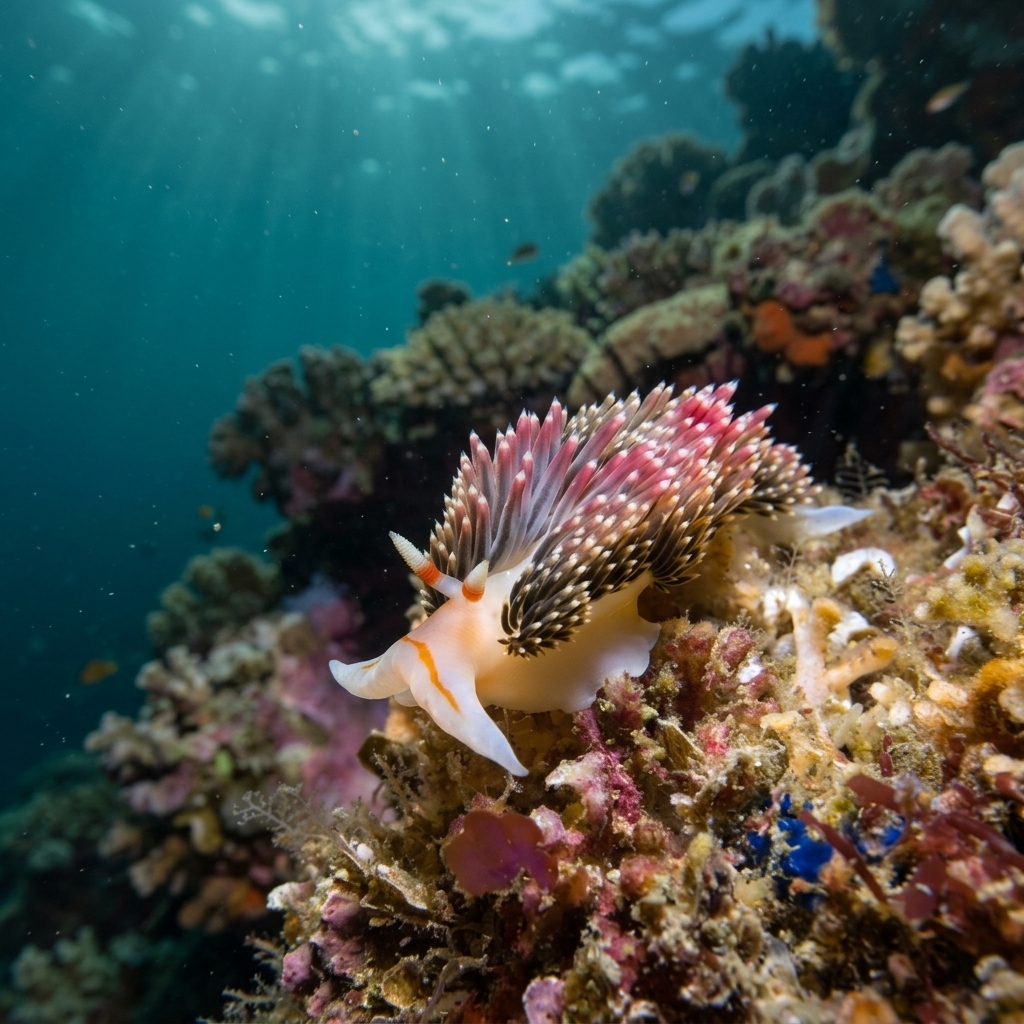
Reef neighbours a diver could mistake it for. Use the identification notes above to tell them apart.
Most commonly logged along the US Pacific Coast, particularly in California, which accounts for the largest share of sightings. It also turns up regularly across the Caribbean, with strong records from the Colombian Caribbean coast, Guadeloupe (especially Basse-Terre and Grande-Terre), and the Sint Eustatius Marine Park. Smaller but consistent records exist for Mexico's Northern Pacific coast, Grand Cayman, and the US Virgin Islands.
Mapping where Hilton's Aeolid is logged…
The US Pacific Coast, particularly California, is the most reliable region. In the Caribbean, look for it along the Colombian coast, around Guadeloupe, in the Sint Eustatius Marine Park, and at sites in Grand Cayman and the US Virgin Islands.
Sightings in the Northern Hemisphere cluster in November to January and again in July to September. The species favours cool water between roughly 13 and 17.5 °C, so timing a dive to those windows in California or the Caribbean gives you the best odds.
Look for a slender 3 cm nudibranch with rows of pale cerata tipped in bright orange or red, and matching orange pigment on the head tentacles and rhinophores. It moves slowly across rocks or algae, which helps you spot it if you scan surfaces carefully.
Typically around 3 cm in length. At that size it is easy to overlook on a busy reef, so slowing down and looking closely at rock surfaces and algae patches is the way to find one.
No. They are small, slow-moving, and entirely uninterested in divers. Like many aeolid nudibranchs they may store stinging cells from their prey in their cerata, but this poses no practical risk to a diver who simply observes without handling them.
Site and sighting data is aggregated from diver logs, iNaturalist and GBIF. For taxonomy and conservation status:
Nudibranch
3,168 sites