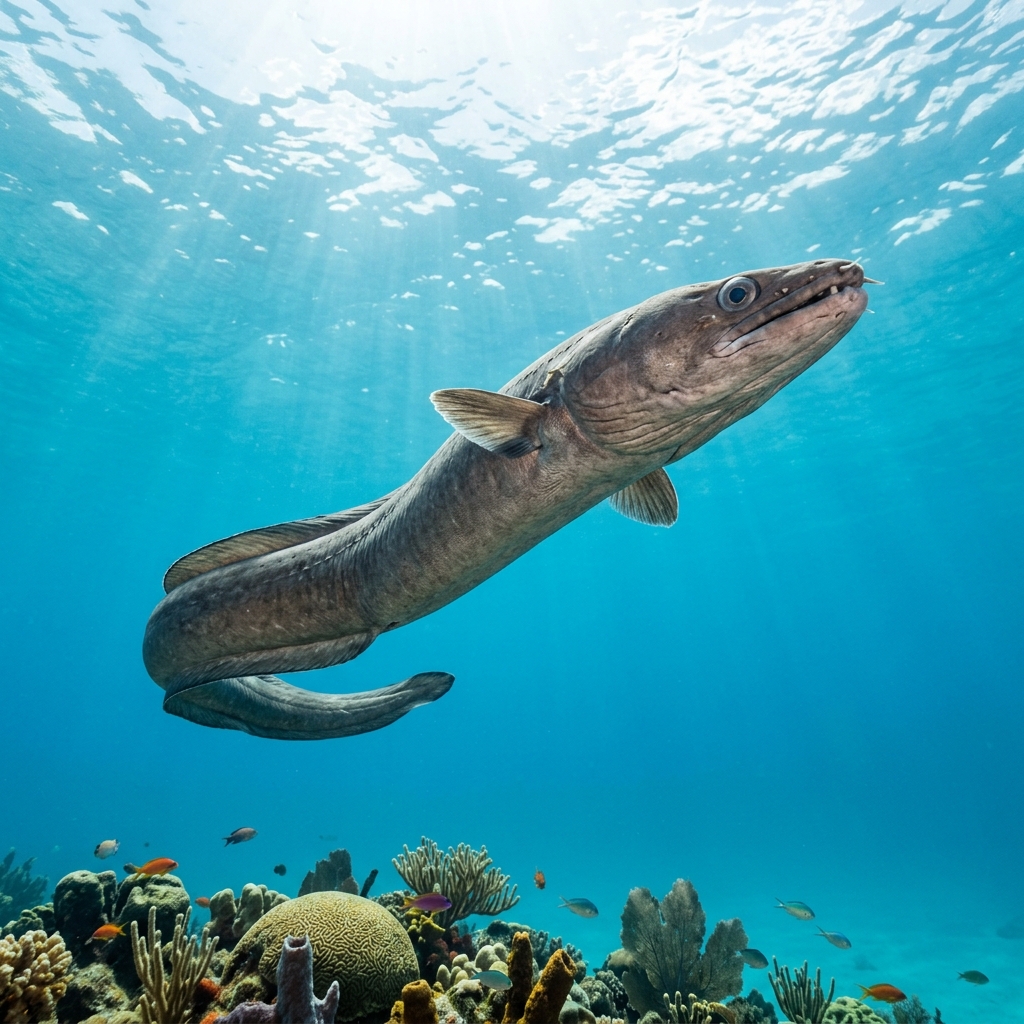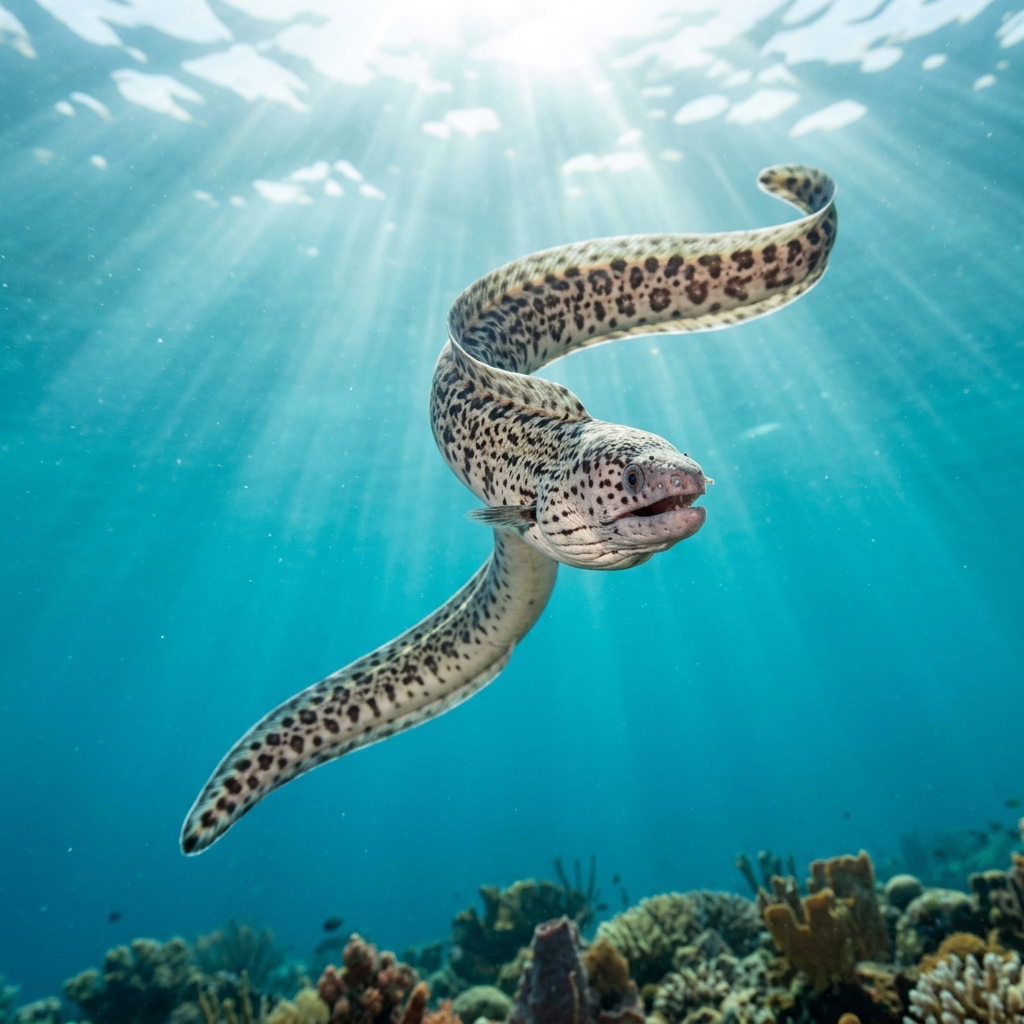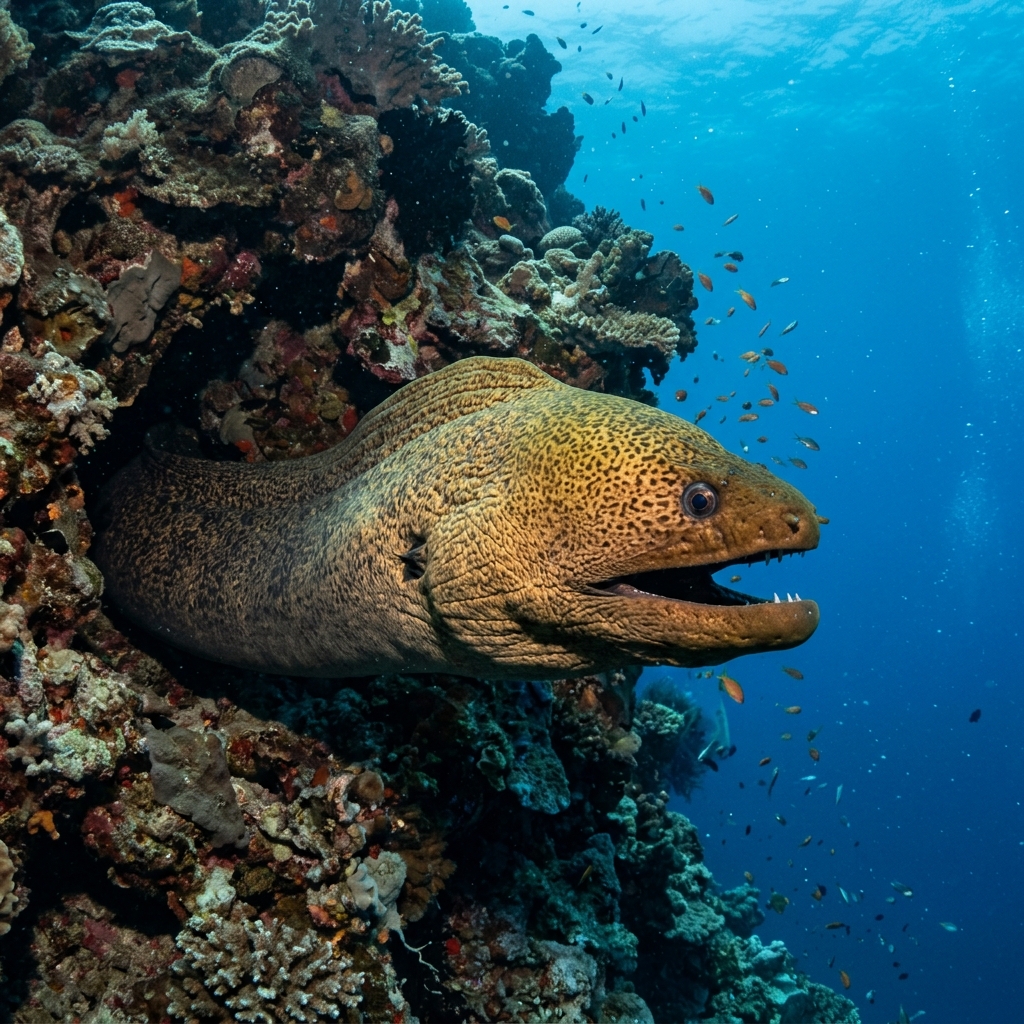
Ophichthus altipennis
Sandy-bottomed reefs in the Visayas and Sulawesi hide this speckled snake eel, most active on night dives in 24-29C water.
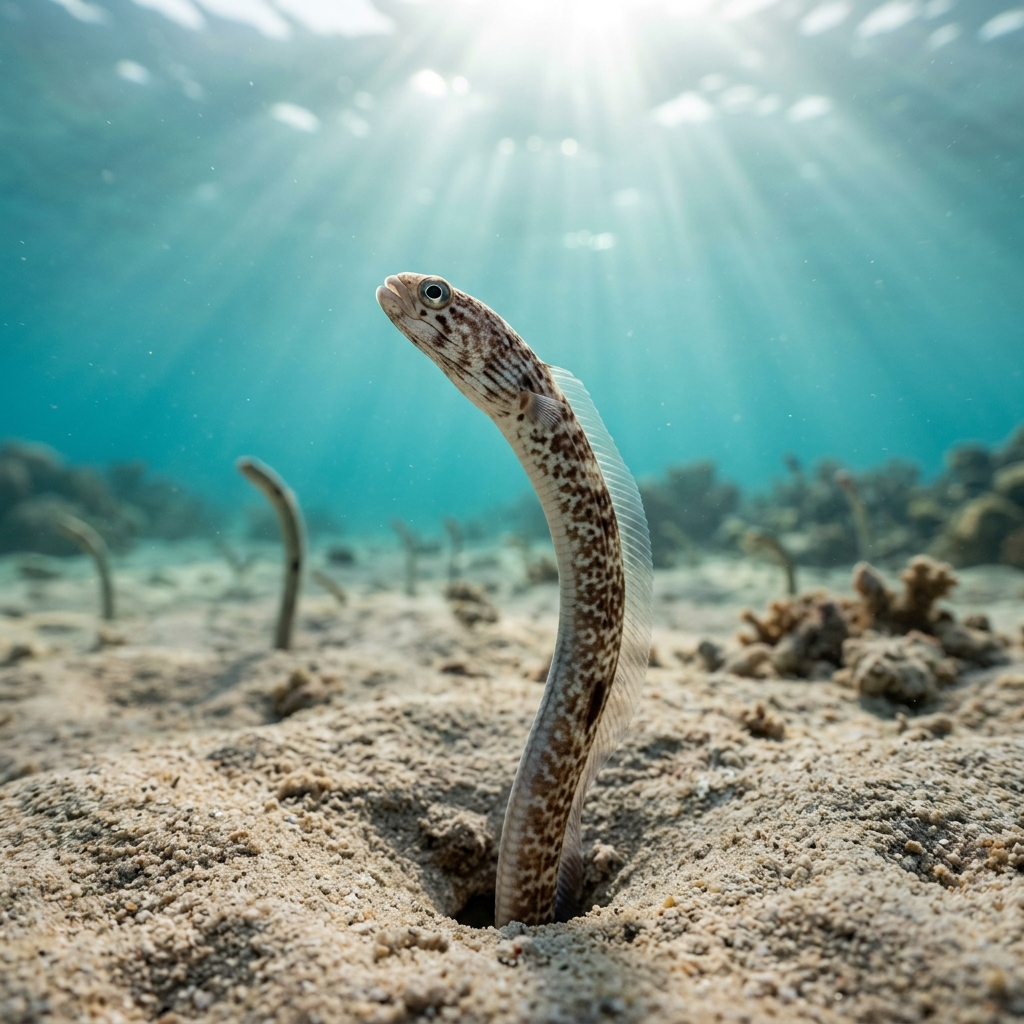
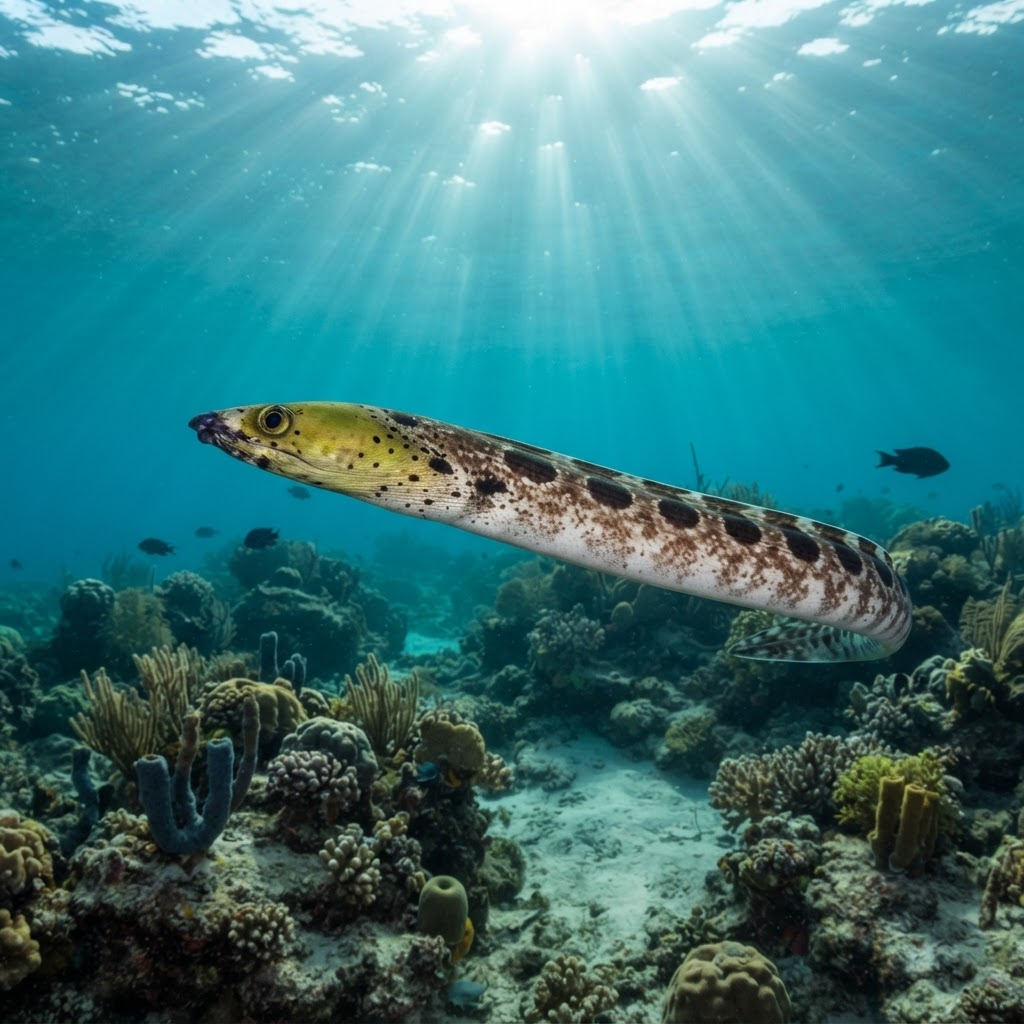
A slender, elongated body reaching up to about 84 cm, patterned with fine brown to olive speckling over a paler background that helps it disappear into sand. Look for the pointed snout and the tail tip, which lacks a fin and tapers to a hard point used for burrowing tail-first into the substrate. Usually only the head or a short stretch of body is visible, poking out from a burrow on a sandy or rubble patch rather than swimming freely in open water.
Divers typically spot just the head or forequarters sticking out of a sandy patch, often near coral rubble or the base of a reef slope, while the rest of the body stays buried tail-first. It tends to hold still and watch rather than bolt, though it will retreat into its burrow if approached too fast or too closely. Night dives tend to turn up more activity, with the eel sometimes extending further out of its hole to hunt.
That pointed, finless tail tip is a dedicated digging tool, letting it reverse into sand almost instantly when startled rather than turning around to flee head-first like most fish.
No clear seasonal pattern shows up in the sighting data, and with a comfortable range of 24.1 to 29.2 C on tropical reefs, it is logged year-round rather than in a particular month or two.
Most reliably found in the Philippines, especially across the Visayas and Luzon, and in Indonesia's Sulawesi region, where sandy slopes and rubble patches near reefs give it plenty of places to burrow. Smaller but consistent numbers turn up in Thailand's Phuket area, Sabah in Malaysia, and Longdong in Taiwan, with occasional sightings logged in Western Australia.
Mapping where Highfin Snake Eel is logged…
The Philippines is the strongest area, particularly the Visayas and Luzon, with Sulawesi in Indonesia close behind. Phuket in Thailand, Sabah in Malaysia and Longdong in Taiwan also produce regular sightings on sandy reef patches.
There is no strong seasonal pattern in the sighting records, so it is considered a year-round sighting on tropical reefs where water stays between about 24 and 29 C.
Look for a slender speckled brown and pale body poking out of sand or rubble, with a pointed snout and a hard, finless tail tip. Most of the body stays buried, so divers usually see only the head and neck emerging from a burrow.
They can reach around 84 cm in length, though most of that length stays hidden in the sand, so divers usually only see a much shorter section poking out of a burrow.
No, they are not considered dangerous to divers. They spend most of their time buried and retreat into their burrow rather than approach, so there is little chance of contact during a normal dive.
Its tail tip has no fin and ends in a hard point, which it uses to burrow backwards into sand almost instantly, a much faster escape than swimming away head-first.
Site and sighting data is aggregated from diver logs, iNaturalist and GBIF. For taxonomy and conservation status:
Garden Eel
2,448 sites