Anoplarchus purpurescens
Cold-water blenny found tucked in rocky crevices around British Columbia, usually spotted uncommon at 5.9-13.4C on Pacific Northwest dives.
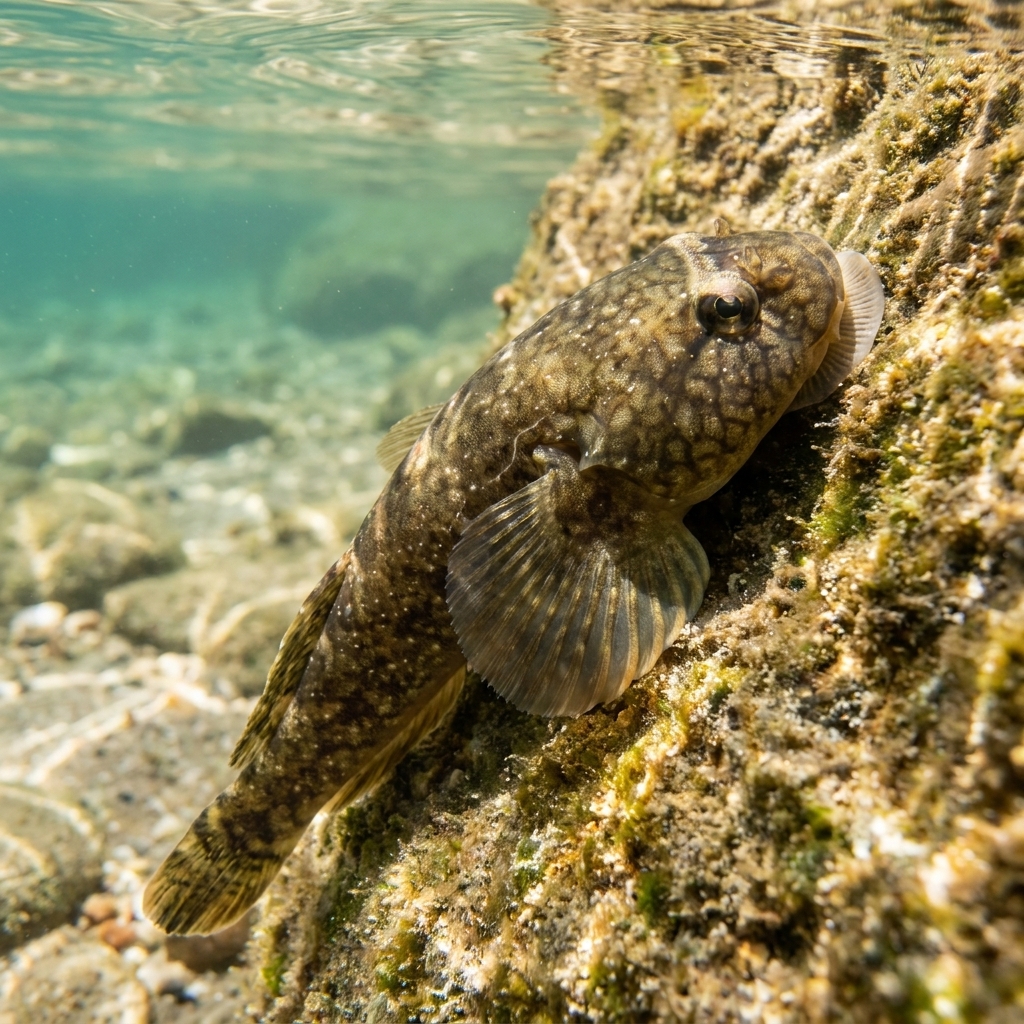
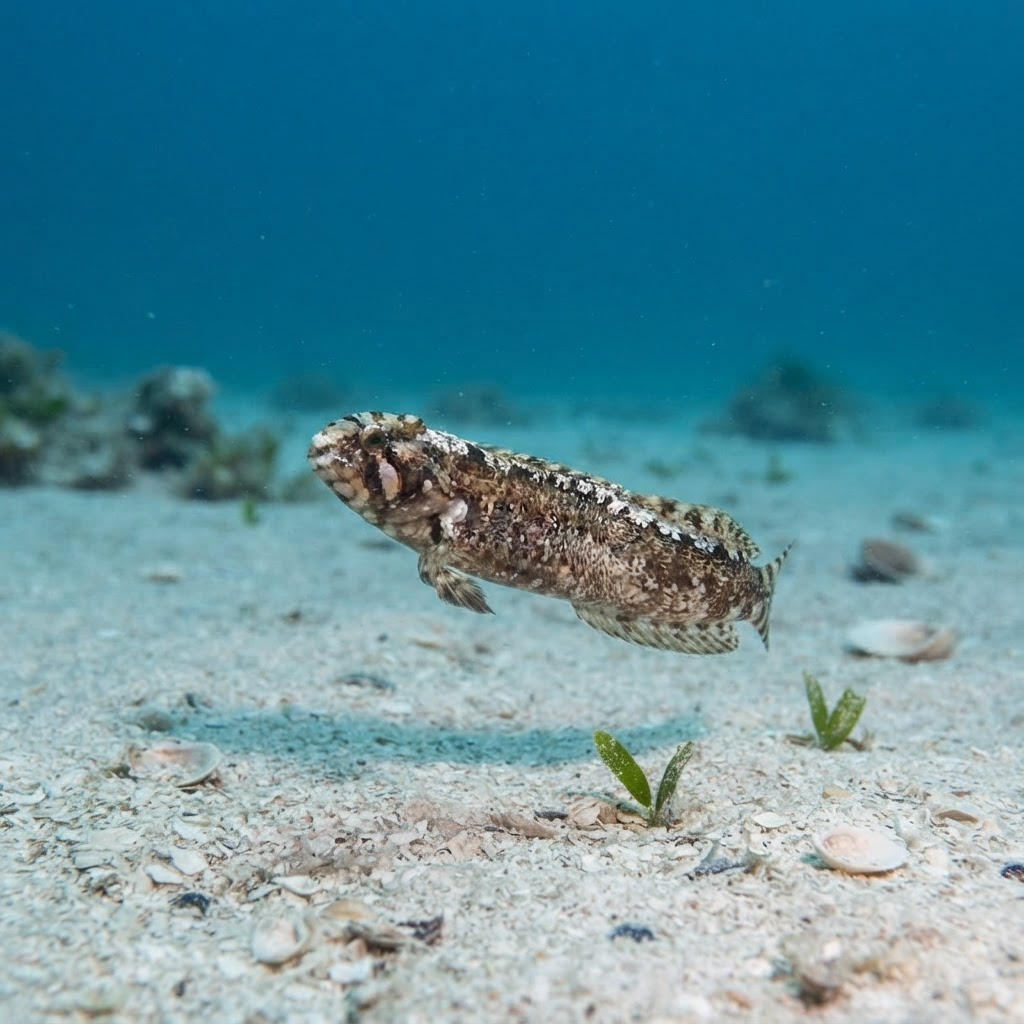
Small, eel-like fish around 14 cm long with a laterally compressed body and a blunt head with a fleshy comb-like crest running along the top of the skull. Colour ranges through dark brown, reddish-purple and near-black, usually mottled to match the rock it is hiding against. Look for it lying still in a crevice or under a rock ledge rather than swimming in open water, with its long dorsal fin running almost the full length of its back.
Spends most of its time wedged into rock crevices, under boulders or tucked against the reef, relying on camouflage rather than movement to avoid attention. Divers usually find it while peering into cracks during a slow, close-focus look at a rocky wall rather than spotting it out swimming. It tends to hold still when a light passes over it, making it an easy subject for a patient macro shot once located.
It guards its egg mass directly, with one parent staying coiled around the eggs in a crevice until they hatch rather than leaving them exposed on open rock.
Sighting data shows no clear seasonal pattern, and with a temperature niche of roughly 6 to 13 C it stays active in cold water year-round, so any month works for a dive along the British Columbia or Pacific Northwest coast.
Most reliably logged in British Columbia, Canada, which accounts for the bulk of recorded sightings, with further records across the Pacific Northwest and Alaska in the United States. It is a cold-water rocky-reef species, so look for it on temperate dive sites rather than tropical ones.
Mapping where High Cockscomb is logged…
British Columbia in Canada is by far the strongest area for sightings, with further records along the Pacific Northwest coast and in Alaska in the United States. It sticks to rocky, temperate reef habitat rather than tropical sites.
There is no strong recorded season, and it tolerates cold water down to around 6 C, so it can turn up on British Columbia or Pacific Northwest dives at any time of year.
Look for a small, dark reddish-brown to blackish fish about 14 cm long, wedged into a rock crevice with a long dorsal fin and a fleshy crest on its head. It rarely swims in the open, so slow, close searching of crevices and boulder undersides is the way to find one.
They typically reach around 14 cm in length, making them a small crevice-dwelling fish best appreciated with a close, patient look rather than from a distance.
No, they pose no threat to divers. They are shy, crevice-hiding fish that hold still or retreat further into the rock rather than react aggressively.
One parent coils around its egg mass inside a rock crevice and stays there guarding the eggs until they hatch, rather than abandoning them in the open.
Site and sighting data is aggregated from diver logs, iNaturalist and GBIF. For taxonomy and conservation status:
Soldierfish
3,612 sites