Heteroconger hassi
Spotted garden eels sway from sandy flats across the Philippines, Indonesia, and Zanzibar in warm 27-29 °C water. Here's where to find them and what to look for.
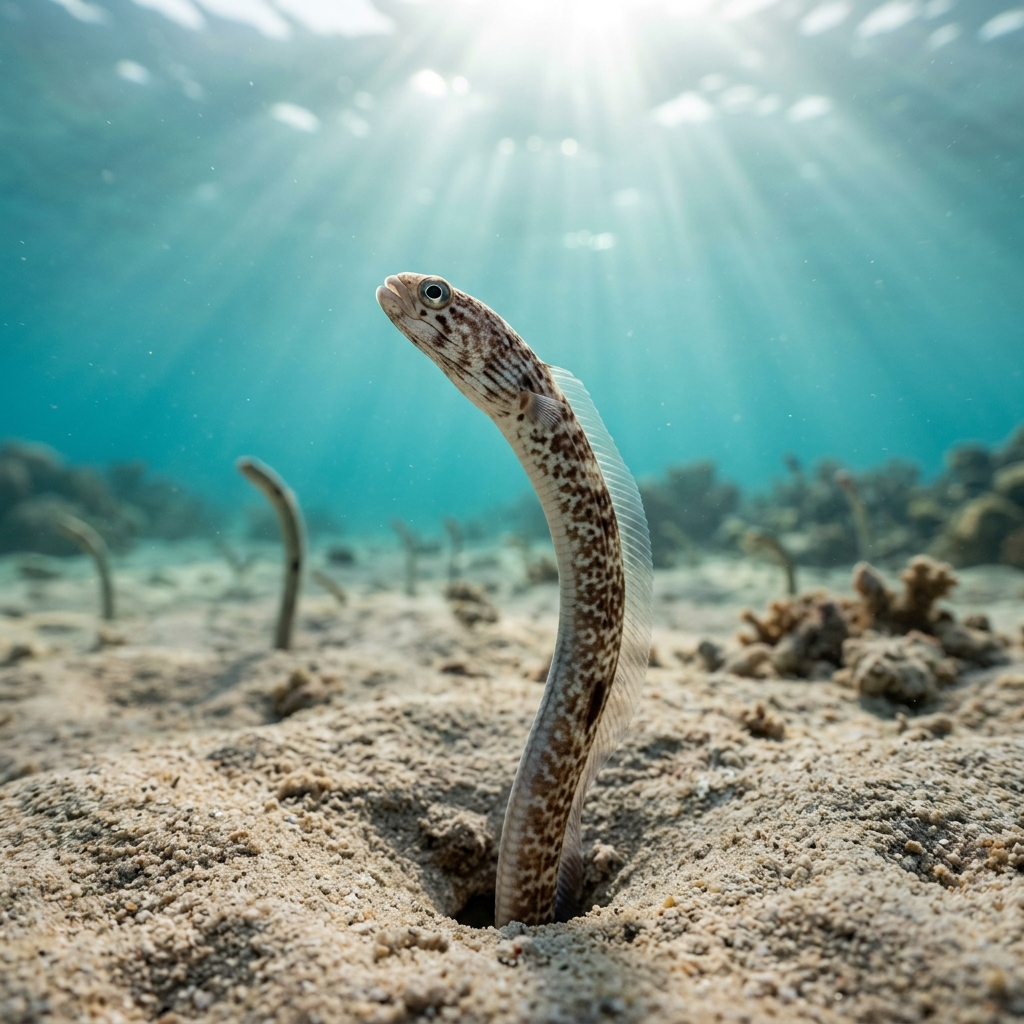
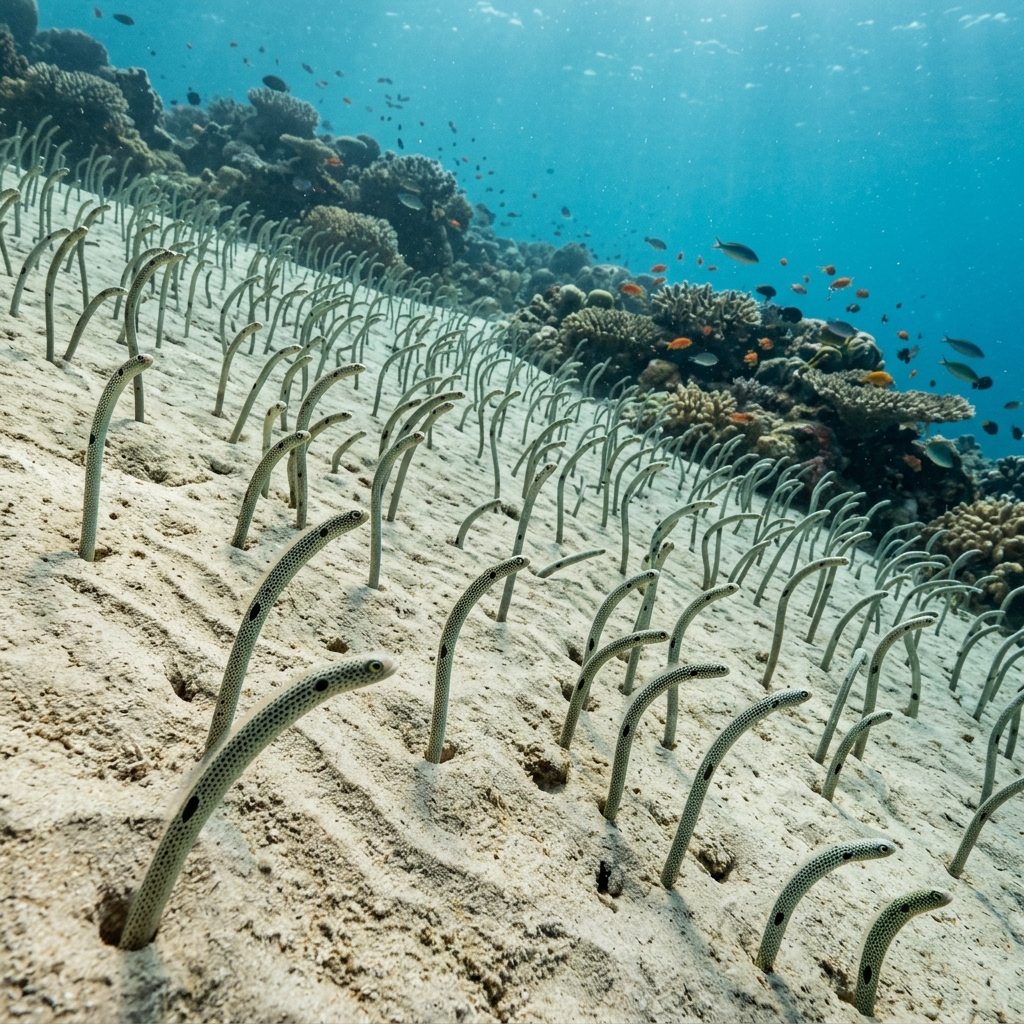
A slender, ribbon-like eel that extends vertically from the sand, with only its upper body visible above the substrate. The body is pale white or cream with a scattering of dark spots and a distinctive large black blotch behind the gill opening. Colonies can number in the dozens to hundreds, all facing into the current and swaying gently, which is usually the first thing a diver notices. Approach too close and they vanish backwards into their burrows.
Spotted garden eels live in colonies on open sandy plains, each individual anchored in its own burrow and extending its body to feed on zooplankton drifting past in the current. They are notoriously skittish: a diver who approaches upright will watch the whole colony retract in a slow wave well before reaching them. The best tactic is to sink to the sand several metres away and edge forward slowly, keeping a low profile.
Each eel excavates and maintains its own mucus-lined burrow, and individuals rarely stray far from it. During spawning, neighbouring eels will lean towards each other and intertwine their upper bodies, all without ever fully leaving their respective burrows.
No concentrated season has emerged from the sighting data, so they can be encountered year-round. Their observed temperature range of 27 to 29 °C aligns with warm tropical reef conditions that persist throughout the year across all top sites.
Most logged across the Philippines and Indonesia, with Western Visayas and Zanzibar in Tanzania consistently the top regions for sightings. Strong records also come from the Maldives, particularly the Male and Ari Atolls, as well as Nusa Tenggara in Indonesia and sites across Fiji, Kenya, and Thailand.
Mapping where Spotted Garden Eel is logged…
The Philippines, particularly Western Visayas, and Tanzania's Zanzibar coast are the most consistently logged locations. Indonesia, the Maldives, Fiji, Kenya, and Thailand all have solid records too. Look for gently sloping sandy flats adjacent to coral reef, which is their preferred habitat.
Sightings are spread across all months with no clear peak season, so they are effectively a year-round species at tropical sites. Water temperatures around 27 to 29 °C suit them well, and these conditions persist throughout the year at most top locations.
Look for pale, pencil-thin eels standing upright from a sandy bottom in colonies, swaying in unison. The cream body carries scattered dark spots and a bold black blotch near the gills. The colony habit is the key identifier: no other common reef eel behaves this way.
They are slender fish, typically reaching around 40 cm in length, though most of the body stays buried. Above the sand you usually see only the upper 15 to 20 cm swaying in the current, which can make them look smaller than they are.
Spotted garden eels are highly sensitive to movement and shadow. When they sense a threat, they reverse into their burrows tail-first. Approaching slowly at sand level, rather than descending from above, gives you the best chance of getting close before they retreat.
Site and sighting data is aggregated from diver logs, iNaturalist and GBIF. For taxonomy and conservation status:
Garden Eel
2,448 sites