Heniochus monoceros
Spot Masked Bannerfish across the Maldives, Mauritius and Réunion. Uncommon but reliably logged in warm Indo-Pacific waters from 23 to 29 °C.
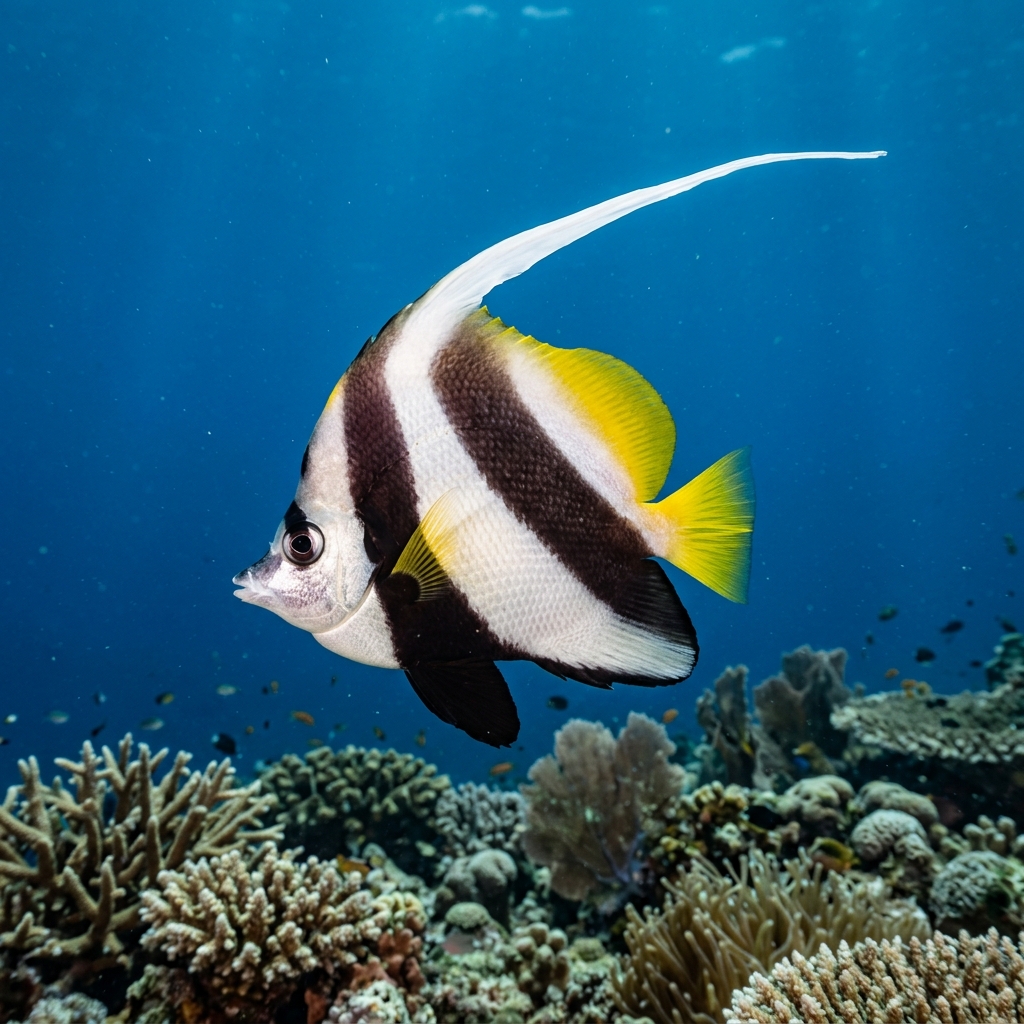
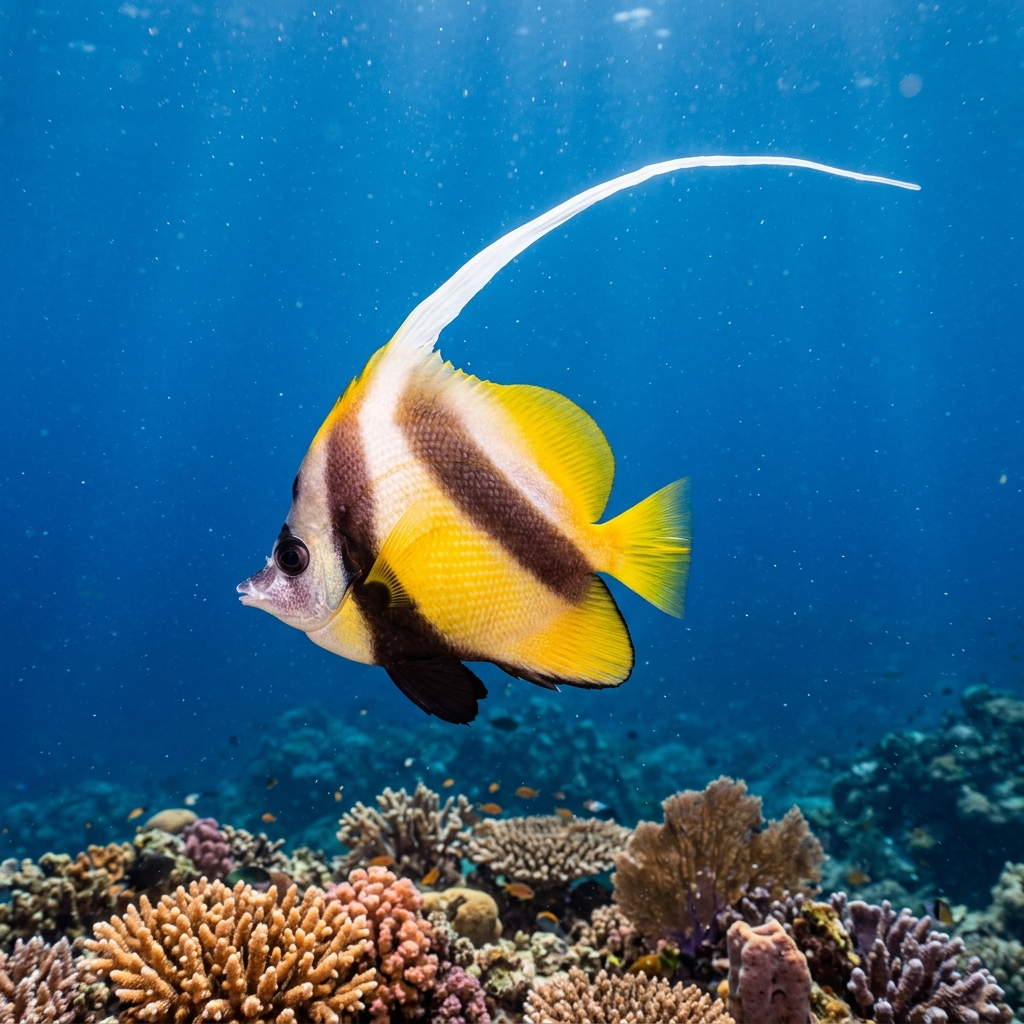
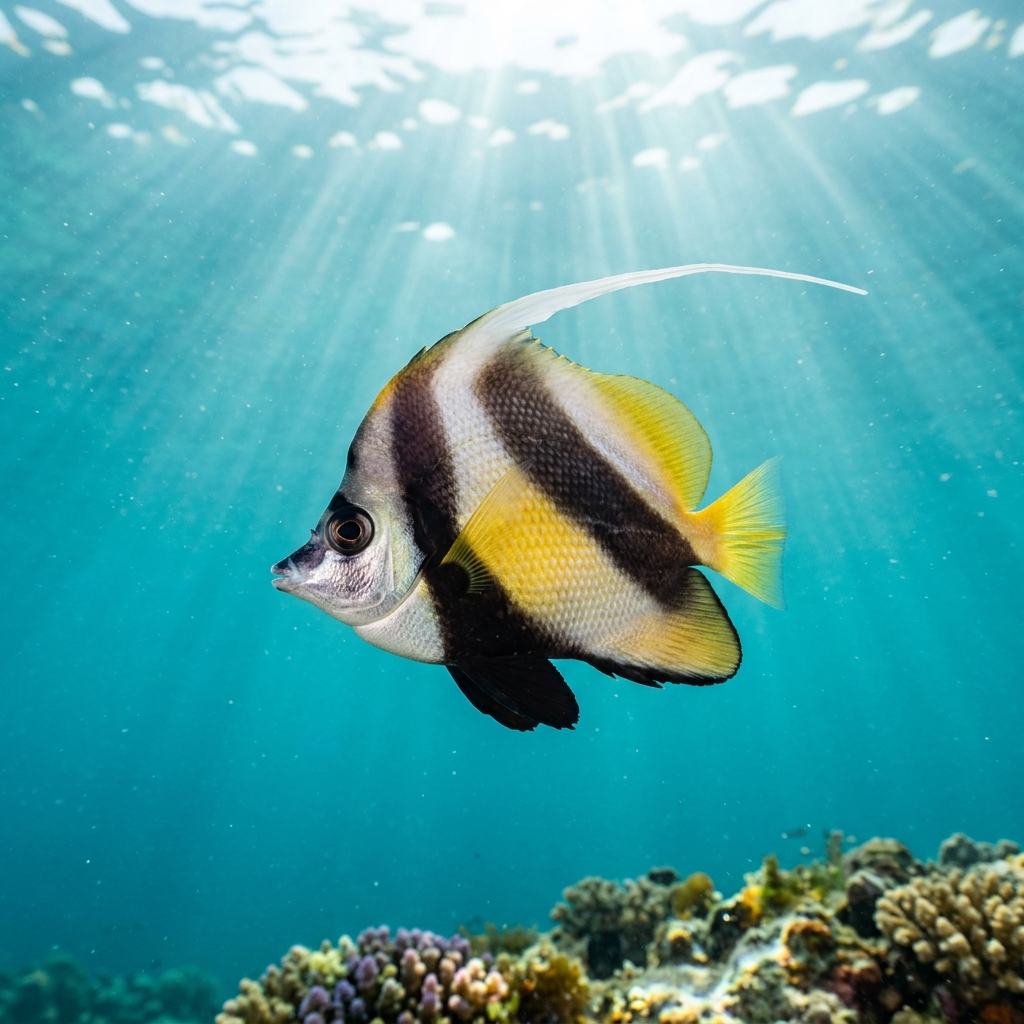
Two bold vertical black bands dominate the body, one sweeping through the eye and another across the rear flank, against a largely white background, with yellow accents on the tail and dorsal fin. That elongated dorsal-fin filament (the banner that gives the family its name) points skyward and is the first thing to catch your eye as the fish moves through the reef. Body shape is disc-like and laterally compressed, similar to most butterflyfishes, but the horn-like protuberance above the eye in adults is a distinctive close-up feature. Juveniles lack the horn and carry a more uniform banding pattern.
Typically encountered alone or in very loose pairs, moving deliberately across coral-rich slopes and walls in the mid-water column. It tends to keep a cautious but not panicked distance from divers, often pausing to pick at coral heads before drifting on. Most encounters happen during daytime dives when it is actively foraging.
The small horn above the eye, visible on adults at close range, is what the species name 'monoceros' (Greek for unicorn) refers to. It is one of very few butterflyfish with this feature, which makes a close, calm approach well worth the patience.
Southern Hemisphere sites such as Mauritius, Réunion, and South Africa show sightings concentrated from April through October, the austral autumn and winter. Equatorial destinations like the Maldives and Palau sit within a stable 23-29 °C band year-round, so timing there is dictated more by dive-site conditions than fish seasonality.
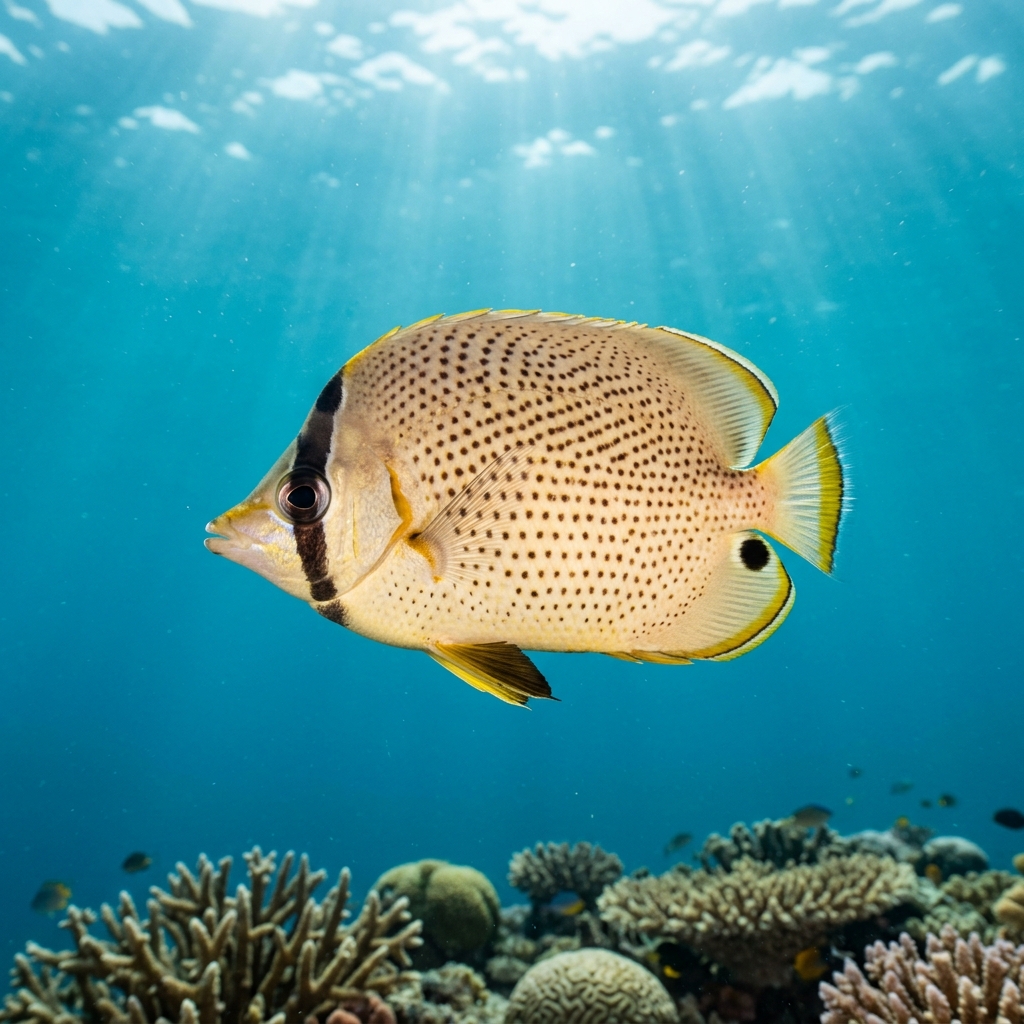
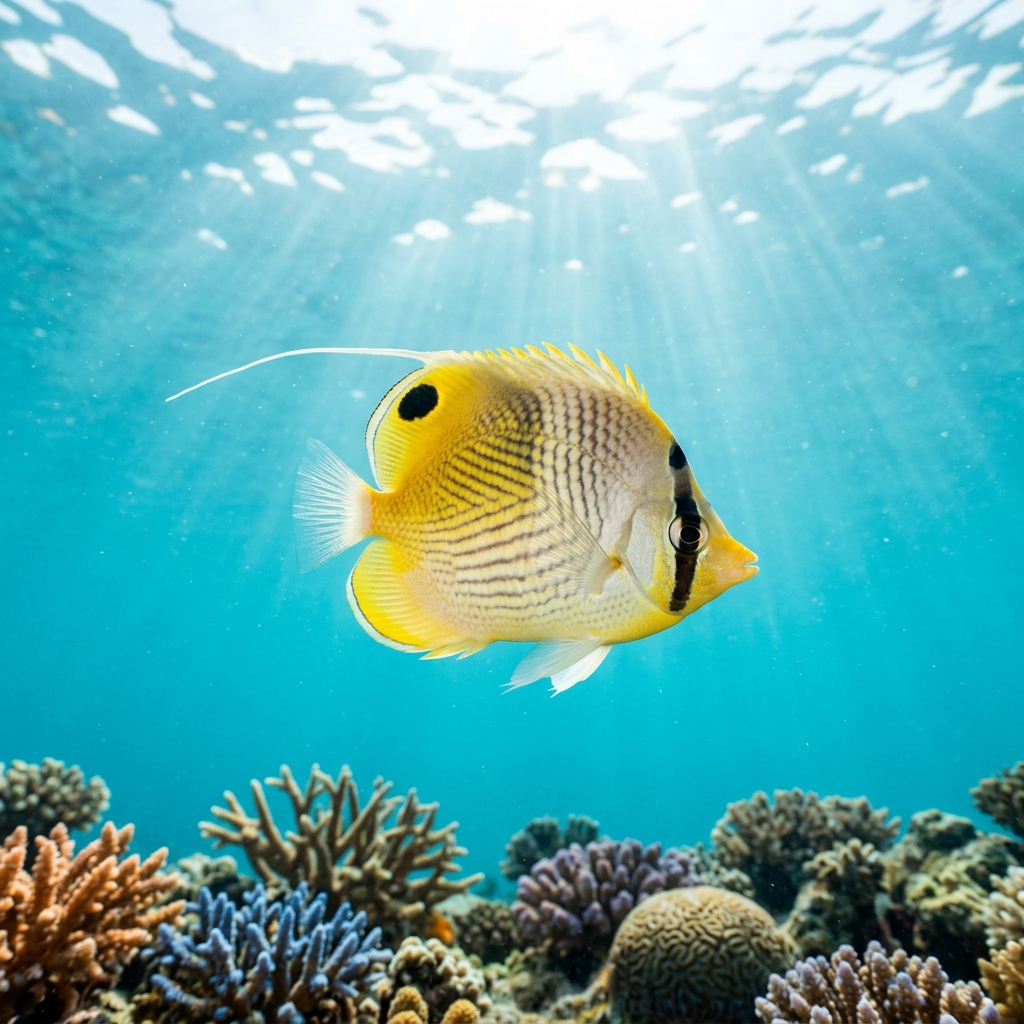
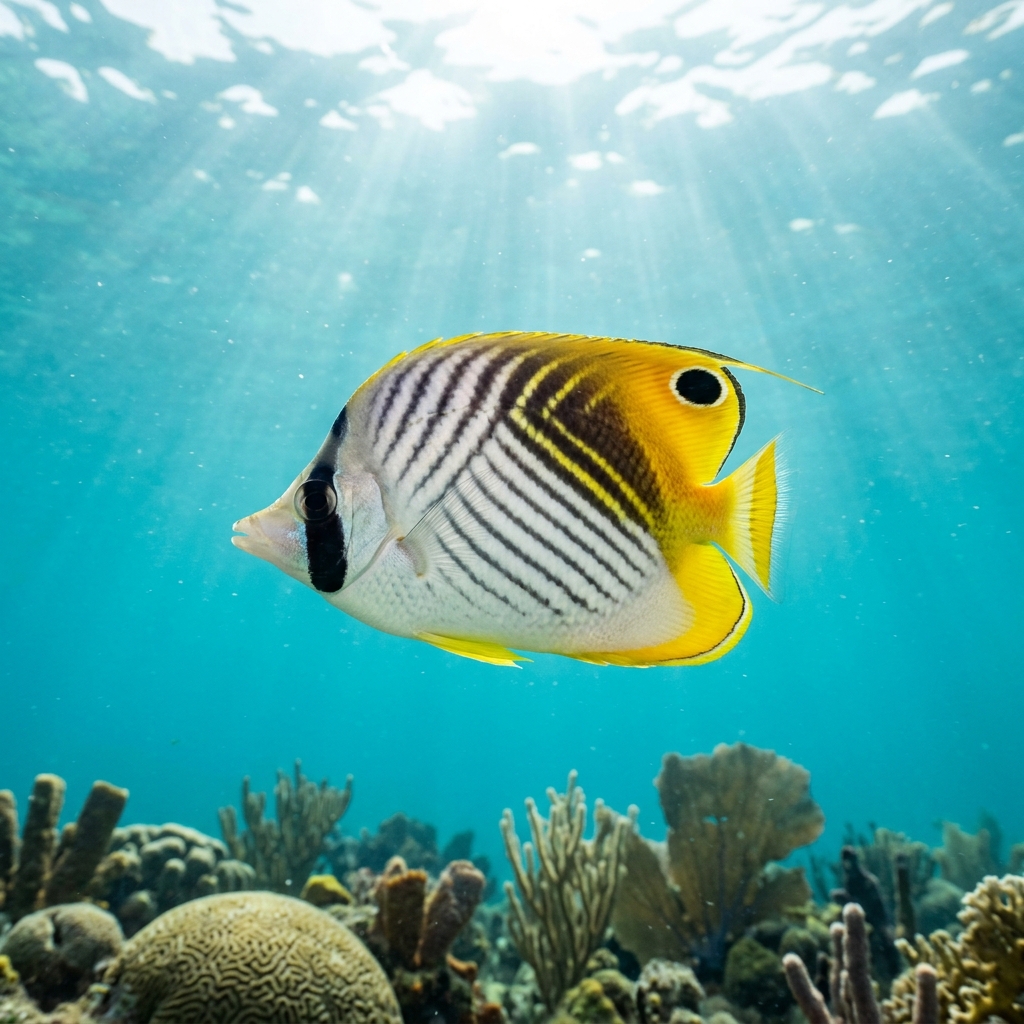
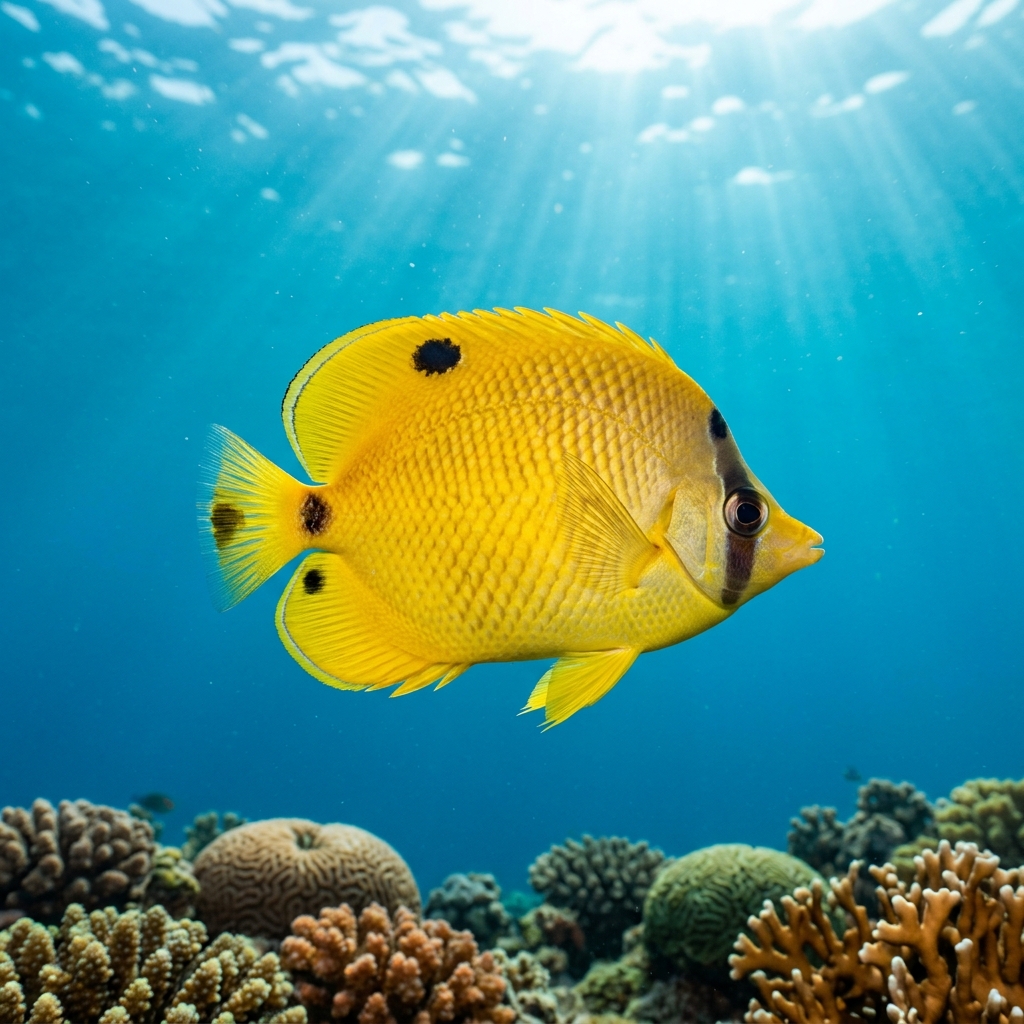
Reef neighbours a diver could mistake it for. Use the identification notes above to tell them apart.
Most reliably logged in the Maldives, where Male and Ari Atolls together account for the strongest concentration of sighting records anywhere in its range. Mauritius (particularly North Mauritius), Réunion, and Zanzibar in Tanzania are the next most productive spots. Further afield, strong populations are recorded in Palau, Rarotonga in the Cook Islands, and across Rangiroa and Tikehau in French Polynesia.
Mapping where Masked Bannerfish is logged…
The Maldives leads by a clear margin, especially the Male and Ari Atolls. Mauritius, Réunion, and Zanzibar in Tanzania are consistently productive, and divers also log it regularly in Palau, the Cook Islands, and French Polynesia. South Africa's Durban and North Coast is notably its southernmost hotspot.
At Southern Hemisphere destinations like Mauritius, Réunion, and South Africa, April to October is when sightings peak. In equatorial locations such as the Maldives and Palau the species is present year-round within the warm 23-29 °C waters it prefers.
Look for two sharp black vertical bands on a white body, a yellow tail, and a tall trailing dorsal-fin filament. Adults also have a small horn above the eye, unique among bannerfishes, which is visible on a close pass. The combination of the black eye band and that horn distinguishes it from similar species.
Sighting frequency data shows it is uncommon at the majority of sites where it is recorded, and rare at many others. Only a handful of sites classify it as common. Setting expectations low and moving slowly over coral-rich walls will give you the best chance of a sighting.
No. Masked Bannerfish pose no risk to divers whatsoever. They are shy, keep their distance, and will simply move away if approached too quickly. No special precautions are needed.
Site and sighting data is aggregated from diver logs, iNaturalist and GBIF. For taxonomy and conservation status: