Telmessus cheiragonus
Spot this hairy-edged crab on cold British Columbia dives, 6.9 to 12.9°C, logged uncommon at most sites year-round.
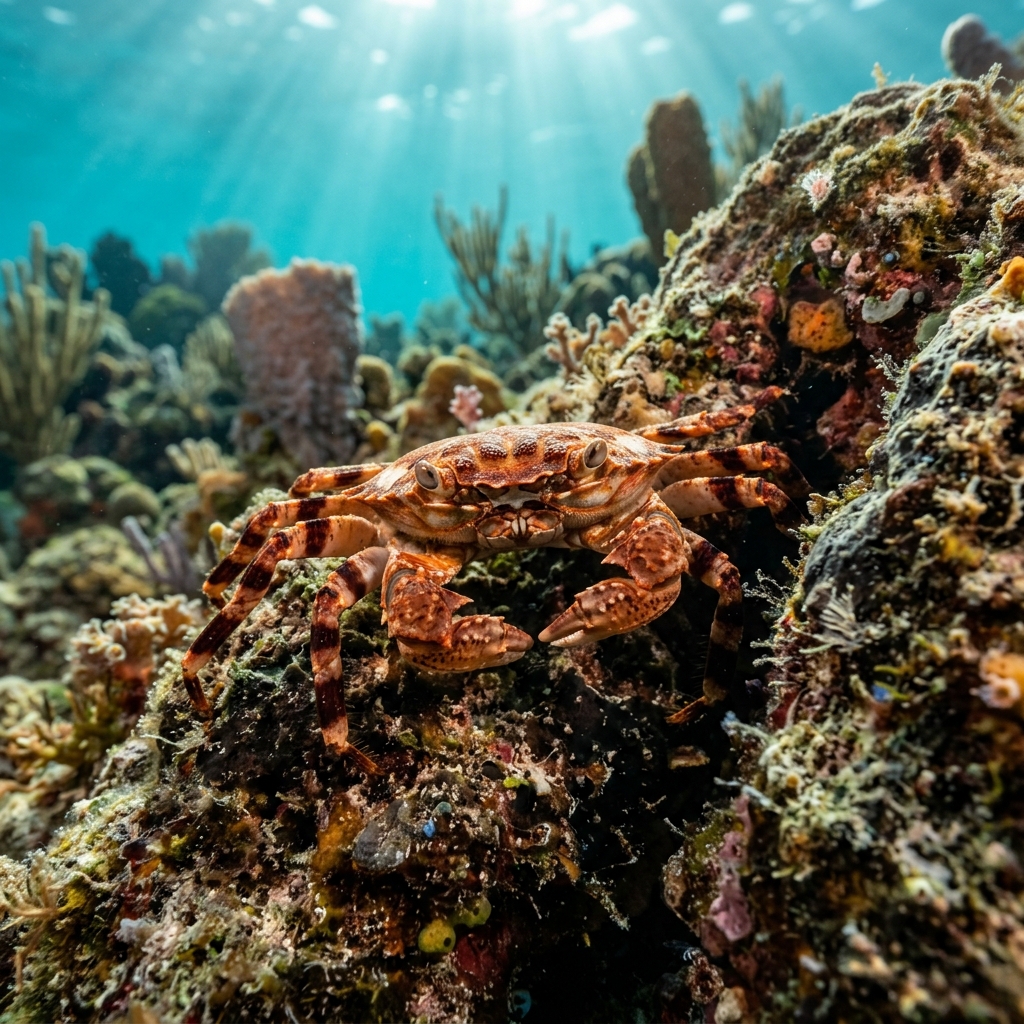
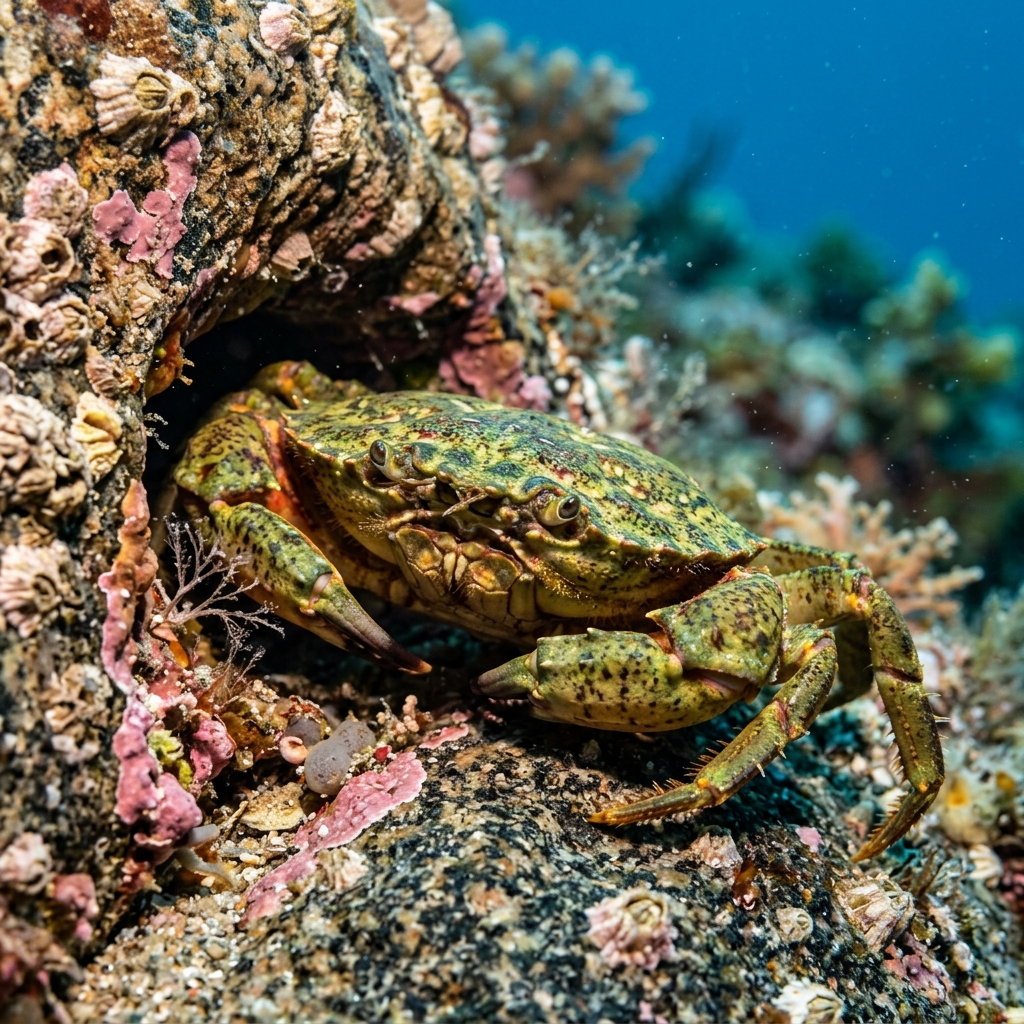
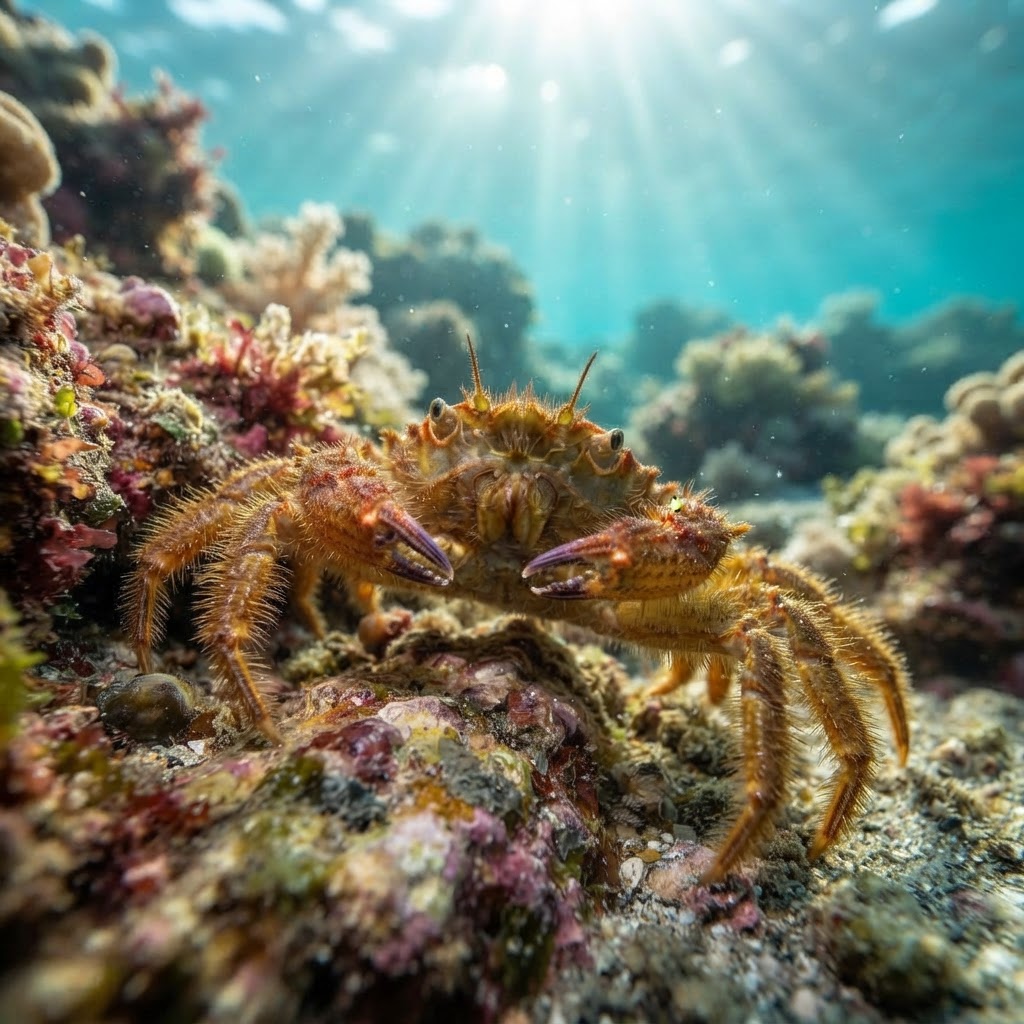
Rounded, fan-shaped shell about 7 cm across with a bristly, hair-fringed edge that makes it look almost furry at close range. Colour runs from olive-brown to reddish-purple, usually mottled to match the rock or gravel it sits on. Look for the six low, blunt teeth along each side of the carapace and stout, hairy legs tucked close to the body.
Divers usually find it moving slowly over rock, gravel or shell-rubble bottoms, often half-tucked against a boulder or in a crevice rather than out in the open. It is not shy in the way a fish is skittish, but it will freeze or shuffle away rather than confront a diver, and most encounters are single crabs rather than groups. Look for it during the day on the same cold, rocky slopes where you'd expect other Pacific Northwest crab species.
That bristly fringe around the shell isn't just texture, it helps trap silt and debris, giving the crab a natural camouflage cloak against the mixed rock and gravel bottoms it favours.
Sightings show no clear seasonal pattern, so treat it as a year-round find; it sits comfortably in the 6.9 to 12.9°C range typical of Pacific Northwest and BC dive sites through most of the year.
Reef neighbours a diver could mistake it for. Use the identification notes above to tell them apart.
Most reliably logged in British Columbia, Canada, which accounts for the bulk of sightings, with further records across the Pacific Northwest and Alaska in the United States. It shows up on cold-water rock and gravel dives rather than reef sites, so it is very much a Pacific Northwest speciality.
Mapping where Helmet Crab is logged…
British Columbia in Canada is the strongest area for this species, with additional sightings across the Pacific Northwest and Alaska in the United States. It favours cold rocky and gravel-bottomed dive sites rather than tropical reefs.
There's no strong seasonal pattern in sightings, so it can turn up on any dive through the year. Water temperatures at the sites where it's found stay in a fairly narrow 6.9 to 12.9°C band year-round, which suits it fine.
Look for a rounded, fan-shaped shell around 7 cm across with a distinctly hairy, bristled edge and six blunt teeth along each side. Colouring is usually olive-brown to purplish and tends to blend with rocky or gravel seafloor.
They're a small crab, with a shell typically around 7 cm across, so they're easy to miss against a rocky or gravel bottom unless you're looking closely.
No, they pose no danger to divers. They tend to move away or tuck against rock rather than react defensively when approached.
Site and sighting data is aggregated from diver logs, iNaturalist and GBIF. For taxonomy and conservation status:
European Green Crab
2,469 sites