Canthigaster jactator
Tiny, white-spotted and found almost exclusively in Hawaii, the Hawaiian Spotted Toby is a reef favourite between May and September. Here's where and how to find one.
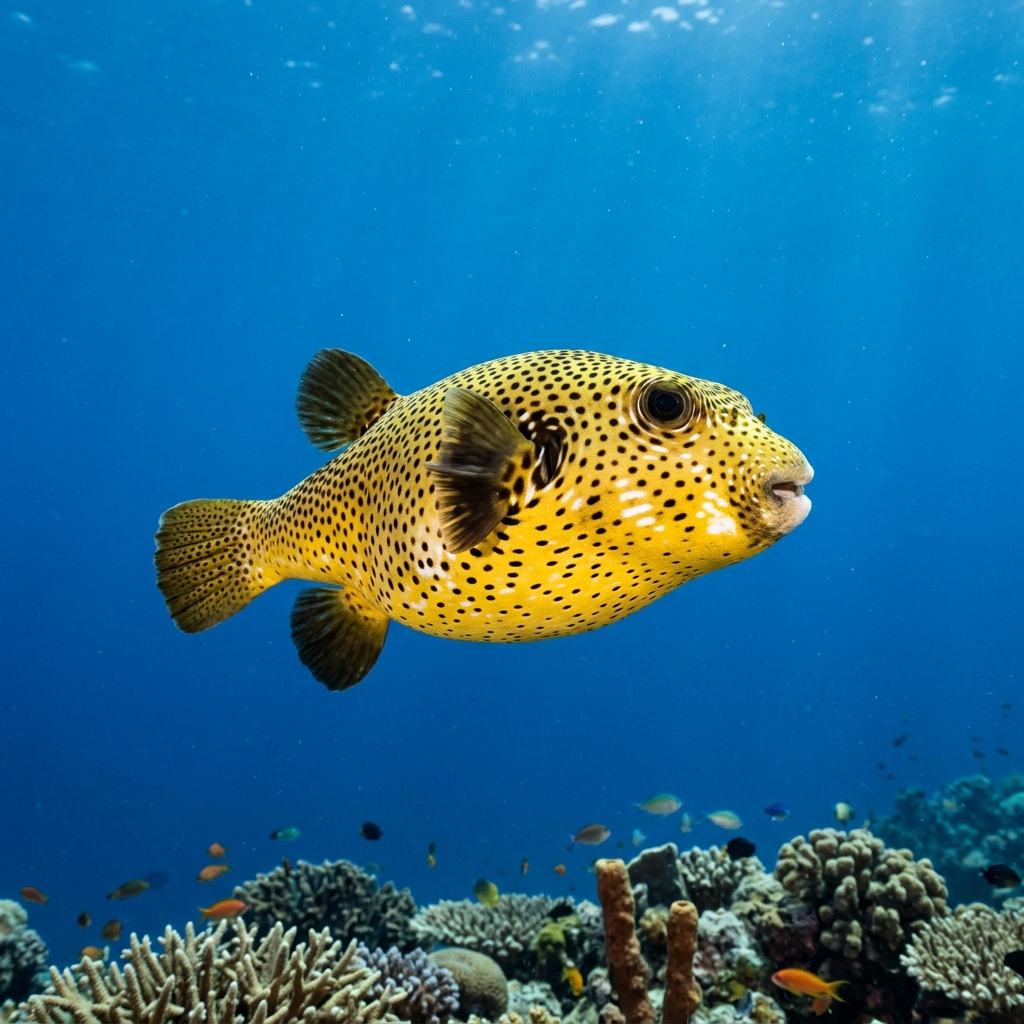
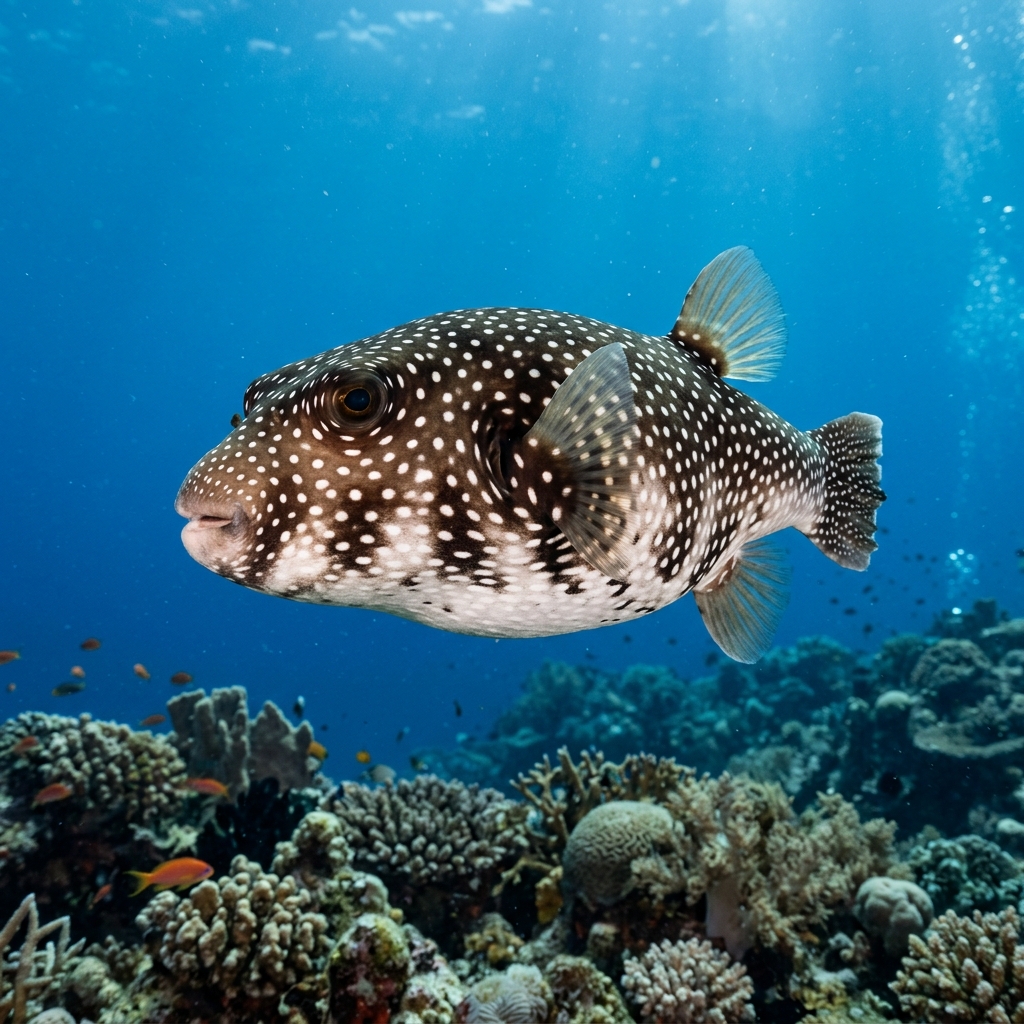
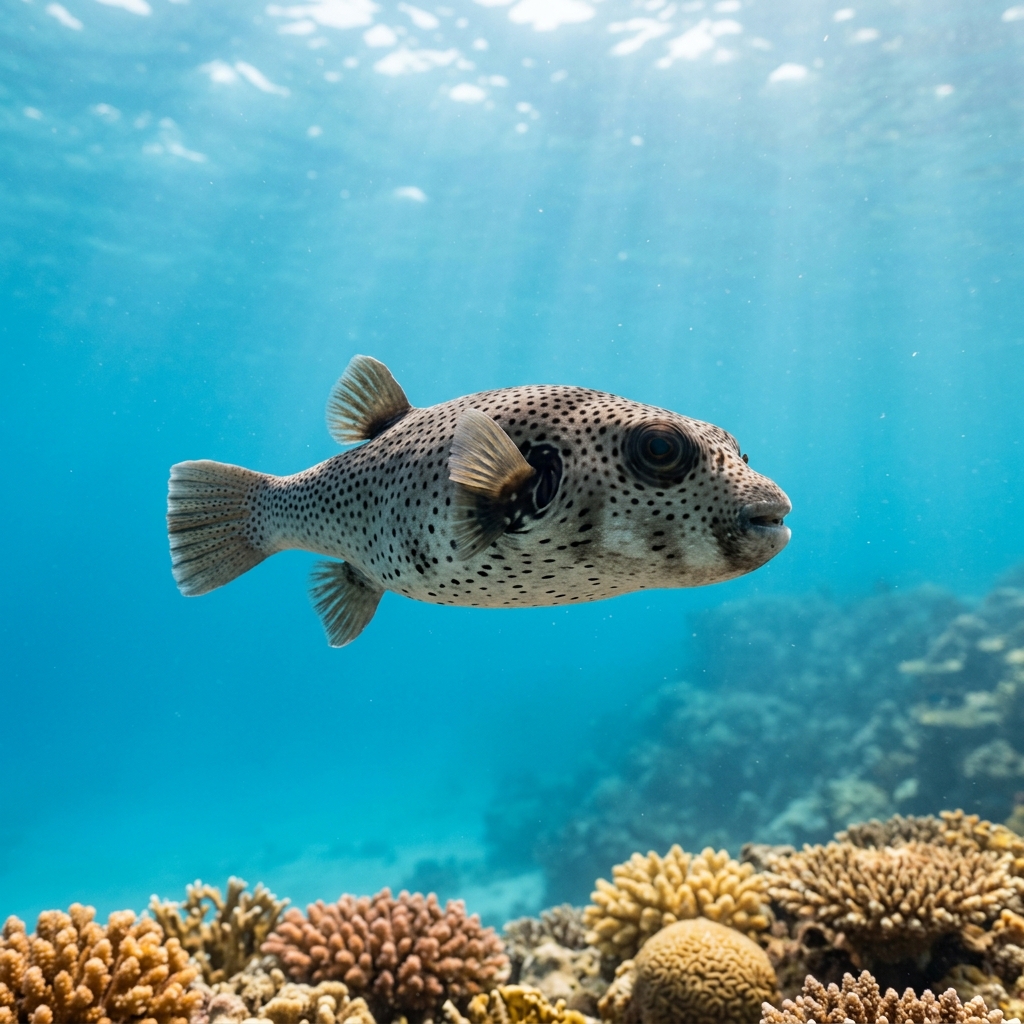
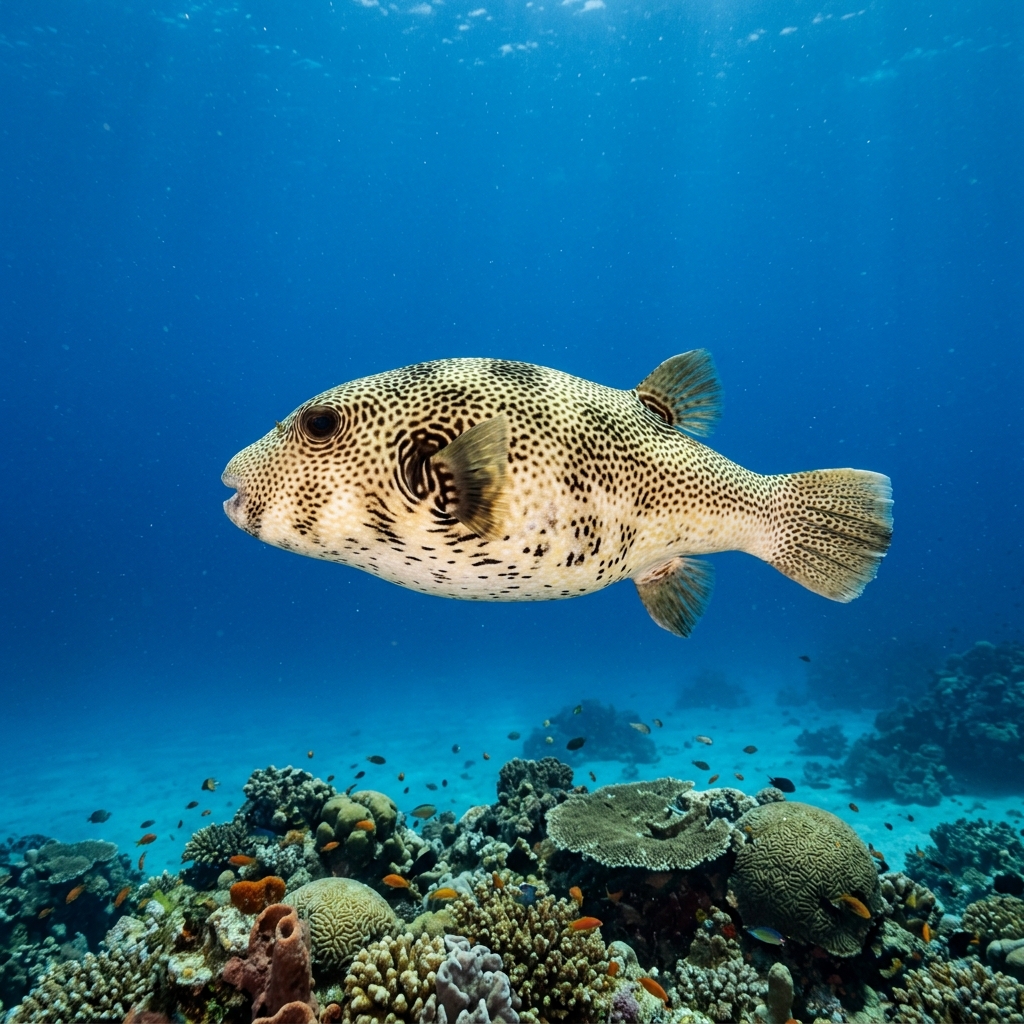
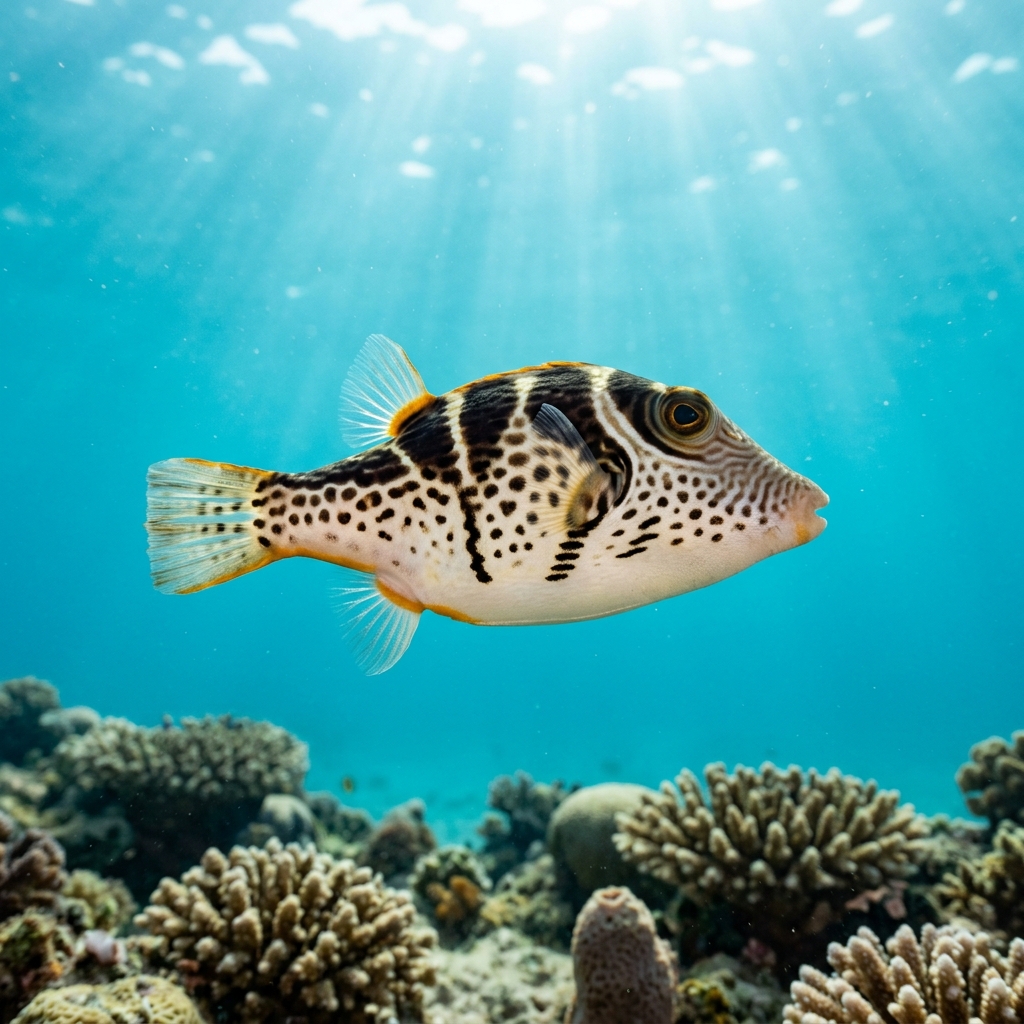
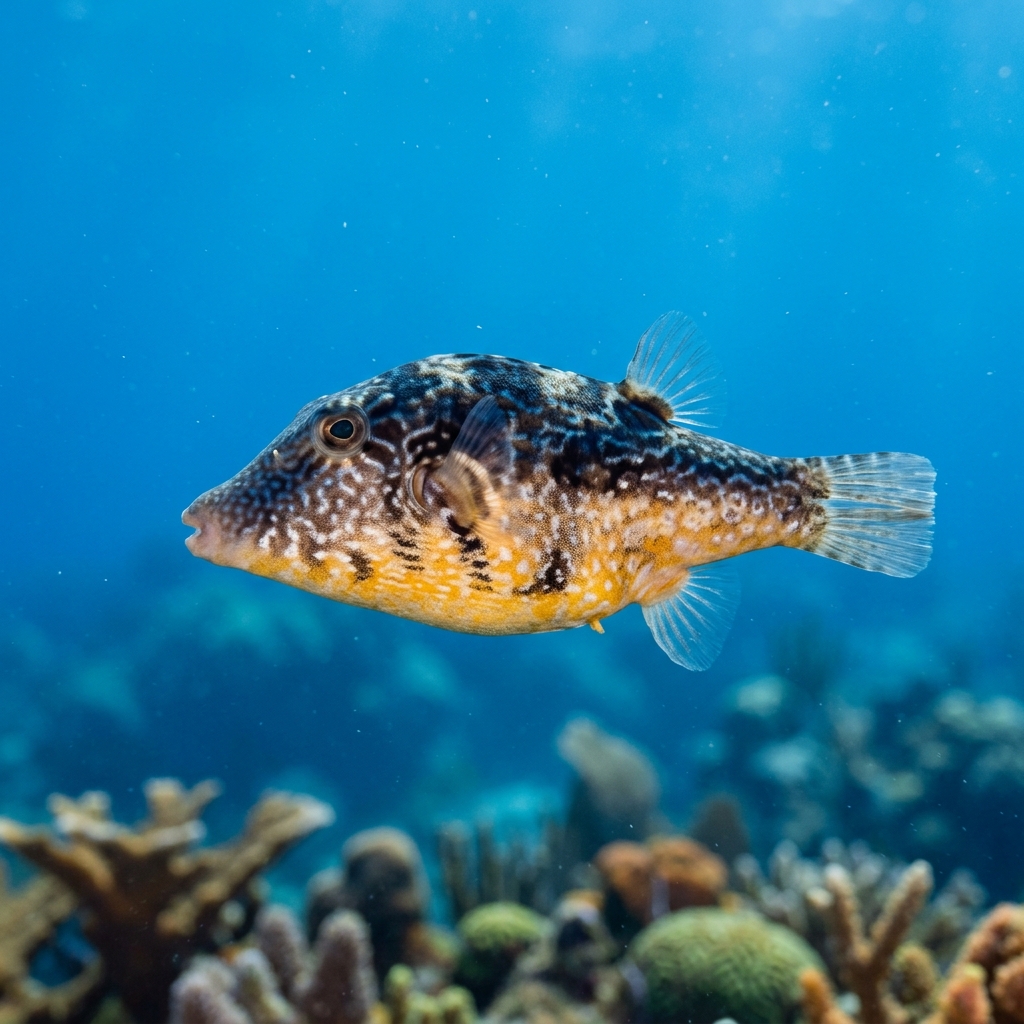
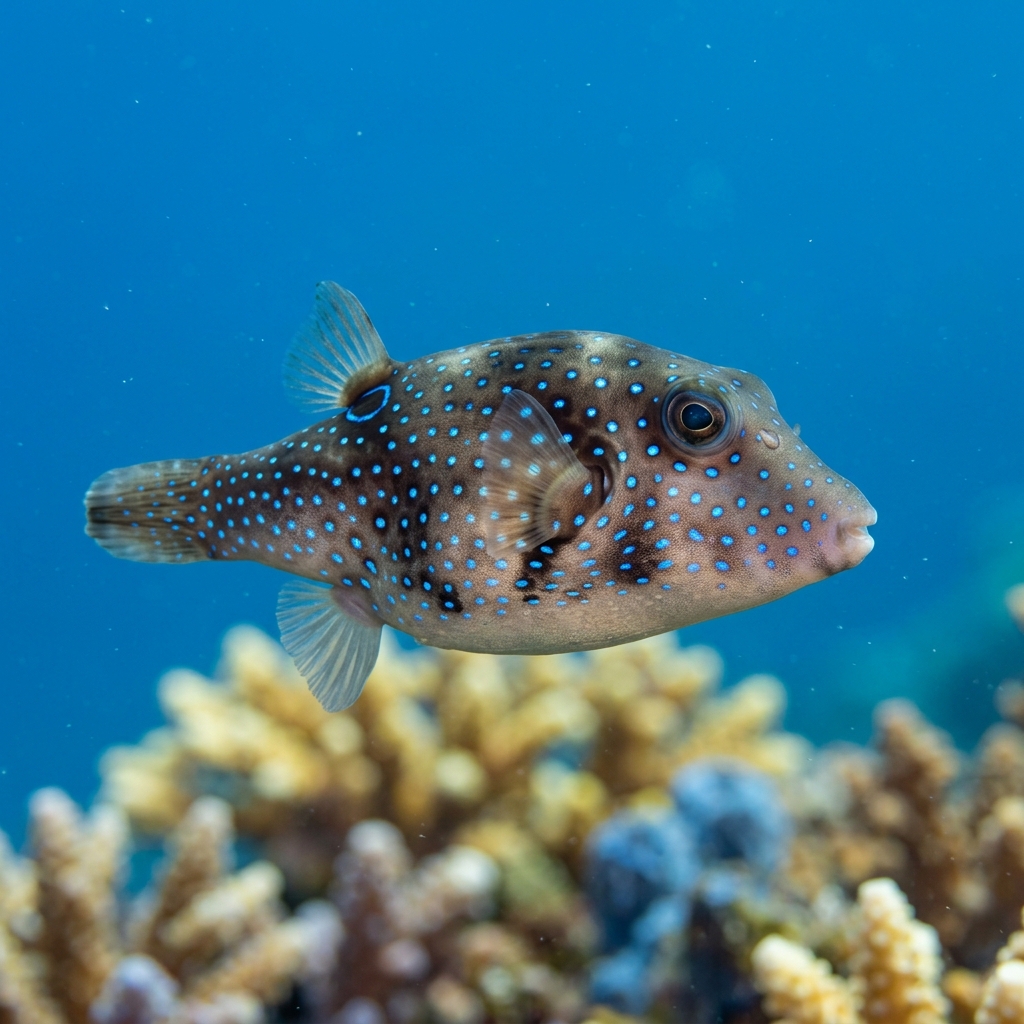
At around 6 cm, this is a very small pufferfish with a rounded, compact body covered in white spots against a warm brown to olive background. Look for the characteristic toby shape: a beak-like mouth, large expressive eyes, and no visible spines at rest. The spots are densely packed and roughly uniform in size across the body and fins, which helps separate it from larger, more boldly marked pufferfish. It rarely strays far from the reef structure, so any small spotted puffer hugging the coral in Hawaii is very likely this species.
Spot one and it will likely dart into a crevice or behind a coral head, but curiosity usually wins and it will reappear shortly, hovering at the entrance to watch you back. They spend the day picking at algae and small invertebrates across the reef surface, rarely moving far from a convenient bolt-hole. Approach slowly and stay low; abrupt movements send them into hiding far more reliably than a patient, still approach does.
Like all tobies (sharp-nosed pufferfish), the Hawaiian Spotted Toby can inflate its body with water when threatened, making itself harder to swallow and wedging itself tightly into crevices. Its skin and organs also contain tetrodotoxin, a potent neurotoxin that deters most predators.
Northern Hemisphere sightings concentrate between May and September, so plan a Hawaii dive trip for the summer months to give yourself the best chance of an encounter.
Reef neighbours a diver could mistake it for. Use the identification notes above to tell them apart.
Almost all logged sightings come from Hawaii, making the Hawaiian Islands by far the best and most reliable place to encounter this species. It has been recorded across a wide spread of Hawaiian dive and snorkel sites, from shallow snorkelling reefs to depths of around 30 m. A single range-model record exists for Argentina, but in practical terms this is a Hawaiian fish.
Mapping where Hawaiian Spotted Toby is logged…
Hawaii is the place. Virtually every logged sighting comes from Hawaiian dive and snorkel sites, and the species is considered endemic to the Hawaiian Islands. It turns up on shallow reefs accessible to snorkellers as well as on deeper dives down to around 30 m.
Sightings in Hawaii cluster between May and September. Visiting during these summer months gives you the best odds of an encounter, though the species lives on Hawaiian reefs year-round.
Look for a tiny, rounded pufferfish around 6 cm long covered in small white spots on a brown background. The compact toby body shape, beak-like mouth, and large eyes are the key features. In Hawaii, any small white-spotted toby is almost certainly this species, as it is endemic to the islands.
They are small fish, typically reaching around 6 cm. That makes them easy to overlook among coral rubble, so scanning slowly and close to the reef surface pays off.
No, they pose no threat to divers. Like all pufferfish, they carry tetrodotoxin in their tissues, but this is only relevant if the fish is handled or eaten, neither of which you should do. Simply observing them is completely safe.
At most sites where it appears in dive logs, it is recorded as uncommon rather than a guaranteed sighting. Patience and slow reef exploration improve your chances. It tends to stay close to coral structure, so methodical searching of crevices and ledges is more productive than open-water swimming.
Site and sighting data is aggregated from diver logs, iNaturalist and GBIF. For taxonomy and conservation status:
Valentini Pufferfish
2,830 sites