Gorgasia hawaiiensis
Endemic to Hawaii, these slender eels poke from sandy burrows in warm 25-26C water; here's where divers actually find them.
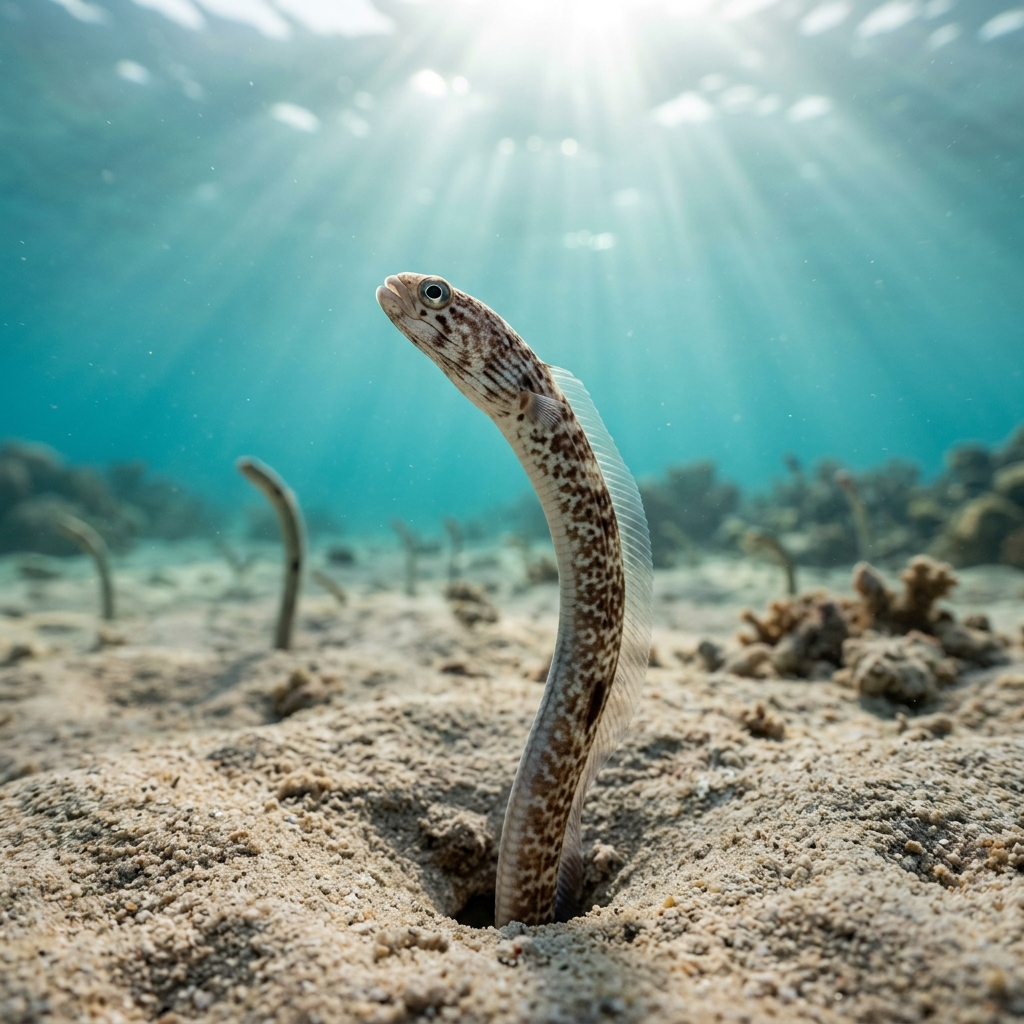
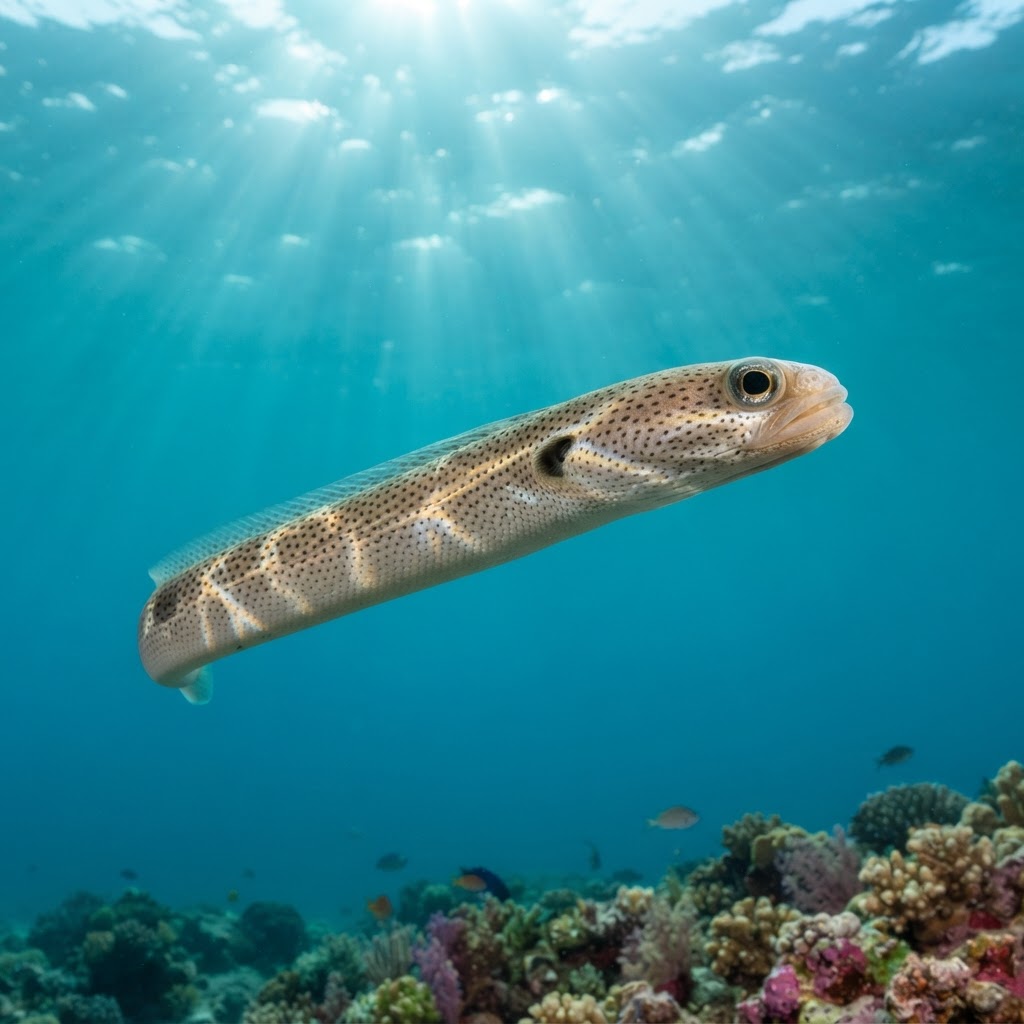
Slender, pencil-thin body reaching around 42 cm, though most of that length stays hidden in a burrow so you typically see just the head and a short stretch of neck swaying above the sand. Colouring is a mottled grey-brown with fine speckling, blending closely with the sandy bottom it lives in. Look for a colony of these narrow shapes all facing into the current, retracting instantly and in sequence as a diver approaches.
Found in loose colonies on open sand or rubble patches, each eel anchored tail-down in its own burrow with its head swaying gently to feed on drifting plankton. They're easily spooked and sink out of sight the moment a diver gets close, so a slow approach and some patience pays off, and colonies logged so far read as uncommon rather than abundant even at known sites.
Garden eels feed by holding position and snapping up passing plankton without ever fully leaving their burrow, which is why a colony looks like a field of swaying stalks rather than free-swimming fish.
Sightings don't show a clear seasonal pattern, and the 25 to 26C water it favours holds fairly steady in Hawaii year-round, so any month is fair game.
Currently logged only in Hawaii, United States, making it a specialty sighting for divers doing sand-flat or rubble dives around the islands. It hasn't turned up elsewhere in diver records, so Hawaii is the place to look.
Mapping where Hawaiian Garden Eel is logged…
All current diver sightings come from Hawaii, United States, on sandy or rubble seafloor patches rather than reef structure. It's an endemic species, so Hawaii is really the only known place to look for it.
There's no detected season in the sighting data, and Hawaiian waters sit around 25 to 26C for this species year-round, so it's a year-round possibility rather than a seasonal target.
Look for a thin, sand-coloured eel body poking upright from a burrow in open sand, swaying with the current. Colonies retract into the sand one by one as divers approach, which is often the clearest ID clue.
They reach about 42 cm in length, though most of that stays buried in the burrow, so above the sand you usually only see a short visible section.
They never fully leave their burrows to feed, instead swaying with the current and snapping up passing plankton while keeping their tail anchored in the sand for a quick retreat.
Site and sighting data is aggregated from diver logs, iNaturalist and GBIF. For taxonomy and conservation status:
Garden Eel
2,448 sites