Labroides phthirophagus
Bright purple and yellow, found only in Hawaii, this little cleaner works reef stations year-round in water from 15.6 to 25C.
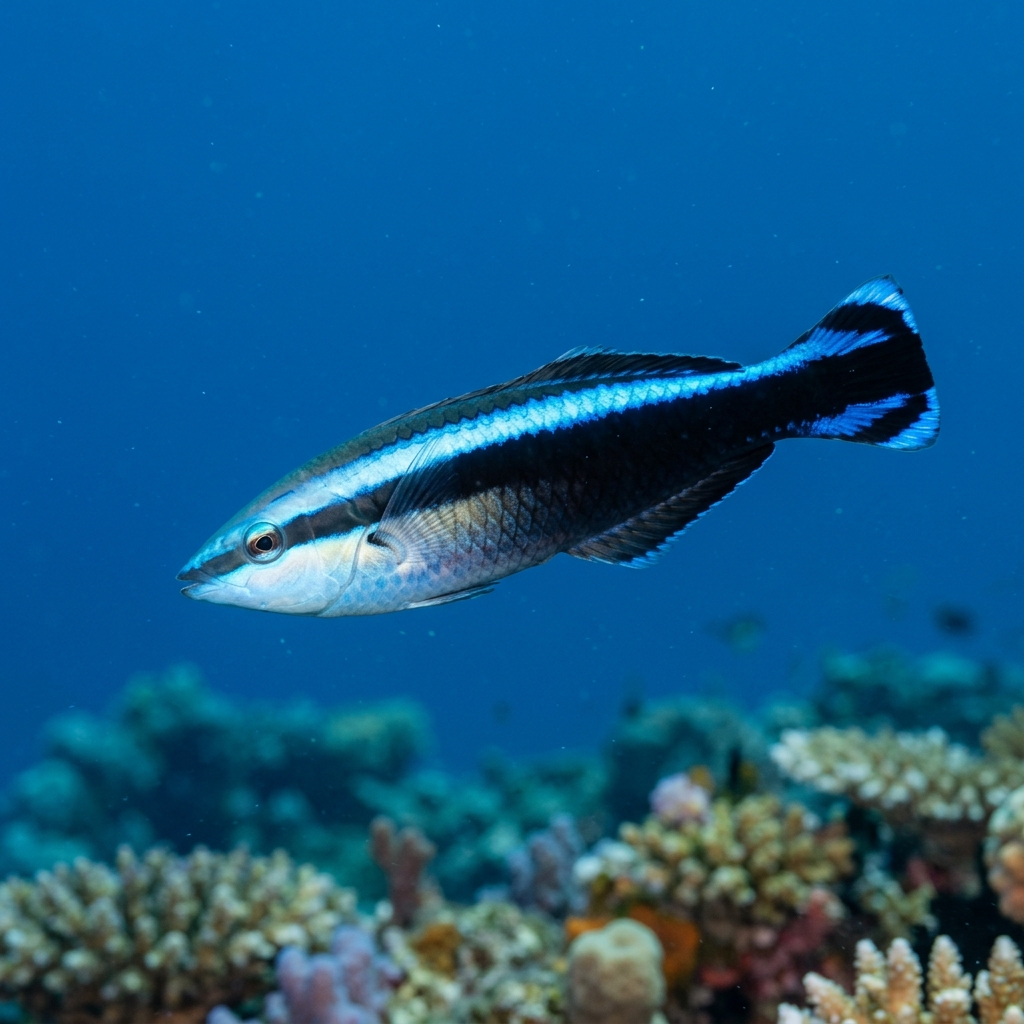
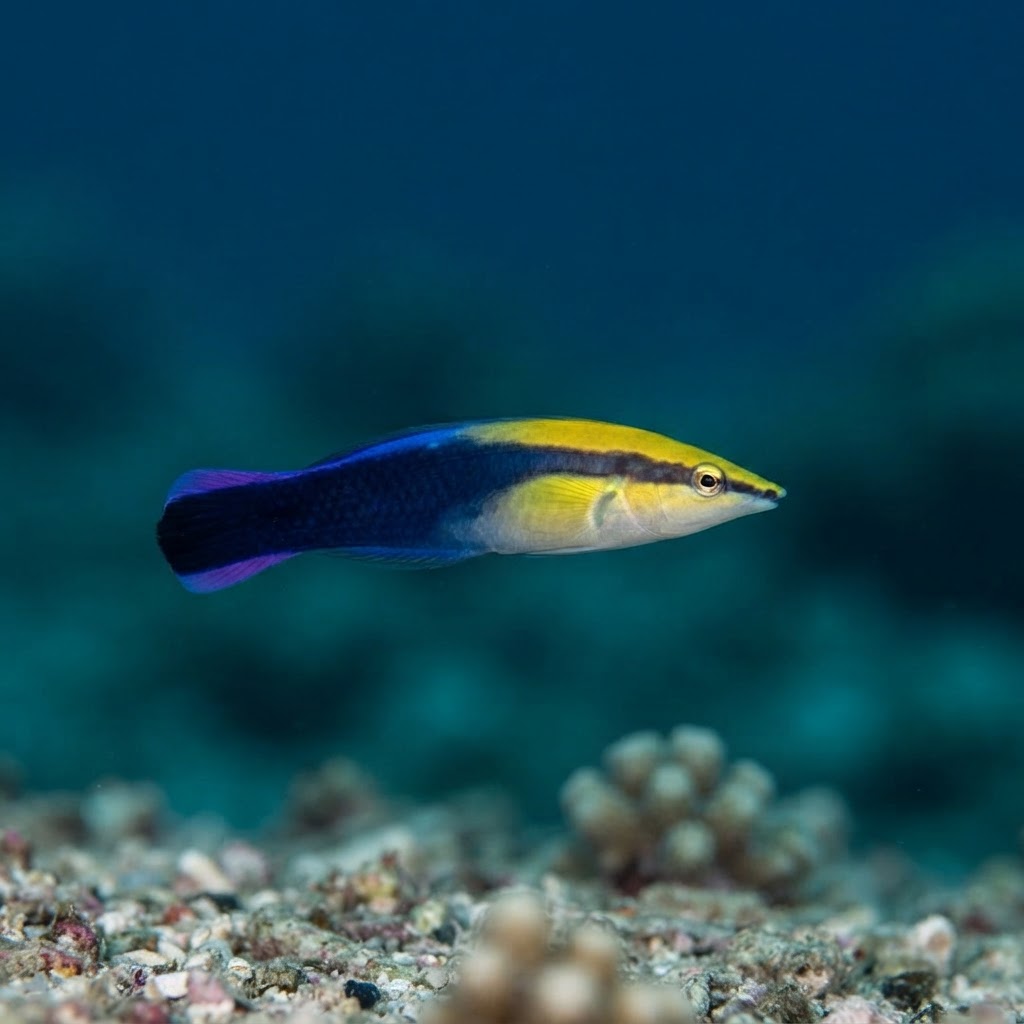
A slim, torpedo-shaped little fish, no more than 8 cm long, with a body split into a yellow head and back half and a deep purple-black lower half along a sharp diagonal line. A dark stripe often runs through the eye, and the tail is rounded and yellow. It swims with a distinctive slow, hovering wiggle rather than a normal wrasse dart, which is often the first thing that gives it away at a cleaning station.
Divers most often find it stationed over a coral head or ledge, hovering and doing its wiggling dance to advertise its cleaning station to passing fish. It picks parasites and dead tissue off the bodies, gills, and even inside the mouths of client fish that queue up and pose for it, and it pays little attention to a diver hanging back to watch. Most sightings describe it as uncommon rather than common or rare, so patience at a good station usually pays off.
It makes its living entirely by cleaning other reef fish, picking parasites and dead skin off clients that actively queue and pose for the service, a real cleaning symbiosis rather than casual feeding.
No clear seasonal pattern shows up in sightings, so it is a year-round fish on Hawaiian reefs. Its comfort range of roughly 15.6 to 25C covers Hawaii's water temperature swing across the year, so there is no season to plan around.
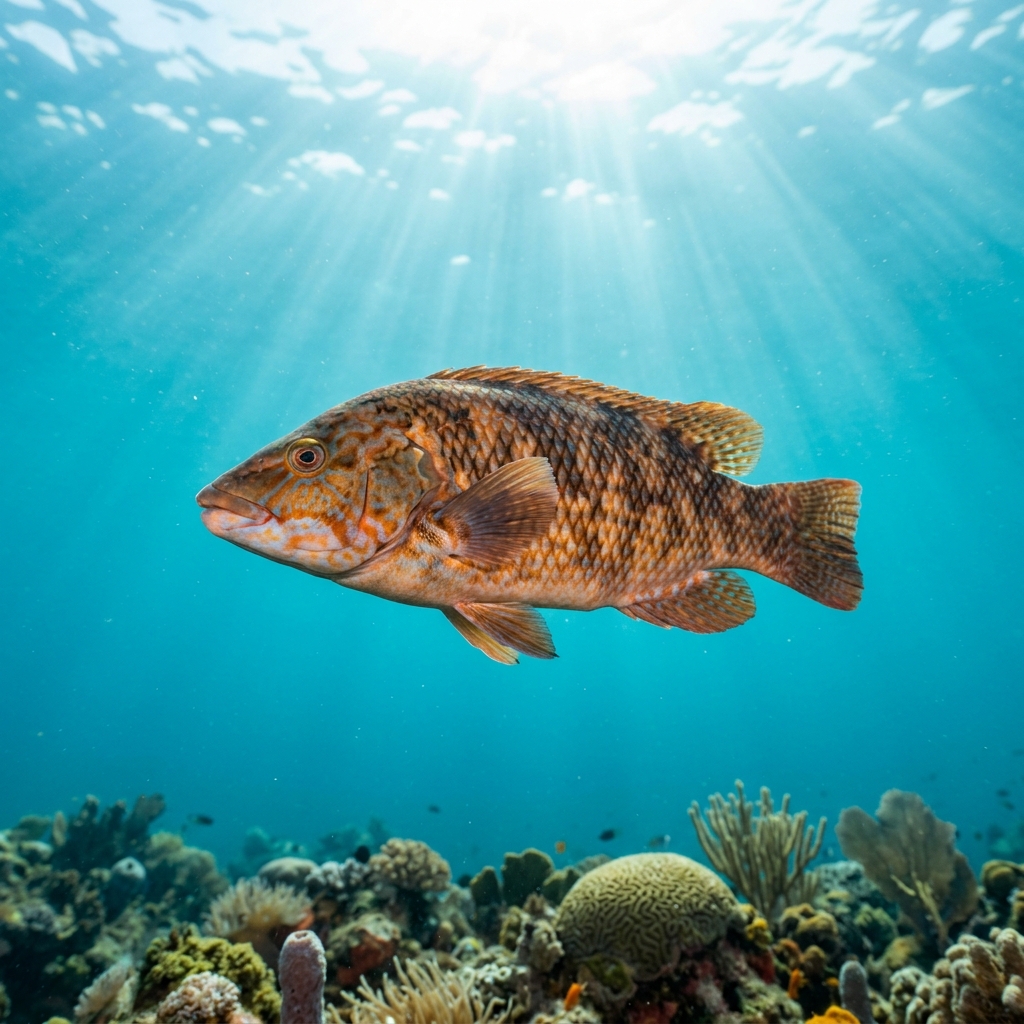
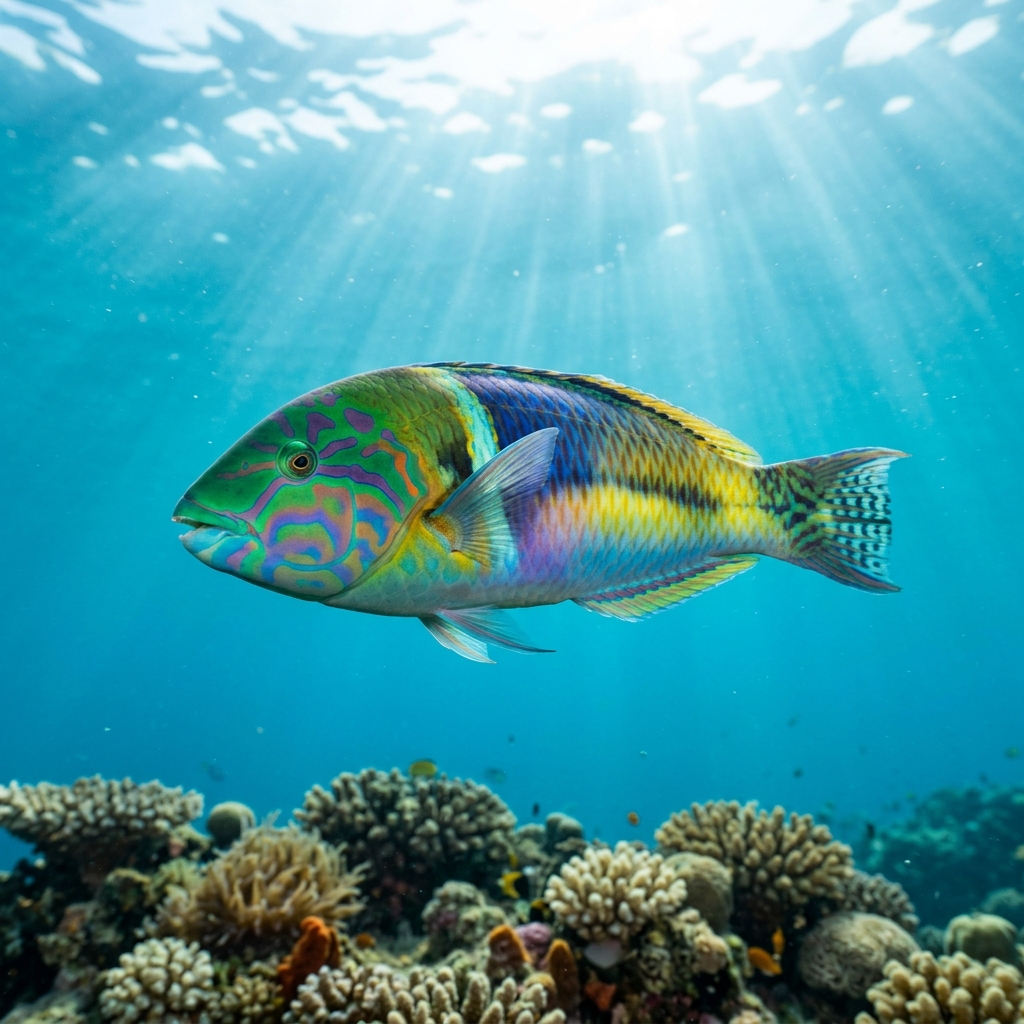
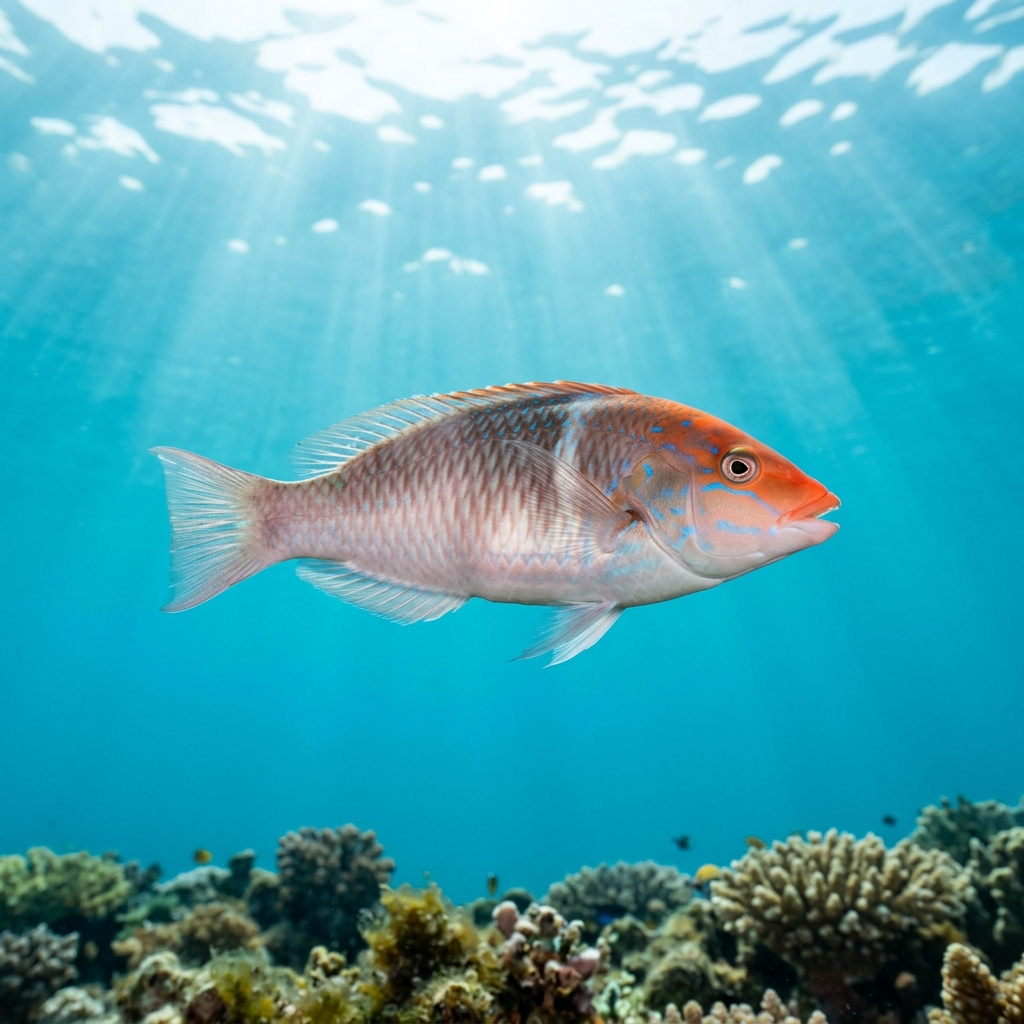
Reef neighbours a diver could mistake it for. Use the identification notes above to tell them apart.
This one is a Hawaii endemic, so your only real option is diving the islands themselves, and it turns up reliably across sites throughout Hawaii, United States. Look for it on reef structure with some relief, coral heads, rock ledges, or current-swept points, where it can run a cleaning station in the open.
Mapping where Hawaiian Cleaner Wrasse is logged…
It is endemic to Hawaii, so the Hawaiian Islands, United States, are effectively the only place to see it. It is a reliable find across many Hawaii dive and snorkel sites rather than concentrated at one hotspot.
There is no strong season in the sighting data, so it is seen year-round on Hawaiian reefs. Water temperatures there stay within its comfort range most of the year.
Look for a tiny fish, under 8 cm, split diagonally into a yellow top half and purple-black bottom half, often with an eye stripe. Its hovering, wiggling swim at a stationary spot on the reef is a strong giveaway.
They stay small, topping out around 8 cm, which is typical for cleaner wrasses in general.
It runs cleaning stations on the reef, where other fish line up to have parasites and dead skin picked off their bodies and even out of their mouths and gills.
Site and sighting data is aggregated from diver logs, iNaturalist and GBIF. For taxonomy and conservation status:
Cleaver Wrasse
2,700 sites