Lissocarcinus laevis
Bright orange-and-white crab often spotted riding sea cucumbers in Bali, Visayas and Maluku year-round in warm reef water.
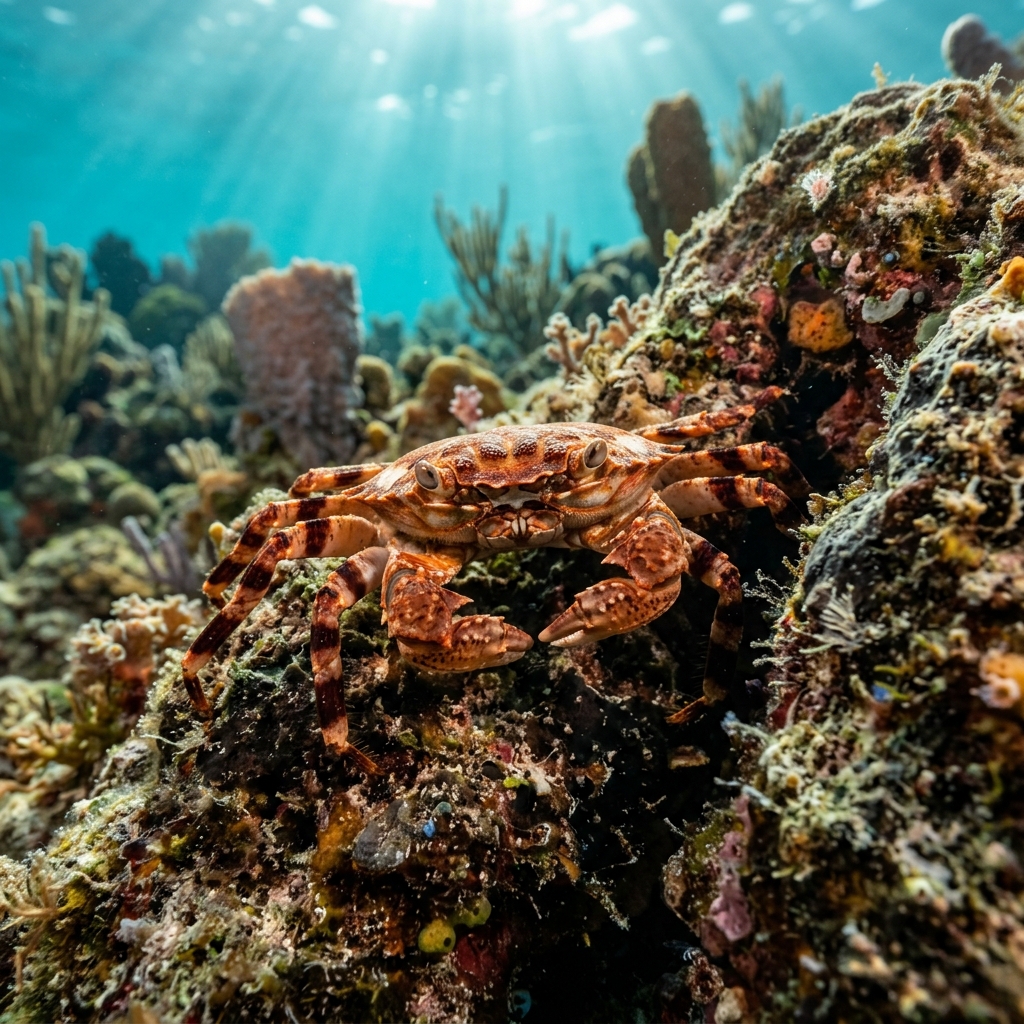
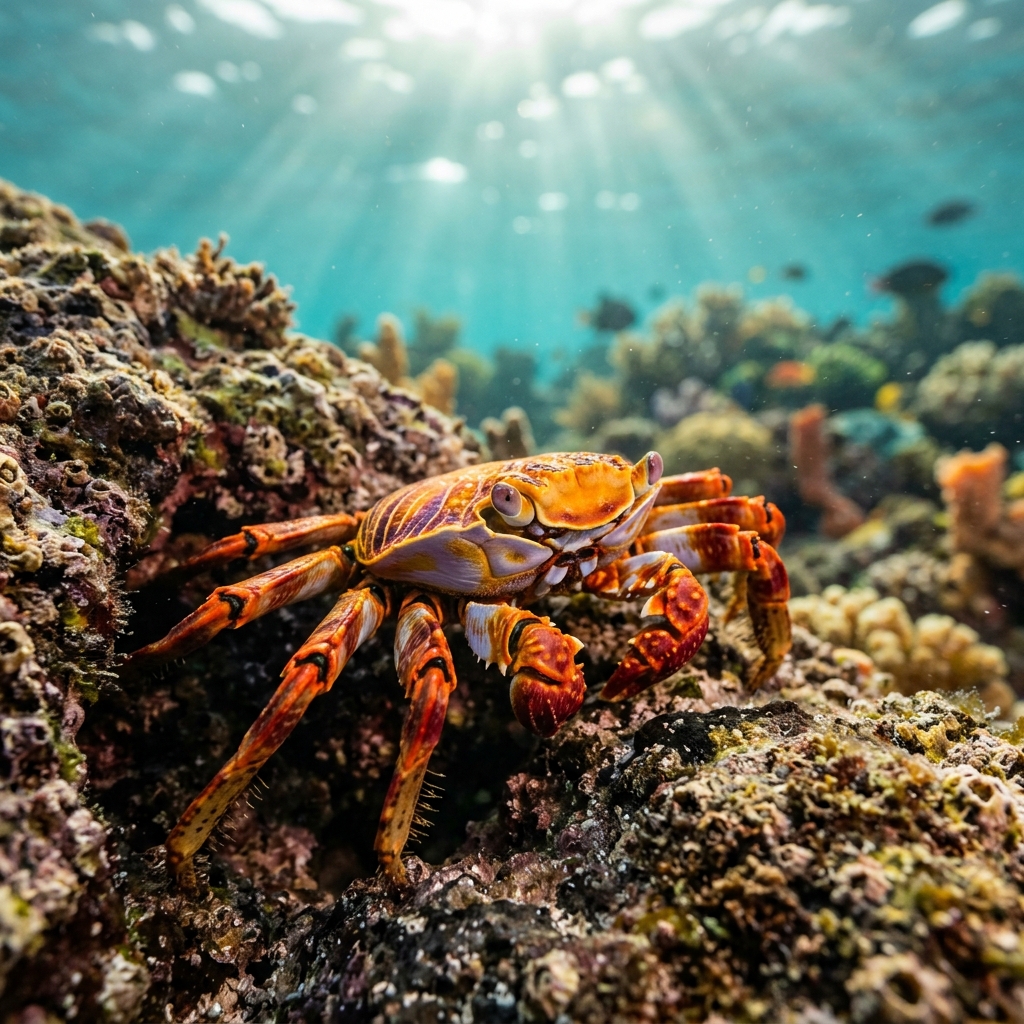
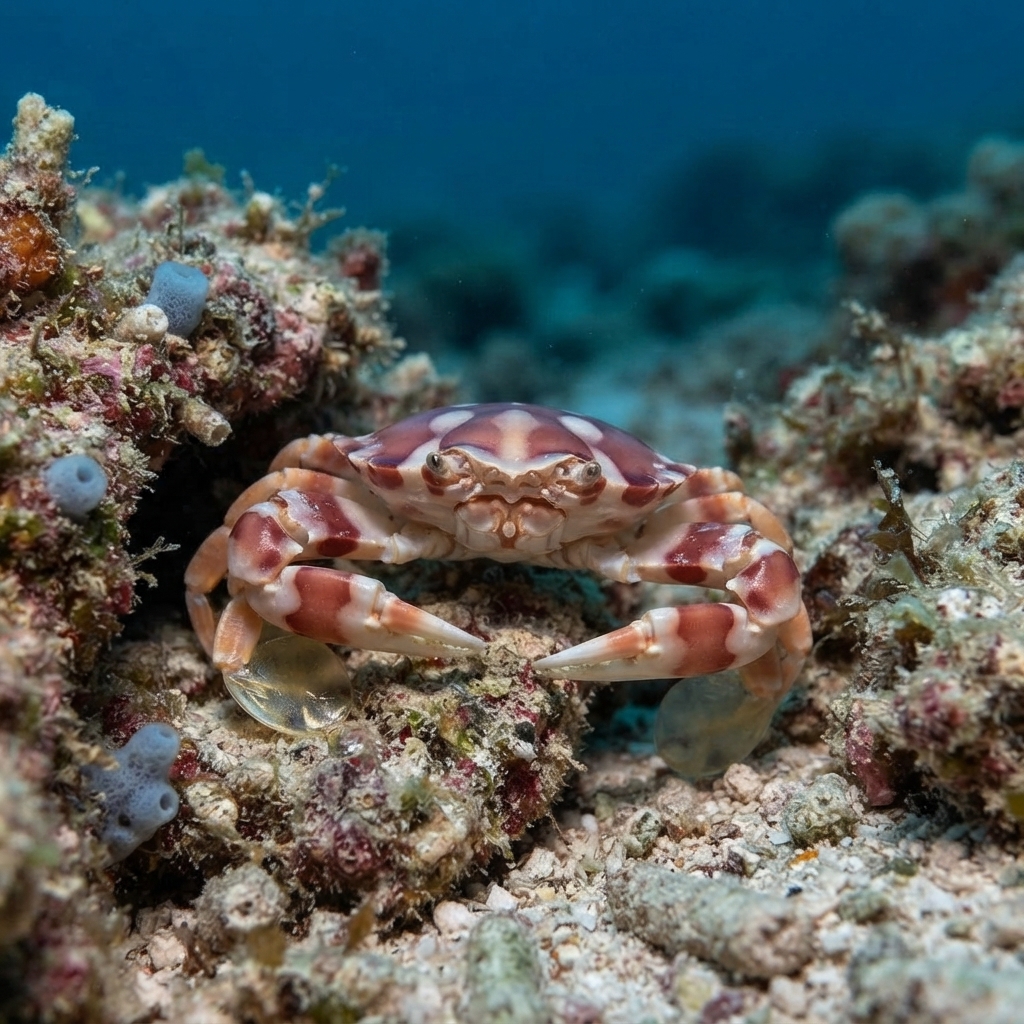
Small crab with a rounded shell splashed in bold orange-and-cream blotches that break up its outline against a host's skin. The flattened last pair of legs are paddle-shaped, a giveaway of the swimming crab family, though it is far more often seen clinging still than swimming. Look for it pressed against the body of a sea cucumber or tucked into a sea anemone, where its pattern reads as camouflage rather than warning colour.
Divers usually find this crab sitting motionless on or beside a sea cucumber, letting the host's bulk and its own blotched pattern do the work of hiding it. It does not scuttle off in a panic when a torch or lens comes close, which makes it a manageable subject once you have actually spotted it. Most sightings come from slow, methodical macro dives over sand or rubble rather than fast drift dives, since the crab is easy to miss unless a guide points out the host.
This crab lives in a loose partnership with sea cucumbers and anemones, using the host as both camouflage and a mobile base rather than building any shelter of its own.
No clear seasonal pattern shows up in the sighting data, and the water temperature it is found in (25.4 to 31.4 C) holds steady year-round across its Indo-Pacific range, so any month is fair game. Treat it as a standing target on any macro-focused dive in the region rather than something to plan a trip around.
Most reliably logged across the Visayas in the Philippines and Bali in Indonesia, with a solid secondary presence in Maluku and Sulawesi and a handful of sites around Luzon. Indonesia and the Philippines between them account for essentially every logged sighting, making this a muck-diving and reef-macro target rather than a species tied to any single famous site.
Mapping where Harlequin Swimming Crab is logged…
It turns up most reliably in the Visayas region of the Philippines and around Bali in Indonesia, with further sightings in Maluku, Sulawesi and Luzon. Look for it on muck and macro dives rather than open-water reef sites.
There is no strong season in the sighting data, and it lives in consistently warm water between roughly 25 and 31 C year-round, so it can be found on any month's dive in the Indo-Pacific.
Check for a small crab with an orange-and-cream blotched shell, usually sitting still on or right next to a sea cucumber or anemone. The paddle-shaped rear legs mark it as a swimming crab, but it is rarely seen actually swimming.
Exact size figures are not well documented for this species, but it sits firmly in the small macro-subject category, easily overlooked without a guide pointing it out against its host.
It spends much of its life riding on sea cucumbers or sheltering in anemones, relying on its host's body and its own blotchy pattern for cover instead of building any shelter of its own.
No, it poses no threat to divers. It is a small, host-associated crab that stays put rather than reacting defensively when approached.
Site and sighting data is aggregated from diver logs, iNaturalist and GBIF. For taxonomy and conservation status:
European Green Crab
2,469 sites