Serranus tigrinus
Spot the Harlequin Bass on Caribbean reefs from Florida to Roatán. A reef ambush predator most common in warm, shallow water year-round.
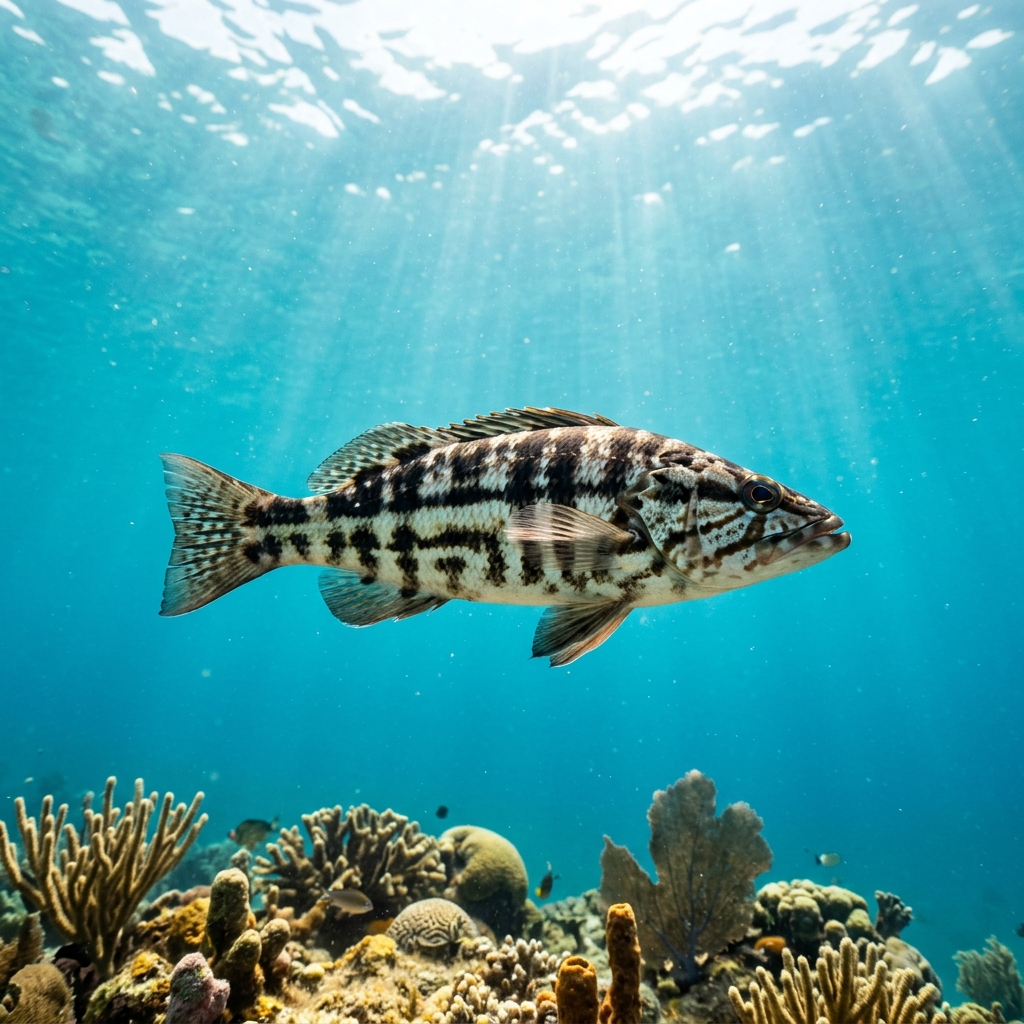
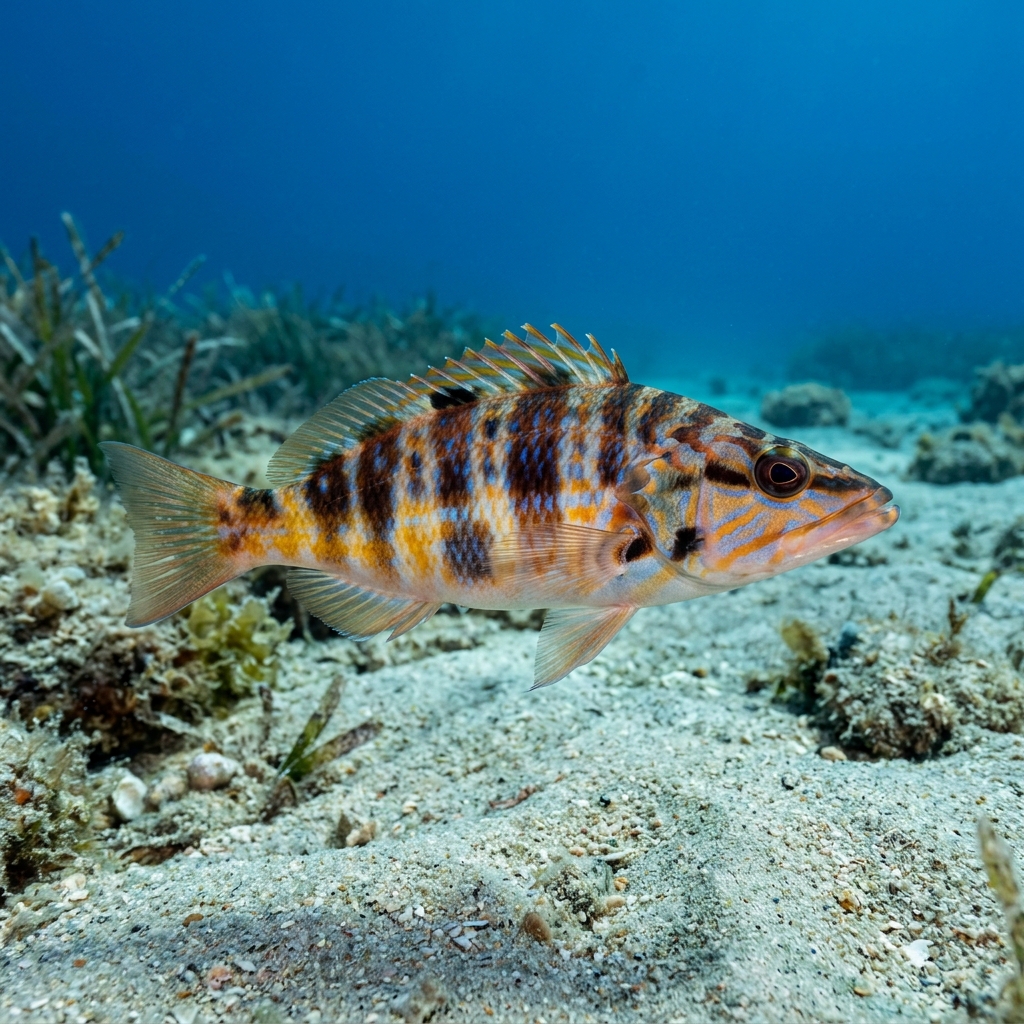
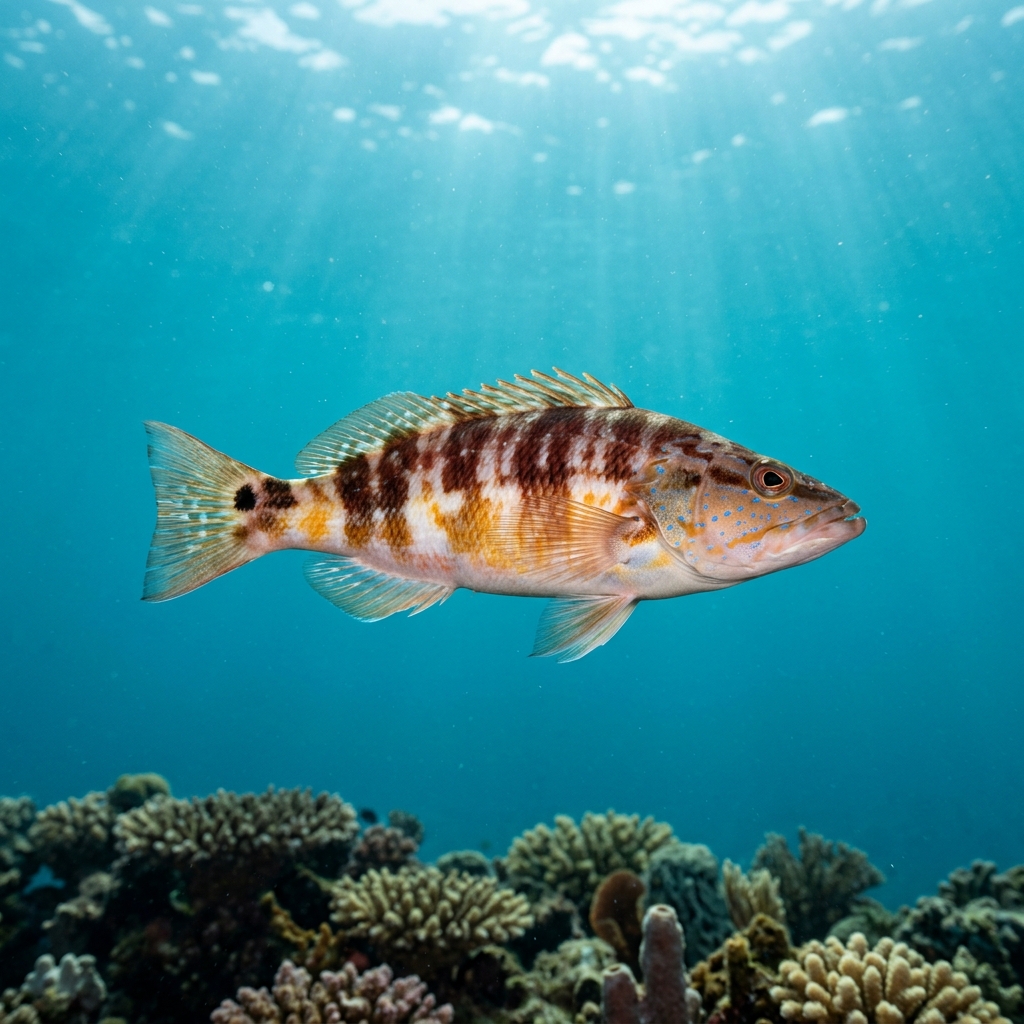
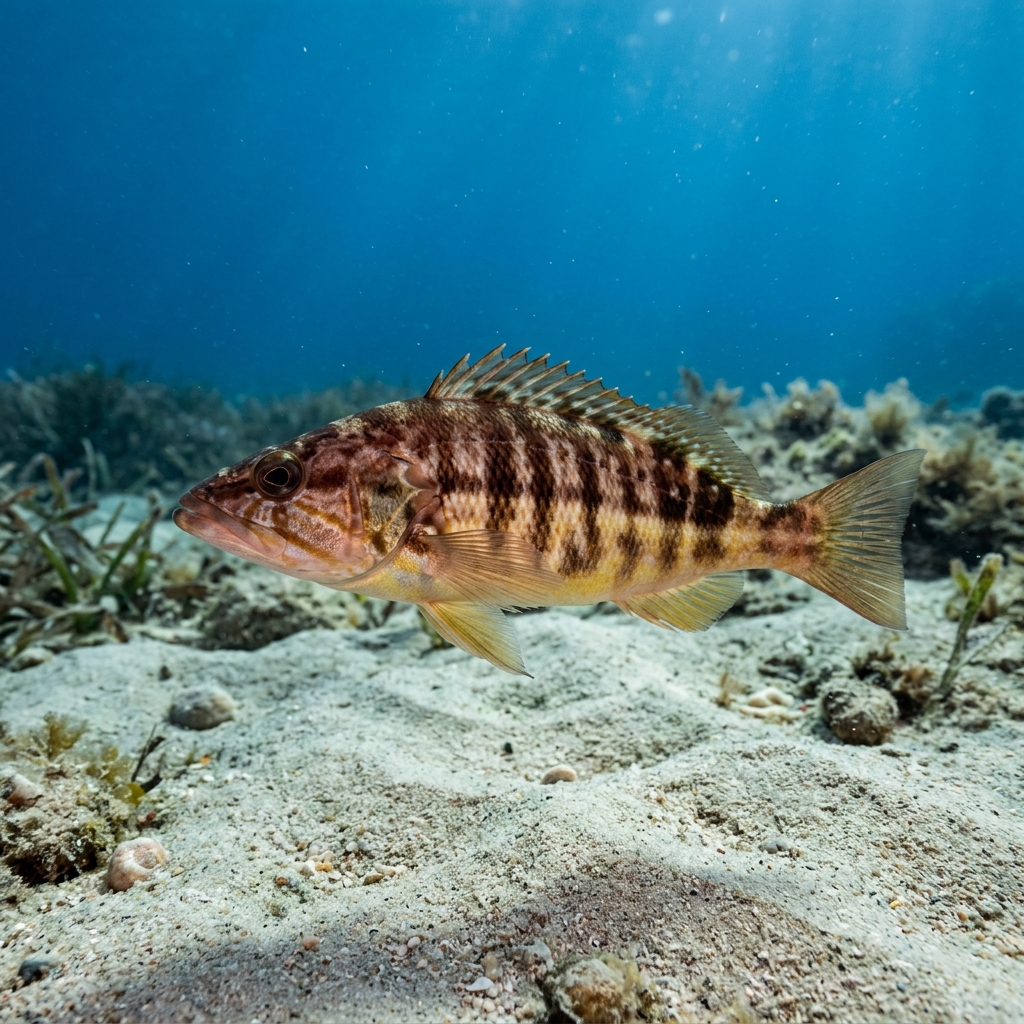
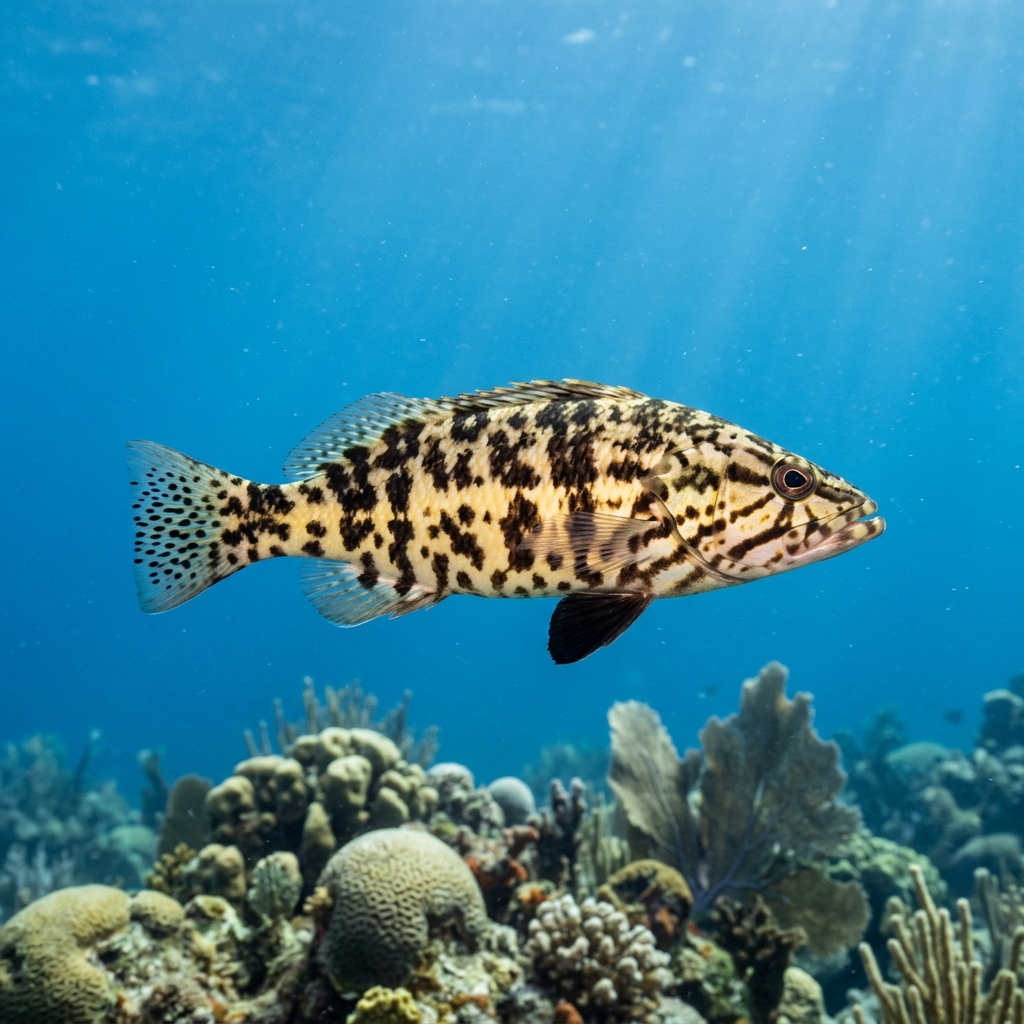
Bold, contrasting black and white vertical bars and blotches on a pale yellow-cream body make this small bass hard to mistake once you know it. At around 20 cm, it sits roughly hand-sized, with an elongated grouper-style body and a large mouth suited for ambushing prey. Look for the distinctive dark stripe running through the eye, a key mark that stands out even when the fish is tucked into shadow. The patterning is consistent across adults, making it one of the more reliably identifiable small serranids on Caribbean reefs.
Expect to find one hovering low near a coral head or perched just inside a crevice, scanning for small invertebrates to ambush with a quick dart. They tend to keep their distance when divers approach, so slow, calm movement and a bit of patience from a metre or two away gives the best view. Daytime dives are the call here, as they hunt actively in daylight rather than shifting to nocturnal patterns.
Like many serranids, harlequin bass are simultaneous hermaphrodites, meaning each individual carries both male and female reproductive tissue and can function as either sex depending on the social situation at hand.
Present year-round on Caribbean and western Atlantic reefs, with no concentrated seasonal peak in the data. Comfortable within a narrow warm-water band of around 25 to 28 °C, it stays active on tropical reefs in any month, so there is no bad season to look for one.
Most commonly logged across the wider Caribbean, with the strongest sighting records in Florida, the Yucatán Peninsula, Roatán in Honduras, and Grand Cayman. Bonaire, the Bahamas, Cuba, and the US Virgin Islands also deliver consistent records, meaning almost any reef dive in the tropical western Atlantic gives you a realistic shot. Klein Bonaire and the reefs off Grenada Island are particularly well-represented in diver observations.
Mapping where Harlequin Bass is logged…
They are logged across a wide spread of Caribbean and western Atlantic reef sites. Florida, the Yucatán Peninsula, Roatán, Grand Cayman, Bonaire, the Bahamas, and the US Virgin Islands all have strong records. Essentially any shallow to mid-depth reef dive in the tropical western Atlantic gives you a chance.
They are present year-round with no defined peak season. The species sits within a warm-water comfort zone of roughly 25 to 28 °C, which describes most Caribbean reef conditions throughout the year. Daytime dives are more productive than night dives.
Look for bold black and white irregular bars across a pale yellow body, a large mouth, and a clear dark stripe through the eye. At around 20 cm it is a small fish, but the tiger-like patterning is distinctive among Caribbean reef fish and stands out even in shaded crevices.
Typical adults reach around 20 cm, roughly the length of a hand. They are small for a serranid, which can make them easy to overlook against a busy reef backdrop. The striking markings help compensate for the modest size.
No. They pose no threat to divers. They are shy rather than bold, and their teeth are sized for small invertebrates rather than defence against large animals. Treat them calmly and they will usually hold their position long enough for a good look.
Harlequin bass are simultaneous hermaphrodites, meaning a single individual possesses both male and female reproductive organs and can switch between roles depending on the social context. This is a trait shared across many serranids but still unusual among vertebrates generally.
Site and sighting data is aggregated from diver logs, iNaturalist and GBIF. For taxonomy and conservation status:
Blacktip Grouper
2,726 sites