Halgerda batangas
Spot Batangas Halgerda in the Visayas and Bali in warm 27-29 °C water. ID tips, best months, and top dive regions across the Coral Triangle.
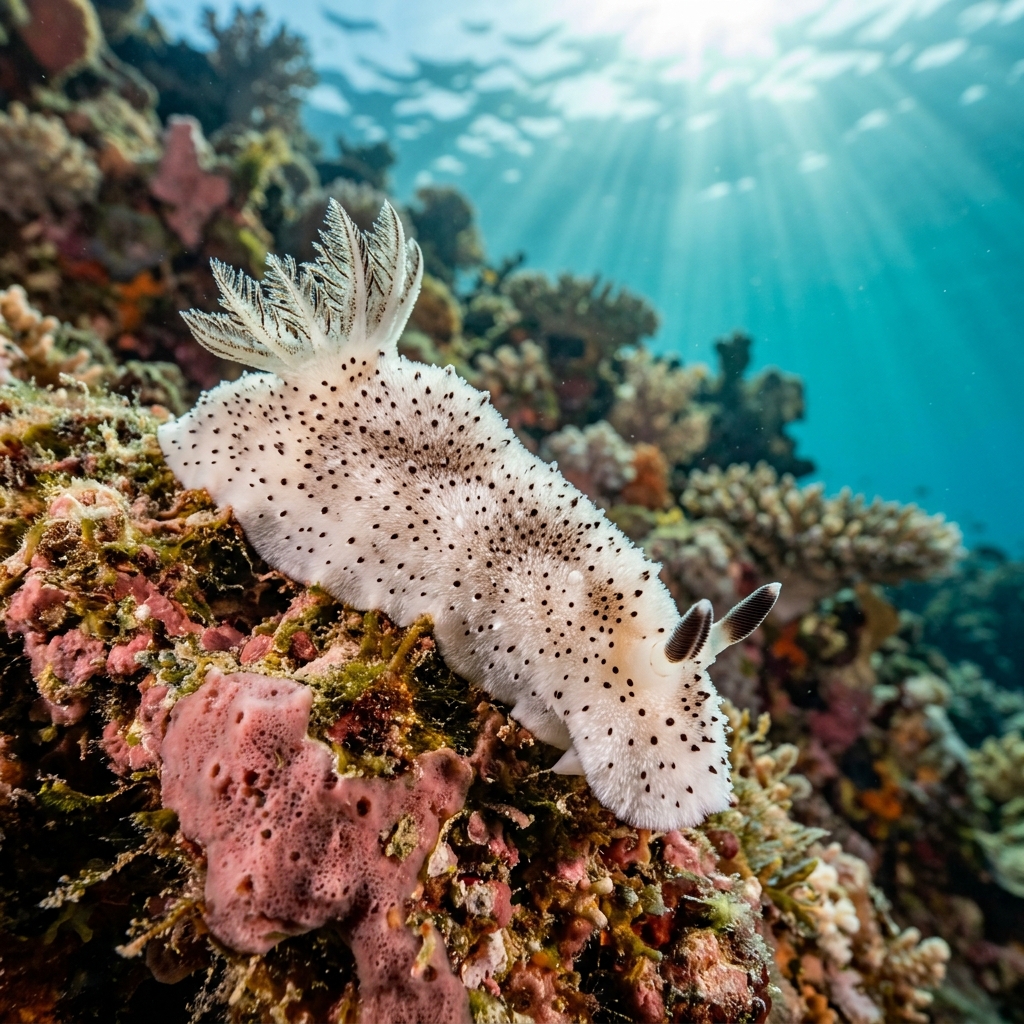
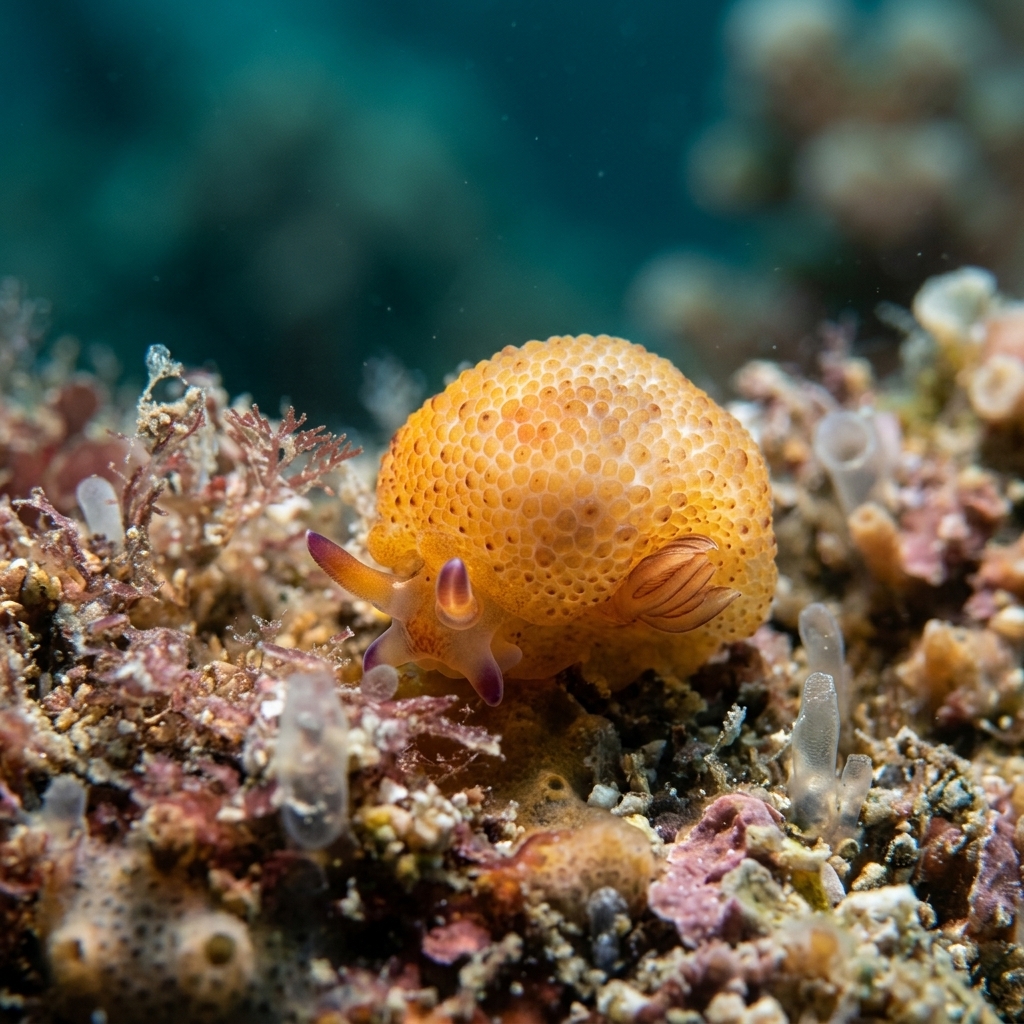
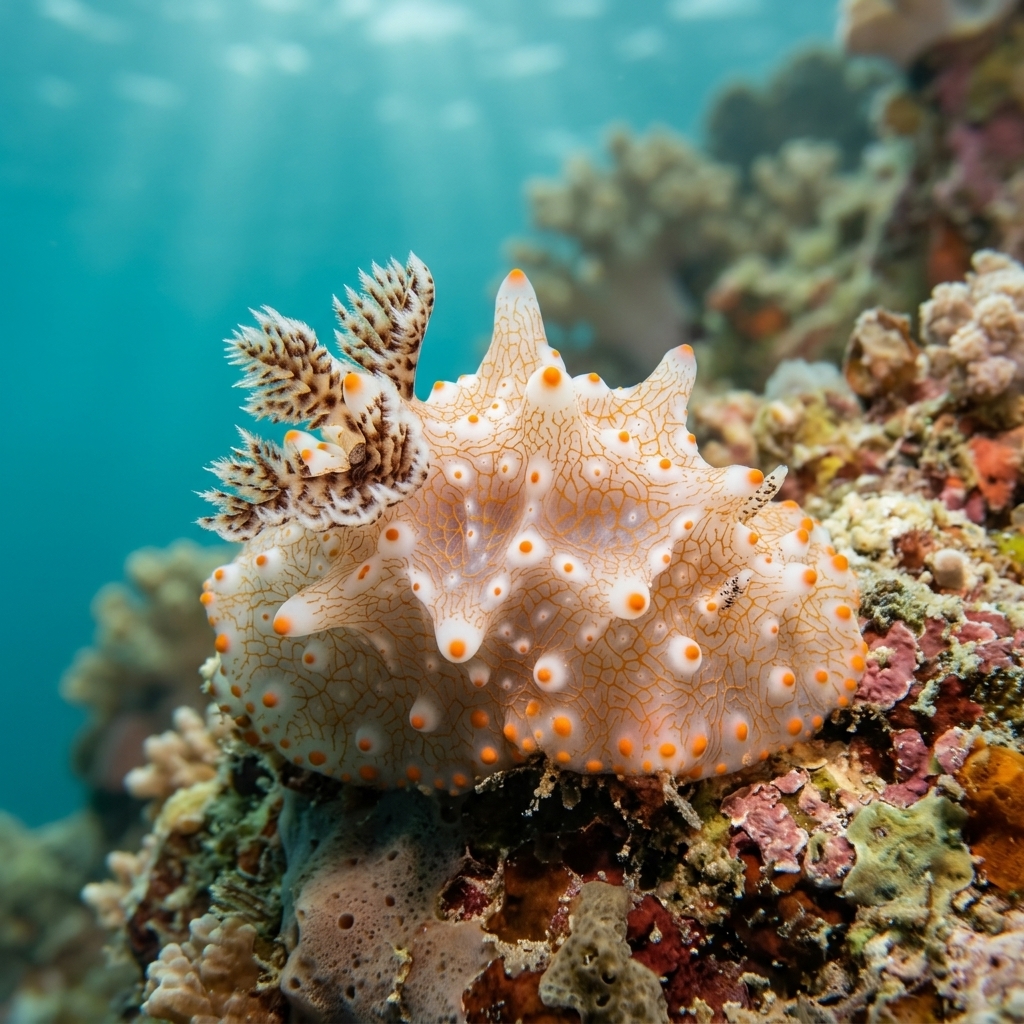
A small, flattish dorid nudibranch with a pale cream to white body covered in a network of raised orange or orange-brown ridges forming a reticulated (net-like) pattern across the mantle. The gill plumes and rhinophores (chemical-sensing head horns) are typically orange-tipped. That ridge network is the key feature to lock onto underwater, no other Halgerda in the region has quite the same colouration and pattern density.
Like most dorids, it crawls slowly across hard substrate and rubble, browsing for sponges, look low on the reef where encrusting growth is dense. It tends to ignore divers completely, making close-focus photography straightforward as long as you approach without disturbing the substrate around it. Sightings are typically solitary.
Halgerda species are known to feed specifically on sponges, and the elaborate ridge patterning on their mantle is thought to be a form of aposematic (warning) colouration, signalling to predators that the animal stores noxious compounds from its diet.
Northern Hemisphere sightings concentrate in January through June, making the early part of the year the most productive time to search for this species in the Philippines and the rest of the Coral Triangle. Observed water temperatures run 27-29 °C, consistent with tropical conditions that persist year-round at these sites, so encounters outside peak months are possible.
Reef neighbours a diver could mistake it for. Use the identification notes above to tell them apart.
Most sightings come from the Philippines, particularly the Central, Eastern, and Northern Visayas and Luzon, these regions account for the largest share of logged encounters. The Coral Triangle extends the range into Indonesia, with solid records from Sulawesi and Bali, and Malaysia's Sipadan and East Sabah coast is another reliable area. Smaller numbers of observations come from Timor-Leste, Taiwan, and Australia.
Mapping where Batangas Halgerda is logged…
The Philippines, especially the Central and Eastern Visayas, is by far the most productive area, followed by Sulawesi and Bali in Indonesia, and Sipadan in East Sabah, Malaysia. Smaller numbers of sightings come from Timor-Leste, Taiwan, and Australia.
January to June is when sightings concentrate in the northern hemisphere part of its range, particularly across the Philippines. Water temperatures stay warm year-round at 27-29 °C, so encounters are possible at other times too, just less frequently reported.
Look for the raised, net-like (reticulated) ridge pattern in orange or orange-brown on a pale cream body. The orange-tipped gill plumes and rhinophores are a secondary clue. That ridge network is distinctive enough that, once you have seen one, it stands out from the surrounding rubble immediately.
It is most typically logged as uncommon, meaning you will not find one on every dive even at sites with records. A smaller number of sites rate it as rare, and a handful consider it common. Muck and rubble dives with encrusting sponges give you the best odds.
Not at all. This is a slow-moving, small nudibranch that poses no risk to divers. Like many nudibranchs it may store defensive chemicals from its sponge diet, but that is a deterrent to predators, not people.
Site and sighting data is aggregated from diver logs, iNaturalist and GBIF. For taxonomy and conservation status:
Light-spotted Aegires
3,168 sites