Medialuna californiensis
Silver-grey reef fish with a dark tail, most reliably logged around California's kelp forests year-round in 12.5 to 22.3 C water.
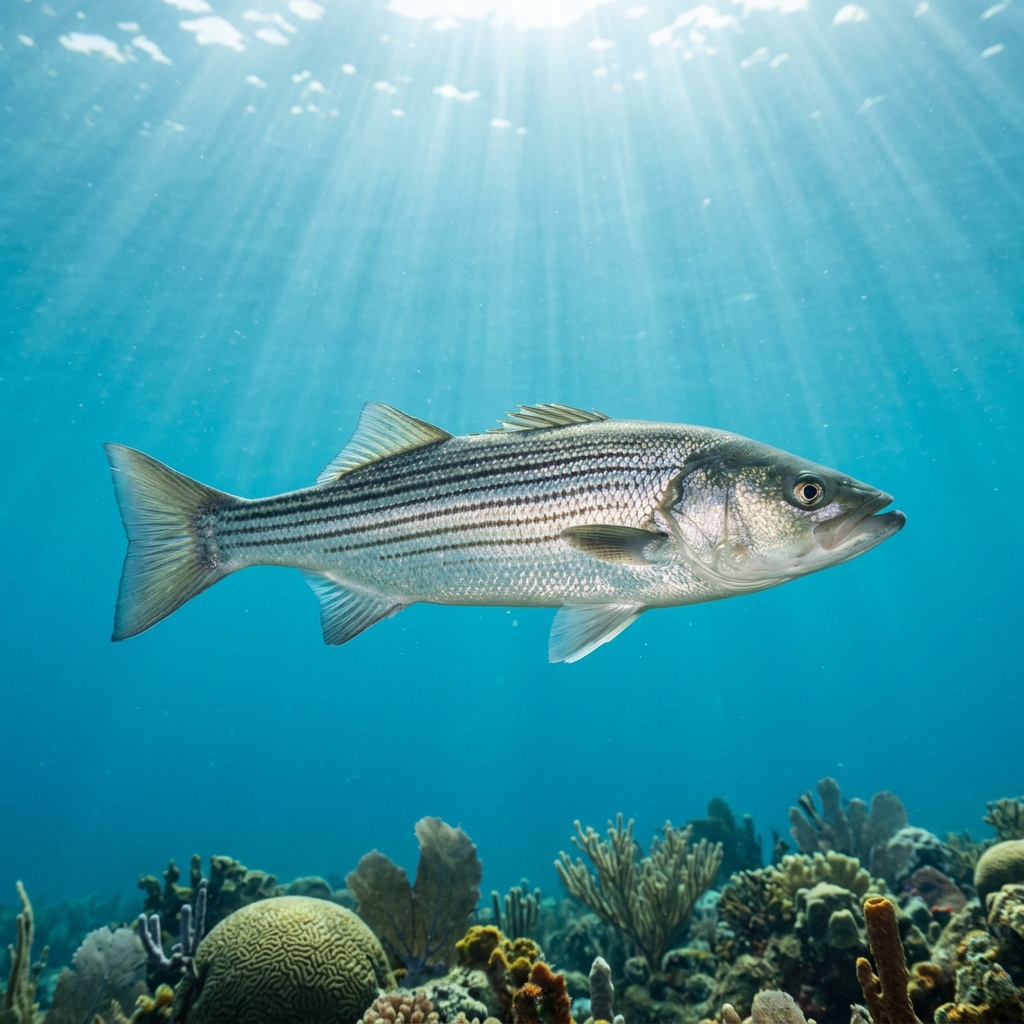
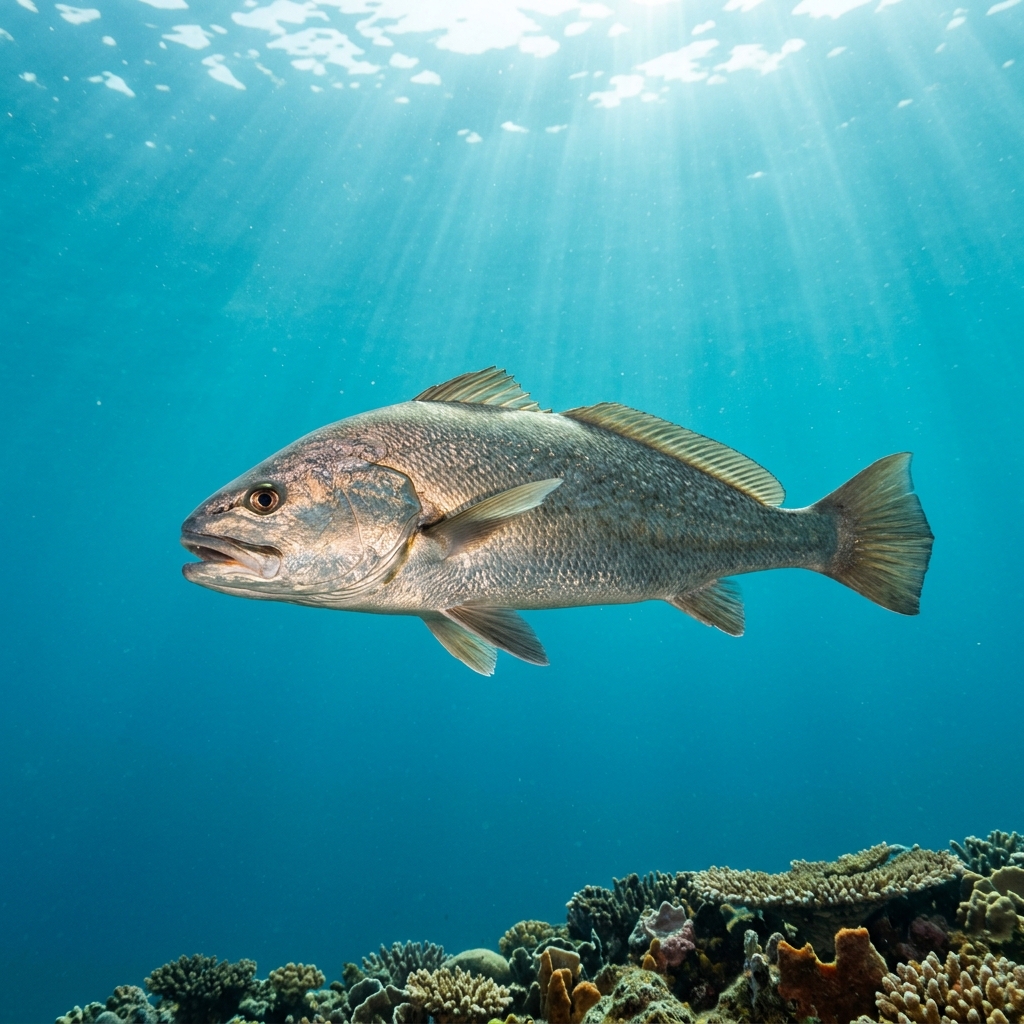
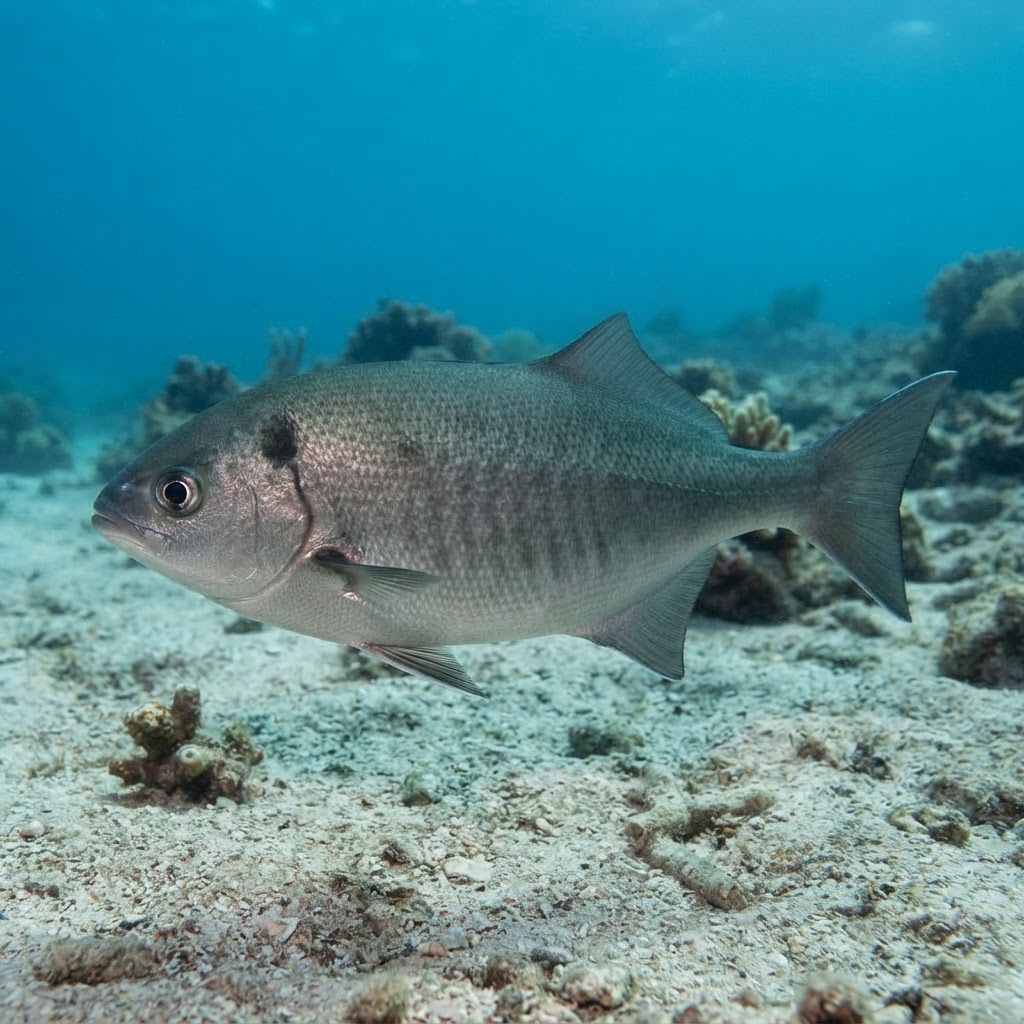
Deep, oval body in slate grey to blue-grey, often with a faint yellowish wash on the fins, and a dark, sharply forked tail that gives it a crescent-moon silhouette when it flares. Grows to around 33 cm, usually seen hovering mid-water over rock or kelp rather than hugging the bottom. No strong stripes or spots to key on, so the plain body plus that dark tail is the main tell against other temperate reef fish sharing the same water.
Typically seen drifting in loose schools mid-water over rocky reef or kelp, grazing on algae and picking at whatever drifts by rather than chasing prey. Generally unbothered by divers, holding position or slowly circling rather than bolting, which makes it an easy fish to watch at length on a kelp dive. Most sightings are during the day at open reef sections rather than tucked into cracks or caves.
Despite the omnivore label, a large part of its diet is drifting algae and kelp fragments, making it one of the more herbivore-leaning fish you'll see cruising a California kelp forest.
Sightings show no detectable seasonal pattern, so treat it as a year-round resident wherever it occurs. Its recorded temperature range of 12.5 to 22.3 C spans California's cooler winter upwelling and warmer summer conditions, which fits with divers finding it across the calendar rather than in a narrow window.
Most consistently logged along the California coast, particularly in Southern and Central California kelp forests, with a smaller but steady presence in Baja California, Mexico. Divers most often report it as an uncommon to common sighting at rocky reef and kelp sites rather than sand or wreck dives.
Mapping where Halfmoon is logged…
California's kelp forest and rocky reef sites are the most reliable spot, especially in Southern and Central California, with Baja California, Mexico also holding steady numbers.
There's no clear seasonal pattern in sightings, so they're logged year-round. Their recorded temperature range of 12.5 to 22.3 C covers most of California's seasonal swing.
Look for a deep-bodied, grey to blue-grey fish around 30 cm hovering mid-water over reef or kelp, with a dark, forked tail that stands out against the plainer body. There are no bold stripes or spots, so the tail shape is the key giveaway.
They typically reach about 33 cm, making them a medium-sized presence on a kelp forest dive, easy to spot in loose schools without being a stand-out giant.
No, they pose no danger to divers. They're generally calm around people and will hold position or slowly circle rather than react defensively.
Site and sighting data is aggregated from diver logs, iNaturalist and GBIF. For taxonomy and conservation status:
Meagre
1,159 sites