Pycnochromis iomelas
Two-tone reef fish split black and white, most reliably logged around French Polynesia's Society Islands in warm 25-28C water.
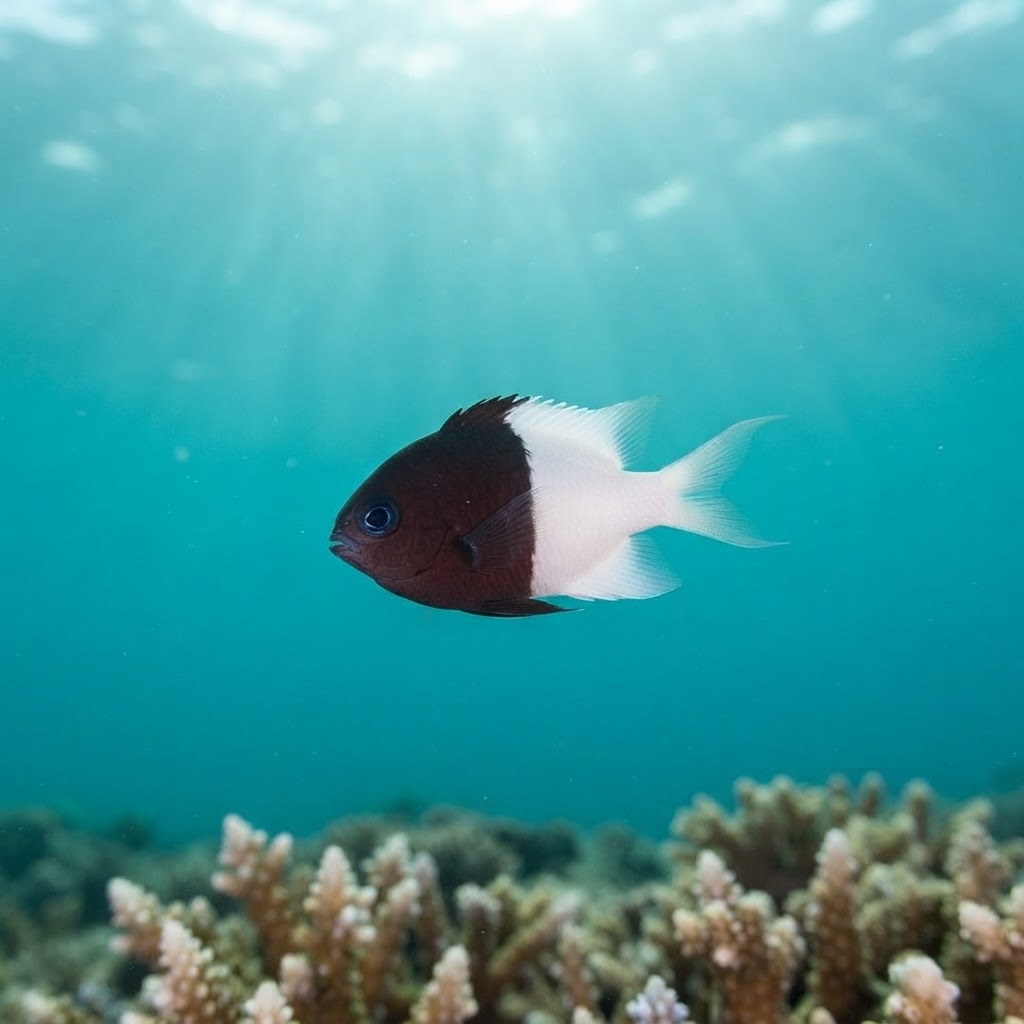
A small damselfish, only about 6 cm, split cleanly down the middle: the front half of the body and head is dark grey to blackish, the back half and tail are bright white. That sharp two-tone divide is the giveaway, no stripes or spots to sort through. It usually hovers in loose groups just off the reef structure rather than sitting flat against it.
Look for it hovering in small loose groups a short distance above the reef, picking at plankton drifting past rather than feeding directly off the substrate. It is logged as uncommon at the sites where divers find it, so it is not a fish that swarms in big numbers, more a scattered handful mixed in among other damselfish on the same patch of reef. It does not react much to a diver's presence and will simply keep feeding at a comfortable distance.
Like other chromis, it is a plankton feeder that spends much of its time in midwater above the reef rather than picking at algae or coral like many of its damselfish relatives.
No clear seasonal pattern shows up in the sighting data, so treat this as a year-round fish on the reefs where it occurs. Water in the 25.3 to 27.9C range it favours is present through most of the year across its French Polynesian and New Caledonian range, which lines up with the lack of a seasonal spike.
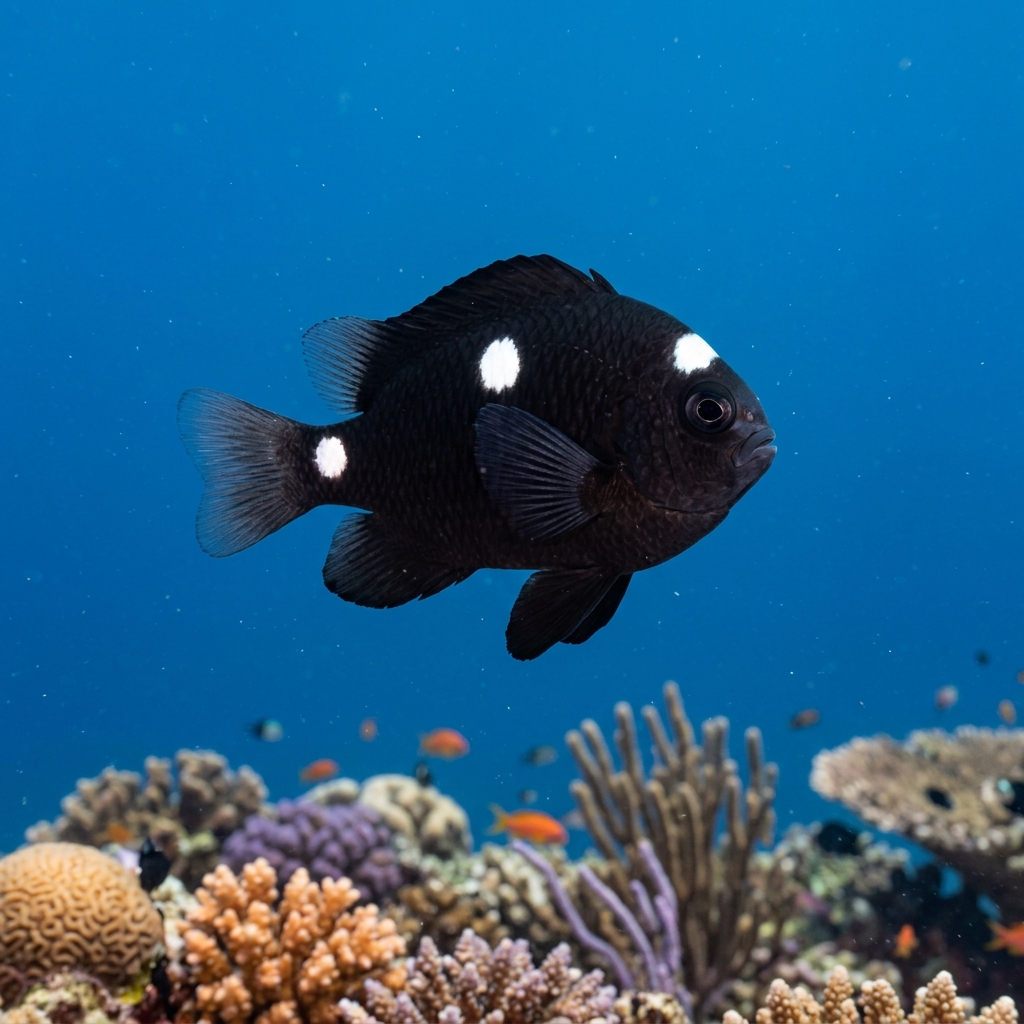
Reef neighbours a diver could mistake it for. Use the identification notes above to tell them apart.
This one is most reliably logged in French Polynesia, especially around the Society Islands and the Tuamotu Islands, where the bulk of dive-site records come from. Smaller numbers turn up around Nouméa and Bourail in New Caledonia, with an occasional sighting in Fiji's Lomaiviti region.
Mapping where Half-and-half Chromis is logged…
The strongest records come from French Polynesia, particularly the Society Islands and Tuamotu Islands. It also turns up around Nouméa and Bourail in New Caledonia and has been logged in Fiji's Lomaiviti region.
Sighting data does not show a clear season, so it is considered a year-round fish. It favours water between 25.3 and 27.9C, conditions that hold for much of the year across its French Polynesian and New Caledonian range.
Look for a small damselfish, around 6 cm, split down the middle: dark front half, white back half and tail, with no other patterning to check. That clean two-tone divide is the main thing to key on underwater.
They are small reef fish, typically reaching around 6 cm in length, so they are easy to overlook among larger damselfish on the same reef.
No. They are small, harmless plankton feeders that show little reaction to divers and pose no risk on a dive.
Site and sighting data is aggregated from diver logs, iNaturalist and GBIF. For taxonomy and conservation status:
Dascyllus
3,697 sites