Pachycheles rudis
Spot the Hairy Porcelain Crab along the Pacific Coast of the US and British Columbia in cool 10-16 °C waters. Here's what to look for.
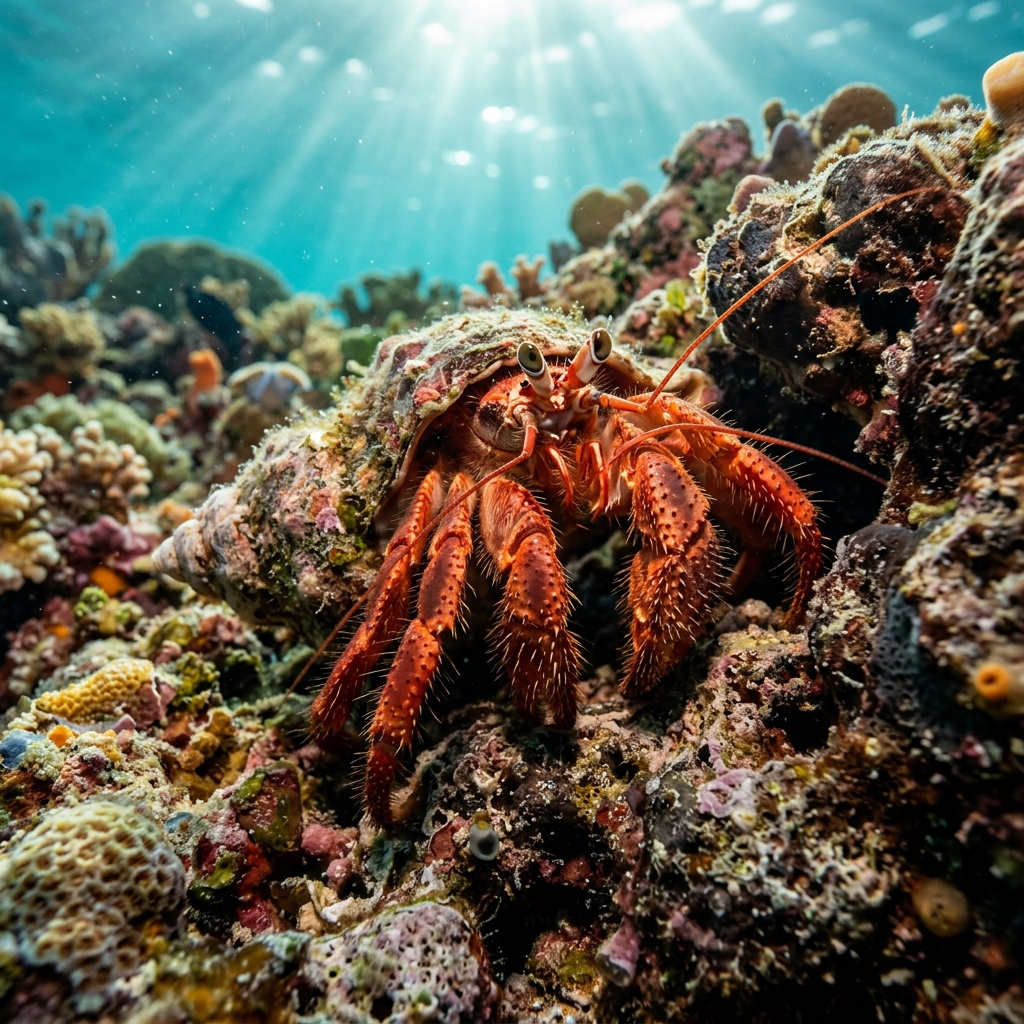
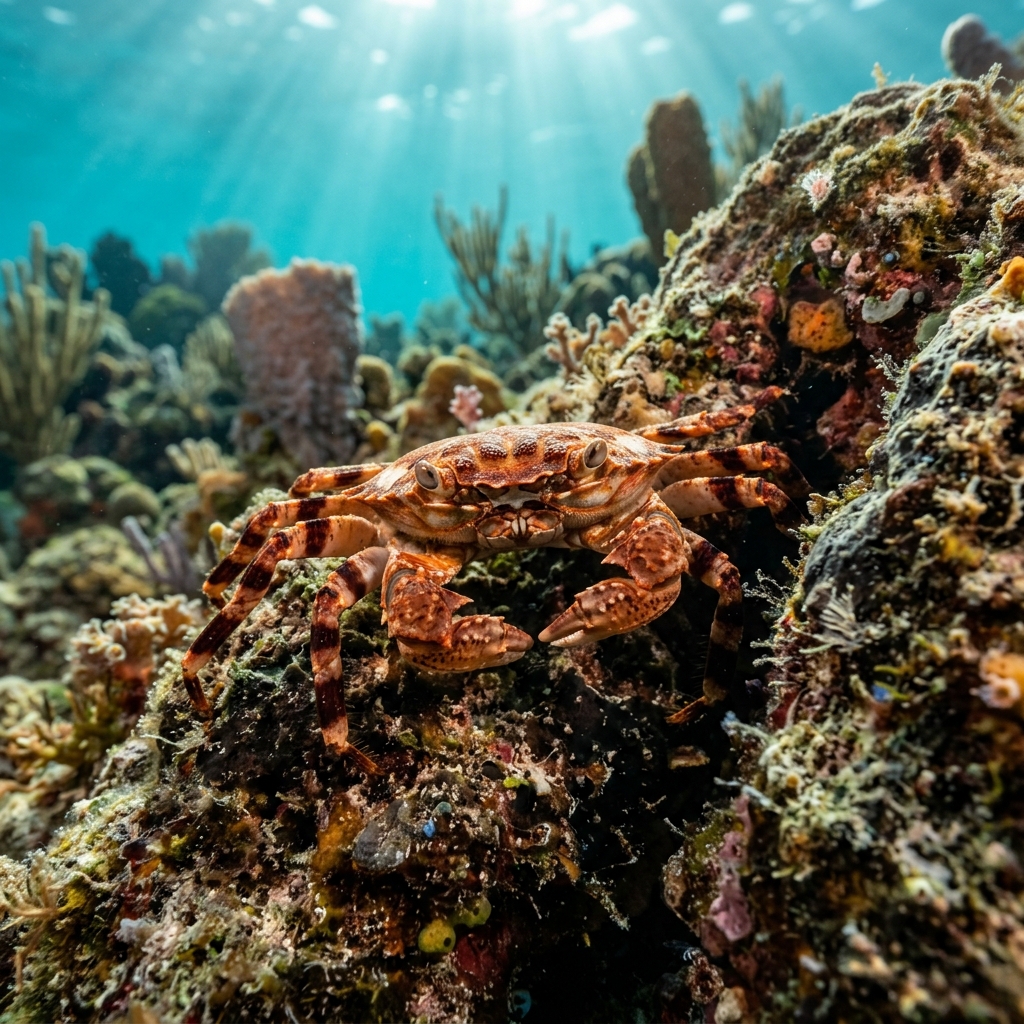
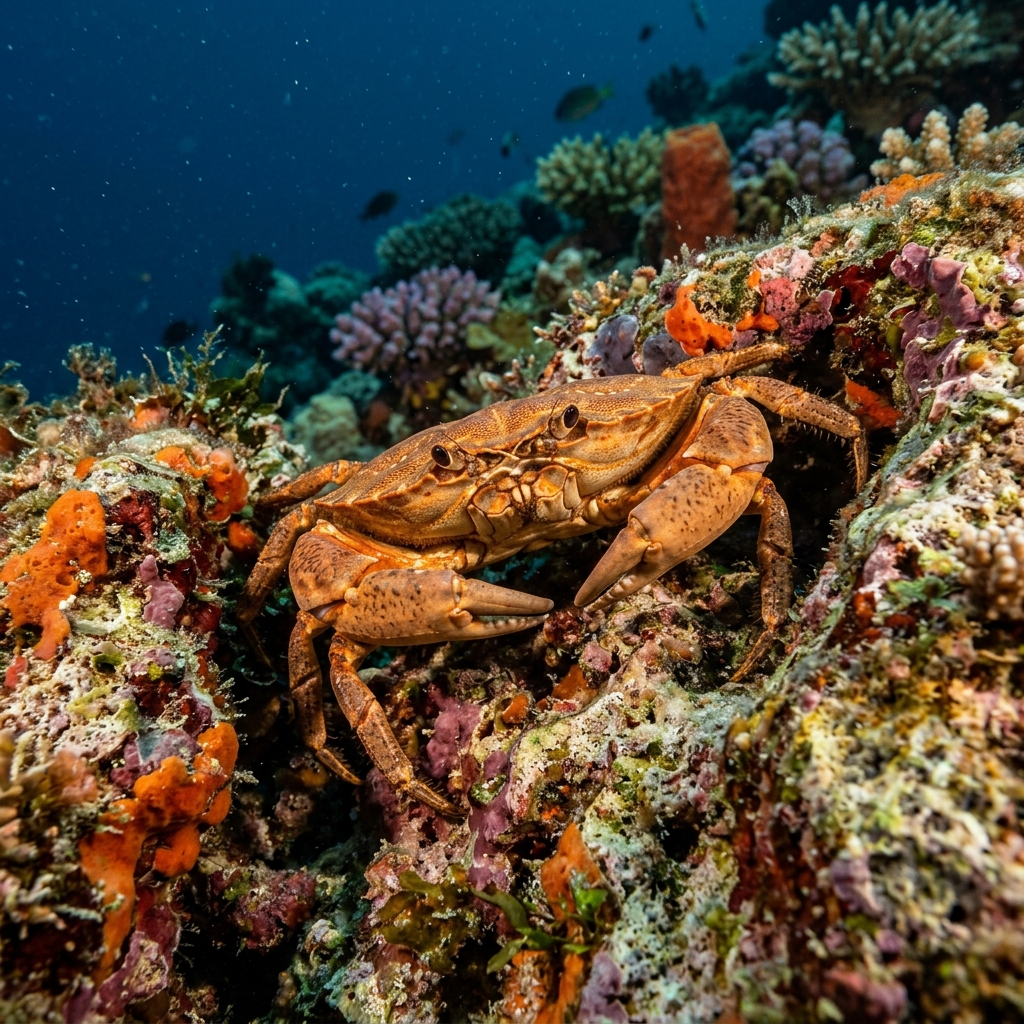
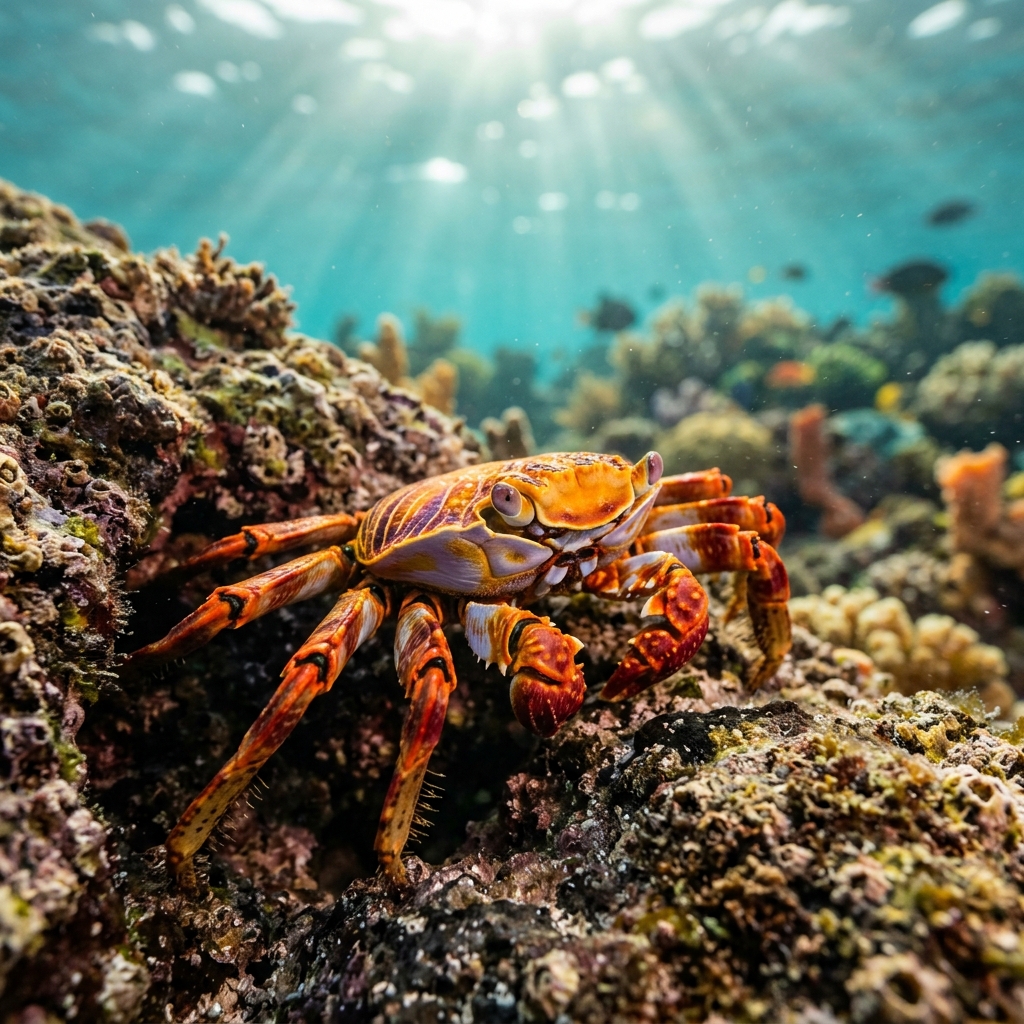
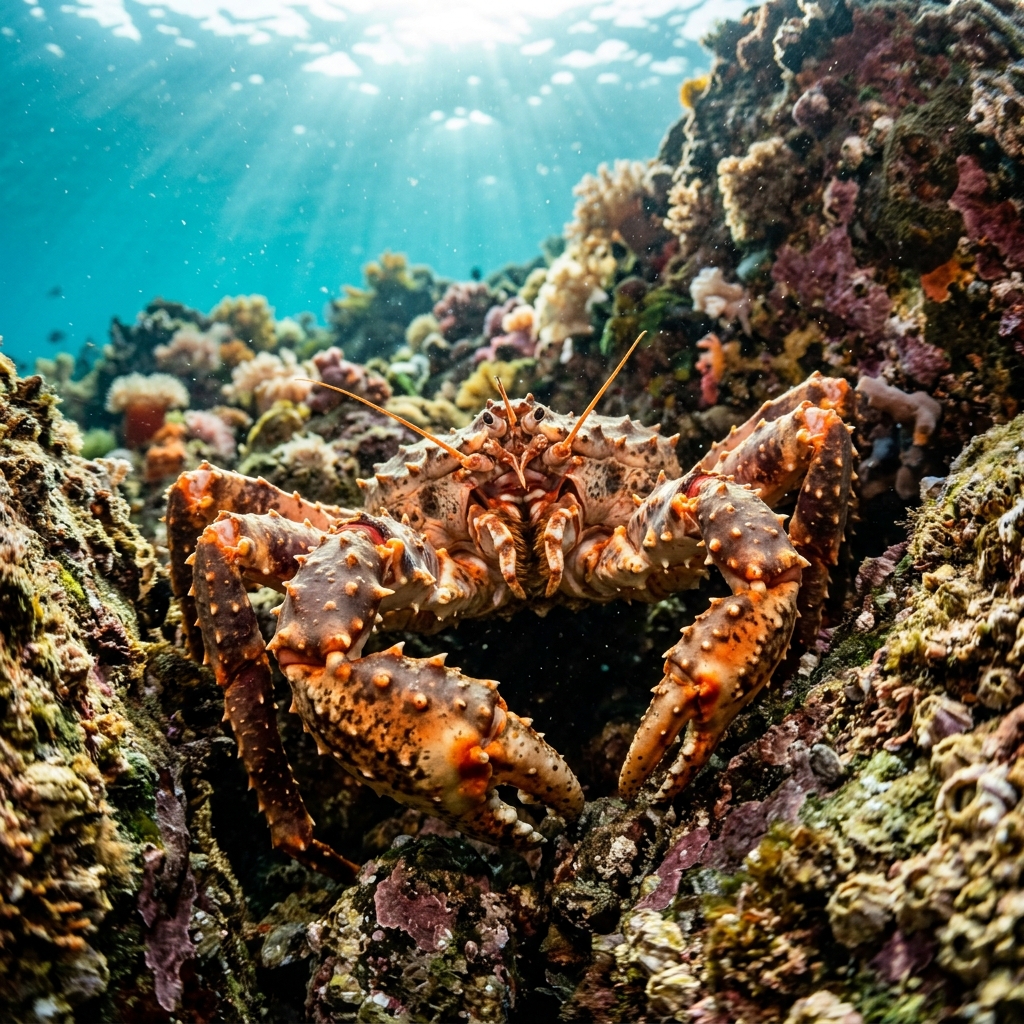
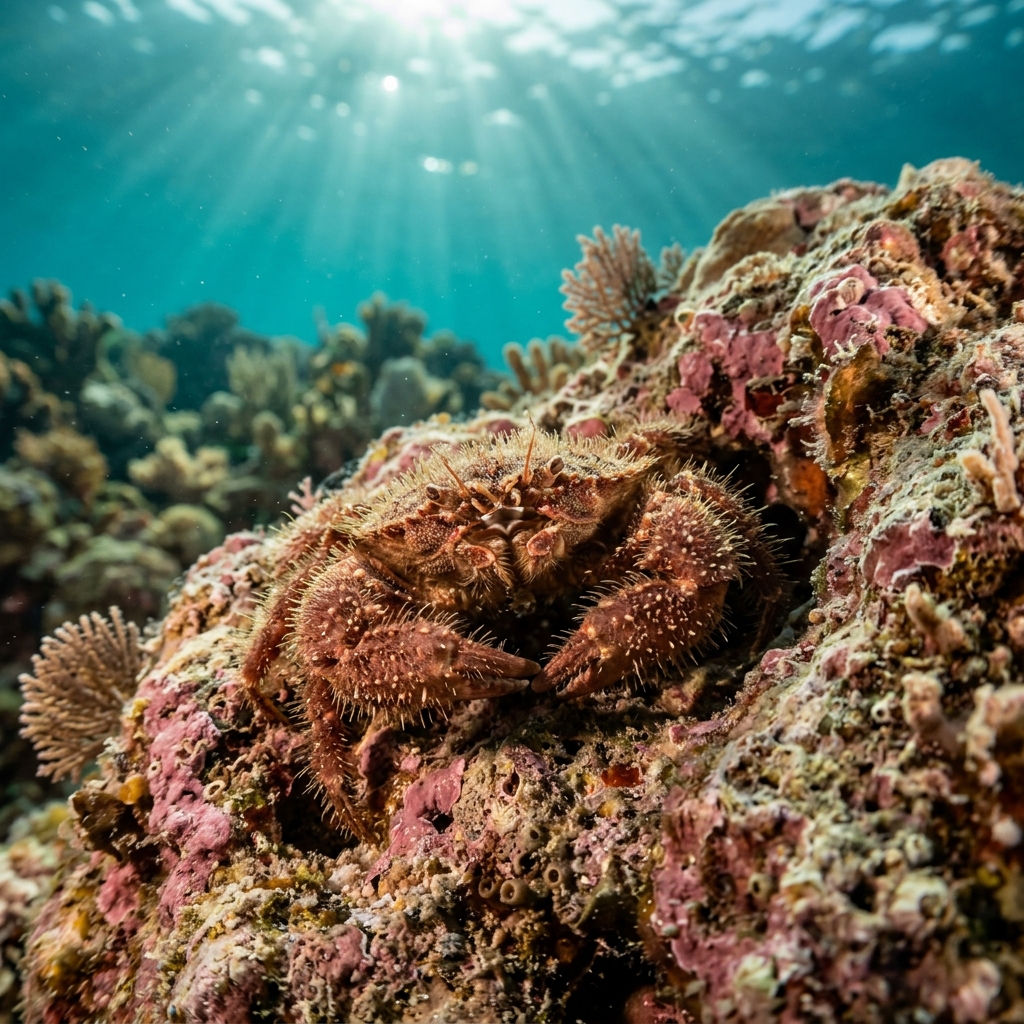
Look for a small, disc-shaped crab with a noticeably flattened, oval carapace (the hard upper shell) bristling with coarse, stiff hairs that give it a shaggy texture, that hairiness is the most reliable field mark underwater. Colouring tends to run mottled reddish-brown to greyish-tan, blending closely with encrusted rock and coralline algae. The oversized, flattened claws are a classic porcelain-crab feature: broad, paddle-like, and often held out in front of the body. Despite being small, those claws are disproportionately wide, helping separate it from other small crustaceans sharing the same rocky nooks.
Hairy porcelain crabs are benthic (bottom-dwelling) and spend most of their time pressed flat against rocky surfaces, tucked under boulders, or wedged into crevices where current brings food particles their way. When disturbed they typically freeze or retreat deeper into cover rather than fleeing into open water, which is why careful, slow searching pays off. Most encounters happen on the reef itself during daylight dives when divers are scanning rock faces at close range.
Like all porcelain crabs, this species is not a true crab but is more closely related to squat lobsters. It filter-feeds by sweeping feathery mouthparts through the water to catch plankton and detritus, a behaviour occasionally visible to patient observers when the animal feels undisturbed.
There is not enough monthly sighting data to point to a defined season, so treat it as a year-round possibility. Its observed water-temperature range of roughly 10 to 17 °C fits the cool, year-round conditions typical of the northeast Pacific, suggesting it can be encountered whenever you're diving those waters.
Sightings are concentrated along the Pacific Coast of the United States, which accounts for the large majority of known dive sites, with British Columbia's coast in Canada a secondary but well-represented area. A single site in Pacific Coast Mexico rounds out the range. Rocky, benthic reef habitat in these cold-water regions is where to focus your search.
Mapping where Hairy Porcelain Crab is logged…
The species is most consistently found along the Pacific Coast of the United States, with British Columbia, Canada also being a realistic destination. A small number of sites exist along the Pacific Coast of Mexico. Rocky, current-swept reef in cold northeast Pacific waters is the habitat to target.
No clear seasonal peak has emerged from diver sighting data, so it is treated as a year-round species. Its preferred water temperatures of roughly 10 to 17 °C match the fairly stable cool conditions found on the Pacific Coast throughout the year, meaning any season can produce an encounter.
The easiest feature to key on is the coarse, bristly hair covering the flattened carapace, no other common rocky-reef crab in its range looks quite this shaggy. Pair that with the broad, paddle-like claws held forward and a mottled reddish-brown colour that blends with encrusted rock, and you have a solid ID package. Expect to find it pressed tightly against rock or under boulders.
Precise size data for this species is limited in diver-observation records. Porcelain crabs in general are small animals; most species have carapaces measuring only a few centimetres across, and hairy porcelain crabs fit within that range. Their large, flat claws can look oversized relative to the body.
Despite the name, it is not a true crab. Porcelain crabs belong to the family Porcellanidae and are more closely related to squat lobsters than to the crabs they superficially resemble. One tell-tale sign is the pair of feathery feeding appendages they wave to filter plankton from the water, which true crabs do not have.
Site and sighting data is aggregated from diver logs, iNaturalist and GBIF. For taxonomy and conservation status:
European Green Crab
2,469 sites